2024 Burgundy: The summer of tough love
2024 Burgundy: A guide to the villages and vineyards
2024 Chablis is better than you might suppose. The wines do not give the impression of a cold season. The image of the vintage has no doubt been affected by the disastrous hailstorm, devastating mildew, and a dismal, cloudy summer, but the 2024 Chablis I tried rose above those difficulties, with charm and vivacity and all the salinity one hopes for.
The smoky, reductive aroma, so integral to Chablis, is more immediately apparent in 2024 than in sunnier vintages. The received wisdom is that it comes from the Kimmeridgian limestone, followed by aging on lees. I just love it.
Related
So, it’s a classic, cooler vintage in Chablis, but not in any pejorative sense. This is not acidic, lean Chablis. On the contrary, the acidity is lower than expected. The impression is fresh, not least because of lower concentration and viscosity—it’s medium-bodied Chablis, with fair intensity and alcohol levels ranging from 12% to 12.8%. Frankly, the latter is a relief after the rich, dense fruit and higher alcohol of 2023. There are plentiful citrus and floral aromas, followed by a straight sweep on the palate. Pure and vibrant Chablis, on the whole. But don’t be surprised if you find that some wines have surprisingly ripe aromatics, even a touch tropical here and there. There was no lack of ripeness where yields were modest.
In 2024 the eventful season conspired to create a natural balance in the vineyard and thus in the wine. It was possible to ripen a small crop over the cloudy summer. Organic vineyards had particularly few leaves—not much of an engine room, but an even smaller crop to service than conventionally managed vineyards. With yields as low as 2–4hl/ha (yes, that’s correct), some wines are very concentrated.
So, don’t dismiss this vintage. The good wines are very enjoyable. Just be aware that those who cropped at the higher end are likely to have dilute wine in which the acidity may poke though. Almost everything I tried avoided this, but in the wider context of Chablis, given the conditions and different approaches, bear this in mind.
Content from our partners
Stand-out climats include, on the Left Bank: Vaillons, which is so pretty this year; Forêt, for its floral notes; and Butteaux, which has benefited from a touch more reserve and austerity. I enjoyed the lighter, lithe, and lively feel to the Left Bank this year. On the Right Bank: Vaucoupin, for its linear density and savory minerality was my favorite. From the grand cru hill, super-silky Preuses is a charmer. Les Clos fulfils its potential as the most consistent grand cru and the one with most gravitas.
2024 Chablis: Producers’ impressions of style and quality
Julien Brocard: “2024 is cool, fresh, sharp, and dry, and with nice minerality. Classic Chablis, despite a difficult year.”
Pierrick Laroche at Domaine des Hâtes: “A classic style, straight and pure. We thought it would be hard in acidity at the beginning, but not now. When the ripeness was good, they are well-balanced and not too hard in acidity.”
Guillaume Gicqueau-Michel at Domaine Louis Michel: “Old-school Chablis, with tension, austerity, and aging potential probably. A wine needing some time for élevage and bottle-aging. The problem is, there is no wine. Maybe people already think it is not a good vintage. It was a nightmare and stressful, and yet I am happy overall with the result. We will have very interesting bottles to open in the future.”
Lucie Depuydt of J Moreau & Fils: “This vintage, I love it.”
2024 Chablis: The season and vineyard
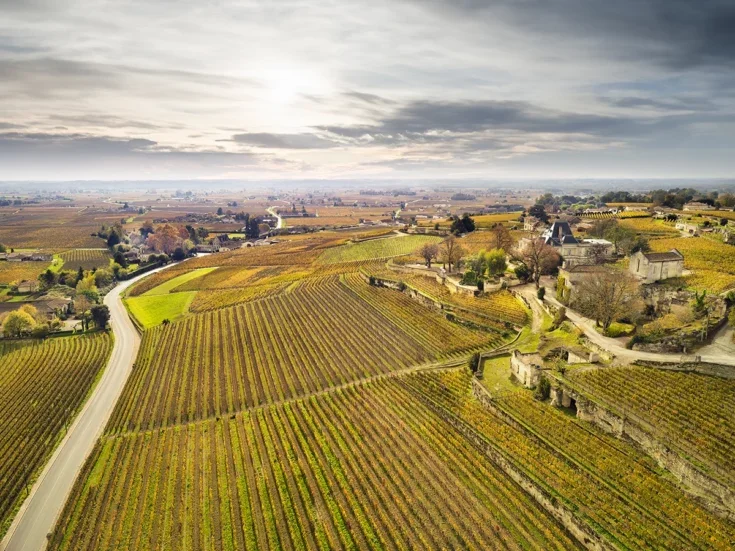
To begin with, there was frost in April, sufficiently threatening for candles to be lit and electric wires to be switched on for those fortunate enough to have them (the latter are triggered at around 35.5ºF [2ºC]). Much more significant was the damage caused by the hailstorm on May 1. The area around Courgis and Préhy escaped largely unscathed, while the far north of Chablis was possibly the worst affected. The hail was very localized. Although widespread, it could entirely miss a parcel and decimate another 150ft (50m) away. Domaine Louis Michel had hail in Vaudésir, yet very close by, in Grenouilles, there was none. There were other smaller hail events, adding insult to injury.
This was followed by very poor flowering owing to bad weather. It was humid and rainy, with 27% more rain than usual. There was significant rainfall of 7.7 inches (196mm) in May and 4.6 inches (117mm) in June. The inclement weather brought high pressure of mildew. Some growers found that flowering took more than three weeks to complete (a total contrast to 2025, as I was visiting to assess the 2024s, when the rapid flowering was coming to an end in early June).

July and August were drier. It wasn’t a warm summer, but nor was it cold. In the period from April to September, it was just 0.36 ºF (0.2 ºC) below average, but had 97 hours less sunshine, making it overcast rather than especially chilly. Some growers noticed that where there is clay, the mildew was most pronounced, for the clay kept the moisture. For Pierrick Laroche, this meant high losses in the Petit Chablis vineyard. The mildew attacked the leaves, and no leaves meant no photosynthesis. Organic vineyards were brown. A systemic spray certainly helped. “We are not organic,” says Marc Cameron of Domaine Servin, “so, we had green leaves.”
Everyone had low yields, if not from hail, then from mildew. Producers working organically suffered significantly and some eventually caved, resorting to a systemic spray or two. Guillaume Gicqueau-Michel gave up in June and will not become certified organic again. Bessin Tremblay performed two systemic sprays, even though they have followed biodynamic practices since 2017. Biodynamic producers told me that the relevant tisanes were completely ineffective in the face of such aggressive mildew.
Most organic producers sprayed between 20 and 25 times during the relevant period—i.e. twice a week. Little and often was the approach, as the sprays of sulfur and copper were simply washed away, but frequent tractor work in the vineyards compacts the soil. Domaine William Fèvre sprayed 24 times. In Irancy, Gabin Richoux sprayed just nine times but rather regretted not spraying more.
Harvest started around September 19. Most said the conditions were good for harvest, but it was not fine throughout harvest time. BIVB records show that inches 4.5 inches (115mm) of rain fell during September. Despite the small crop, many said it was quite a long harvest, since they worked slowly, being careful not to miss any bunches. The fruit was pretty clean, as there was no oidium and only a touch of botrytis here and there.
Many of those who didn’t make a systemic spray suffered losses as high as 95%—if they had anything to harvest at all. For organic producers, crops were often as low as 2–10hl/hl. “We continued to be organic,” remarked Didier Séguier. “William Fèvre has been organic for more than 20 years. And for Saskia [de Rothschild of Domaines Barons de Rothschild, which acquired the domaine in January 2024], it was impossible to stop.”
It was a difficult decision to make, as one systemic spray could save the harvest. Conventional producers I visit harvested between 20 and 30hl/ha, about half an average crop. Many of these, including Raveneau and the Dampt brothers, used a systemic spray only as a last resort. In finer seasons they get by with copper and sulfur.
So, it was a small to negligible crop, but low yields saved the vintage, and certainly those I visited have lovely wines, far better than I anticipated.
Many people have blended cuvées, not least to manage allocations. As Didier Séguier remarks, “When you have 600 to 900 bottles, it will be difficult to allocate.”
2024 Chablis: Winery and analysis
The potential alcohol was quite low in the 2024 Chablis vintage. Everyone I visited chaptalized to increase alcohol levels by between 0.5% and 1.5%, which was permissible in 2024. (If yields were 40hl/ha or higher, however, the wine risks being dilute.)
Total acidity (TA) was average, lower than I expected, and the pH levels were a little higher. The TA makes sense, as it was not an especially cold vintage. The higher pH levels may result from the uptake of potassium because of the rain.
Tasting the wines, they are not particularly acidic—the highish pH levels may make them taste less acidic than expected. Nor is it especially lactic. (There are a few exceptions here and there. Wines from grand cru Blanchot taste razor-sharp.)
Producers said the wines tasted very acidic before the MLF, and that MLF and aging on lees have changed them very noticeably.
Many had post-MLF pH levels of 3.3–3.35. At Louis Michel, after MLF TA was 3.8–4.0 as sulfuric, pH 3.2–3.3. Pierrick Laroche at Domains des Hâtes told me, “There is a lot of malic acidity, but the TA after MLF is lower than for 2021. It was from 3.5–3.8 (as sulfuric), pHs from 3.3 to 3.35.”
I asked a few people to look up levels of malic acidity. The highest was 6g/l but it was usually lower—not the malic of a very cold vintage. Julien Brocard had malic acidity of 5g/l. This converts to about half that number in lactic. He had tartaric of 4–4.5g/l in the final wines, and pH levels of 3.2–3.3
Vincent Dampt said, “Typically, the grapes of premiers crus have a pH of 3.18–3.2, with malic around 6g/l (especially where there was hail). Premiers crus after MLF and after racking have 4.2–4.5 TA in sulfuric and final pH levels around 3.35. MLF has really changed the wine.”
People were especially careful at the press not to extract too much (also mindful of increasing pH), and many settled the juice more thoroughly, since the bourbes were not perfect. There is a bitterness, a slightly phenolic note, to this vintage. But it generally stays on the attractive side.
Antoine Bessin, who was an industrial pharmacist, reports: “Very conventional kinetics for the fermentations and MLF—something we have not seen for a few years. Very few interventions were necessary. With low potential alcohol levels, the yeasts had no problem to ferment to dryness. I can have up to 1g/l sugar in the warmer vintages, but not in this vintage.”
It is a “fragile” vintage in the winery, according to Guillaume at Louis Michel, while conversely, the Dampt brothers find it strong, consuming very little SO2.
There were logistical challenges, however, as the small volumes required numerous small tanks. At Domaine Louis Michel, Guillaume will bottle his Vaulorent earlier than usual, as it’s in tank under a floating cap. “It consumes more SO2 and it’s vulnerable. I prefer to mature it in bottle.”
Long-Depaquit is using glass globes to accommodate the tiny quantities of grand cru, which were moved from oak to globes in May 2025 for the second half of the aging.
I noticed some wines, here and there, had rather high viscosity—strange for a cooler vintage—and asked Pierrick about it. He didn’t dismiss my query, as many might have done, but explained it as a touch of graisse (fat) or ropiness. I recall this from my MW studies, but have never encountered it. Full blown, it shows as strings in the wine. It’s caused by the production of certain polysaccharides, primarily beta-glucans, by lactic acid bacteria. The wine has to be moved, probably pumped, to break the molecular chains. Pierrick will pump and maybe use some oxygen. The Dampts tell me they see it more in warm vintages. Lucie Depuydt had a small touch in 2024 and more in 2023. “It’s more aerobic,” she says. “I find it more in new barrels, where there’s more oxygen. You can break the chains by moving the wine and using more sulfur.” She prefers to deal with it using bâtonnage rather than by pumping.
When it comes to finishing the wine, this vintage will probably have less CO2 than in recent warm vintages, although Vincent Dampt will bottle at 900mg/l CO2. “We like this level. It protects. If people reduce to 600mg/l, to decrease the impression of acidity, it might not be enough. We know that with a quite high pH, we will not feel the acidity, so we can keep our normal level of CO2.”
Vintages to compare and contrast
In terms of cooler vintages, 2024 Chablis is fruitier, riper, and more succulent than 2021. And it has a good deal more charm. It is not as lean and lactic as 2008. A little like 2014, but the acidity is higher in 2014. 2017 has a warmer feel, but wines from very low yields in 2024 steer in this direction, with lower concentration.
It is unlike 2020 and 2022, which are both well-balanced vintages with higher concentration and acidity than 2024, although the acidity may be less apparent in those vintages, because it is enveloped in denser fruit. 2024 is quite the opposite of the rich 2023.
Louis Gimmonet at Long-Depaquit said, “We are between 2014 for vivacity, and 2017 for ripeness and balance. 2014 had a similar, but drier, spring and September. The summer period was similar, as were harvest dates. The length of the growing season was also similar: 99–102 days. Similar concentration of aromas, too.” We tasted together the 2014 Vaudésir, which was straight, sapid, lean, and keen. “It is riper than 2021. Gentle and balanced in comparison with 2021, which was very biting. 2024 is more delicate.”
Sebastien Dampt commented, “2016 was similar in analysis, but the wines are much more exotic in 2016, as there was a very late harvest.”
Guillaume Gicqueau-Michel finds 2024 “a little like 2014. But I have never seen such mildew pressure. Even my uncle never saw this pressure. The yields were higher in 2014. The 2021 had the same profile of high acidity, reduction, and lower alcohol. The analysis in 2021 was similar.” We tried 2021 Butteaux, which feels much greener and more phenolic than the 2024.
Pierrick Laroche reflected: “It is in the style of 2021, also a little like 2017, but more like 2021, as 2017 was richer and riper, and 2024 doesn’t have the same structure. But the acidity is lower than 2021.” We tried 2021 Butteaux, which is straighter and more austere than the 2024.
Julien Brocard generously opened several bottles and magnums of older vintages to compare and contrast. Chablis Sainte Claire 2008 was lactic, with attractive sourdough; aging rather well, straight and bright, with complex truffle notes; far more acidic and lactic than the 2024. Chablis Premier Cru Vau de Vey 2014 is keen, lean, racy, and narrow, with a salty finish; perfect to drink now. It indicates that about ten years is enough for colder, straighter vintages. “Between 2008 and 2014,” says Julien, “2024 is a little closer to 2014.”
Jean-Marc Brocard Chablis Premier Cru Vau de Vey 2010 was the opposite: rich, with crystalized fruit and marzipan. I feel that rich vintages of white Burgundy, with sufficient acidity, can last longer than the colder years. 2010 may last longer than 2014. If you are in Chablis and want to try different vintages, I would recommend the “Chablis Wine Not” restaurant in the high street, which has an excellent wine list, wide-ranging for Chablis, and plenty of choice beyond this.
Aging potential and when to drink them?
It’s a vintage to open young and enjoy. Don’t think too much. Ripe Chablis vintages must slim down to show the Kimmeridgian soil, but not 2024. Even the wines that are more concentrated within the context of 2024, owing to absurdly low yields, some with ripe aromatics, are not rich, thick, or dense, nor is the acidity high. There is nothing really to resolve. You could open the village wines and lighter premiers crus soon after bottling, while higher-level premiers crus and even grands crus should start drinking well from 2027. The best top-end wines should evolve nicely over the following five to ten years, but there are vintages with more potential to evolve in an interesting way.
Julien Brocard agrees: “We thought it would need time, as it was fresh and sharp before the MLF, but now, with aging on lees in the tanks, the wines are more harmonious and will be very interesting to drink early for their freshness. We have dynamic wines in Chablis, which we can drink earlier.” Antoine Bessin feels the same way: “I don’t think 2024 has the body and skeleton for long aging. Drink earlier for freshness and enjoy the acidity and minerality. You could start in 2027, and enjoy for up to eight or ten years in the case of Fourchaume or Valmur.”
Vincent Dampt, however, reckons that between five and ten years should not be any stretch. “The wines didn’t consume much SO2 during élevage, which is a good indication that they will age for a long time.” Didier Séguier advises, “You could drink the premiers crus from 2026, but I think it’s better to wait five years and up to ten years is a good window. If you have a good cellar, longer. The Kimmeridgian soil gives us a unique typicité on older wines, which you cannot find anywhere else.” Guillaume Gicqueau-Michel is of a similar mind: “You must wait longer than for the 2023s. I think it is a vintage that will need to age.” So, too, Isabel Raveneau: “Without doubt, ten to 15 years, and after that… I have no idea.”
Left Bank premiers crus
Generally, the Left Bank premiers crus showed better than the right when I tasted them in June 2025. They were more consistent, better balanced and more harmonious, and I certainly enjoyed them more.
Beauroy is always the most straightforward of the premiers crus, and in ripe vintages it can be quite one-dimensional. This year it benefits from a lighter and more energetic profile.
In the cool and narrow valley of Vau de Vey, the premier cru vineyards face east to southeast on a steep slope at 45 degrees. The bottom of the slope is always in shadow. In 2021, it was difficult to ripen grapes here, but in 2024 it was quite possible, given the crop was low and harvested later. Brocard, who ends the harvest here, has tip-top examples.
In Côte de Léchet, is it hard to catch the moment in a warm vintage. The profile has been very rich and ripe recently, but 2024 has more citrus freshness and energy.
I particularly like Vaillons this year, for its floral and delicate personality. Often the first vineyard to be harvested, in a warm vintage it can still very quickly become too rich and rounded, with ripe stone fruit, whereas in 2024 it is more delicate, light, and mineral: pretty, pirouetting Vaillons. Some producers, Long-Depaquit among them, have blended in 2024, so lieux-dits with richer characters, including Beugnons, are balanced with fresher parcels, most notably Les Lys.
Les Lys is fresh, pithy, and energetic, and really quite juicy. The vines face northeast, rather than southeast on the Vaillons slope, so I wondered whether there would be sufficient ripeness in 2024. But Didier Séguier found that ripeness was not difficult to reach, because the yields were so low: 6hl/ha, just three barrels from 1 hectare. “Not aggressive acidity. There is lots of marl here, which increases the density and richness.” Vincent Dampt remarked, “Achieving ripeness in Lys in 2024 could be complicated, but it gets the wind, so we had dehydration and not so much acidity in the end.”
Moving on to the Côte of Montmains: Although there are likely to be more blends than usual under the Montmains umbrella in 2024, there are still sufficient lieu-dit wines. Just as well, for it’s a good year for Forêt. This is usually the most upright, high-toned, and fine-boned of the three lieux-dits, but it has been a while since I have found it floral. It’s always mineral, but finer aromatics are on show in 2024. (NB: The Long-Dapaquit Montmains is from Forêt.) Butteaux has slimmed down in 2024. It’s a bit more austere and contained, whereas warmer vintages have exaggerated its muscularity.
Right Bank premier cru
The hailstorm struck Fourchaume. Yields were low and the wines are quite concentrated, some showing topical notes; not the intense richness of recent warm vintages, but aromatically pretty ripe. They are fruity and forthcoming, with decent acidity but not much minerality. Although part of Fourchaume, Vaulorent abuts Preuses on the other side of the hill and has a different exposition; south-facing for most of the parcels, while some turn a little west. Louis Michel’s is south-facing and, as Guillaume remarks, is “the most Côte d’Or of our wines.” It is sumptuous. It was badly hit by hail. William Fèvre took a mere 4 hl/ha here, resulting in an exotically perfumed version.
Montée de Tonnerre is usually the most consistent of the Right Bank premiers crus in style and quality. It is also usually in place and predictable in June—but not for the 2024s, which varied widely, from austere and muscular at Louis Michel, to ripe and unusually soft at William Fèvre.
The premier cru that most appealed to me was Vaucoupin. Many of the vines here are an old massal selection, some dating back to the 1930s, for it was not a vineyard people thought worth replanting. The impression of acidity is often more about minerality from the Kimmeridgian soil. At J Moreau, the pH of Vaucoupin is 3.3—not low, yet this wine is super-keen and fresh and cutting. This comes from the very shallow soil on the plateau, whereas Long-Depaquit’s parcel, on the steep slope, produces riper wine, with greengage fruit sliced with cold minerals. Whatever the vintage, this climat, perhaps thanks to its old vines, seems very stable and able to deliver both intensity of fruit and minerality.
Grand cru climats
Bougros has benefited from fewer sunshine hours and feels more open and airy in 2024. It’s less hefty, with lower alcohol and less body. Vaudésir is more charming in a cooler vintage, especially wines from the warmer slope, although Fèvre has still produced quite a rich version. The wines are less concentrated and more harmonious, and should come forward sooner, while Vaudésir’s cooler face leans into its most elegant profile. Preuses is properly purring and sleek, but also nuanced and refined. There is not much Valmur, which was decimated by mildew. It’s much less broad and muscular than recently; lacking somewhat in intensity, it generally has less gravitas, too, although Raveneau has conjured up a good one. Les Clos has a sweetness, a sunny profile, even from a cloudy vintage, since the convex slope maximizes the sunshine. It is ripe but fresh and all in place. A step up. Blanchot, however, often feels too thin, sharp, and dilute for grand cru. At best, it is light and delicate. While it is always lovely to have grand cru Chablis in the cellar, there are better vintages to age. I would focus on premiers crus in 2024, and the Left Bank is my preference.
Irancy
Irancy was not affected by hail but suffered from frost and mildew. Gabin Richoux tells me nearly half the vineyards in Irancy are worked organically. Of those, all but 20ha (50 acres), owned by Domaine Ferrari estate which was sold in 2023, continued to be managed organically in 2024. “The mildew attacked the leaves and across Irancy the vineyards looked brown,” he recalls. There was no César in Irancy in 2024. It buds a week earlier than Pinot Noir and was wiped out by frost. Organic producers made minuscule yields. Martin Chariat made 2hl/ha. And Gabin Richoux, who had 4hl/ha, wondered whether he should have sprayed more than nine times.
I tasted wines from producers who are conventional in their farming and those who are organic—William Charriat, Richoux, and Franck Givaudin—and there was a considerable difference. The organic producers have very attractive Irancy, with delicious cherry fruit and ripe tannin. These wines are nicely concentrated, with natural alcohol levels around 12.5–12.8%, requiring no chaptalization. They are fresh and energetic; elegant and crisp, expressing the limestone soils. “There is way more limestone in Irancy than in the Côte d’Or,” says Martin Charriat. “It’s Kimmeridgian limestone here.”

Martin describes 2024s as “Irancy with red fruits. A classical profile, with lighter color, higher acidity, and lower alcohol than recent vintages. A little like 1991.” Beware, however: Irancy made with much higher yields, from conventional farming, around 25hl/ha, is often thin, green, and acidic. Note that 50% of Irancy is harvested by machine.
Gabin remarks, “It is better than 2021. Maybe like 2008, because of the cool weather. Same acidity and maturity as 2021, but we had more grapes in 2021, giving less phenolic ripeness and concentration.”
Those with low yields have blended their parcels to make one or two cuvées, so sadly there were no single-vineyard wines, including my favorite Veaupessiot.
St-Bris
This year I went to St-Bris to taste Sauvignon Blanc. The appellation, which is spread over seven hills, is remarkably beautiful. The village of St-Bris le Vineux, home to about 1,000 inhabitants, lies ten miles (16km) west of Chablis and a few miles southeast of Auxerre. If you find yourself in Auxerre, I recommend a relatively new restaurant, Le Sarment, where I had a delicious gazpacho and fish tartare for lunch. No wonder it was packed.
There are about 100ha (250 acres) of the St-Bris appellation. It must be produced from Sauvignon—Blanc or Gris—although there is little of the latter. I visited the vineyards with Caroline Lavallée (Grande Roche), who points out that Sauvignon Blanc is planted on the north-facing slopes, while Chardonnay is planted on the warmer faces of south and southeast. “Sauvignon buds later than Chardonnay and is more resilient.” She adds, “We don’t have a tradition of making separate lieux-dits in St-Bris.” Prior to 2003, when St-Bris was awarded its own appellation, it was labeled as Sauvignon de St-Bris, and many producers still put Sauvignon on the label. Chardonnay becomes Bourgogne Côtes d’Auxerre.
The soils are limestone and clay. It had rained over the few days I was in the Chablis area and the soil seemed very heavy. At Caves de Bailly-Lapierre (Caves de Bailly), I met with cellar master and winemaker Sylvain Martinand, who tells me the soil is more Portlandian than Kimmeridgian. He described the 2024 season thus: “There was no hail in 2024; no hail here since 2016. In 2024, just mildew. It was a classic, 100-day season. No reason to wait for more sugar.” There are approximately 35 producers in St-Bris, many of whom sell to this co-operative. “Most harvested at 11% potential alcohol and most chaptalized. The average yield for St-Bris is 25hl/ha.” Some do a MLF in St-Bris, or a partial MLF. Some age in oak.
I took the opportunity at Caves de Bailly-Lapierre to taste some older vintages of St-Bris, to see how it evolves, and was pleasantly surprised. The 2018 was quite soft and evolved but showed minerality to finish. The 2014 was reminiscent of pea-shoots; slim, racy, lively, and quite long. It was still super-fresh (lowish pH after MLF of 3.2.) The 2012 had evolved, with notes of undergrowth, nuts, and truffle, and developed some complexity. Once again, the finish was not bad at all, as it was on the 2010, which was more linear, lighter than the 2012 but more mineral. Given that the Caves de Bailly St-Bris is a large cuvée—around 200,000 bottles (in an average vintage) and made with the fruit from between 15 and 20 growers—this tasting was pretty impressive. St-Bris is really made to be enjoyed young within a year or two of bottling, but this tasting certainly showed that the wines can evolve beneficially in some vintages and when aged under the correct conditions. These bottles had been stored in the tunnels of an old mine at 54ºF (12ºC).