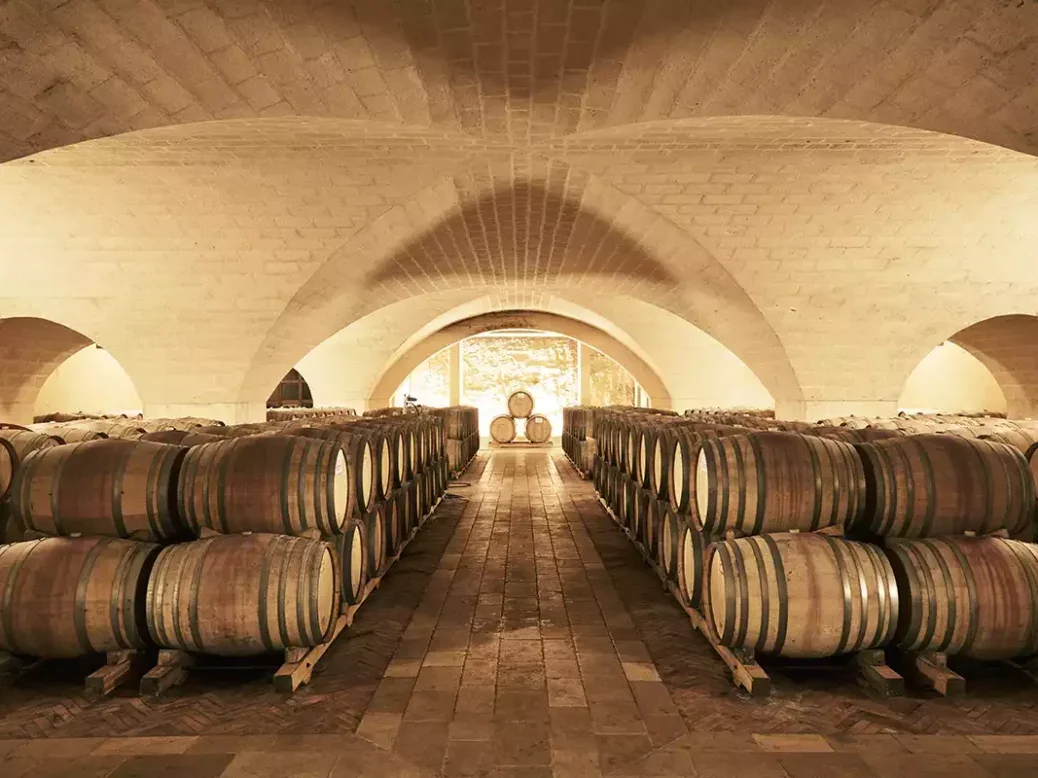
Bocca di Lupo Arso challenges prejudices about the southern Italian region, says Sarah Marsh MW.
Puglia has a reputation for overripe and jammy wines, and we want to show we can make a wine of freshness and balance,” says Vito Palumbo. “Fighting the prejudice of heavy-cooked wine” was a recurrent refrain as Palumbo presented Arso 2020, the first vintage of a varietal Cabernet Franc from Tenuta Bocca di Lupo, Antinori’s estate in the DOC of Castel del Monte.
Arso 2020 is certainly ripe, but it’s not overly rich or heavy. Aged in new Remond barriques (medium toast), it is glossy with oak but finishes with attractive freshness. The vines were planted in 2010, but it took some years before the Palumbo family, together with Antinori’s head winemaker Renzo Cotarella, felt they had realized the “iconic” wine they wanted for the estate.
We need to backtrack a little to explain how Antinori, grandees of Tuscany, partnered with a family producing bulk wine in Puglia. Palumbo explains that the idea of “bottling more interesting wine” in Puglia goes back to the 1970s, when his family teamed up with Victoria Gancia, to which they were selling wine in bulk. Like Bolla in Veneto, Gancia dominated volume wine production at the southern end of Italy.
Related
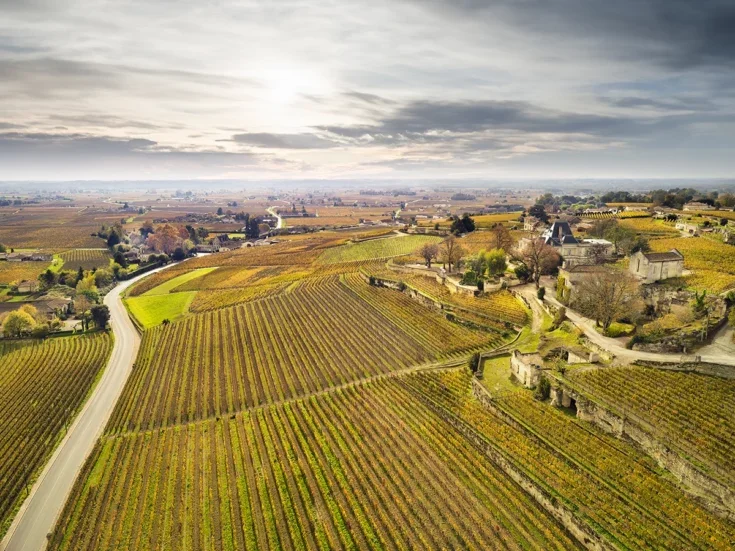

Chardonnay and Cabernet Sauvignon, together with Aglianico, were planted on the 140ha (346-acre) Bocca di Lupo estate, but the ambitions for higher-quality wine from lower-yielding vines were not followed through until 1998, when Gancia invited Piero Antinori to visit the estate. “At the time, it was a no man’s land, but he fell in love with the feeling of the place, and that changed everything. At that point, we sold to Antinori, who asked my father Peppino to run the business,” explains Vito Palumbo.
Initially, Aglianico and Fiano were the primary focus for the revamped image of Bocca di Lupo as a fine-wine tenuta. “My father described Fiano as the red grape of white varieties—low in acidity but with texture and structure.” The first vintage of the Bocca di Lupo Fiano was 2016.
I rather like the current vintage, 2021, which is aged in 300-liter barrels for six months, and the malolactic is stopped to preserve freshness. It is lightly aromatic, with a hint of apricot skin and fresh almonds. The lightly rounded and silky palate has peach-kernel notes, with an attractively bitter phenolic note. It’s savory and finishes unexpectedly salty.
Content from our partners

The 2022, which has just been released, has a degree more alcohol (13.5%) and a ridged foursquare feel; equally savory, but harder and more phenolic than the lighter and fresher 2021. The dense and sinewy palate needs time to open up. I would put it away for a couple of years. These are interesting whites.
Palumbo describes Aglianico as a challenge, not only in the vineyard—because it doesn’t ripen until late October—but also in the winery, where he says it is difficult to tame the tannin. So, the fermentation temperature and extraction have been decreased, and in the current vintage, 2019, the seeds, which tend to be green and bitter, were not put into the press. Hungarian oak has been replaced by Taransaud and Remond barrels. “We feel new oak is necessary to smooth the tannins.”
We tasted the 2014 and 2019 vintages. The 2019 is fairly grippy. “We wanted to make an Aglianico that is ready sooner.” This isn’t ready yet, but the 2014 is nicely integrated and approachable—still attractively fruity, with blueberry notes and a touch of oregano. It has a smoother and lighter texture and body than the 2019. Clearly, some bottle aging is desirable. 2014 was a difficult, wet vintage in Italy but maybe not quite so bad in Puglia as elsewhere, for this 2014 is not without charm.
This expensive project is financed by Calafuria rosé, which comes from vineyards of Negroamaro scattered along Puglia’s Adriatic coast; it is described by Antinori’s marketing team as “the bestselling premier rosé in Italy and the most expensive.” Calafuria Salento IGT rosé is immensely quaffable. It has a ripe strawberry fragrance, a peachy, creamy palate, and is fresh and sea-breezy to finish. Production is 650,000 bottles. Palumbo explains, “This is the engine of our growth,” which has enabled Bocca di Lupo time to explore and hone the expression of its terroir, working organically not only with local varieties but also with international favorites.
What’s in a name?
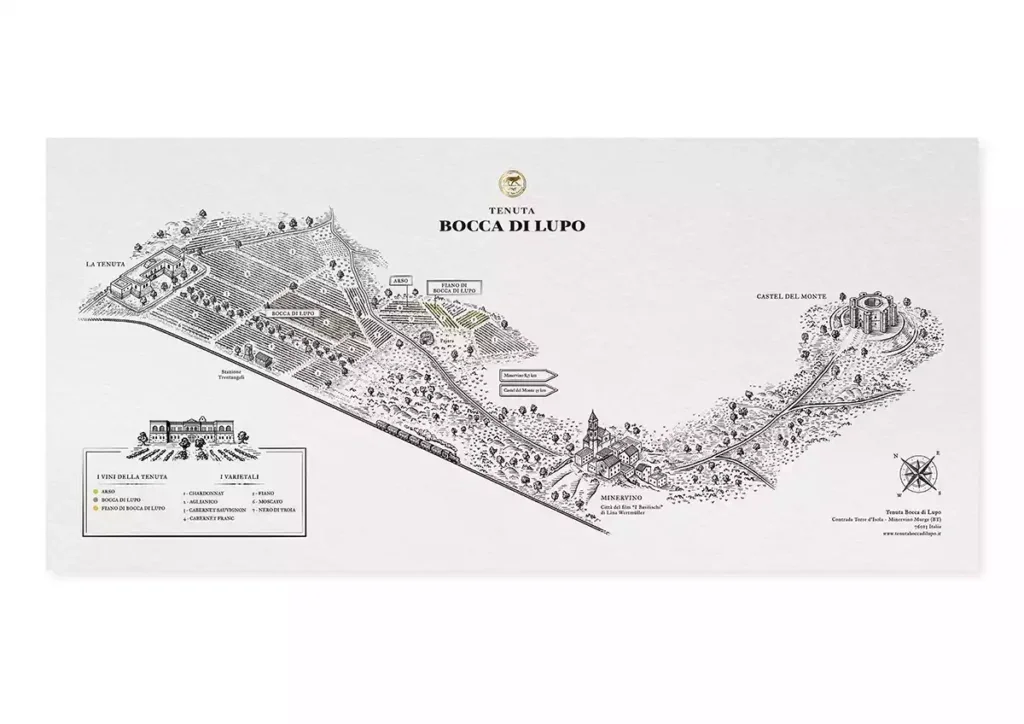
It was, above all, the calcareous soil that encouraged Antinori to plant Cabernet Franc. Puglia is dominated by terra rossa, but there is calcareous soil in the murgia—the hillside of Puglia. Tenuta Bocca di Lupo is located in Alta Murgia at 1,000–1,150ft (300–350m), at the higher northern end, on a band of tufa that stretches down to Matera, famous for its cave houses.
Several parcels of Cabernet Franc were planted using clones from Antinori’s Bolgheri estate. The first 60in (150cm) of soil had to be fragmented before planting the vines. “The practice of crushing rocks is part of our culture,” remarks Palumbo. This soil is quite challenging. It’s white, which reflects the heat and accentuates the bright light in the vineyard, and it’s porous, so drip irrigation is essential, and for this the estate has its own well. On the upside, the tufa gives freshness to the wine and salinity to the Fiano.
As for the climate—well, it’s hot, but this is mitigated by persistent winds, and there is a reasonable diurnal shift, from 91–93°F (33–34°C) during the day to 71.5–75°F (22–24°C) at night. The daytime temperature in 2014 was cooler than this, but the 2021 was much hotter. Palumbo says that “2021 and 2022 are fighting our idea of freshness and elegance—but 2023 is better.”
Some Cabernet Franc is blended with Cabernet Sauvignon for Locone, Castel del Monte DOC Cabernet, adhering to regulations that permit only “Cabernet” to be used on the label. International varieties are nothing new here. I tried the 2021, which I found best chilled; it kicks the 14.5% alcohol into touch, makes the tannin a little crunchy, and allows the juicy blackberry fruit to sing. Pure enjoyment.
Not all the fruit from this 140ha estate is used for Tenuta di Lupo wine. Some is still sold. Only the best is kept, and the most prized of all comes from a 10ha (25-acre) parcel on a gentle east-facing slope, from which Arso is made.
The name Arso, which may raise an eyebrow or two, was inspired by a farmer burning the stubble. Or that’s one story. The Cabernet Franc grapes are destemmed and fermented at quite a cool temperature, before the wine is aged in new oak for 14 months. Only the best barrels are selected. Not all make the Arso grade.
“We made a choice between Cabernet Franc and Cabernet Sauvignon, but Cabernet Franc was more fitting with the soil, and the slope delivered the best balance and elegance,” explains Palumbo, who recalls that Piero Antinori was concerned that Cabernet Franc would be too big. “But it is deep, not heavy,” enthuses Palumbo. “Like a ballerina, it has muscles to make it elegant and light.”
“Balletic” might be stretching the imagination a little, since Arso is a rich wine, at 14.5% ABV, but it certainly does have sleek texture and depth, and it purrs across the palate. Its debonair demeanor makes Aglianico seem somewhat rustic in comparison.
With a range of Italian grape varieties from which to choose, why select an international variety for their finest wine? “We wanted a wine to speak an international language but not in an international style,” explains Palumbo, “using a grape that will not scare people. And we wanted to provoke the wine community.”
Nice, but it was a rhetorical question. I’d already received the message in a bottle.
Tasting
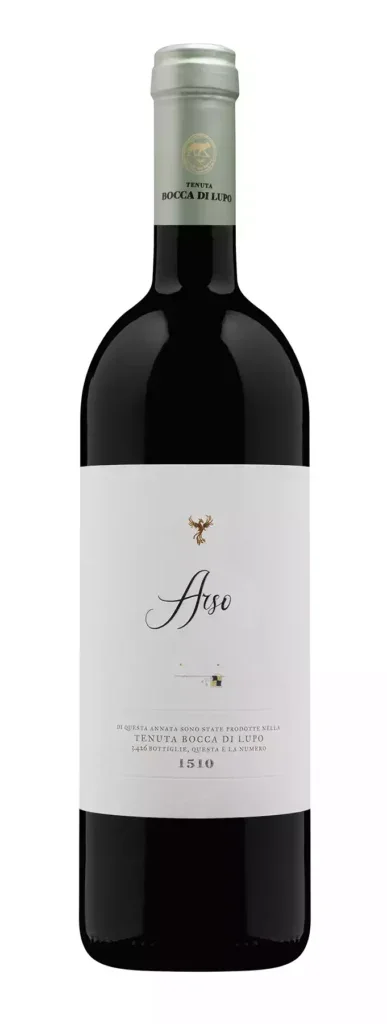
Tenuta Bocca di Lupo Puglia IGT
Arso 2020
Cabernet Franc. Bottle no.0866. Total production 3,426 bottles. 14.5% ABV. Certified organic.
A deep aroma of black cherries, with dark chocolate and a hint of mint and rosemary. The nose is as intense and inky as the color. The palate glides in on lead filings. It is concentrated and plush, with ripe forest fruit, and it slides down smoothly. The velvet texture is underscored with the freshness of plentiful oak tannin and the light bitterness of cocoa. There’s a hint of burned toast. On the finish, which is nicely sustained, a waft of asphalt and mint combine. This is a fitting marriage of variety and terroir, where the sometimes lean and herbaceous character of Cabernet Franc is transformed into a rich and sumptuous wine with appetizingly herbal aromatics. You sense the sunshine and the warm chalkiness of the soil. It’s 14.5%, but the opulence is offset with tangy freshness. There is a distinct sense of place—a Super-Puglian, indeed. | 95