When Santiago Marone Cinzano was born in Geneva in 1994, his parents named him in honor of the road to Santiago de Compostela. “I was conceived on the pilgrim road,” he likes to say, “and in some ways, I’ve never really stopped walking it.” It was a symbolic beginning for a life shaped by long journeys, family history, and a search for renewal—and it was pure coincidence that the family moved to Santiago when he was just two and lived in Chile for the next ten years.
Santiago’s father, Francesco Marone Cinzano, grew up in Turin and was groomed from birth to lead the Cinzano wine and spirits empire, a dynasty begun in 1757, when the family founded one of Italy’s most recognizable brands. Cinzano was a global force—its advertising shone from Piccadilly Circus, its vermouth a staple in bars from London to Buenos Aires. By the 1970s, it was even a Fortune 500 company, propelled by its partnership with Grand Metropolitan, then the world’s largest wine and spirits conglomerate.
But with success came fracture. “My father was the eldest son,” Santiago explains, “and the company had always passed to the eldest. Grand Met issued an ultimatum: Either sell, or watch your stake devalued.” In 1993, Francesco and his siblings sold Cinzano. Just before the sale, he extracted two small jewels from the company’s vast holdings: the Montalcino estates of Col d’Orcia and Argiano. He believed fine wine, unlike industrial spirits, held the deeper, more lasting value.
The decision, however, continued to haunt him. Francesco had promised his own father never to sell Cinzano, and breaking that chain of nine generations left its mark. “He carried a tremendous sense of guilt,” says Santiago. “He used to say, ‘If I am the one who breaks the chain, I must also be the one who reclaims what we’ve lost—our identity as farmers.’’’
Related
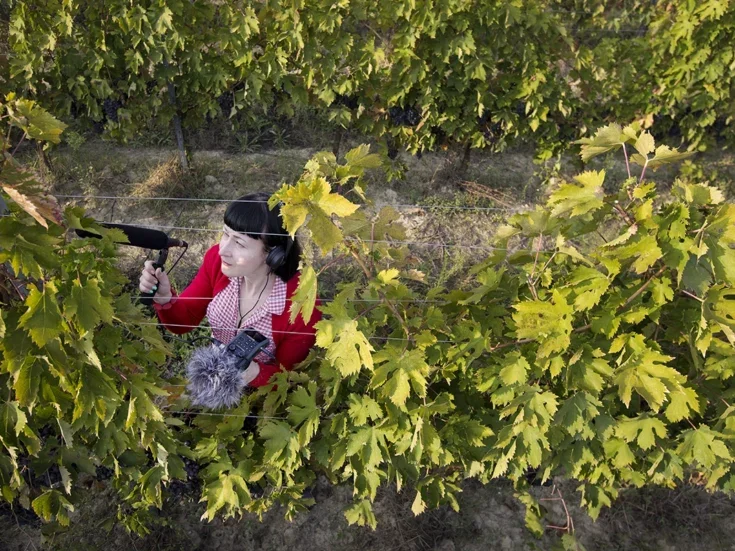
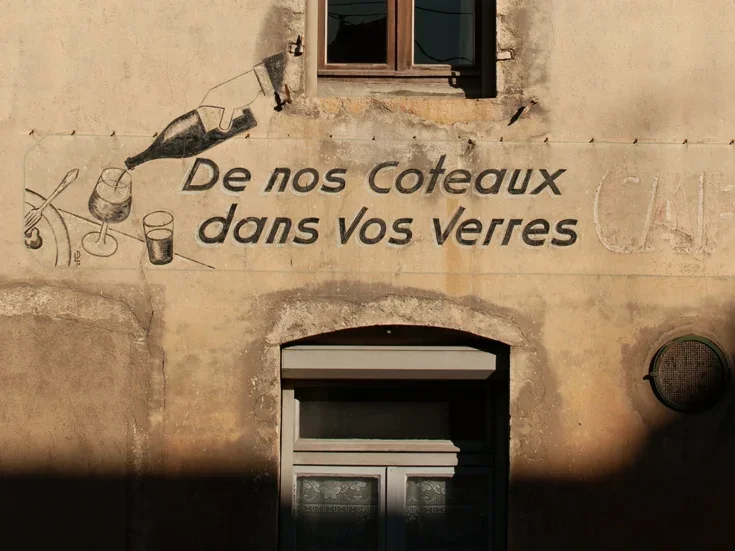
In 1995, Francesco moved his family to Chile, drawn by the Maule Valley’s ancient vines and untamed landscapes. There he founded Erasmo, a small artisanal winery far from the industrial world he had left behind. The local farmers were practicing lunar calendars and herbal composting, old traditions that mirrored the biodynamic principles taking root in Burgundy. “They hadn’t read Rudolf Steiner,” Santiago recalls, “but their knowledge came from generations of observation. That’s when my father realized biodynamics wasn’t a fad—it was ancestral wisdom.”
For ten years, the Marone Cinzanos cultivated vines in this remote valley, working with the land rather than against it. When they finally returned to Montalcino in 2005, Francesco brought that philosophy home. His sister Noemi ran Argiano and moved to Patagonia in Argentina, where she founded Bodega Noemia de Patagonia. Francesco meanwhile managed Col d’Orcia. Here he began converting the estate to organic farming, experimenting with biodynamic preparations and natural compost. By 2010, the estate became certified organic, one of Tuscany’s largest to do so. “Our goal was to prove that even large wineries could operate sustainably,” says Santiago. “We wanted to set an example—that scale doesn’t have to mean compromise.”
Santiago grew up surrounded by vineyards, but he was never pressured into continuing them. Still, the family legacy was important to him. “When I was 12, I asked my father if I could help with the harvest,” he recalls. “It started as a search for his approval and turned into a passion.” His childhood memories are tinged with both pride and loss. “When I was a child in Chile, I recognized the Cinzano logo from old posters my father had kept. One day I put a bottle of Cinzano in our supermarket cart, and he told me to put it back. He couldn’t bear to see it. Eventually he told me the story of the brand, and then I knew I wanted one day to dedicate a project that uses the family name to give him back something he lost.”
Content from our partners
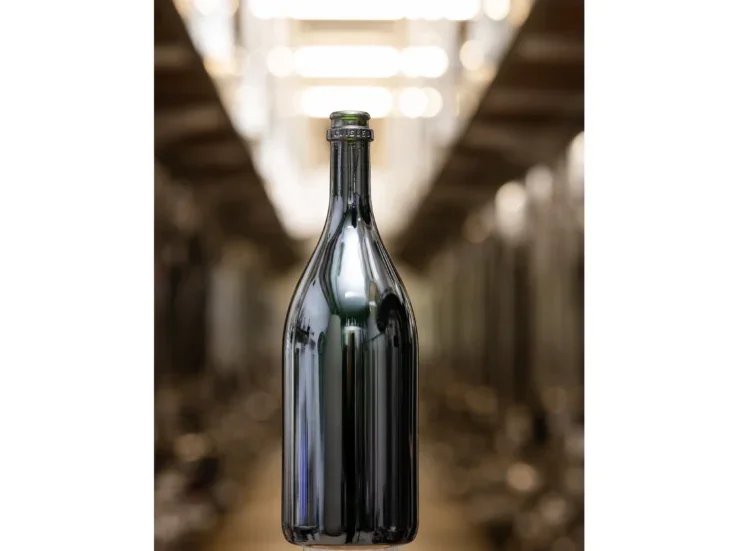
After joining Col d’Orcia full time in 2017, Santiago honored his family’s lost heritage by naming his own wine after the dynasty: Conti Marone Cinzano. The Cinzano name was now owned by a large Italian spirits conglomerate, which they insisted would block any use of it in wine. But Santiago persisted.
“I wrote directly to Luca Garavoglia, the owner,” he says, smiling. “After six months, he agreed to meet me in Milan. I told him our story—what my father had endured—and said I only wanted to use the name for a small Brunello project, to pay tribute to my family. He shook my hand and gave me his blessing.” When Santiago returned home to break the news, his father wept. “He had told me, ‘Don’t humiliate yourself.’ But when I came back and told him we had the green light, it felt like closure—for both of us. Now my father even collects old Cinzano paraphernalia.”
Today, Francesco lives on the estate, his Parkinson’s disease progressing slowly. “He’s still greatly involved,” Santiago notes. “He went from being an industrialist to being a farmer again. It’s a full circle.” Meanwhile, Santiago’s brother has joined the estate, founding a small brewery and producing craft beer, organic grappa, olive oil, and cigars rolled from their own Kentucky tobacco. The 500ha (1,235-acre) property sustains 150ha (370 acres) of vineyards, along with cereals and forestry, forming a rare Tuscan ecosystem rooted in balance.
A roaming identity
In 2017, as he assumed greater control of operations, Santiago launched his own project within Col d’Orcia—Lot 1. Guided by consultant winemaker Donato Lanati, he began applying micro-parcelization techniques across the estate’s 109ha (270 acres) of Sangiovese. “We wanted to understand how each plot behaves under different conditions,” he explains. “The climate has become so unpredictable that you can no longer rely on fixed crus.”
The research eventually revealed an extraordinary climatic variability. “The past decade has given us the hottest summer, the wettest harvest, and the most severe frost in living memory,” Santiago says. “We needed a system flexible enough to adapt.” The solution was what he calls “itinerant cru selection.” Each vintage of Lot 1 comes from a different plot, chosen according to the year’s meteorological character. A dry vintage might draw fruit from a vineyard such as Nastagio, whose clay-rich slope exposed to the northeast has less sunlight and better water retention; a damp one from a sandy, well-drained vineyard such as Poggio al Vento, open to the air conditioning of marine breezes.
“This way,” Santiago explains, “each year tells a logical story of its climate. We maintain a stylistic coherence even as conditions change.” Identifying vines most resilient to droughts or heatwaves since 2006, cuttings are propagated to preserve adaptive diversity. The result is what Santiago describes as “the genetic memory of Col d’Orcia.”
Lot 1 typically yields fewer than 10,000 bottles—a meticulous selection sometimes reduced bunch by bunch. “In 2019, from our Canetto vineyard, we harvested just the best 25% of the fruit,” he notes. For a region built on the mythology of single-vineyard expression, Lot 1’s roaming identity is quietly radical. Santiago acknowledges the paradox. “Of course, there’s a tradeoff. I sacrifice a little terroir character for stylistic consistency,” he admits. “But ultimately, I’m pursuing the highest quality, not dogma. It’s about clarity, not repetition.”
Lanati works on aromatic compounds, which can be seen in the analysis of the grapes after veraison but not experienced until after the fermentation. In addition, Santiago says, “We look for phenolic maturity that lets tannins polymerize during aging,” he explains. “That yields a rounder, softer style, high aromatic complexity, and skins thin enough to favor perfume over power.”
Technically, the wine follows minimalist principles. His winemaker, Antonino Tranchida, from Marsala, vinifies with native yeasts in stainless steel, with brief passages in cement before aging in large neutral oak of a kind that “gives a singular elegance,” he says. Aging varies with each season. The 2019 Lot 1 spent 36 months in oak, achieving Brunello Riserva depth; the riper 2020 needed only 28 months to maintain vibrancy. “Today, the best riservas are often the ones spending less time in wood,” Santiago says. “Time alone doesn’t create greatness; sensitivity does.”
If agriculture has grounded Santiago’s vision, marketing runs no less deeply in his DNA. His great-grandfather, Enrico Marone Cinzano, was a pioneer of modern branding—commissioning iconic Art Deco posters and installing the world’s first neon sign in Paris in 1904. “He was a marketing genius,” Santiago says; “the first to bring a sense of theater to wine.”
After studying at Malvern and then Exeter, where he focused on business and marketing, Santiago embraces that inheritance consciously. “Winemaking and storytelling are both in my blood,” he says. “The nuances of marketing wine fascinate me. It’s about creating emotion that matches the craft.” Lot 1 is now sold mostly in Italy, with export markets growing in Asia—particularly Hong Kong and Japan—and Scandinavia, and an expanding presence in the US.
Santiago sees his work not just as innovation but as restitution—a bridge between the grandeur of his family’s past and the humility of its present. “My father’s generation lost Cinzano,” he reflects. “Ours is rebuilding identity through the land.” He’s keen to show Brunello producers that there is a different, modern way of doing things. Looking ahead, he says, “My dream is that my grandson one day looks back and says, ‘My grandfather invented this way of doing things.’” Lot 1 is his testament—not just a wine, but a philosophy: to adapt without forgetting, to renew without denying lineage, and to farm with both modern precision and ancestral soul.
Tasting

2019 Conti Marone Cinzano Brunello di Montalcino Lot 1 (14.5% ABV)
Deepish color, with striking Sangiovese typicity of aroma, it shows fragrant, cedary notes, quintessence of Sangiovese, with herb and cherry. There’s an ultra-polished, silky textural quality, ripe cherry-fruit sweetness laced with spice, seducing the palate with rounded tannins and yet, at the same time, incisive damsony acidity for a delicate texture. A certain grip balances out the fine finish. | 93
2020 Conti Marone Cinzano Brunello di Montalcino Lot 1 (14.5% ABV)
A bright, youthful red cherry in color, this has an engaging, sweet cherryish depth of aroma, with an underlying camphor and cardamom-like spicy note bringing inviting detail. The first taste is of sweetly ripe cherries, with a texture defined by precision, freshness, and balance. Inviting you in, that ripe cherry, etched with refreshing acidity, turns to gentle grip and mouthwatering savor, making this pure Sangiovese so seductively approachable right now that it’s almost more Super-Rosso than Brunello, yet with a decade ahead of it if you want it. | 95