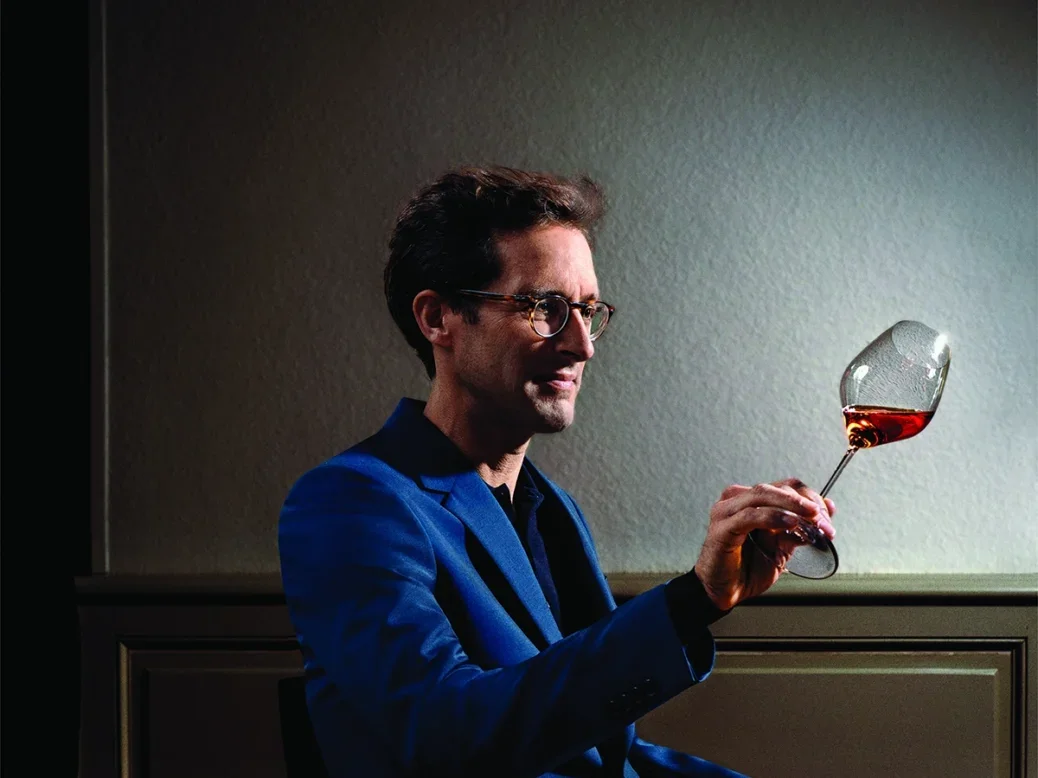
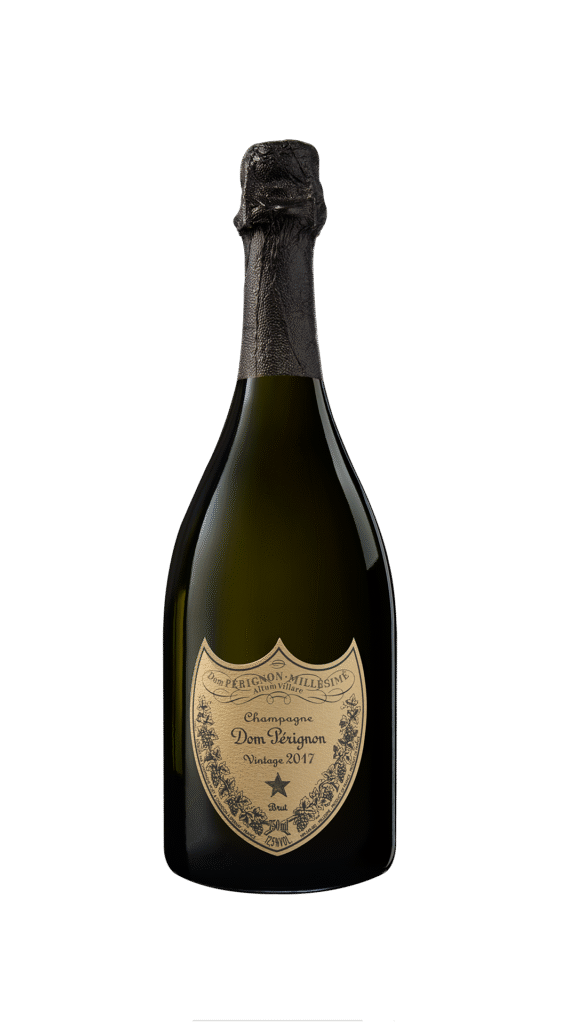
Simon Field MW tastes the latest Vintage wines from Dom Pérignon in the company of the charmingly enigmatic chef de cave Vincent Chaperon in London.
It was the best of seasons, and it was the worst of seasons. Vincent Chaperon is in London to release the 2017 Dom Pérignon, a charmingly enigmatic beast, but released in such small quantity (15% of the normal production, we are told) that he plans to be back in town to launch the 2018 before the end of the year. An unprecedented double for the house, making up, perhaps, for the failure to release not only the famously tricky 2011 and 2014, but also the 2016. There must be something rather special about this 2017, child of a vintage that is perhaps best remembered for its problems with sour rot after August 15.
There is indeed. “A dry and warm start to the season turned into chaos with significant degradation of both Pinot Noir and Pinot Meunier,” reveals Chaperon, adding that Chardonnay was saved by its thicker skins, especially the older vines located on the gentle chalk slopes of the Côte des Blancs. The Chardonnay thus makes up a higher than usual 61% of the blend (only exceeded once before, in 1970, with 66%) with the selection process for the Pinot Noir rigorous enough to explain the parsimonious, Sauternais yields. A silk purse, its fruit picked early (only 2003 and 2007 have been earlier) and blended with supreme skill, for the last time, by Vincent’s predecessor, Richard Geoffroy. The wine is an outstanding success; the warmth of the early part of the season is captured in the mid-palate ripeness and confidence; the rather more problematic hinter season has bequeathed firm acidity and a genuine tension, the leitmotif of all great Champagne, their juxtaposition underlining complexity and inherent quality. So, no, Vincent advises, it is nothing to do with commercial pressures, nothing to do with the fact that 2017 was Richard’s last vintage; all to do with an innate quality, plucked from the most unpromising of conditions.
How did they do it? Well, site selection is key, and Dom Pérignon has almost 900ha (2,224 acres) of vines at their disposal, almost all of it grand and premier cru, distilled down further to a core 350ha (865 acres) that Vincent describes as “the best of the best.” A natural advantage in a vintage where selection is key, then, and one that clearly underlines the difference in scope between the grower and the négociant. Vincent’s theme this year focuses on specific site selection. Previously he has equated the collective spirit of the brotherhood of the Benedictine monastery, with its democratic sense of unanimity, with the process of blending itself. This year he specifies that the monks were also aware of the superior quality of specific sites, climats and lieux-dits—sites such as the hill of Hautvillers or the plot of St Thomas—and that Dom Pérignon’s natural interest was actually to identify and promote such sites, but only with a view to ensuring that the best possible blend was achieved thereafter. The symphonic orchestra is made up of significant contributions from individual instruments, Chaperon advises. How could it be otherwise? When one thinks of the Symphonie Fantastique, one thinks of the cow bells, or even more obviously, the pipe organ in Sans Saëns’ Symphony No 3… and so on. Only 15 years after Dom Pérignon’s death in 1715, Ruinart was founded to put in place the blending process that Pierre Pérignon had advocated. Today Dom Pérignon owns all its requisite vineyards, unprecedented for a Grande Marque, and can thus, in a sense, be seen as the largest grower Champagne; the best of both worlds, with the focus on specific sites becoming more and more important, and more analysis and development of what Vincent describes as “the physicality of the landscape,” with work focusing on forestation and the exploitation of natural water sources. Vincent is fascinated by the comparison between historical documentation and empirical scientific study; in Burgundy, he says, the sites venerated by the monks are, more often than not, those that stand up to scrutiny today. Such a micro-specific approach has proved invaluable in a year as mercurial as 2017. There is no sign of botrytis or sour rot in this wine, needless to say, but both left their mark on a less than auspicious year for the region in general. Which makes this achievement all the more remarkable!
Related

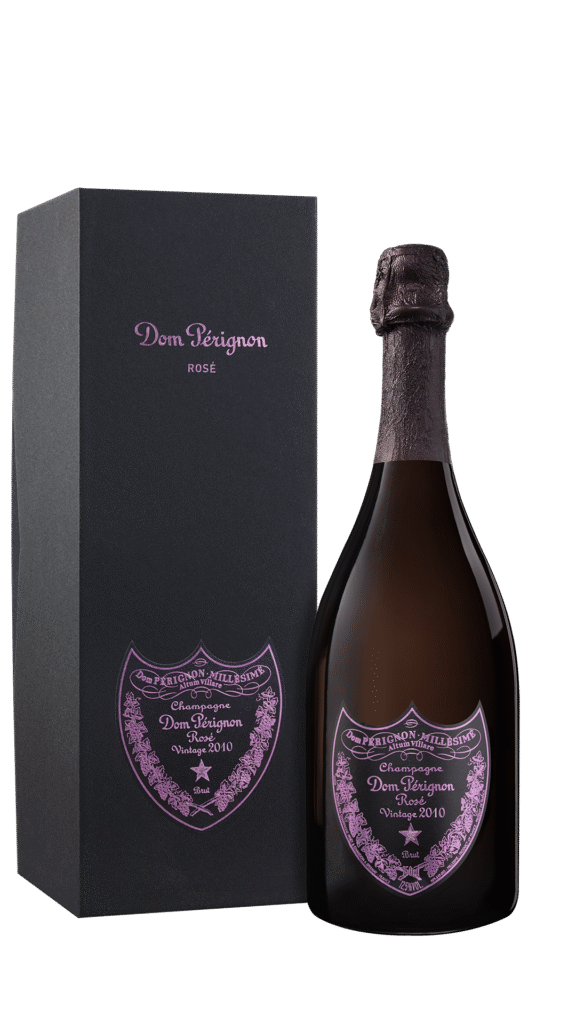
Also released is the 2010 Dom Pérignon Rosé, and we also got to retaste the 2008 Plénitude 2, which is evolving magnificently. Vincent describes making the Rosé as his “most challenging project,” and this cuvée, over the years, has been a little inconsistent, especially when one recalls the deeply colored offerings from 2004 and 2008, the latter with an unprecedented 28% of red wine added. By comparison, the 2010, with a mere 11%, captures gastronomic savory potential without entirely forsaking a red-fruit uplift. It is interesting to note, however, that Dom Pérignon is virtually the only prestige house to release its Rosé wine so late. Many, indeed, release their pink wine first. The wine is certainly à point… its red component sourced from Bouzy, Hautvillers, and, most significantly, Aÿ (the “lodestone”). Vincent does not make a “special” base blend for the Rosé from scratch; rather he adds certain wines that he feels will work best with the red component, thereby creating a homogenous entity, but one that is not entirely unrelated to the Brut cuvée. The resulting style of the 2010, however, differs radically and unsurprisingly from the statuesque 2017 white.
And what about the 2008 Plénitude 2, already reviewed, with no lack of flourish, last year (WFW 89, 2025, p.52)? Well, I am happy to report that an extra year of aging under its second cork has done little to assuage the critical flow of superlatives—quite the reverse. The 2008 growing season was cool first, then warm later, therefore the opposite of 2017 (without the rot of course), and its evolution has been marked by harmony and precision from the start. One year on, a little savory development, with umami, honey, and soft hazelnut to the fore, has only enhanced the ensemble. Vincent describes the wine as a “phare” (beacon or lighthouse), such is the redemptive power of its luminosity. One of the greats, for sure.
Tasting
London, March 2026
Content from our partners

2017 Dom Pérignon (61% C, 39% PN; disgorged March 2024; dosage 5g/l)
Attractive billowing silver, with a steady bead. The flinty reduction is initially austere, but soon cedes to yellow fruit and spring flowers, agrume, and a hint of iodine; upstanding but generous at the same time. Or, as Vincent would have it, “pulling in different directions,” the early-season warmth bestowing mid-palate ripeness and generosity, the more problematic late season chiseling an angular finish; a pleasing tension, in other words, a bittersweet symphony. Precision of textural definition, framed by assertive acidity and uplifted by a teasing twist on the finish. No sign whatsoever of botrytis or any other blight, such was the rigor of the selection undertaken. A highly successful effort, which capitalizes on the vicissitudes of a cruel vintage in a manner seldom attempted, let alone achieved, in the region. Early purchase is recommended, given the paucity of production, but thereafter it will continue to flourish for several years. | 94–95
2010 Dom Pérignon Rosé (61% PN, 39% C, 11% red wine added; disgorged March 2023; dosage 6g/l)
A gentler color than some of its forbears (2004 is particularly deep of hue); onion skin, with an amber gloss. The aromatic offers spice and red fruit, the primary character of the latter already deferring to more savory elements and drier fruit, its relatively somnolent acidity inclining toward a velvety texture and gastronomic potential, which translates to notes of field mushroom and umami, dried apricot and incense. Relatively evolved and with a somewhat foursquare finish, a rosé that offers pleasure today and should therefore be consumed now and over the medium term. | 93