As the United States marks its 250th anniversary, Stuart Walton looks back to the beginnings of the Republic, when noted enophile Benjamin Franklin was the country’s first ambassador to France.
“Le verre en main,” goes the refrain, “Chantons notre Benjamin!”—a rollicking drinking song sung to the tune of a Swiss melody, L’Air des Treize Cantons. It was roared out on nights of wild abandon in the years leading up to the French Revolution, a lilting catch that celebrated one of the Founding Fathers of the recently fledged American Republic, and an inspiration to patriotic elements in France itself.
The Benjamin apostrophized in the lyric was of course none other than Benjamin Franklin, the United States’ first ambassador to France. As his very name fancifully suggests, Franklin was an inveterate Francophile. During the years of his embassy, 1777 to 1785, he lived at the Hôtel de Valentinois overlooking the Seine in the well-heeled Paris suburb of Passy, where he established a legendary cellar stuffed with the finest productions of French viniculture.
There was a voluminous tide of Bordeaux, both red and white, wines of some of the tiniest and most recherché plots of Burgundy, an effervescence of Champagne in its various styles, with fortified wines of Spain and Portugal to fill the gastronomic gaps not traditionally covered by France. Much of the wine was of considerable age, as the cellar book proudly indicated. It is hardly an accident that the term “connoisseur” is from the French.
Related

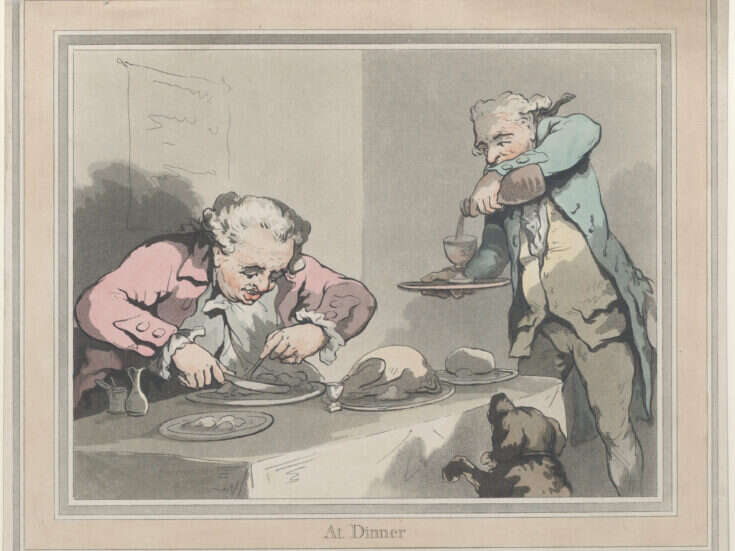

Let’s sing of our Benjamin
The chanson à boire came about when Franklin’s great friend, the economist and philosopher Abbé André Morellet, wrote a lyric on the occasion of the third anniversary of the US Declaration of Independence, celebrating both the political skills and reputation for bien vivre of the American diplomat. “Que l’histoire sur l’airain,” it begins, “Grave le nom de Franklin / Pour moi je veux à la gloire / Faire une chanson à boire [Let history engrave in brass the name of Franklin / As for me, I want to glorify him with a drinking song].” The refrain to each verse goes, “Glass in hand / Let’s sing of our Benjamin.”
That we are already on first-name terms with the Ambassador denotes the absence of formal pomposity that came with the new diplomatic mission of the United States. The second verse accords Franklin grand political stature, but immediately balances it by saying that, at table, he is merry and straightforward. He might have helped found a new nation, but he also knows how to drink and laugh. And don’t we too, we assure ourselves, as the raucous refrain returns.
The overtly political turn occurs halfway through. “On ne combattit jamais / Pour les plus grands interêts / Ils veulent l’indépendence / Pour boire des vins de France [We have never fought them for greater interests / They want their independence / So as to drink French wines].” They know a good thing when they see it, in other words. Further on, the lyric falls to more explicitly, if reluctantly, acknowledging the English by name. They may have many great intellects, as is evident from the best of their writings, but their cooking stinks. If the Americans had stuck with them, they would have been reduced to drinking tea. And so forth.
Content from our partners
The present day has rather soured the great revolutionary alliance that once saw the nation’s size doubled when 800,000 square miles of territory were sold off to it by France in the Louisiana Purchase. American resentment of French arrogance is a deathless cultural trope, while nobody in France would now dare to share a joke with an American colleague about atrocious food. But in the eruptive late 18th century, the shining city on a hill was founded on a dedication to French high culture, even while it preached a democratization of manners and plain-spoken Puritan religion.
The English are unhappy for want of wine, Morelles song concludes. After the French have beaten their northern neighbours at sea, they will sweeten the defeat by teaching them to drink. Properly drink, of course, not pickle themselves in gin or douse themselves in beer. Morellet must have known that it was only geopolitical hostility that had turned the English to favoring Port. When it was all over, they would return peaceably to the same enjoyment of French wines that they had long preferred, and which Franklin passed on to his ambassadorial successor, Thomas Jefferson.
On the other side of the Atlantic, wine underwent something of a decline in the century and a half that followed. Prohibition hardly helped. While connoiseurship awaited its renaissance, wine had other purposes. In 1969, when Apollo 11 was about to disgorge two of its occupants to the surface of the Moon, one of them, the fervent Presbyterian Buzz Aldrin, poured a cup of sacramental wine supplied by his pastor in Webster, Texas, and celebrated the Eucharist, the only time alcohol has ever been allowed on an American spacecraft. In the reduced gravity of the final frontier, it swirled up the side of the chalice.