

Last year, Domaine Faiveley marked its bicentenary with an auction and a memorable masterclass tasting. Raymond Blake tells the story of the estate, from its humble beginnings as a plasterer’s side project to a 21st-century reinvigoration that has seen the wines reach new peaks of elegance.
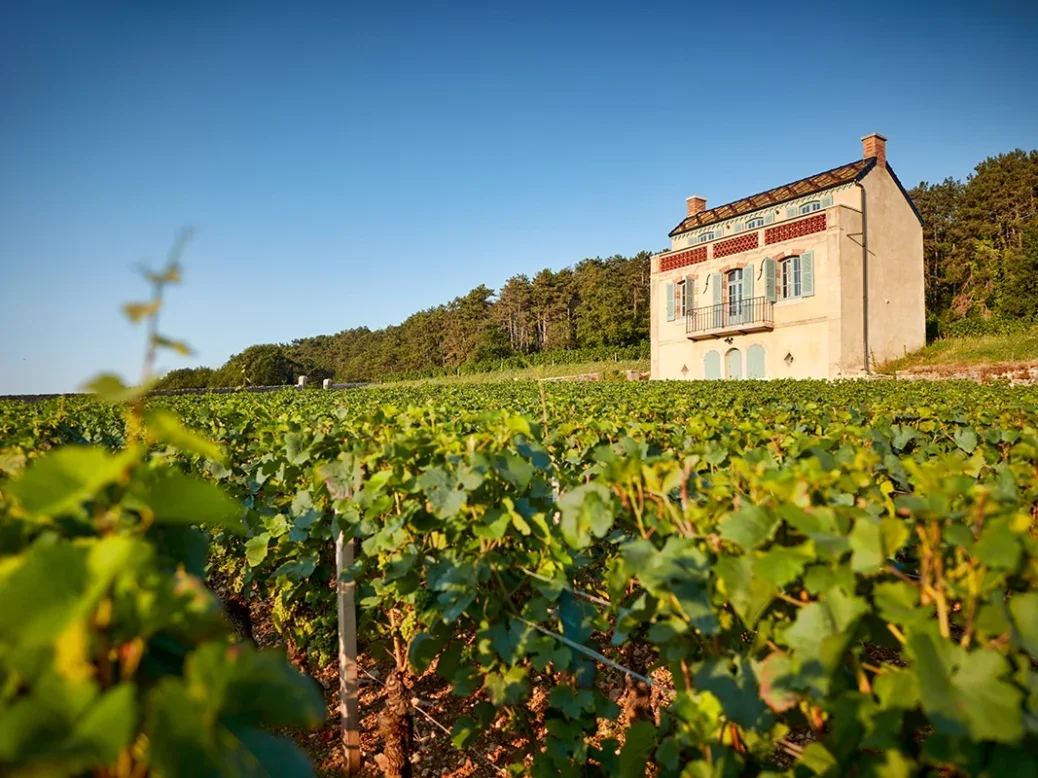
Clos des Issarts in Gevrey-Chambertin has the dual distinction of being both Burgundy’s smallest climat and smallest monopole. Owned by Domaine Faiveley since 2003, the premier cru is easily spotted from a distance thanks to the presence of the beautifully restored folie, described, in their own words as, “a charming villa that adds to the vineyard’s singular appeal.” It was not always thus.
Twenty years ago, as my wife and I explored the Côte d’Or in search of a house, we spotted the then-dilapidated structure standing (just about) at the upper end of the 0.61ha (1.5-acre) vineyard. It was a complete ruin, save for the polychrome roof that was remarkably intact when contrasted with the remainder of the property. Jokingly, we indulged in the fantasy of buying this ultimate doer-upper, but before dream turned to nightmare, sanity returned and we moved on.
A distinguished past reimagined for the 21st century
In a broad sense, the restoration of that folly is the contemporary story of Faiveley in précis and can be seen as a metaphor for the significant transformation effected over a score of years, leaving the domaine in fine fettle to celebrate its bicentenary in 2025. Not that the business was in poor shape—simply that it needed to be re-imagined for the 21st century. In short, the reputation has moved from solid, to special; the wines are now lighter-shod, relying more on grace than gravitas to impress.
Related


The first century of the Faiveley story is threadbare, the substance of it being lost, like so many other tales, in the clichéd mists of time. Pierre Faiveley, a plasterer by trade, started a parallel wine business following the birth of his son, Joseph, on New Year’s Day—Jour du l’An—1825, the year that France’s last king, Charles X, was crowned in Reims. Some 30 years later, fils joined père in the business and then the story skips a generation to Georges, who married in 1913 and whose son, Guy, was born on August 1, 1914: “That very afternoon, the tocsin tolled from every church across France. Not to herald the birth of a child, but to mark the somber hour of general mobilization” (Faiveley Bicentenary Brochure). Military service called and, unlike so many of his compatriots, Georges survived the war, despite serving at Verdun, one of the worst conflagrations of the conflict.
Perhaps more than any other member of the Faiveley dynasty, it was Georges who established the family name on the world stage—in oblique fashion—by the foundation of the Confrérie des Chevaliers du Tastevin in 1934. This was in response to the dismal market conditions of the time, when worldwide recession caused wine sales to collapse. He famously stated: “If no-one wants to buy our wines then let’s invite our friends to share them with us!”
From the prosperous vantage point of the 2020s, with bank-breaking prices being paid for the most sought-after Burgundies, it is impossible to grasp how difficult conditions were in the 1930s. Demand was almost non-existent, cellars brimmed with back vintages—something had to be done. Faiveley conferred with his friend Camille Rodier, an idea was born, and on November 16, 1934 the confrérie held its first chapitre. A painting of Le Grand Conseil shows a regal Georges front and center, robed in scarlet and ermine, looking unbothered by the world not wanting his wines. Bibulous good fellowship has sustained the confrérie ever since, and today it numbers some 12,000 members. Notwithstanding the success of the confrérie, it is unlikely that Georges Faiveley could ever have foreseen today’s frenzied pursuit of treasured bottles or the astronomical prices paid for slivers of the most prestigious Côte d’Or vineyards.
Content from our partners
Also in the 1930s, Georges began to expand outside the Côte d’Or, moving south to the Côte Chalonnaise, initially working the vineyards through rental agreements before his son Guy bought substantial holdings in the 1960s, principally centered on the village of Mercurey. Today, these vineyards amount to some 70ha (173 acres), including the 11ha (27-acre) monopole, La Framboisière, which produces a bountiful wine with oodles of raspberry and strawberry fruit, ripe and fresh and immediately likeable. I once wrote: “One sip suggests another. And then another…” It is an entry-level flagship, the opposite in almost every respect of the more patrician and extremely limited offerings such as the domaine’s Musigny or Bâtard-Montrachet.
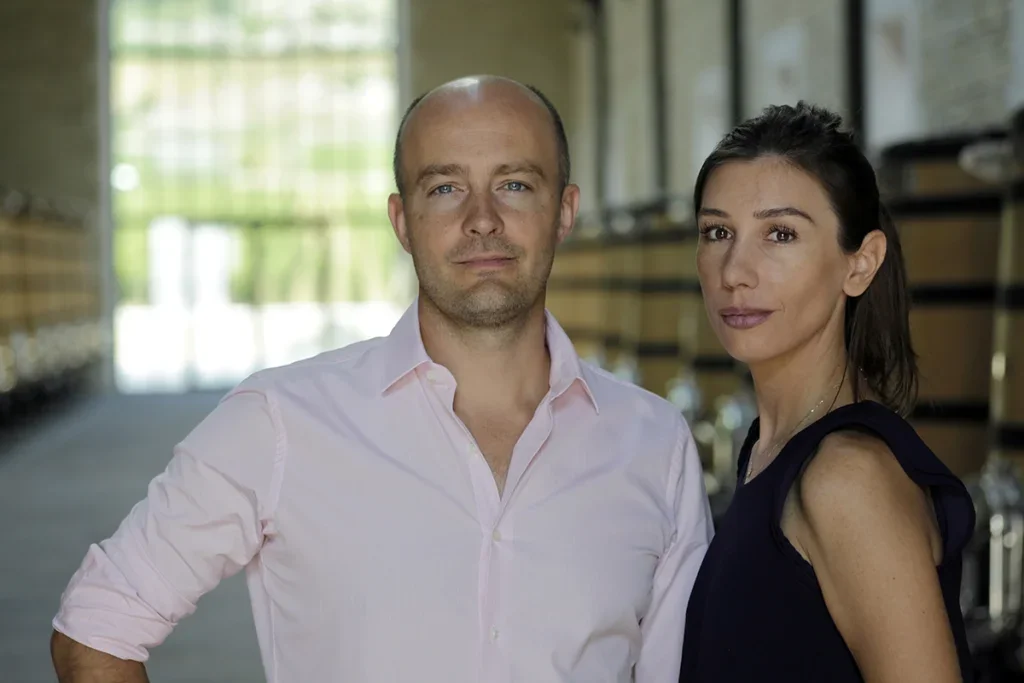
Guy was succeeded by his son, François, who retired relatively young 20 years ago, handing over to his son Erwan, reasoning: “I’ve seen too many examples of family-run estates where the patriarch clings on far too long, still signing off on every document each evening! How can you expect your children to succeed if that is how you treat them?” Erwan was joined by his younger sister Eve in 2014 and, together with Technical Director Jérôme Flous, they have shaped Domaine Faiveley for the challenges of the 21st century.
Celebrations across continents and generations
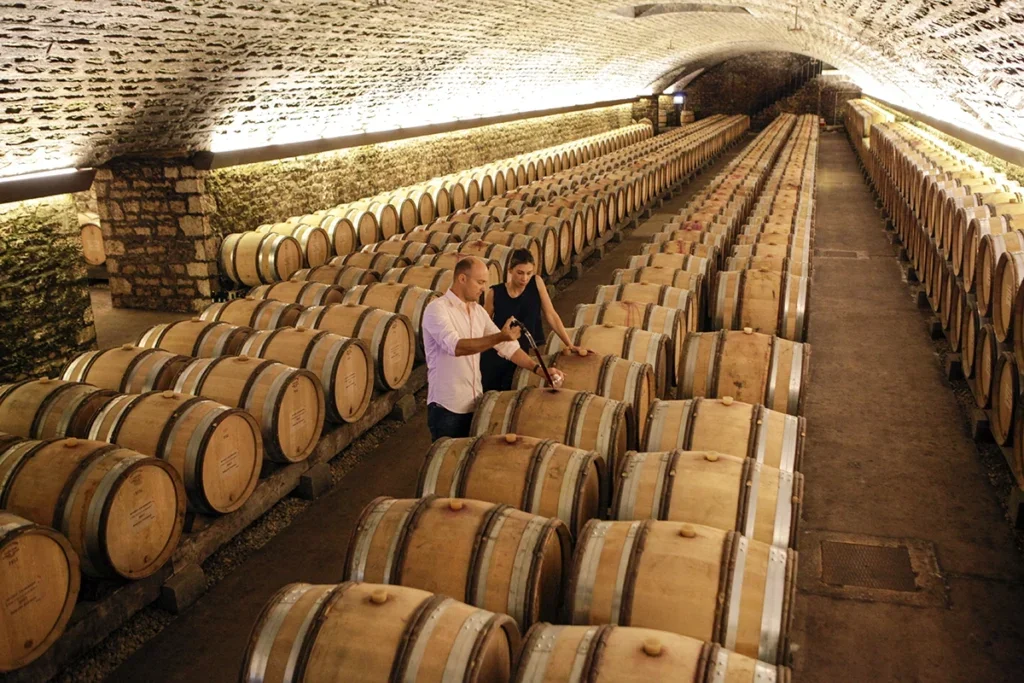
The changes and developments wrought under their aegis are myriad, seen most tellingly in the soaring new vat room in Nuits-St-Georges, a place of Cistercian calm when not in use. Expansion beyond the Côte d’Or also continued, first going north to Chablis with the purchase of the 17ha (42-acre) Domaine Billaud-Simon in 2014 and then, ten years later, across the Atlantic to purchase a majority stake in Sonoma-based Williams Selyem. Most recently, the bicentenary was marked in the vineyards with the addition to the portfolio of 1.5ha (3.7 acres) of Meursault Charmes, of which 2025 is the first vintage. Of greater significance was the donation of a plot of about four ouvrées of vines in Clos de Vougeot to the Hospices de Beaune. Named Cuvée François Faiveley in honor of the third and sixth generations of the family, it was first offered for sale at the 165th Hospices auction on November 17, 2025, the two barrels being sold for €165,000 and €170,000.The bicentenary celebrations were further marked with another auction, this time of a collection of bottles, old and new, from the Faiveley cellars, and conducted online over a fortnight in November 2025. Treasures such as Musigny 1908 and Corton Clos des Cortons 1928 found well-heeled homes—to be drunk, I hope, not re-traded. By coincidence, at about the same time, another venerable Burgundy name, Bouchard Père et Fils, held a similar auction of wines from their Beaune cellars, again attracting a legion of deep-pocketed bidders. Such events grab the headlines yet always leave me wondering why the vendors don’t drink the wines themselves. I would.
Tasting
On Friday, June 20, 2025 “Faiveley 200” was celebrated in memorable fashion, the highlight of which was a masterclass tasting hosted by siblings Erwan and Eve, along with their father François and Jérôme Flous. Ten wines, all from vintages ending in “5,” were presented to a cohort of French and international tasters invited for the occasion. Aside from excellent organization, the event was commendable for the fact that it was restricted to ten wines and not the scores of vintages too often assembled for a tasting such as this. That evening, a grand dinner was held at the Château du Clos de Vougeot, where all the wines were grands crus, served in pairs.
Chambertin-Clos de Bèze Les Ouvrées Rodin Grand Cru 2015
Not to be confused with Faiveley’s “regular” bottling of Clos de Bèze, this wine comes from a plot of old vines (planted 1966) that covers about one third of a hectare (0.75 acre). Though the vines are old, this is a young cuvée, first produced in 2010 to celebrate the memory of Maurice Fenaille, great-grand-uncle of current generation Erwan and Eve, and patron of Auguste Rodin. The latter’s famed marble sculpture, The Kiss, has been copied in bronze many times, though only the first dozen are regarded as originals—and one of these greets visitors to Faiveley’s home base in Nuits-St-Georges, sitting solitary in the middle of a grassed quadrangle.
The color was more evolved—brickish at the rim—than expected for a ten-year-old. A lightly scented nose segued into a penetrating and intense palate. Not heavy or concentrated. Lovely mature fruit and pronounced spicy tingle, crisp tannins, and a mild herbaceous edge. Hard to know how it will age, given its already well-developed palate.
Latricières-Chambertin Grand Cru 2005
Latricières lies almost on the southern boundary of Gevrey-Chambertin, its southwestern corner just touching Clos de la Roche, across the commune boundary in Morey-St-Denis. The name may derive from the Latin tricae, meaning difficult, suggesting that the land was challenging to work. Faiveley is the second-largest owner, with well over 1ha (2.5 acres) in the heart of this 7ha (17-acre) vineyard.
From birth, this was a celebrated vintage, as Jacky Rigaux noted in 2006: “All in all, it was a casebook season that could be used to define ideal conditions for an exceptional vintage.” Deep garnet color with reserved dark fruit aroma on the nose; repeated swirling revealed more perfumed fruit. Fresh acidity and firm tannin defined the palate, a trifle foursquare. Very much a child of the vintage.
Mazis-Chambertin Grand Cru 1995
Mazis’ 9ha (22 acres) are split, 50:50, into haut and bas by the winding road that drops down from Ruchottes-Chambertin to Clos de Bèze. Faiveley’s holding stretches across several plots in both upper and lower, giving a total of a little over 1.5ha (acres). The soil changes from thin and stony upslope, to heavier, deeper clay downslope, and Mazis is noted more for power than immediate charm.
At 30 years old, this wine’s power was tamed by time, and the closed nose gave way to a soft and gentle palate, with the smooth texture enlivened by whiffs of sweet leather and spice. Lingering length. A lovely wine, not in any way “shouty,” it could be easily dismissed, its charms discreet, not overt.
Latricières-Chambertin Grand Cru 1985
In many respects, 1985 can be seen as the beginning of a 40-year Golden Age for Burgundy, though it started with a bang in the form of a bitterly cold January that saw the temperature drop to -28°C in Clos de Vougeot, as noted by Erwan Faiveley. Across the Côte, many vines were killed—though the beauty of this wine banished that harsh memory by way of a light-textured palate shot through with delicious freshness. The acidity was crisp though not intrusive, and complexity came by way of sweet spice that ran like a will o’ the wisp through the wine, before it resolved into a delicate, lingering finish. For a wine of notable delicacy, the finish was remarkably persistent.
Corton Clos des Cortons Faiveley Grand Cru Monopole 1955
This is one of the most storied of all Côte d’Or vineyards, though Joseph Faiveley can hardly have foreseen the convoluted arguments the name would cause when he bought the 2.77ha (6.85-acre) clos in 1874. By the 1930s, however, Clos des Cortons was in the spotlight when, with appellation names and boundaries being codified, it was felt that the name “Clos des Cortons” suggested there was only one clos on the famed Hill of Corton. A compromise was reached and the name “Faiveley” was added to the vineyard name. The family could be forgiven for celebrating ever since.
The famed vineyard faces almost directly east and lies within the Ladoix-Serrigny commune, abutting Corton Les Renardes in Aloxe-Corton. At 70 years old, the wine displayed a bright, lucent ruby, with copper flashes at the rim. A gentle, delicate tingle. Frail but valid. A solo violin, more Mozart than Beethoven. Only fully reveals itself on the reverberating length.
Nuits-St-Georges Premier Cru Les Porêts Saint-Georges 1945
Context is everything, and never more so than when considering this wine, the grapes for which were harvested barely a few months after the end of World War II. It was impossible to separate it from the circumstances of its birth, yet no special pleading needed to be made for this vinous treasure.
The nose was glorious, fresh and inviting, with floral notes mingling among the lively fruit. Beautifully composed wine. Sweet fruit and incense married to tingling freshness. All the elements blended and burnished by the decades. Not a hair out of place. Fully mature, with the grace of age and none of the decline. Glided seamlessly into a clean finish. A beacon of beauty, born out of conflict and suffering. Not for spitting.
Gevrey-Chambertin Premier Cru La Combe aux Moines 1935
Every Côte d’Or vineyard rewards exploration on foot, but few do so as memorably as Combe aux Moines. Though separated from the patrician Chambertin grands crus by little more than 1km (0.6 mile), the topography is more rugged—as evidenced by the vertical back wall of rock that forms the western boundary of the vineyard. There is even a sculpture of a hooded monk surveying the vines from an elevated back-corner perch.
This was a true rarity, for it was the only appellation from this vintage remaining in the Faiveley cellars. The palate was defined by sweet juicy fruit, with some gentle tannins whispering in the background. Showing its age but still valid and vibrant, like bright eyes in a lined face. Glorious, lingering finish. Knowing I would not pass this way again I didn’t trouble the spittoon.
Corton-Charlemagne Grand Cru
The Faiveley holding of 0.86ha (2.1 acres) lies upslope of the Clos des Corton Faiveley, reaching to an elevation of 360m (1,180ft) and facing almost due east. A lively discussion among the tasters centered on Charlemagne’s vineyard ownership and the fact that he was German. Apparently, he inherited the vineyards when he was 16 but donated them to the church six months later. As more voices joined in, trying to trace the intricate history, complication and qualification drove enlightenment beyond reach, until Michel Bettane helpfully delivered a verbal full-stop: “The story of Corton-Charlemagne is impossible to understand.”
Corton-Charlemagne Grand Cru 2015
Bright lemon-yellow, almost luminous. Creamy rich nose, matched by a sumptuous, lavish texture on the palate. Opulence made wine. Creamy nuts. Viscous texture. A streak of acidity would have helped to hold the more lavish notes.
Corton-Charlemagne Grand Cru 2005 (Magnum)
Full yellow. Crisp nose. Lovely composure and clarity. Not lavish or opulent. Lovely dry bite, almost tannic in texture. Taut and precise. Lacks the opulence of the 2015—and all the better for that. Splendid wine.
Corton-Charlemagne Grand Cru 1995
Last three bottles. Honey-gold color. Aged nose, with a slight sweet-sour twist. Much better palate. Intense savor. Perky and pugnacious. The fruit is fading, replaced by more savory notes. More curiosity than charmer.
Dinner Wines
Latricières-Chambertin Grand Cru 2019
Sumptuous fruit. Quite full on the palate and a bit hearty. Warm finish. Carries the stamp of the vintage. Could use some redeeming acidity.
Echézeaux Grand Cru 2009
Lighter than the Latricières, notwithstanding the ripe and rich vintage. More elegant and precise. Gracious fruit comes on and on to deliver a pure and penetrating wine.
Corton-Charlemagne Grand Cru 2018
Bright, sparkling yellow. Creamy, sweet palate with some tropical-fruit notes. Suave texture. A trifle unctuous. Very much a child of 2018.
Bâtard-Montrachet Grand Cru 2008
Deep yellow. Precise and focused in character, with a citrus tingle counterpointing the richer fruit flavors. Showing impressive maturity yet still vital. Linear and long rather than broad. More engaging and ultimately more satisfying than the Corton-Charlemagne.
Clos de Vougeot Grand Cru 2015
Ample in every dimension, signaled by sumptuous fruit and supported by a whiff of sweet incense. Great balance between the abundant components keeps it light on its feet. A reminder that, when on song and despite its mixed reputation, the famed clos can deliver true, grand cru quality.
Mazis-Chambertin Grand Cru 2005
Maturity rather advanced for a 20-year-old grand cru from a top vintage. Fruit showing a slightly baked quality, but good length on the finish. Overshadowed by the Vougeot and not the finest standard bearer for this celebrated vintage.
Chambertin-Clos de Bèze Grand Cru 2010
Saving the best till last? Inviting perfume of fresh, dark fruit, comes on in glorious waves. The palate takes things a step further, courtesy of juicy acid and smooth tannins. Reverberating finish. Approaching perfection.
Corton Clos des Cortons Faiveley Grand Cru Monopole 1990
The name might be clumsy, the wine is anything but. Lively and vibrant, with memorable “perk” on the palate. Delicate though not frail. Satin texture bequeathed by long aging. Progressed smoothly across the palate before departing with a lingering farewell.


