Margaret Rand meets Nyetimber owner Eric Heerema, and winemakers Cherie Spriggs and Brad Greatrix, the team behind “the highly meticulous, detail-driven” English sparkling wine pioneer.
For a long time there has seemed to be a contradiction at the heart of Nyetimber—or at least, at the heart of its public persona. For nearly 20 years now the public face of Nyetimber has been Cherie and Brad—Cherie Spriggs and Brad Greatrix, head winemaker and winemaker respectively, married to each other, serene and unflappable at every tasting, a still point in the midst of what has appeared to be a rapid turnover of staff and sometimes unflattering stories about owner Eric Heerema.
That contradiction could distract from the fact that the wines have got better, and better, and better. Nyetimber is the English wine that people who’ve only just heard of English wine have heard of. It claims luxury-good status, backed up by its excellent 1086 cuvée. The official spiel, which I’m told that all staff members have to learn, includes a disclaimer to the effect that although Nyetimber gets a mention in the Domesday Book it wasn’t actually making wine then, as far as anyone knows. That visitors might need to be told that it’s a young company shows how far it has become synonymous with good English wine.
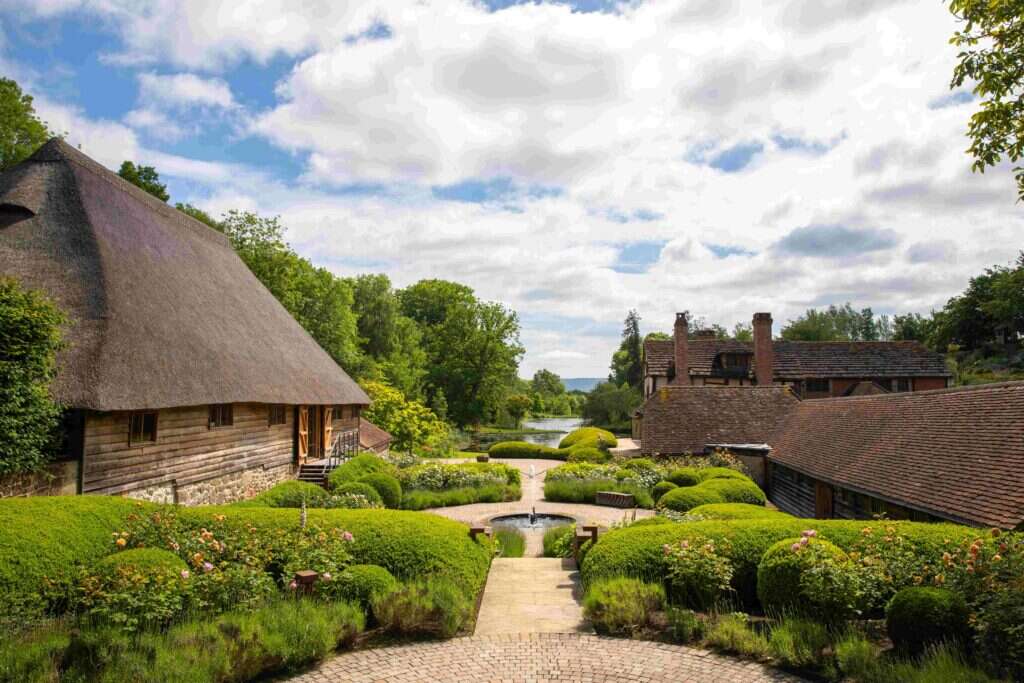
Some English producers are jolly, some are eccentric, some are ad hoc, some are meticulous and detail-driven. Nyetimber is firmly in the last category. Drive through the gates and everything is perfect. The big box hedges in the garden seem to have dodged the depredations of box moth, at least so far. There are horses in a paddock, Highland cattle elsewhere, and Romney Marsh sheep overwintering in the vines, keeping the grass down. The company electric Land Rover is painted Nyetimber aquamarine; the Coquard presses are a darker turquoise, but that’s a standard Coquard color apparently. They have enquired about having them painted Nyetimber aquamarine, but the price quoted was silly.
Related

This is, you infer, a company that hasplenty of money behind it. And thank God for that—because sparkling-wine companies require deep pockets. And Nyetimber is not profitable yet; profitability has been looming for a few years now, and is expected in 2027. “It has to be profitable,” says Heerema.
Elaborating on the original vision
But let’s go back to the beginning, though not, you’ll be relieved to hear, to the Domesday Book. The first vines went in in 1988, planted by Americans Stuart and Sandy Moss, who had the then-rather curious idea of making sparkling wine in England from Chardonnay, Pinot Noir, and Pinot Meunier. The first wine, a 1992 blanc de blancs made by Kit Lindlar, was released in 1996.
In 2001, the Mosses sold to Andy Hill, and he in turn sold to Heerema in 2006, for a reported £7.4m. Heerema had already bought a farmhouse south of nearby Petworth and had planted some vines, and he wanted to expand by buying an existing brand. Nyetimber had 16ha (40 acres) then; now it has 430ha (1,062 acres), in 11 sites: six in West Sussex, three in Kent and two in Hampshire; all are south-facing and all are sheltered from the sea. “Nyetimber is built on greensand,” they say. But the Kent and Hampshire sites have chalk, as does a vineyard at Amberley in Sussex.
Content from our partners
The winemaker then was Dermot Sugrue. Sugrue has always been tight-lipped about why he left shortly after Heerema took over, but honestly, one cannot imagine the two working together. Chalk and cheese isn’t in it.
Meanwhile, in another part of the forest…
Spriggs and Greatrix, who had met on their undergraduate course, had finished their academic studies and were ready to start practical work; they were looking at jobs in their native Canada. One day (they were on Vancouver Island at the time) Greatrix asked Spriggs what would be her dream job. She had tasted a bottle of Nyetimber that her father, English by birth, had happened to buy for her at Heathrow. “It wasn’t perfect, but it had so much potential that I hadn’t seen anywhere else.” So, they sent an email to Nyetimber saying they were two young winemakers, and asking if there was enough of an industry in England to make it worthwhile looking for work?
They had a reply from the office—from Belinda Kemp, they remember—who said that the owner was looking for two qualified people. Interviews on Skype followed, and two weeks later they arrived to start work. Spriggs was to be head winemaker and Greatrix assistant winemaker. “We didn’t even debate it, I think,” says Greatrix. “I became winemaker as my grey hairs arrived.”
What they found meant that there was plenty to do. “A rough-cut diamond,” Greatrix calls it. English wine in 2007 was still in its semi-amateur stage. What pushed it toward proper professionalism was an influx of winemaking knowledge, proprietors with plenty of money and a willingness to invest it cleverly, and warmer summers which, even if nature remains unpredictable, provided an encouraging background. All these things came together in West Sussex in these years.
What they found is enough, even now, to make the ultra-calm Greatrix raise his eyebrows. Inconsistency was a problem in England generally, he says: “A few good things were made, but lots were below par. A lot of wines were not well made. Wines would sit on ullage in tank; we stopped keeping them on ullage.” There was another technique, if that’s the word, which involved stringing old margarine tubs together, floating them on the surface of the wine and filling them with liquid sulfur dioxide. Presumably this was supposed to prevent oxidation, but if they tipped over you got rather a lot of sulfur dioxide in your wine.
“Another problem that took longer to resolve was that you must not do the malo,” says Greatrix. In fact, it probably requires caps: You Must Not Do The Malo. “It was a hard and fast rule. It was said that it was hard to do the malo well in England. But why? We had decent ripeness in 2007 so we didn’t do the malo, but all the time we were thinking, we could do the malo. There were strange things being said in the industry about some fatty acid that stopped the malo from working in England.”
“In 2008, the acids were higher than any we’d seen,” says Spriggs. “My philosophy is always that every wine region has its Achilles heel. In England, it’s too much acidity. It’s hard actually to block the malo if you don’t want it; it’s natural. We said to Eric, we’re going to do the malo. We haven’t really looked back.
‘The very early years of Nyetimber were made with the malo. From 1992 to 1996 they’d done full malo. The 1997, which they thought of as non-malo, was in fact partial malo, based on lab chemistry. In 1998, they did full malo. But from 1999 until the day we arrived, no malo was the rule.” Now they do full malo, and the malo is normalized throughout England—it’s been one of the major steps forward. And, says Spriggs, you have to know how to get the bacteria to grow gently, and then inoculate, and then take care of it. “The entire industry felt that doing the malo was a problem. The only problem I’ve observed was lack of knowledge.”
They switched to DM closures when they arrived, and to dark amber glass to protect the wine. Then it was lots of small details. Says Spriggs, “There was no in-house lab work when we started. It’s not essential, but a few things are really useful to have as guard-rails, a tape measure. Lab results are never a decision-maker. Eric agreed instantly, and we got in the lab materials.”
They also got their own bottling line. “We had a bottling line from France at first, and Eric understood very early on that we should be in control of our own destiny.” They needed to resolve bottle variation, and variable fill heights were clearly a factor.
Another factor in bottle variation was the crates used for storing bottles; they weren’t designed for that purpose, and some bottles were tilted, either with the neck down or with the neck up, but either way giving a different surface area. “That variation is locked in,” says Greatrix.
In the vineyard, it’s been a story of expansion. When Spriggs and Greatrix arrived (we could call the time before that the BBC years, perhaps?) there was known to be some Riesling in with the Chardonnay; all the advice was to leave it there. Heerema said no, take every Riesling vine out and replace it.
When they’ve bought land for planting (and they have never bought land that is already planted), they’ve dug soil pits and set up weather stations and all that stuff; and they only want greensand or chalk; no clay. “We don’t want that character,” says Spriggs. “A key consideration in England is rain, so you need good drainage. As winemakers, we admire the Côte des Blancs, and we thought that if we could find chalk it would be a wonderful extra layer. From 2009 to 2011, we planted on chalk.” They’re not half and half now, but not far off. The vineyards are divided into 152 parcels, kept separate for fermentation and aging, including the small piece of the Tillington vineyard that so struck Spriggs and Greatrix that it is kept for the savory, tense Tillington bottling.
There are no consultants now. “Eric is good at being clear he is not a winemaker,” says Spriggs. “He doesn’t have that knowledge; that is ours. A long noose we can tie ourselves in. But the business decisions, the brand decisions—all those are Eric’s. He’s interested in winemaking and tasting, and is one of the biggest wine lovers I know, but he recognizes his limitations.”
It is all, they say, part of Eric’s vision. Says Spriggs, “He was talking about a prestige cuvée in 2007–08, when he was still justifying the existence of £25 bottles to people.” His staff talk of his flow of ideas. Just ideas, I asked? Ten new ideas before breakfast? No, not like that. Every idea he produces is apparently thought through before he mentions it. And that high turnover of staff? It doesn’t include, apparently, the many people who have stayed for years and years.
“There was no precedent for what we were doing,” says Greatrix, “and it’s not finished yet. Some people thrive on that, and others are less comfortable. You need an entrepreneurial mindset to work here, even if you’re not an entrepreneur. You’re working in a category dominated by very, very good products and businesses, and to break through, you have to think outside the box.” And perhaps he doesn’t suffer fools gladly, I suggested. “He’s a leader, not a manager. If you need a manager, it’s not for you. The energy he puts in is second to none. He doesn’t have time to manage people.”
And sometimes, of course, people aren’t the right people at that moment. “I took on many people from the British Champagne business,” says Heerema. “They often had years of experience in brands. In the beginning I was naïve, and they were naïve, too, in thinking that they could bring something I shouldn’t have expected and they shouldn’t have expected from themselves. Successful Champagne brands have policy made in Paris and a team here, and there is already awareness in the trade, and distribution patterns. And there we came, and we had nothing, and no real brand, and the industry hardly existed. How to market? How to start? People thought they would make an immediate success, and I became dissatisfied and they became demoralized.”
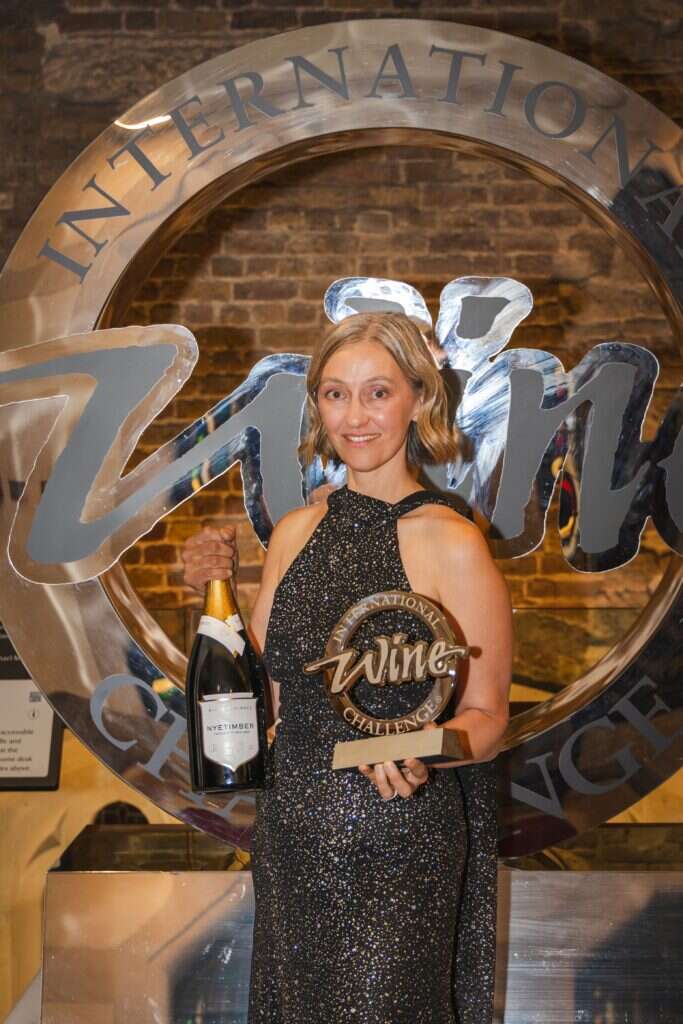
But here we are. In 2018 and again in 2025, the International Wine Challenge named Spriggs as Sparkling Winemaker of the Year; the wine wins accolades all over and, as I said above, it’s the one English wine that everybody has heard of. It’s a remarkable achievement.
Interestingly, Heerema says he makes almost all his decisions on intuition, “and so do Cherie and Brad.” This is slightly surprising for somebody who trained as a lawyer in the Netherlands, but then he didn’t stay a lawyer; it was more that a job in a major law firm was a good thing to do to begin with. He was a beneficiary of a trust and went into asset management—and that was a deliberate choice, whereas wine was different, and was an activity that evolved after he bought a farmhouse, planted vines, and decided to buy an existing producer. “I wouldn’t have stayed a lawyer,” he says. March 4, 2026 was the 20th anniversary of his buying Nyetimber.
“Building awareness here and abroad takes many years; it’s a very slow process and very expensive.” That massive expansion of vineyards cost a lot, and “yields are a problem; we’ve had to change our plans several times.” There was the 2012 vintage, for example, when they took the decision not to make any wine—and indeed not even to sell grapes or juice to other producers. They had enough stocks of wine to see them through. “Many other producers ran out of stock and had nothing to sell, and got into serious financial trouble.”
No compromises
A key element of what they’ve done, says Heerema, is the application of the highest standards to everything. “We buy the very best vineyard sites, and we’re meticulous and selective, and we’re ruthless in selling off vineyards. The first vineyard we sold was in 2010, and other in 2012, because they were just not as good as we expected. We’ve been extremely selective. We have a lot of knowledge now of planting, and we make even better decisions than 20 years ago. We have very intensive teams and we probably spend more money than others. We make enormous efforts in training, and decision-making as a team. We’re ruthless and we don’t compromise, and not all are like that. The year 2012 was when we became a luxury brand but made no wine that year. I could afford that without going broke, but it cost me a lot of money.”
That thing of being a luxury brand—how did it happen? “It was a novelty brand when I took over in 2006. It was a gradual thing. One big step was in 2012, the Jubilee year. Nyetimber was on the royal barge. It just happened; we had no say in it. We were informed some weeks before, via a merchant. It got a lot of publicity. We did a rebrand that year, and the original label was replaced by what you see now. After that there were smaller steps. Then when Cherie was named Sparkling Winemaker of the Year in 2018, that was a big step forward.”
Sponsorships help with visibility, too, although they are famously expensive. Nyetimber has been the official brand at Henley, Glyndebourne (though not now), with Team GB at the Paris Olympics, and lots of others. “It can work out very well,” Heerema says. They sold 60,000 of the official Team GB bottle. Glyndebourne, though, was an overlap with the same audience as Henley, “and we have to be selective.” So, they’re working with the RFU and British Cycling: “We want to reach additional groups of people.”
Nyetimber is there at blind tastings, too; so many that one begins to wonder if there is a point when blind tastings become too big a risk—not because the wine is unpredictable, but because blind tastings are unpredictable. A wine’s position in the line-up, the time of day, the quality of the tasters… “We’ve had gold and bronze medals for the same wine,” says Heerema. “It’s a necessary thing, and we appreciate and respect those involved, and Nyetimber tends to do well. We’ve only done a few over the past few years; we’ve become more selective than most of our peers have. At last year’s IWC we won and beat Champagne; we have beaten individual Champagnes many times. At the Battle of the Bubbles in 2025 [at the London Wine Trade Fair] 1086 beat all the others” (see WFW 89, 2025, pp.20–22).
Now of course Heerema has another project to add to Nyetimber: In 2024, Nyetimber bought The Lakes Distillery, producer of English whisky. The deal, according to The Spirits Business, valued the distillery at £71m.
Heerema had been looking since 2022, at “either creating a new spirit, or creating a spirit not new but complementary, with its own story.” Here is a man, you might infer, who having taken on the big drinks conglomerates once from scratch, wants to do it again. It’s the synergies that are appealing: “We can apply our knowledge and experience in creating a luxury drinks brand; there are parallels with Nyetimber… The quality of the single malt is very high, but they’re not there yet in brand-building. They have a different way of working, and we have a lot of work to do. We’re working on it, developing the brands Lakes comes with, and looking at other things in-house.”
These days, Heerema says, he’s more commercially business-driven and really wants to become profitable. “It’s coming closer. It’s easy to lose yourself in spending, which I did all those years.” The distillery is also loss-making at the moment, and Heerema has been quoted as saying it won’t take as long as Nyetimber has to become profitable. And it’s another blank page in a new industry. Pity the Domesday Book didn’t cover anything that far north.