If ever there were a wine estate with a long and layered history worthy of celebration, it is South Africa’s Klein Constantia, producer of the legendary—in this case, the word is appropriate—sweet Vin de Constance. So it was that Matt Day, only the third winemaker since the estate’s revival in 1980, was in London in May hosting a small lunch to celebrate the estate’s 340th anniversary and to mark it with the unveiling of an exceptional limited edition, the previously unreleased 2010 Vin de Constance. But if anyone was expecting this to be an occasion for looking back at the many achievements, accolades and, yes, vicissitudes of the estate and its wine through the centuries, they soon learned that it was far from being that.
Almost the first thing Matt Day said was, “We talk a lot about history, the past, the story, but for us today the future is more important. We have reached a pinnacle where we can see the future.” The sentiment was echoed later by one of the estate’s two co-owners, Charles Harman, when he went on to say, “We risk getting submerged by our rich history.” So, we skipped over (more or less) the many luminaries who have been fans of Vin de Constance—from Frederick the Great, Louis XVI, Marie Antoinette, and Napoleon, through George Washington, John Adams, and Thomas Jefferson, to Jane Austen, Alexandre Dumas, Baudelaire, and Dickens.
But one can hardly talk about the estate or the wine without bringing in some of its history—the importance of Lambertus Johannes Colyn (or Colijn), for example, whose detailed descriptions at the end of the 18th century of vineyard and cellar practices were invaluable in the recreation of Vin de Constance by Duggie Jooste in the 1980s, but who was written out of history until relatively recently because he was the son of a wealthy freed slave of West African descent (see WFW 69, pp.88–91). And one can’t talk about the newly released 2010 without talking about its history—its singular journey from vineyard to bottle.
At the time of writing, the Vin de Constance website says of the 2010 vintage, “Vin de Constance is an international icon, deserving of its reputation as one of the best dessert wines in the world. We have a responsibility to ensure that each vintage lives up to this reputation, and if we decide that the wine is even slightly less than exceptional, we will not release it. Unfortunately, this was the case in 2010.” Thus 2009 was succeeded by the release of 2011, and no more was said about the missing vintage.
Related
Missing but not lost. The 2010 had never left the cellars; had never even been bottled. Not that there was much to bottle. A total of just seven barrels lay unloved and untouched—except, crucially, for regular topping-up—for almost 15 years. Enter Hubert de Boüard, a shareholder since he and Bruno Prats merged Anwilka with Klein Constantia in 2012. Hubert was visiting the estate and tasting in the cellars with Matt. They tasted the 2010 from barrel, and as Matt puts it, Bruno said, “This is pretty good; we should do something with it.”
In fact, they had to do a lot to it “to make it as vibrant as it is,” says Matt. To clean it up, they had to resort to casein. Up to that point, no animal products had been used—only pea proteins—but casein was the only product that made it bright. It was bottled at the end of last year.
What happened in 2010? The official story (which has failed to reach the website) is that 2010 was “crafted from a limited crop shaped by rigorous, unconventional farming techniques [and] followed a winemaking process previously untested at the estate. Harvested in three carefully timed batches, the first selection provided acidity, the second added midseason ripeness, and the final batch, comprising individually picked raisins, contributed deep concentration and natural sweetness. The three-week harvest was followed by a groundbreaking step [… The] Muscat de Frontignan grapes were destemmed and fermented on the skins in open-top wooden fermenters for two weeks. This method gave the wine remarkable concentration, texture, and phenolic depth. After pressing, the wine completed fermentation in 50% new 500-liter oak barrels, then was left to age on the fine lees for 15 years.”
Content from our partners
All of which is true, but there is more to the story, as Matt, who was assistant to winemaker Adam Mason at the time, explains. During the growing season (2009–10), they switched wholesale to organic and biodynamic cultivation, going as far as they could. “We went a bit too far. The vines went into chaos mode and produced a tiny amount—about 10% of normal production. There was so little fruit, we had to put it in open-top fermenters, on the skins. It was a two-week fermentation with a lot of punch-downs, a lot of extraction.”
The next year, Lowell Jooste sold the estate and Adam Mason exited, leaving no winemaker. Matt was given one chance to prove himself, the 2012 vintage. If he did well, he stayed; if not, he was out of the door. He has been the winemaker of Vin de Constance ever since, along the way making Klein Constantia a benchmark for Sauvignon Blanc and taking over the winemaking of Anwilka.
Over that time, Matt has improved the quality and consistency and has deliberately freshened the style of Vin de Constance, reducing aging to three years, in new French oak, Hungarian oak, and French acacia, and switching to larger barrels (500-liter and foudres).
He has also taken a more methodical, exacting approach in the vineyards and the vinification cellar. Every lug box can be traced back to the individual picker; each bunch is sorted by hand on a conveyor belt as it arrives at the cellar; and there are around 25 different pickings, ranging from ripe berries with high acidity, to intensely sugar-concentrated raisins (but never in botrytis). Cold maceration on the skins, taking up to two weeks, is followed by a light pressing into barrels, each batch kept separate throughout. The result is a fermentation, including the addition of a non-Saccharomyces yeast that stimulates a non-alcoholic microbial fermentation, which stops naturally after six to 12 months at around 14% ABV, 165g of sugar per liter, and a pH of 3.65–3.7.
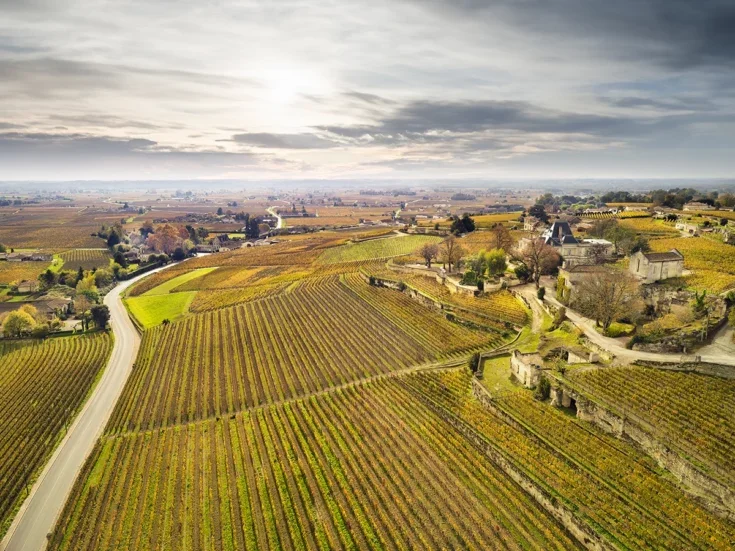
Investment by the new owners has made all this possible—and more. The farming has been made more sustainable, and there has been a significant replanting program, including experimental plantings of Petit Manseng (successful), Hárslevelű (unsuccessful, but much appreciated by the baboons), and Furmint. The cellar has been rebuilt, and a restaurant and tasting room have recently been opened.
The restaurant and tasting room will undoubtedly be promoting the idea that, although Vin de Constance is one of the world’s great sweet wines, it is not only a dessert wine and not only a special occasion wine. “We’re trying to get people to go out and drink it, not hoard it. Drink it often. And at any time during the meal,” says Matt. While he concedes that the old-style Vin de Constance went well with desserts, he believes the fresher, lighter, contemporary style is more versatile; he suggests foie gras or scallops with younger vintages and gooey, creamy goat cheese and blue cheeses with older modern-style vintages. His own preferred accompaniment is “a cheese platter.” At the celebration lunch at Saison by Mauro Colagreco at Raffles, London, we had two old-style vintages, 2009 and 2011, served either side of the one-of-a-kind 2010, and they came with a lemon and shortbread dessert that involved lemon curd, lemon-leaf ice cream, and fresh citrus segments.
I say “one of a kind,” but Matt left us with a passing thought. There is another vintage that has never been released: 2003. Winemaker Ross Gower left mid-harvest, and as I write, the Vin de Constance website says exactly the same as for 2010, which I can paraphrase as “not good enough to release.” There are 20 barrels sitting in the cellar. “We either bottle one barrel every year for the next 20 years, or we bottle it all in 2035 for our 350th anniversary. What do you think?” asked Matt. I would have to taste it to venture an opinion…
Tasting
London, May 13, 2025
2010 Klein Constantia Vin de Constance Limited Edition
Aged on fine lees in seven 500-liter oak barrels, regularly topped up, for more than 14 years, after the quality was deemed below par. Bottled at the end of 2024. Winemaker: Adam Mason. 14% ABV, RS 172g/l, pH 3.92, TA 6.3g/l; 4,500 bottles.
Bright amber orange—brighter than 2009 and 2011 and the headiest of the three, with orange-blossom floral notes, fresh apricot, cumin, coriander, and sandalwood spice, and a richer, but not heavy, coffee and cream layer below—coffee and walnut cake, perhaps. The palate is intense and opulent, so opulent it’s almost viscous, but the viscosity is balanced by the driving purity of the acidity and by uplifting orange-zest freshness and a mesmerizing suggestion of dill. The acidity is balanced, in turn, by the sweetness. Although it’s ready now, I see no reason why, with its brightness and balance, it should not be cellared until the estate’s 350th anniversary and beyond. | 95
2009 Klein Constantia
Vin de Constance
Harvest began in late January and did not finish until late April. Two weeks’ skin-contact in big rotation tanks produced a lot of extract. The wine was aged in new French oak (60%), Hungarian oak, and French acacia for four to 4.5 years on gross lees, without racking or movement until the final blending. Winemaker: Adam Mason. 14% ABV, RS 160g/l, pH 3.6, TA 7.8g/l.
A fairly deep amber color. Fragrant, dried-apricot and floral notes. Intense and very spicy on the palate; powerful but lifted with zingy, Seville orange marmalade and vibrant acidity. Elegantly tapered, well balanced and sustained. | 93
2011 Klein Constantia
Vin de Constance
The end of an era and the start of a new one with new owners, a departing winemaker, and increased input from assistant winemaker Matt Day. The wine was aged in new French oak (60%), Hungarian oak, and French acacia for three years on gross lees before racking and blending, followed by six months in tank before bottling. 13.27% ABV, RS 152g/l, pH3.6, TA 7.2g/l.
The vision for the 2011 was said to be to balance the unique style of Vin de Constance with a rejuvenating freshness, but it was not reflected in the bottle at lunch, which was amber brown in color and looked and tasted older, and more old-style, than both the 2009 and the newly released 2010. It was marked by a slightly syrupy, molasses character on the nose and palate and by a candy-apple note, despite having less residual sugar. The acidity, though higher than in the 2010, was less vivid and refreshing. In its favor were dried peach and spice, but I suspect there are better bottles. | 90?