SANTENAY
DOMAINE JESSIAUME
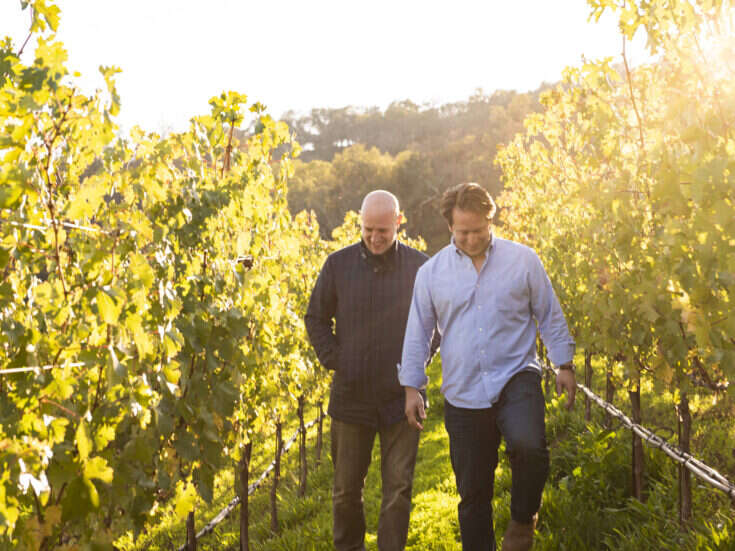
William Waterkeyn has been winemaker here for 11 years now. The estate has 15ha (37 acres) of vines, reclaiming 6ha (15 acres) from fermage arrangements in 2021. Doctor Jean-Francois Le Bigot sold his pharmaceutical company in 2019 when he bought Jessiaume and established a new bio-tech company developing vaccines for cancer. William has autonomy, but Le Bigot comes every month. “He is very interested and involved,” remarks William.
The domaine began farming organically in 2016 and will be certified biodynamic in 2026. William comments on the effect. “In a hot vintage, we don’t have very high sugar levels. Maybe deep-rooted weeds offer competition. My 2020s were not high in alcohol but had concentration and were better balanced.”
Related
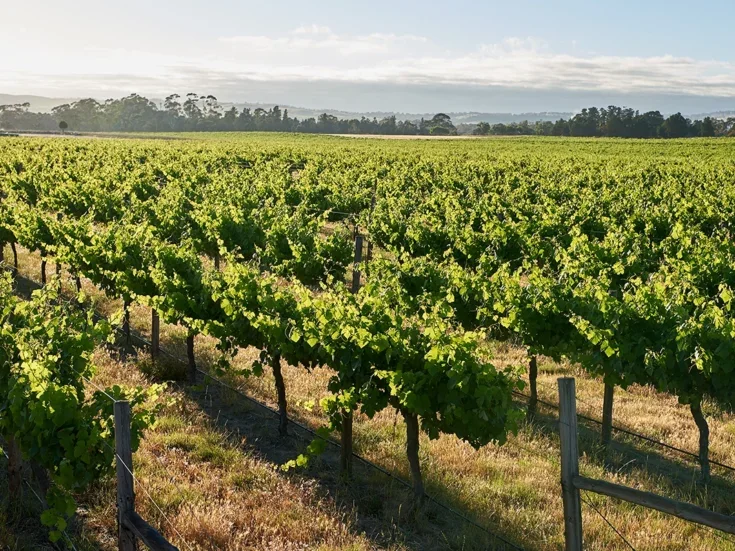

William feels that in Santenay, “We may have had a little less rain and less humidity, so the mildew pressure was lower, but the pressure on Pinot Noir was still high. Flowering was not good. We had 15–20hl/ha for reds. The older vines—more than 60 years old—had lower production, while 30-year-old vines had higher yields in Pinot Noir.” He sprayed ten times, using 4kg (9lb) of copper.
William harvested at pH levels of 3.15–3.25 for the reds, and they remained lowish for the vintage after MLF at 3.4–3.5. Yet the whites ended with pH 3.5–3.6, which is rather high, “maybe because the white vines are younger.”
The reds were 100% destemmed—the approach ever since 2018. Sulfur was added only after MLF. Natural yeast. All fermented in stainless-steel vats, which are temperature-controlled. A cold-soak to start, then the temperature was increased slowly to 86–90ºF (30–32ºC), where it was kept for a couple of days—three weeks in total. “I want to keep the grapes macerating for at least 20 days… in 2024 as well.” Mainly remontage, and a little rack and return, for extraction. “I like rack and return, because it builds up the wine and makes it fuller, but in a gentle way, not like punch-down, which can extract harder tannins. If I use only pump-overs, the wine finds the same path through the cap, but rack and return brings another cap of skins. I like to use it at the end, when there is alcohol, so it is more extractive, but punch-down is too efficient. I would use it before the fermentation to clean the juice. But the main thing for me in 2024 was to sort the fruit. I always chaptalize at the end of the fermentation, so I can push the length of the fermentation. I will let the reds settle for three weeks off the lees after pressing. We only use the fine lees for barreling down.”
Content from our partners
For the whites, the bunches are sorted then whole-bunch-pressed, before 24 hours of settling at the ambient temperature, before going to barrel for fermentation. Twelve months in oak—a mix of 228-, 350-, and 500-liter barrels. Racked at harvest before going into tank for six months with the lees.
The domaine also has vines in Auxey-Duresses and Beaune. Auxey-Duresses Premier Cru Les Ecussaux was partly planted to Pinot Noir, but it was ripped it out and replanted with Chardonnay in 2023. “When I started at Jessiaume, I thought, Why is there Chardonnay here? The soil is heavy clay and deep, so you would think it is a Pinot Noir area, but for many years I have seen the two colors, and I know Chardonnay does really well here, while reds were irregular. It is always very cold here, and somehow, because of the temperature, it works well. Actually, the limestone content is quite high, as we discovered when we sampled the soils. We used 5C and some SO4. Yes, it’s a powerful rootstock, but in this area it can work well. There is never any problem with drought here, while in Santenay, on the slope, the soil is very thin and dry, and Richter 110 works well.”
The tasting started with a couple of cracking Bourgognes from a parcel, Les Perrières, visible from the house, close to the Santenay station, situated on a slope across the valley. It’s actually in the Chalonnais, in the village of Chassey-Le-Camp, and faces northeast. One third of the 1ha (2.5-acre) parcel is planted to Chardonnay.
White
Bourgogne Les Perrières
Delicate, mineral, and light-bodied, with a light puff of a chalky finish. Top-notch Bourgogne. Lovely. 2026–28. 85
*Auxey-Duresses Premier Cru Les Ecussaux
A flat area with heavy clay, which has proved successful with Chardonnay. Fermented and aged in pièces from Chassin and Damy. Intense aroma. Punchy, rich, and full. A touch phenolic; a tannic edge that adds an attractive bitterness to the finish. It’s robust and should age well. 2027–33. 87–88
*Santenay Premier Cru Les Gravières
From a parcel at the top of the climat. Firm, straight, tight, and savory, with a quartz-mineral note. There is sweetness juxtaposed with salinity. The finish is properly persistent. Much better than the Beauregard. The gradient here is up to 35%, so this is a warm terroir, hence the sweetness. Good terroir expression. 2027–33. 90–91
Red
Bourgogne Les Perrières
Attractive, strawberry aroma. Juicy, light, and bright, with a whip of crisp tannins and a slight garrigue note to the finish. Very nice indeed. 2026–28. 85
Beaune Premier Cru Les Cents Vignes
From a parcel of 1.16ha (2.86 acres). “It’s a sandy soil and the vines can ripen very quickly, being very sensitive to the season. When it’s very dry, the wine is very concentrated, but when it’s wet, as in 2024, we get a more elegant style. The 2020 was very concentrated in color, acidity, and tannins. The 2021 was very light, while the 2024 has more intensity again. Some of the vines are more than 60 years old, but they are still very heathy.” Soft summer fruits, spicy and on the sweeter side, but light, smooth, airy, and rounded. A touch of new oak on the finish works well to give some tannic freshness. Some 30% new oak, with a blend of barrels from François Fréres, Taransaud, and Hermitage. 2027–34. 91–92
Santenay La Cassière
From a lieu-dit under La Maladière, with 50-year-old vines. Quite a sandy soil, which drains quickly. Red-currant and cherry fruit; light, quite fine-textured tannins. Soft and easy. 2026–28. 85–86
*Santenay Clos du Clos Genet
This is from a clos within the Clos, a tiny monopole of 0.5ha (1.2 acres), very close to the village. It is different from the rest of the Clos in that it is protected by the village from the prevalent northeast wind. The warmth of the place is immediately apparent in the ripe, strawberry-field aroma. Soft and generous, richer textured than the other village cuvée, but also slightly firm in its tannins, which give some freshness. Good substance and finish for a village Santenay. 2026–30. 87
Santenay Premier Cru Les Gravières
Jessiaume has 5.5ha (13.5 acres) of the total 23.77ha (58.7 acres) of the climat (excluding Tavannes and the bit of La Comme, which can be labeled as Gravières), 1.7ha (4.2 acres) of Chardonnay and 3.8ha (9.4 acres) of Pinot Noir. A straight palate, neat and well-edged, with light, mineral grip. Some tension and vibrancy. Lightly firm, but fine-textured tannins, and it pushes through nicely. Jolly good. 2027–32. 90–91
*Santenay Premier Cru Les Gravières Numerus Clausus
From the domaine’s oldest Gravières vines, planted in the 1930s, and a further barrel selection—three when I visited, but a final decision had not been taken then. The first vintage was 2020, and the name is a reference to a maximum number of students who may be admitted, indicating the best of the best. Rich, red-fruit aroma. Juicy splash on the attack. A generous, concentrated mid-palate for 2024, with deeper, satin-smooth tannins, which become a little firmer on the finish, giving freshness and extending the length. 2028–34. 92
MAISON JESSIAUME
There are eight négociant wines. The delightful young Willian Waterkeyn has no influence in the vineyard, but in some cases his team does harvest the grapes. “We are working with growers close to our philosophy—organic farming—even if they are not certified.” It’s not always possible to work with the same growers, hence the parcel is not declared on the label. I found the 2024 whites better than the reds. The stand-out wine comes from Rully.
White
Rully
This is from the lieu-dit Rosey, in the high part of the village, at 350m (1,150ft), southeast-facing, on the route to Bouzeron. Not organic, but sustainable. The first wine made with fruit from this grower. Juicy, ripe citrus, with a clean cut of acidity under the fruit and a vibrant, smooth-salt finish. Lovely energy. What a good Rully. 2026–30. 86
DOMAINE PHILIPPE DI HARDI
The domaine embraces 25 appellations, across 98ha (242 acres), 72ha (178 acres) of which are in Mercurey. It is managed by Jean-Philippe Archambaud, who acquired for it in 2019 a small estate in Gevrey, from which the rather good Petite Chapelle comes.
White
*Bourgogne Côte d’Or Clos de La Chaise Dieu Monopole
An attractive Bourgogne, with a savory, non-fruity, mineral feel. Nicely terse. There is a hint of cumin bitterness and its fresh and pithy to finish. Good job. I’d happily drink this. 2026–29. 83–84
St-Aubin En Vesveau
From the Gamay area, the lowest part with more clay, below the Bourgogne Cote d’Or section, south-facing. It is full, rich, and chunky, with greengage fruits. Almost a light caramel toffee-ness. A bit soft but inviting. 2026–32. 85–86
*Santenay Premier Cru Le Comme
Quite an oaky Santenay, but not as overtly vanilla and spice as the Beaurepaire. Succulent and juicy. Soft, with ripe, slightly spicy, greengage fruit. On the finish, it becomes more sappy, mineral, and interesting. 2026–29. 87
*Chassagne-Montrachet Premier Cru Embrazée
Rather oaky, but the climat does still show through. The palate is direct; the core is firm; there is some tension and freshness, with a touch of minerality to finish. Good typicité, but the finish is a little modest. 2027–32. 89
Red
*Santenay Premier Cru La Comme
Very pleasant. Plenty of bramble fruit. It’s quite sweet, but also a little sauvage. The tannins have a touch of rustic grip, but there’s an appealing freshness and energy to this wine. Juicy joyousness. Very drinkable indeed. 2026–29. 87–88
Gevrey-Chambertin Premier Cru Petite Chapelle
From two parcels. Rather a swanky Petite Chapelle. Light grip of tannin; quite finely textured and slightly powdery. It weaves forest fruit with herbal fragrance. Delicate and pure to finish, not particularly persistent, though there is an aromatic echo. A charming and light interpretation of this terroir. 2028–32. 91–92
CHEILLY-LÈS–MARANGES
DOMAINE CHEVROT
The domaine, which is certified organic, is run by brothers Pablo and Vincent Chevrot. “We manage the grasses in relation to soil fertility and depth,” explains Pablo. “This improved resilience to the high levels of water in 2024, so we didn’t have so much botrytis. It is much better for erosion as well. But it could be very negative if you used highly competitive plants in thin soils. After many years of doing this, the state of the soil is better, so now we are moving to seed every other year, but it is a lot of work, and the natural herbs are good.” An old-vine Tilleul Aligoté parcel is plowed by horse and has a higher canopy. “We are very happy with the higher canopy and are introducing it in other parcels.”
“We rely more now on the colder places, such as the Hautes-Côtes. Statistically, in 2021, 2024, and again in 2025, we have much lower yields in the premiers crus, where the vines are more sensitive to frost, disease, and high temperatures. So, we are moving to higher canopies, to have both cooler conditions and less frost, the fruit being farther from the soils. Frost affected the flowering in 2024, but we had fewer losses to mildew. In the flat areas next to the river, we no longer have insurance for mildew—but we lost just 5%. We sprayed 18 times.
“For the whites, we pay attention to the pressing in relation to pH—we press with a pH meter. The longer and harder the press, the more the acidity will drop—so, in 2024 we pressed longer and extracted more juice for whites.” The pH levels for the whites still stayed low, at 3.0–3.15.
“We did a light crush for the whites, just lightly breaking the berries, then put them directly into the press. The turbidity depends on the alcohol and terroir—for low-alcohol Aligoté, we have around 300 NTU, and for the riper premiers crus, around 400 NTU. This gives a good balance. We separate the press and the taille, taking only the sediment from the cuvée. With really high ripeness, as in 2023, I can go to 500 NTU.”
“We started with very high acidity in the must of the reds, but it dropped a lot. For reds, we did a longer extraction to lower the acidity, which worked. If you don’t crush the grapes, you lower the malic acidity level during the fermentation, because the intracellular fermentation in the berries degrades the malic. Having some whole bunches and delaying the start of pigeage also helps to lower the malic acidity. The reds started with pH levels of 3.0–3.15, but we ended up with 3.5–3.7. It was one of the biggest changes we have seen.” Pablo chaptalized by about 1% ABV for the reds, 0.5–0.7% for the whites. “I am not a fan, so we do the minimum.”
The domaine no longer produces a Crémant, the fruit previously used for the sparkling wine now going into the Bourgogne. “With global warming, even in a cooler vintage, this place (northwest-facing) is good for red wine, so we are making Bourgogne Pinot Noir [pretty and crisp in 2024] with these grapes and withdrawing from the sparkling-wine market.”
Pablo considered blending the red premiers crus in 2024, because of the low volumes, but he is glad now that he didn’t, as the terroir characters are starting to come through. “The reds are improving. I will not bottle early just because it is a lighter vintage.”
Pablo is using 600-liter barrels for reds as well as for whites, and experimenting with thicker, 50cm (20-inch) staves. He also uses oval foudres for whites, which keep the less in suspension. He works with Foudrerie Marc Grenier, part of La Tonnellerie Meyrieux, basd near Nuits-St-Georges. “We have little Stockinger and Rousseau, but Grenier is my favorite.” The whites spend a second winter in stainless steel, are not racked clean: “We keep all the fine lees.”
Pablo concludes, “The 2024 reds might be like the 2021s, where we also dropped the acidity, but there is more red fruit in 2024, and it’s riper than ’21. We made better premier cru reds in 2021, but better village reds in 2024. And all the whites are better in 2024. There is good aging potential for the whites, but I don’t know about the reds.”
White
Bourgogne Aligoté Cuvée des Quatre Terroirs
All made in foudres. Creamy citrus, with a lively cut of acidity and bitter pithiness on the finish. Appetizing. 2026–28. 82
Bourgogne Aligoté Cuvee Spéciale Tilleul
All made in foudres. More acidity and minerality than the other Aligoté cuvée; a richer texture, with greater depth and intensity. 2027–30. 85
*Bourgogne Hautes-Côtes de Beaune
The hard frost here meant that there was only 25% of a normal crop. But “even in a cold year, it is well balanced.” Chevrot’s Hautes-Côtes vines are actually at the same altitude and exposure as the domaine’s village parcels, but conditions are still cooler because of the soil. Foudres, 600-liter barrels, and a few smaller barrels. Exotic aroma, a touch tropical. Nicely rounded and even lightly sumptuous, with a keen line of citrus acidity, which becomes quite piquant to finish. 2027–30. 85
*Maranges Blanc
A yield of 35hl/ha in 2024. Foudres and 600-liter barrels. Slicing citrus fruit on the attack. This really has improved since the introduction of the foudres. Sparkling energy, with some delicacy and purity. 2027–30. 87
*Maranges Blanc Premier Cru Fuissière
From a parcel at an altitude of 380m (1,250ft). Hard frost resulted in one barrel, rather than the usual seven. Very reductive at the time of tasting, but it pushes energetically into the finish. Impressive concentration, vigor, and a super-savory, salty finish. 2027–33. 89–90
Santenay Blanc Comme Dessus
A normal yield of 50hl/ha. “Even warm places could not carry more yields in 2024. We used 228-liter barrels because of the yields.” The wine can handle the oak, and they had barrels from the large 2023 vintage which is why it shows more toasty, nutty oak, but this sits well with the lightly peachy fruit. Nicely rounded and fresh to finish. It’s a good village wine. 2027–30. 86–87
Red
Bourgogne Hautes-Côtes de Beaune Rouge
Some 20% was in foudres, 80% in barrels, but none new. An engaging, bright aroma of summer fruits, with a touch of cherry blossom. Crisp and juicy. Splashing and vibrant. A light dusting of tannin. So pleasing. 2026–28. 84
Maranges Sur Le Chêne
Half of the wine was in foudres, half in barrels; racked into foudres for the second winter. 10% whole-bunch. A juicy spring onto the palate; spicy fruit, wild and brambley, with just a hint of an attractive herbaceous character. Light-bodied and with a light brush of tannin. It’s pretty. 2026–28. 86
Maranges Premier Cru Le Croix Moines
From a parcel at 350–380m (1,150–1,250ft) but with thermal winds due to the cliffs on either side, which used for paragliding. Only half a normal crop in 2024 due to the frost. 70% whole-bunch. Rounded, soft, and lightly velvety. Pablo will bottle straight from the barrels. “This wine will not accept any moving.” 2027–30. 87–88
*Maranges Premier Cru La Fussière
From a parcel at 350m (1,150ft). Only half a normal crop in 2024. “We had some frost, but it did not suffer as much as Le Clos Roussots, as this is our hottest site.” Most unusually, two thirds of the wine went into one new foudre. Smoky, maybe reductive, but Pablo thinks it’s the soil. Forest fruits, slim, with a silky texture and a smooth, savory, slate-graphite finish. 2027–30. 88–89
*Santenay Premier Cru Le Clos Roussots
“The only cuvée for which we could use whole-bunch—40%—as the stems were good. We had no mildew, and this always works well with whole-bunch. Thyme flowers on the nose. The palate is sappy and zesty. I like the chalky salinity, light austerity, and crunch. “It’s not usually so austere, it’s normally more velvety,” says Pablo, but I quite like this. 2027–30. 87