NUITS-ST-GEORGES
DOMAINE DE L’ARLOT
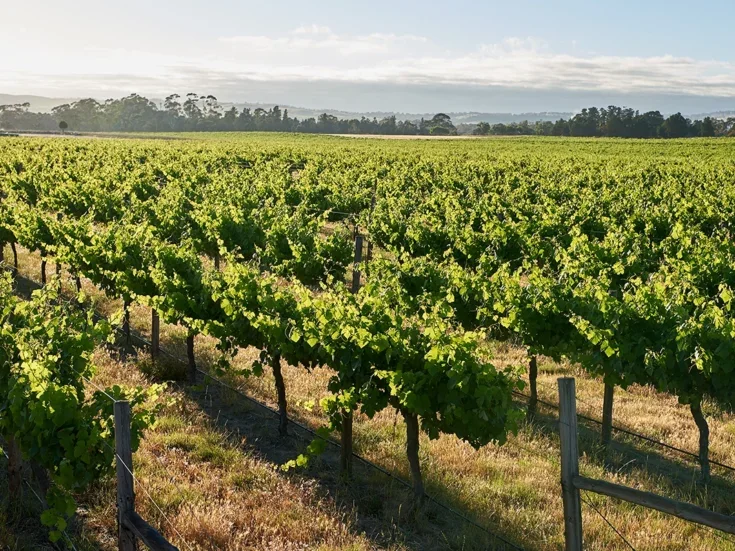
“Premeaux-Prissey may have had the wettest conditions in the Côte de Nuits,” remarks Géraldine Godot, who sprayed 19 times and used 5kg (11lb) of copper. She harvested September 18–21, with average yields for the reds of 8hl/ha, though in Clos des Forêts the yield was as low as 3.6hl/ha, for only nine barrels. The average yield for the whites was 14hl/ha. The levels of malic acid were high. Clos de l’Arlot, for example, had 4g/l, with pH 3.4 at harvest. “It was very important to get the balance of acidity and pH.” So, like many other producers, she tweaked the tartaric acidity, arriving at pH 3.45 and TA 3.65g/l (as sulfuric) for the Clos de l’Arlot.
All the fruit was destemmed, and there was a pumping over each morning but no punching down. Geraldine has taken care with the extraction. She decanted and let the wines settle for one month before barreling down and remarks that it was such an important step for 2024. There is quite a lot of new oak on the premier and grand cru wines.
Related
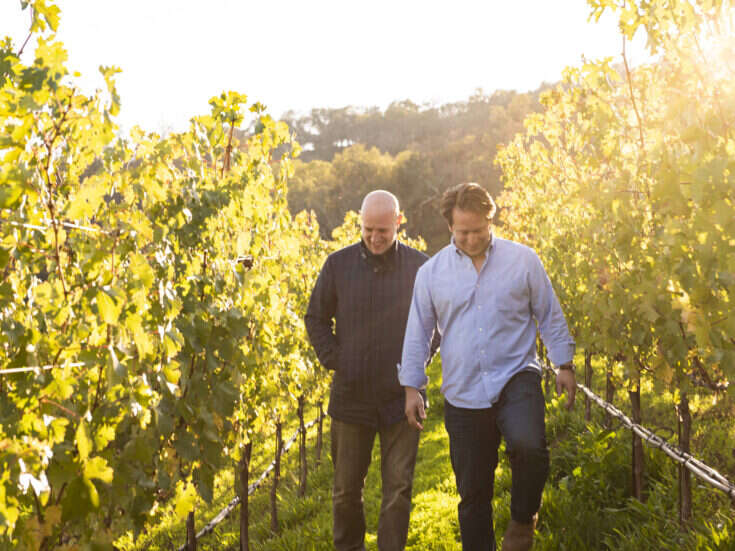

“Very fruity, drinkable, and approachable for reds,” considers Géraldine. “It is easy. We do not have the same complexity as 2023, but if you forget the previous vintages, you see 2024 as a more Burgundian style. All is here. So, I believe the wines will age.”
Géraldine finds some similarities with 2014, “because it is lighter in structure and tannins, but finally because we see the character for each appellation.” Christian Seely, managing director of AXA Millésimes, which owns Domaine de l’Arlot, added, “2024 is delicate, pure, and fine—which doesn’t mean light, and I think it might age rather well. Better than the 2014. A little comparable to the 2017, which I love in terms of style.”
Two delicious whites to kick off. Géraldine is definitely optimizing the full potential of the Chardonnay on this terroir. She has a light touch with the reds. Clos de l’Arlot is delightful and Géraldine has seriously refined the Clos des Forêts.
Content from our partners
White
*Hautes-Côtes de Nuits Le Mont
From a 1ha (2.47-acre) parcel above Clos des Fôrets, the upper two thirds already planted to Chardonnay, and the lower third, previously planted to Pinot Noir, has been ripped out in favor of Chardonnay. Compact and gravelly, with a pure, stony, and salty feel. Fresh with savory miso. Salted almonds at the end. Love this. A cracking Hautes-Côtes, punching way above its weight. 2026–28. 88
*Nuits-St-Georges Premier Cru Clos de L’Arlot Blanc (Monopole)
Géraldine racked from oak with full lees to tank in August 2025 to bottle before Christmas. Nutty, rich yet stony aroma, and on the palate, yummy succulence and depth, with marzipan indulgence; savory but sweet. Also a hint of lemon peel. There’s some density to the the mid-palate and persistence on the finish. Very good. 2026–35. 94
Red
Côte de Nuits-Villages Clos du Chapeau
Red-cherry aroma. Delicate, crisp, and pure. Bright red-currant fruits on the palate. Fresh crunch to the finish. Light-bodied and engaging. 2026–28. 87
*Nuits-St-Georges Premier Cru Clos de L’Arlot (Monopole)
From 60-year-old vines. Light, bright pomegranate aroma, with a touch of rose petal. Sweetness on the front palate. Silky, fine texture. Breezy, light, and lucid cherry fruit. Slim and light-bodied. An attractive hint of cherry-kernel bitterness and light snap carry to the finish. Crystalline. 2026–32. 94
Nuits-St-Georges Premier Cru Clos des Forêts St-Georges
Nine barrels this year. 44% new oak seems a lot, but the oak doesn’t dominate. Pure and lucid fruit aroma. Svelte texture on the palate; there is energy and intension. Intensity without concentration. It has an engaging lightness to it. There is layering not just of fruit, but of acidity and tannins, a certain vibration and nuance. Pushes into a persistent finish. 2027–36. 94
Romanée-St-Vivant Grand Cru
A yield of 18hl/ha. 50% new oak, as there are only two barrels, one new. Super-fine texture, intense, streamlined, channeled, and compact. There’s power and austerity, bordering on severity for now. The finish is well-sustained. Super-cold feel. 2028–38. 95–96
DOMAINE DU CHÂTEAU GRIS
Albert Bichot owns this 3.5ha (8.7-acre) monopole, an east-facing, terraced, walled vineyard at an altitude of 280m (900ft).
*Nuits-St-Georges Les Terraces
The upper part of the vineyard (0.7ha [1.7 acres]) is planted to Chardonnay. Slim, light, and trim. Attractive bitterness gives the wine freshness, with a hint of lemon zest. It finishes on pithy note. A delicate, savory wine. 2027–30. 87–88
*Nuits-St-Georges Premier Cru Château Gris
Lively, with a crunchy texture and delicate, cranberry fruit. This is crisp and pure, slim and lightly herbaceous in such an appealing way. Light and sprightly, with a sprinkle of thyme and salt to finish. Love it. So pretty. 2027–32. 93
DOMAINE JEAN CHAUVENET
Christophe Drag remarks that “every ’04 vintage seems to be difficult.” The estate produced an average of 9hl/ha, and a mere 6hl/ha from village parcels. There is therefore only one village cuvée, to which Christophe added the pitifully small amounts of premier cru Damodes and Rue de Chaux. There were 130 barrels of wine in 2023 and just 30 barrels in 2024.
Sometimes it was impossible to get into or even get to the vineyards. “On July 5, it was the Tour de France and all the roads were closed and there was 100mm [4 inches] of water. I started the harvest on September 14. Many winemakers here [in Nuits-St-Georges] started on the 21st, but I didn’t want to wait, or we would have had nothing. The skins were getting soft and thin and fragile by the end of the week we harvested. The date was so difficult to choose.” The harvesters sorted in the vineyard. All the fruit was destemmed.
Potential alcohol levels were 11.5–12%, so Christophe chaptalized to bring Bourgogne to 12.5% and Vaucrains to 13.2%. A shorter than usual vatting of three weeks. One punch-down once a day for three days and tapotage. After pressing, Christophe left the wines a week in tank to settle, taking only the fine lees. Christophe also racked in August to take the wines off their lees and returned them to barrel. He was considering bottling in January, depending on how the winter went. If it were going to be cold, he would not move the wines again, but if relatively warm, he would definitely bottle in January.
“It is not a strong vintage; easy to understand. No new oak, as I needed a lot of barrels in 2022 and 2023. It is gourmand, for it has freshness and energy and a lot of fruit.”
Bourgogne Noyer du Pendu
Just two barrels rather than the usual ten. The macabre name of the lieu-dit, meaning “the hanging tree,” which is close to the house, is used only for the UK market, not the US. Soft, supple red fruits, with nice energy and light tannins. Zesty freshness. 2026–28. 82
Nuits-St-Georges
A blend of all 21 village parcels across the estate. A rather charming red-fruit aroma, with light, quite herbal tannin; zesty and bright, with a touch of aniseed. It’s herbal crunchiness gives it a whole-bunch feel, even though all the fruit was destemmed. 2027–32. 86
*Nuits-St-Georges Premier Cru Les Perrières
Christophe had a 500-liter tank that he bought in 2021 and used it for this one-barrel cuvée. An attractive richness to this Perrières, which has surprising generosity and succulence. A plump middle, with rather velvety tannins, carries on a line of cool freshness. The one-fill barrel works very well, providing some sucrosity without any evident oakiness. 2027–35. 93–94
*Nuits-St-Georges Premier Cru Les Vaucrains
Two barrels rather than the usual nine. Forest fruit with a touch of licorice and some reserve. This slides onto, and glides across, the palate on satin-textured tannins. Underscored with cool graphite and a light line of herbal freshness. Carries to a well-sustained, polished-granite finish. Excellent harmony. Discreet and rather sophisticated. 2027–35. 95–96
DOMAINE DU CLOS FRANTIN
Albert Bichot owns this 7.3ha (18-acre) domaine in Nuits-St-Georges.
Vosne-Romanée Premier Cru Les Malconsorts
Sweetness on the attack, a supple texture and some layering. It’s nicely rounded, even quite plump, but quiet and rather restrained. A well-sustained, fresh finish, showing raspberry fruit intensity, but I hope it will have been racked soon after I tasted it, to safeguard that fruit. It’s promising and has a certain elegance. 2028–34. 93
DOMAINE DU COUVENT
Young Paul Chéron is doing a good job here. Having taken over from this father, he is finding his own way, pushing boundaries to discover what works and learning from this experience. He is dedicated and precise. He had the details of all the cuvées at his fingertips with his cellar book open. In 2024 he decided to extract more, while most producers were very cautious—a brave move and, in some cases, he has pulled it off. Many Vosne village wines in 2024 can be a little uninteresting, but not Les Barreaux here: austere, slim, nervy, and just-ripe. Paul has also pulled a very good Clos de Vougeot out of the bag. Bravo.
Some of the wines show bitterness, which can be attractive or a little bit too much. “There is a bit of bitterness on this vintage, but our wines often show some bitterness when they are young.”
Paul says of the growing season and harvest: “Early debudding. There was frost in Marsannay in Clos du Roi, so just two barrels. From May, it rained until mid-July nearly every day. We lost part of the potential yield before the flowing to mildew, and the flowering was long. After flowering, we had losses in dry grapes. Average yields were 14hl/ha but were generally a bit higher in Gevrey, at 19hl/ha.”
Two sorting tables. “The dried berries were more difficult to select, as they were often in the middle of the bunch,” so they had more people. The harvest was September 16–25, when they had only one day of rain. “The beginning of September was quite sunny and allowed the grapes to ripen phenolically, if not so much in terms of sugar.”
For 2024, Paul continued working with whole bunches. He shortened the cold-soak his father used to make, from seven to four days. “We did more punching down, but a maximum of three or four days in total. I usually do one délestage, but I did two this year. It was really to clean the juice and to make an extraction more like a pigeage. Toward the end of the fermentation I did just pumping over, and I thought it was important to keep it warm post-fermentation for five or six days. In 2024, the post-maceration was needed to soften the tannins and the bitterness.” He pressed at up to 1.5 bar—this is really quite high, and he admits it was a bit more than usual, “but it was good to bring back a bit of tannin into the wine. We kept no lees from the press and we always wait two weeks for settling for more precision.”
Paul bought 5hl tanks for the small cuvées, which were “challenging to make.” He started by moving juice/wine in buckets over the cap, but felt it didn’t give sufficient extraction, so he did some punching down.
He chaptalized. “La Romanée had the lowest sugar level—11.3% potential alcohol—yet it was harvested last. The Charmes-Chambertin had a potential alcohol level of 12.5%. I generally chaptalized up by 0.5%, except for La Romanée, which was up 1%. The fermentation was super-quick—done in four days—so, we added sugar in two batches to extend the fermentation. I didn’t want to increase the alcohol too much. I don’t want to make a 13–13.5% wine in 2024. It’s a question of finding the right balance. It doesn’t have to be 13–13.5% just because it is premier or grand cru.
“The oak regime was difficult to manage. We decided to have less oak on the very small, two-barrel cuvée, so only one-fill barrels. The proportion of new oak was generally 20%—25% at most—so, a bit more than on 2023.” He was expecting to bottle in December. “The second winter is not necessary, especially for village wines, but most wines will be left until April [2026].”
Paul sums up 2024 as follows: “A fresh and classic vintage—to be honest, a little like 2012. So, super-nice to drink in the window of 5–10 years, but I am not sure it will be great after this. It is not a difficult vintage like 2013, which took a long time to become enjoyable. 2024 will be approachable young.”
White
*Marsannay Les Longeroies Blanc
The only white from the domaine. A yield of only 7hl/ha in 2024. Picked mid-harvest at pH 3.15, which increased after MLF to 3.24, with a TA of 3.7g/l. No sugar added, and a natural alcohol level of 12.5% ABV. Whole-bunch press. Started in tank before being moved to one 600-liter vat and stainless steel. “The yield is so tiny, we can keep it a second winter,” while previously Paul did not have sufficient space. Very low added sulfite levels—he aims for 30–40mg/l total at bottling. Light tropical aroma and notes of of pineapple on the palate, which is nicely rounded, succulent, and underscored by freshness. “I always get this aroma,” says Paul, who feels it comes from the rich clay and, at the bottom of the parcel, the gravelly soils of the ancient riverbed: “No bâtonnage, as that would have exaggerated it.” Forthcoming and attractive. 2026–28. 86
Red
Chambolle-Musigny Clos de l’Orme
From a 0.4ha (1-acre) parcel, with colluvial soils and some clay, too. The vines were plated in the 1930s, ’60s, and early 2000s. 50% whole-bunch and 25% new oak. The tannins are silkier and more refined than in Les Quarantes Ouvrées, albeit this has whole-bunch. Streamlined, lively, fresh, and aromatic to finish. 2027–34. 88–89
*Chambolle-Musigny Premier Cru Les Feusselottes
From the upper section close to the village; the higher part has soil that is very high in limestone, while the lower part has more clay. 20hl/ha—so, a good crop for 2024. Destemmed fruit and 15% new oak. Ripe, red summer fruit on the nose, then smooth and succulent on the palate, with a lively underscore of minerals and acidity. Pure and somewhat austere, with a dry, savory, sapid finish, but among the most attractive Chambolle wines in 2024. 2027–34. 91–92
Marsannay Clos du Roy
From a 0.42ha (1-acre) parcel, and some of the vines are on 161-49 rootstock, so super-low-cropping, and will be replanted. It was also struck by hail in 2024, so there are only two barrels of this. Paul bought a 700-liter tank for the fermentation. The fruit was 100% destemmed. No new oak. Light and spicy. Herbaceous. Crunchy and lively palate, with a touch of bitterness on the finish. Attractive. 2027–32. 85
Gevrey-Chambertin Clos du Couvent (Monopole)
On the official map, this appears as Le Village. Made in an approachable style. Destemmed and a shorter aging in barrel. The acidity is always quite high: pH 3.16, TA 5.25 before malo, and the malic acid level was high, at 4.69g/l. Naturally 12.25% ABV. It is warm by the wall and grapes here can reach 14%, while those in the middle part struggle to ripen. A high-yielding vineyard, even in 2024: 0.4ha (1 acre) made five barrels of wine. It’s juicy and ripe, exuberant. Forward and fruity, with a light bite of tannin. 2026–28. 86
Gevrey-Chambertin Clos du Meix des Ouches (Monopole)
From a 1ha (2.47-acre) plot, on a flat part at end of Combe Lavaux. 1960s and ’80s plantings. 50% whole-bunch. Marked herbal lift on the nose. It’s juicy, with more richness and succulence than the Clos du Couvent, and pushes into the finish. Crunchy and minty tannins. Has more potential. Paul started with whole-bunch in 2023, as he felt it needed this to bring more interest. 2027–30. 87–88
*Gevrey-Chambertin Premier Cru La Romanée (Monopole)
From a 1ha (2.47-acre) south-facing plot, rich in limestone and with a very thin topsoil. It yielded seven barrels in 2024. Sweetness of red-cherry aroma. Plentiful, but quite fine and crunchy tannin. Despite the big swing in pH, from 3.18 to 3.55 post-MLF, it is still pretty austere. Lean and keen. Vibrantly fresh. It is both minty and salty to finish. Rapier. 2027–35. 92
*Vosne-Romanée Les Barreaux
From rows of vines that touch Cros Parentoux on one side and Brûlées on the other, both running up to the forest, so it can struggle to ripen. In 2024, the potential alcohol level was 11.9%, so it was increased to 12.5%. It started with a pH of 3.16 and 3.2g/l of malic acid, finishing after malo with a pH of 3.43. High-toned wild-strawberry fruit aroma. It is focused, light, and nervy, so most unlike a typical village Vosne from the parcels below the village, but I like the purity, tension, austerity, and fizzling energy to finish. So salty at the end. Very good. 2027–32. 90
*Clos Vougeot Grand Cru Aux Origines
From a 0.6ha (1.5-acre) parcel at the bottom of the climat and a 1.4ha (3.5-acre) parcel in the upper part on the Vosne side. This year, Paul did a 50% whole-bunch fermentation of the fruit from the top section but sold off the production from the bottom section. “Usually, in a wet year, we keep only the top section, but the bottom can be useful in a dry vintage.” Not much press juice. 12.5% potential alcohol, so chaptalized by 0.5% to 13%. 25% new oak. Full and broad. It has grunt and density. I would rather see a grippy and vigorous Clos Vougeot like this. It has some matter, when so many in 2024 feel hollow. It’s a bit of a tannic bruiser, but certainly a Clos Vougeot with terroir expression. The more extractive approach worked here. 2028–36. 94
EDOUARD DELAUNAY
Laurent Delaunay comments, “The 2024 vintage will be remembered as a true vigneron’s year—demanding, challenging, and marked by constant vigilance. The (disease) pressure is the defining characteristic of the vintage. It required growers to be highly attentive and consistently present in the vines. Even the slightest lapse could allow disease to take hold. It was a nerve-racking season from start to finish. We began harvesting on September 14, starting with Pinot Noir from the Côte de Beaune, in relatively mild weather. As usual, we performed two rounds of sorting, first in the vineyard, then again with precision on sorting tables at the winery. The discarded portion was noticeably higher than usual.
“For Edouard Delaunay, 2024 is marked by very low volumes (down 50–60%) and, unusually, no use of whole bunches in our red wines. We chose full destemming to optimize maceration. The combination of lower temperatures and small volumes enabled steady fermentations and precise vinification. For example, we vinified a few very small batches of premier cru reds in vertical demi-muids.”
Laurent believes that “The red wines show vibrant, crisp, red-fruit character, while the whites are expressive and finely etched, with beautiful citrus notes. We reduced the proportion of new oak this year to preserve the clarity and delicacy of the vintage.”
White
Chassagne-Montrachet
A full and flowery, open-textured crochet palate. Charming and generous, moderate intensity, and plenty to like in an oaky style. 2026–30. 86
*Marsannay Les Crais
This is the white wine from Delaunay that most appealed to me, thanks to its light, sappy, stony character and lively freshness. As with all the whites, it seems quite oaky. A forthright personality, and it finishes with a crunchy bite. Fades quite quickly, so enjoy it young. 2026–28. 85–86
Meursault
A full-bodied and rounded Meursault, with a toffee richness, thick texture, and spiciness. For those who like a traditional style. 2026–30. 86
St-Romain
A perfumed St-Romain, almost certainly from the oak, but it also feels as if it’s from a warm exposure, as it’s exotic, with yellow plum and softness. Easy allure. 2026–28. 83–84
Santenay Les Champs Claudes
Spicy oak aroma. Sweet attack, with honey-dew melon on the fruit-driven, toasty, oaky palate. Pleasantly attractive. 2026–30. 83–84
Red
Chambolle-Musigny
A pretty, light-bodied, wafting Chambolle, with delicate, ripe summer fruit, and a light brush of tannin. Delicately done. Sweetness and freshness combine on the finish. Light and charming. 2027–30. 86
Charmes-Chambertin Grand Cru
There is plentiful red summer fruit on the attack, which sweeps into the nicely rounded mid-palate. The tannins are thick, smooth, and supple, with a lick of oak. There is a ribbon of freshness that runs through nicely. Modest finish. I hope it doesn’t stay in barrel too much longer, as the fruit is drying a little on the finish. 2028–32. 91–92
*Pommard Premier Cru Chaponnières
Soft and juicy, fruity, with a fullish, plump body. The tannins are smooth. It’s rather succulent. There is plenty of clay in Chaponnières, contributing to the gently rounded, sumptuous feel. The intensity and finish are fair for this engaging wine. 2027–30. 88
DOMAINE THIBAULT LIGER-BELAIR
Thibault Liger-Belair comments, “2024 was maybe not the worse vintage—that was 2016, as it was more stressful with frost and disease. In 2024 we were amazed by the mildew pressure, but we lost more to the frost. It is the smallest volume we have ever produced, but we don’t want to be fatalistic—when we take ten vintages and do an average… [things seem better]. The 2024 growing season—with 1,900mm [75 inches] of rain, spraying 16 times—was a learning curve, like 2003. I have been working organically for 25 years, but now I begin to question it.
“Because the volume was so small, we destemmed by hand and kept the best stems. If the stems were too black, you risked GMT (les goûts moisis terreux), mushroomy notes, but where the stems were green, it was very interesting to have the volume in the vat and the density of the grapes helped with temperature inertia. It was all very climat-dependent. We used lots of small vats and we opened a lot of 500-liter barrels. The pH was slightly high, although we selected only the best berries. I look at pH not for the acidity per se, but to see if the wine is fragile or not.”
Fine lees were important in 2024. Seven years ago, Thibault moved to using a vertical basket press. “The lees are much finer since 2019.” He also leaves the wine to settle until the end of October. “The oak is different on the bottom, at the sides, and at the top,” where he has more porous staves so there is no reduction. Thibault has used quite a lot of new oak this vintage—60% or more. It works, on the whole, no doubt because he is passionate about ensuring that oak does not mark the wine. Once he starts talking, it’s difficult to stop him on the subject of oak. He selects the trees himself and produces the barrels. “I start thinking about the oak when we are fermenting, as I have chosen the wood three years before.
“The vintage is so small that oak can have a very large impact. I use wood with very fine grain and high in carotene. The hemicellulose, the sugars in the oak, help to fill the wine with more flesh without toast or vanilla flavor. I use a very light toast—blonde.” He selects different forests. In this vintage, the oak from the forest near Fontainebleau was particularly useful. “Here there is haute futaie, a different kind of growing. It was introduced by Jean-Baptiste Colbert [First Minister of State for Louis XIV], and was a system of concentrated planting to encourage competition between trees, so they grew tall, with fine-grained oak, which gave better flexibility for shipbuilding.” The soil here is sandy, which “gives roundness, so I have used a lot of haute futaie in 2024.
“I was surprised by the quality of the wine after the winter, when the cellar became warmer. So, I will do a longer élevage than expected, as the wines are still gaining in structure and length. Sometimes we see a vintage with less structure, but then it acquires more over two winters and two springs before bottling.
“2024 is not the greatest vintage—it’s a light vintage, but not thin; it’s mouthwatering and has good terroir transparency. It’s not a vintage to drink too late, but we may be surprised by how well some of the wines age.” Despite the oak, Thibault is among the producers who have made light, elegant, and finely textured wines in 2024.
*Aligoté Clos des Perrières La Combe
This Aligoté parcel receives the cold wind from the combe and has limestone soils, but the wine is less about terroir than winemaking. There was one week of maceration on skins at 41–43ºF (5–6ºC), followed by foulage and a long, gentle press, so there were very few bourbes and there was no need to settle—the must went directly into barrel. Texturally, this is almost chewy, with an almond character and attractive freshness and bitterness. Savory, and there’s some density, too. Good food-wine. (Thibault also makes a rather nice, mineral, white Savigny-lès-Beaune, following a more classic approach). 2026–28. 86
Nuits-St-Georges La Charmotte
From a lieu-dit on the north side of the village, under Bousselots, with 16–20 inches (40–50cm) of red and brown clay over degraded limestone. No whole-bunch and 60% new oak. Red fruit and light spice. A delicate, silky Charmotte, with plenty of ripe red-currant fruit and a lively finish. “It will stretch into more length,” says Thibault. “The haute futaie [oak] will give the density and roundness.” 2027–29. 86
Vosne-Romanée Aux Réas
The parcel tips slightly to the south. Tight and bright, with a chalky feel and a light flick of crisp tannin. Neat edges and some tension. A pretty village Vosne. 2027–32. 88
*Nuits-St-Georges Premier Cru Les St-Georges
From the 2ha (5-acre) parcel, there were only three barrels in 2024, whereas there had been 29 in 2023. All the fruit was destemmed by hand. Two of the three barrels are new. Super-svelte and finely textured, with lively sapidity and salinity from the fragmented limestone in the deep clay soil. The finish stretches out, cool and persistent. Spot-on. A sophisticated wine. Among the two or three best Nuits of 2024. 2029–25. 96
*Richebourg Grand Cru
From vines planted in 1934 and 1936. Three barrels in 2024. “The vines suffered less here than in Nuits-St-Georges.” Rose-petal aromas, satin texture; deep, layered, and intense, with a sweet core of fruit. There is volume with lightness and luminosity. A fine and persistent finish. 2029–35. 97
THIBAULT LIGER-BELAIR SUCCESSEURS
Thibault has several Chambolles under this négoce label.
Chambolle-Musigny
A village cuvée in which all the parcels, which lie on the Morey side of the village, were combined. Thibault kept as whole bunches the fruit from the village Beaux Bruns. 60% new oak. Pure and elegant, finely textured and fragrant. A delicate, light-bodied, floaty wine, with a crip, light, and lively finish. “It is very necessary to use the new oak,” remarks Thibault. 2028–31. 87
CHEVANNES
DOMAINE DAVID DUBAND
“I usually keep between 7,000 and 8,000 bottles for seven to eight years to release later for restaurants—but 2024 was too stressful. I want to sell everything. It’s the first time in 35 years of winemaking, and 20 years of being certified organic, that I’ve felt like this. Our grandparents never saw such rain. The mildew got into the sap. In Morey, in mid-July, there was less rain and it was cool, but mildew struck in mid-August and ripped through the vineyards. In 2025, there were also low yields, because it was difficult for the vines to recover—they had no reserves.
“I sprayed 18 times—and still lost so much.” In Nuits-St-Georges, the yield was as low as 1–2 hl/ha. In Morey, Chambolle, and the grands crus, it was better (Echézeaux gave 8hl/ha). The maximum yield was 15hl/ha. Higher-situated vines, including those in the Hautes-Côtes, had less mildew, so had higher yields.
David started the harvest on September 16. “Lots of dried berries and so much sorting—so, more destemmed fruit this year.” Usually, it is 60% whole-bunch for village wines, 75% for premiers crus, and 90% for grands crus. “The whole-bunch aromas come from the intracellular fermentation.
“To start, I did four days with remontage, then punch-down.” He chaptalized by 0.5–1% ABV.
For the small cuvées, David does an integral fermentation lasting 12–15 days, adding the fruit through a small door and extracting by rolling the barrels three times. He started with this technique in 2019, inspired by an intern who was writing a thesis on it. “It was a good solution. I was afraid of oxidation in small vats but this way there is no risk, as the wine is saturated with CO2. It’s amazing that it extracts just by rolling, but it does, and the tannins are elegant.” He now vinifies 35 barrels this way.
David settles the wines for a long time—for between four and six weeks. “In 2009, I went too quickly to barrel after a week or two, and I had too much sediment in the bottles, so now I wait. I really control Brett. For 12 or 14 years, we have analyzed for Brett twice a year all the wines going through élevage.” The proportion of new oak is 15% for regional wines, 25% for village wines, and 30% for premiers and grands crus.
“I have not seen this style often over the past 20 years. When we taste 2008 or 2013, they belong to the same family, with a similar structure to 2024. All have good acidity, but they are different. Maybe 2013 is more concentrated than 2024. Maybe 2024 is more like 2021.”
Bourgogne Hautes-Côtes de Nuits Célénie and Louis Auguste
From a southwest-facing limestone vineyard with vines that are now 50 years old. Until 2021, the Hautes-Côtes was one cuvée, but there are now two: Célénie and Louis Auguste. They are both aged in Stockinger foudres, with no added sulfur during élevage, and the Célénie will have no added sulfur at any stage. “I think more about regional wines without sulfites, as they make the wines so closed and dry after bottling.” Sweet fruit, spicy and ripe; plenty of freshness and crisp tannin. 60% whole-bunch. Very appetizing. 2025–28. 85–86
*Nuits-St-Georges Premier Cru Aux Thorey
There is elegance and fine texture to this Nuits from the north side of the village. An attractive concentration of blueberry fruit, woven with freshness. Glides on slippery smooth tannins. 2027–34. 92–93
*Gevrey-Chambertin
Some 90% of the parcels for this cuvée are on the north (Brochon) side of the village. Really rather good concentration for a village wine. It has depth and a suede-soft texture, juiciness and generosity. Punchy energy. Cracking Gevrey for this vintage. 2027–20. 90
*Chambertin Grand Cru
Integral fermentation. Intense blueberry-fruit aroma. Svelte texture, smooth, sophisticated, and streamlined. Neatly woven, it manages to be both powerful and discreet. A lithe and persistent finish. 2028–38. 97–98
Clos de la Roche Grand Cru
Exotic richness of aromatics on both nose and palate. Full in volume, this still has an airiness, under which the fresh, herbal, minty notes swoop in and carry the finish. Expressive, perfumed Clos de la Roche. 2028–36. 97
CURTIL VERGY
BERTRAND ET AXELLE MACHARD DE GRAMONT
The estate extends over 6ha (15 acres). Axelle’s father, Bertrand, felt it was too pretentious put “domaine” on the label. It has been certified organic from 2014. “My father is turning 83 and he had never seen such rain as we had in 2024,” says Axelle. “We had to face the wind as well—which doesn’t help when you have to spray,” which they did 12 or 13 times in 2024. “In between the rain, we had pleasant summer days and then rain the next day. It was extreme—and you can feel it in the wine.”
She destemmed 100% (as usual) and decided to make each cuvée separately instead of combining them, with the exception of the Vosne-Romanée, which includes Les Barreaux. “It was complicated, as the volumes were small and the vats are large. We will rack and bottle earlier than usual.
“2024 is so different from the powerful and shiny vintages—the wines are fresh and approachable and light, but given what we had to face, they are not bad,” considers Axelle. “Maybe it is most like wines from the ’80s—maybe 1985. It is more gourmand than 2013, which took a long time to open and was never seductive. Maybe it is most like 2008; light in density and structure, but when I opened a bottle ten years after the vintage, it was a good surprise.”
White
*Bourgogne Aligoté Le Chêne du Court
From vines by the Abbey St-Vivant at an altitude of 1,400ft (430m). “My father bought this the year Aubert de Villaine bought the abbey, in 1996, and he told me he did so because it is a beautiful area. He was not very interested in Aligoté. It had 10% Melon de Bourgogne, which were the oldest vines.” There are still some, but when it is necessary to replace them, Axelle plants Aligoté. “With Aligoté I have tried skin-contact and fermenting in older barrels but now use a classic approach: whole-bunch presses and into stainless steel. Our attention is focused on perfect ripeness. Aligoté is resistant to disease, so you can wait.” Mineral and straight, but with good intensity. Savory, with some lemon pithiness. There is lively sapidity and saltiness. It like this energetic wine. 2026–29. 85
Red
Nuits-St-Georges Aux Allots
From 0.92ha (2.4 acres) of village vines on the Vosne side below Vignerondes, so there is plenty of clay in the soil. It was bought in 1969 and has been slowly replanted; some 10% was ripped out recently, as too many vines were missing. Fruity aroma. This has sweetness and is lightly rounded. Soft, fragile, gentle wine. 2026–28. 86
*Nuits-St-Georges Les Hauts-Pruliers
Les Hauts-Pruliers is a parcel of village vines just above Les Pruliers but below the road. Planted in 1964, the 0.6ha (1.5-acre) parcel is steep, with poor soil, “some very close to the mother rock. Slightly better yields in 2024 than other parcels, maybe because it is windier and well-ventilated.” Straight and nervy, with morello-cherry fruit, light crunch, and cherry-kernel bitterness on the finish. 2026–28. 87
Nuits-St-Georges Les Vallerots
From vines planted in 1984, high on the slope, at the top above the terraces, from which there is a separate cuvée, this is a little richer and juicier, with more depth of fruit and intensity, but equally there is a firmer, more slicing, cold cut of minerality. 2026–28. 86–87
2024 Burgundy: The summer of tough love
2024 Burgundy: A guide to the villages and vineyards
2024 Burgundy: Côte de Nuits tasting notes—Marsannay and Fixin
2024 Burgundy: Côte de Nuits tasting notes—Gevrey-Chambertin
2024 Burgundy: Côte de Nuits tasting notes—Chambolle-Musigny
2024 Burgundy: Côte de Nuits tasting notes—Vougeot
2024 Burgundy: Côte de Nuits tasting notes—Vosne-Romanée