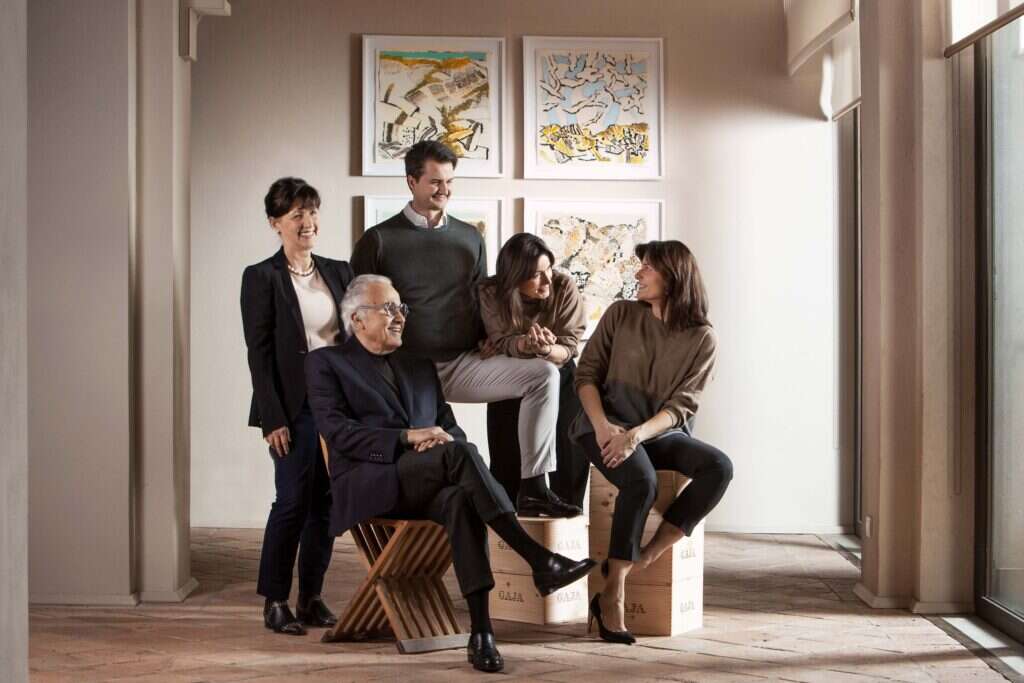
The 30th anniversary of the foundation of Ca’ Marcanda was ample justification for Gaia Gaja to present a range of wines from the Gaja estate in Bolgheri at 67 Pall Mall in London—and she was in her element. It was her father Angelo who conceived Ca’ Marcanda as a blank canvas in the mid-1990s, and it has, over three decades, become one of the defining addresses in Italian wine. Nine vintages of the flagship wine—from the inaugural 2000 vintage—to the just-released 2023, told a story.
Angelo Gaja himself, now aged 86, was not in the room, though his presence was felt throughout. Energetic and characteristically sharp, he continues to travel, taste, and offer opinions, regardless of whether or not they are solicited. As Gaia noted with affectionate wryness, the family tends to file his observations under “I told you so.” Though formally removed from day-to-day decisions since 2012, he remains deeply engaged, still convinced, rightly or wrongly, that he is useful.
To understand Ca’ Marcanda fully, Gaia began, one must first look at what the Gaja family achieved in Barbaresco. The family winery, founded by Giovanni Gaja in 1859, was transformed across successive generations through a philosophy of what she described as “constructive contrarianism”—pursuing excellence, that is, not by following established norms but rather by challenging them.
Angelo cut yields back, reduced fermentation times, introduced barriques and vinification by cru, and experimented with international grape varieties as early as the 1970s, at a time when such ideas were considered provocative in the Langhe. Cocking a snook at his traditionalist father Giovanni, he gave the name Darmagi—Piedmontese for “what a pity”—to his Cabernet Sauvignon blend. The instinct to look where others are not remains central to the family’s identity, and it explains their expansion into Montalcino, where they acquired Pieve Santa Restituta in 1994 and, more recently, Idda on Mount Etna in Sicily.
Related
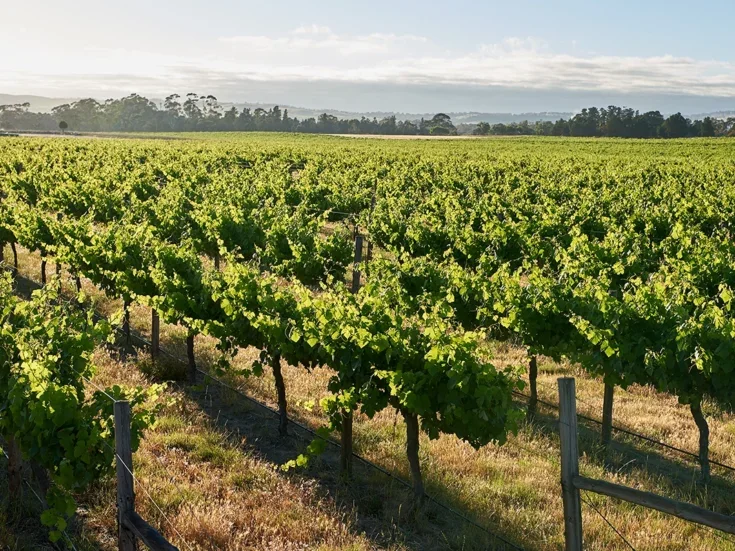
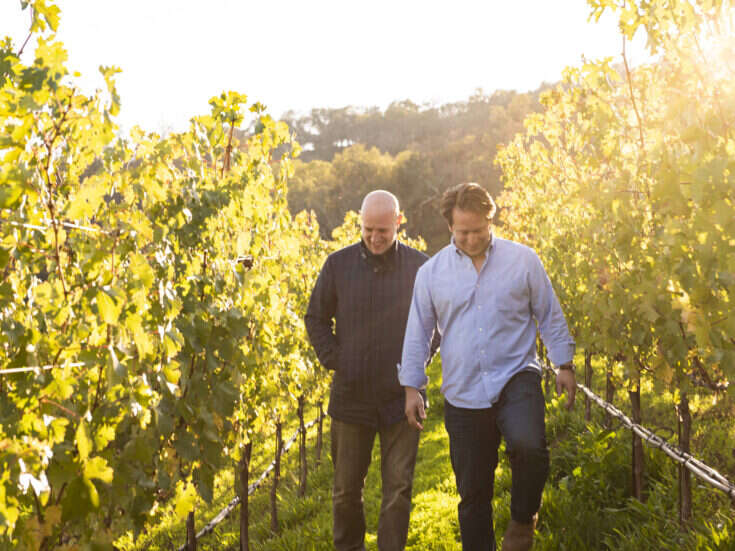

The move into Bolgheri, in 1996, came when Angelo was in his late 50s. Gaia describes it, with a smile, as her father’s midlife crisis—one that produced a vineyard rather than a guitar, Ferrari, or mistress. In reality, it was a calculated leap into a region that remained, in important respects, an open frontier.
Sassicaia had demonstrated Bolgheri’s extraordinary potential decades earlier, famously winning a Decanter blind tasting in 1978 against 33 Cabernet-dominant wines from around the world. But it had originally been made for private consumption, only released commercially from the 1968 vintage. By the 1980s, a handful of estates had followed—Grattamacco, founded in 1977 and now recognized as the region’s second winery after Sassicaia, and Guado al Tasso, the Antinori operation—but the region remained, as Gaia put it, a place of freedom, with complex soils, a landscape shaped by sea and mountains, and no entrenched expectations about what the wines should be.
From scratch
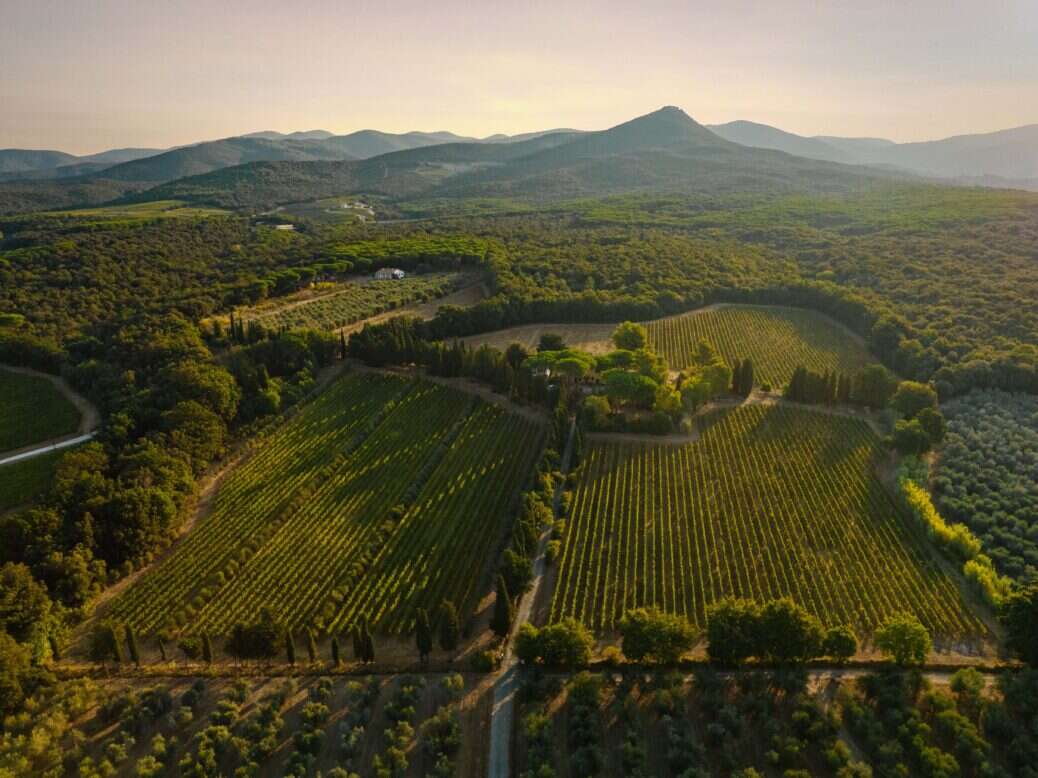
Ca’ Marcanda the winery—as distinct from the apostrophe-free brand name Camarcanda—sits inland from the Tuscan coast, near the village of Castagneto Carducci, closer to the foothills than the sea. The name derives from a Piedmontese expression for a “house of endless negotiations,” an ironic tribute to the protracted difficulty of acquiring the land from its previous owners. The process took the best part of two years and was only finalized in 1996.
Content from our partners

Within the family, Ca’ Marcanda holds a particular place: not merely another estate, but the first wine Angelo created from scratch. It has been described within the family, as Gaia noted with diplomatic delicacy, as Angelo’s true favorite child.
The winery at Ca’ Marcanda is 90% underground, constructed with great care to blend into the Bolgheri landscape, with ancient olive trees imported to complete the setting. Inside, a state-of-the-art winemaking facility occupies some 100,000 sq ft (9,500 sq m) across three underground levels, alongside something approaching a private sculpture gallery. It was, unambiguously, Angelo Gaja’s blank canvas on which to make his mark.
With 24–32in (60–80cm) of topsoil above compact clay bedrock, the soils are relatively shallow, which naturally limits vigor and concentrates the vines’ energy. The estate distinguishes between its terre bianchi—the white soils rich in clay, limestone, and stones from which the structured, long-lived Camarcanda is principally drawn—and the terre brune, browner soils with less clay and limestone but greater depth and organic matter, which lend generosity to the Magari blend.
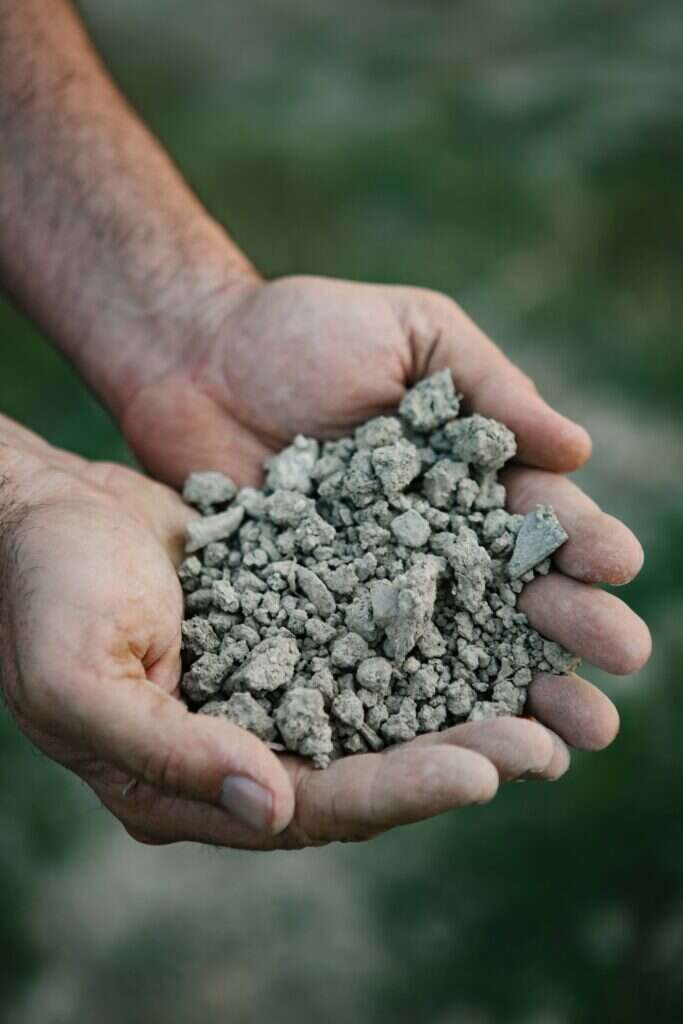
The broader Bolgheri region spans around 1,300ha (3,200 acres), with a striking diversity of soils—from sandy coastal plots, to heavier clay inland. What unites it is climate, moderated by both sea and mountain and defined by wind. That airflow is beneficial in regulating temperature, though it brings its own challenges, notably the spread of vine moth.
Ca’ Marcanda produces four wines: the flagship Camarcanda, a Bolgheri Rosso built on Cabernet Sauvignon and Cabernet Franc; Magari, a Bordeaux-inspired blend of Cabernet Franc, Cabernet Sauvignon, and Petit Verdot; Promis, a Toscana IGT combining Merlot, Syrah, and Sangiovese; and Vistamare, a white from Vermentino, Viognier, and Fiano.
Angelo Gaja has put the underlying philosophy directly: “With climate change, wines risk being too extracted and heavy. It must be the style of the winery to go in the other direction for more streamlined and elegant results.” The response, as Gaia has framed it, lies in gradual, continuous adjustment—“to see with the eyes of tomorrow, not of yesterday.” Not radical reinvention, but small, consistent steps. Less, as she put it simply, is more. At 30, Ca’ Marcanda stands as a milestone and yet is still a work in progress—defined, true to Gaja tradition, not by what it is but by what it is still becoming.
Tasting
The following notes cover nine vintages of Camarcanda tasted at the event—from the inaugural 2000, to the most recent, 2023—
a sequence that traces the estate’s evolution from its Merlot-dominant early years to the Cabernet Sauvignon-led style of today.
2023 Camarcanda Bolgheri DOP
(14% ABV; 80% Cabernet Sauvignon, 20% Cabernet Franc; 12 months in barriques, 6 months in 60hl casks)
Relatively pale in color, this blend from what Gaia described as “not a classic Bolgheri vintage” displays a delightful fresh fragrance of cherry, strawberry, and herb, with the faint vegetal hint of a lighter year yet is still youthfully primary with a trace of subtle oak. An initial sweetness of cherry comes across in a framework of gentle, juicy, supple tannins; a rhubarb-like note then brings extra acidity and freshness, adding to a savory feel from mid-palate right through to the finish. Elegant in style and approachable already, with just a slight dryness at the close. | 91
2022 Camarcanda Bolgheri DOP
(14% ABV; 80% Cabernet Sauvignon, 20% Cabernet Franc; 12 months in barriques, 6 months in 60hl casks)
From a season of drought followed by a rainy autumn, this is a youthful, deep ruby, with a sweet, floral fragrance of dark berry and cherry fruit and a background note of camphor spice. The wine opens with ripe, concentrated sweet raspberry and dark fruit, medium-bodied and finely textured. An initially muscular youthful grip mingles with herb and gradually releases toward the finish, ending on a sweet-savory dry note. Still youthful and fresh, the 25% whole-bunch inclusion is evident in the structure of fine tannins and fresh acidity. Almost accessible now but clearly built for aging. | 95
2021 Camarcanda Bolgheri DOP
(14% ABV; 80% Cabernet Sauvignon, 20% Cabernet Franc; 12 months in barriques, 6 months in 60hl casks)
A dry, mild season yielded healthy grapes and a wine of youthful deep ruby, sweet and spicy in aroma, with notes of camphor and licorice and—seemingly the influence of Cabernet Franc—appealing, bright, herbal lift. On the palate, there is an immediate opulence of dark fruit, concentrated and rich, seamlessly pure, with gentle tannins bringing finesse of texture through the middle. Opulently sweet to the finish, yet one feels the subtle power beneath, supported by tight tannins and fresh acidity. This will benefit from five to ten years in bottle. | 95
2020 Camarcanda Bolgheri DOP
(14% ABV; 80% Cabernet Sauvignon, 20% Cabernet Franc; 12 months in barriques, 6 months in 60hl casks)
Youthful deep ruby, just beginning to shade to garnet at the rim, with a bouquet that is also starting to evolve: spicy camphor and licorice, almost umami in character, with a saline, sea-breeze note—iodine-like—that whets the appetite. On the palate, lovely, pure black fruit, rich and opulent, supported by gentle tannins, with a distinct note of Mediterranean pine and herb; the structure is seamlessly elegant, the finish dry and saline. | 95
2019 Camarcanda Bolgheri DOP
(14% ABV; 80% Cabernet Sauvignon, 20% Cabernet Franc; 12 months in oak barriques and tonneaux, 30% new on average), 6 months in concrete.
A topsy-turvy growing season—cold winter, stormy spring, extreme summer drought, then a cool, wet August and drying winds at harvest—resolved itself into healthy, ripe grapes and high expectations. The wine shows a youthful ruby, beginning to shade to garnet at the rim, with a mature dark-cherry sweetness of aroma and a background hint of camphor spice. The first vintage to include 15% whole-bunch, it’s rich and opulent, with powerful cassis and dark cherry, background herbal notes, and the typical purity and freshness of the estate, all supported by a substantial structure of firm tannins and a hint of sea-breeze salt. A wine that promises a great deal for those prepared to wait. | 95
2016 Camarcanda Bolgheri DOP
(14% ABV; 80% Cabernet Sauvignon, 20% Cabernet Franc; 12 months in oak barriques and tonneaux, 30% new on average), 6 months in concrete.
A warm, dry summer and autumn, with substantial day-to-night temperature shifts for the retention of freshness. Still youthfully ruby in color, this shows little sign of aging. After a fine bouquet of dark fruit and Mediterranean herb—the Cabernet Franc speaking clearly—there is a note of camphor spice and a trace of spicy oak. On the palate, opulently ripe, sweet dark fruit, the juicy texture adding to excellent depth of sweet dark cherry and cassis with notes of spice and chamomile. Super-fresh and elegant, with a spine of acidity and fine tannin: as pure a drop as one could hope for from a ten-year-old, and still promising further development. | 95
2015 Camarcanda Bolgheri DOP
(13.5% ABV; 80% Cabernet Sauvignon, 20% Cabernet Franc)
It is perhaps a little surprising that in a warm vintage such as 2015 the wine appears slightly lighter than the 2016, but as Gaia noted, it may have been picked early—which would account for the good youthful ruby hue and fresh yet maturing bouquet, sweet and spicy with notes of licorice and camphor. The fruit is attractively pure and elegant, though a touch more extracted and drying in the middle, with a sinewy, tannic tightness and more savory feel on the finish; this gives it less of the immediate mid-palate sweetness that defines Camarcanda at its most supple. A wine that needs food. The first vintage to use the now-established 80/20 Cabernet Sauvignon/Cabernet Franc blend. | 93
2007 Camarcanda Bolgheri DOP
(14% ABV; 50% Merlot, 40% Cabernet Sauvignon, 10% Cabernet Franc; 18 months in oak, mainly barriques, up to 60% new)
The first of the older Camarcandas takes you back to an altogether different era; these wines were made by Gaja’s Piedmontese winemaker Guido Rivella, who retired in 2012, and the style reflects both his hand and the estate’s earlier Merlot-dominant philosophy. Now maturing to garnet at the rim, the wine has an appealing perfume of blueberries, coffee, and toffee. It is self-evidently more oaky yet still shows elegant, ripe fruit with a nice mid-palate sweetness, and it remains lively and fresh thanks to the interplay of acidity and firm, tight dry tannins. Perhaps closer to Bordeaux than to Bolgheri in style—the finish is on the dry side—but still very much at the top of its game. | 93
2000 Camarcanda Bolgheri DOP
(14% ABV; 50% Merlot, 40% Cabernet Sauvignon, 10% Cabernet Franc; 18 months in oak, mainly barriques, up to 60% new)
The very first Camarcanda, made from younger vines in a notably hot year and with Merlot as the dominant variety: in every respect, a wine from a different era. Now a mature garnet, it shows a spicy, tobacco-tinged bouquet, with a hint of pruney fruit, still with plenty of mid-palate opulence and weight and more than a hint of oak spice. Aging gracefully and still supported by a firm tannic structure, the acidity keeping it alive, it is a fine Bordeaux-style wine—which is, to a degree, what it is. Tasted blind, it would be a challenge to place it in Bolgheri. But that, of course, is also part of the story. | 92