Winemaker Virginia Willcock came to London in September 2024 with nine vintages of Margaret River Cabernet Sauvignon to celebrate 50 years of Vasse Felix. It all began in 1967, when Dr Tom Cullity planted 2 acres (0.8ha) of Cabernet Sauvignon and an acre (0.4ha) of Malbec and Shiraz in a remote part of Western Australia 2.5 miles (4km) from the ocean.
“There is just one bottle left of the 1972, and there was no way the owners [Holmes à Court] were allowing me to take that!” said Virginia, who has been winemaker at the estate since 2008. Lucky escape. There was no malolactic fermentation for the first three vintages at Vasse Felix, and the old bottles have a surface film and slight fizz.
This was because Tom Cullity was not a winemaker. His experience was confined to enjoying Bordeaux while working at the National Heart Hospital in London during the 1950s. After moving to Perth, where he practiced as a cardiologist, he was attracted to the maritime climate and loamy gravels of Wilyabrup, which had been identified by Dr John Gladstones in 1965 as being similar to the terroir of Bordeaux. At the time, Cabernet Sauvignon, Malbec, and Shiraz—known now as the Houghton clones—were the only vines one could buy in Western Australia, so the bond between Margaret River and Bordeaux was forged with an Aussie tweak of Shiraz in the mix.
“The history of the estate is beautiful,” enthused Virginia. “I wanted to bring you wines from each decade to show the evolution, which will give you an idea of our Cabernet Sauvignon. We are sure it is now very different from Bordeaux.”
Related

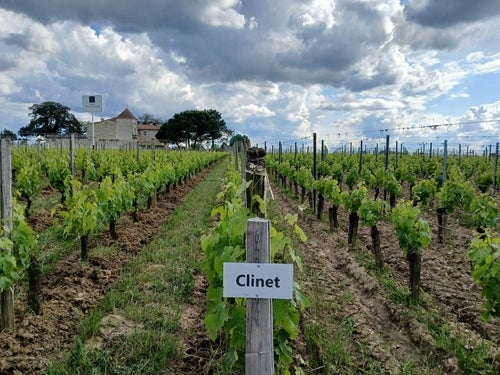
Dr Cullity’s venture didn’t have an easy start. In 1971, the crop was decimated by rot and birds. Over the following year, he trained a peregrine falcon, but when it was let loose to prey on the little birds, it flew away. This sorry tale inspired the bird logo and label. Clearly he had a dark sense of humor, as well as a passion for this wine project, which entailed a five-hour drive from Perth at weekends to tend the vines.
Wilyabrup was remote. A poor area of dairy farming in Margaret River where the locals, who had never tasted wine, thought Tom Cullity was delusional to plant a vineyard. The approach to winemaking was rudimentary. But in 1973 Dr Cullity hired David Gregg to help him in the vineyard and to take over the winemaking. Gregg was a cheesemaker from England. For the 1975 vintage, he sourced cultured yeast from South Australia. Meanwhile, Cullity imported a barrel of Château Figeac, from which he siphoned off the wine and refilled it with his ’75 vintage. Apparently, the wine all but exploded out of the barrel. “The ’70s and ’80s were a beautiful era,” reflects Virginia. “The wine was made very naturally. They used no additives, and there was no proper winemaking equipment.”
We were privileged to taste the 1985 vintage. Few wines from Margaret River survive from the ’80s, so I was delighted—and relieved—to find it intriguing. “Tom and David liked making light and fresh wines,” remarks Virginia. “They were trying to do in the ’70s and ’80s what I am doing now.” But this is galloping ahead.
Content from our partners
Back to the story. The 1985 was a cool season, with a late harvest. Of the wines we tasted, this was the only vintage based largely on the grapes from the original Tom Cullity block planted with the Houghton clones. A portion of the fruit came from a vineyard south of Margaret River on Davis Rd (Wallcliffe area). This apparently gave the 1985 a leafier character than previous Cabernets from Vasse Felix.
In 1985 Tom Cullity sold the estate to David Gregg, who soon realized he needed a cardiologist’s income to support the venture, so he placed an ad in the local newspaper offering the place for sale in 1987. Small as it was, this caught the attention of tycoon Robert Holmes à Court, reputedly Australia’s first billionaire, whose family allegedly swept in on a chopper to take a look. Holmes à Court snapped it up, much to the displeasure of Cullity, who had sold it to Gregg in good faith and probably below the market price. Such was Cullity’s chagrin that he didn’t set foot in the place again until 2007.
The bigger and richer era
The next era of winemaking dawned at Vasse Felix in the ’90s with the arrival of Clive Otto, who came for a vintage in 1989 and stayed 15 years. He studied winemaking in New Zealand and was among the new generation of winemakers with a much more technical approach—an approach that became prevalent in Australia from the ’90s into the mid-’00s. The wines changed.
I clearly recall from my first visit to Australia to taste wine in the 1990s that winemakers finished fermentation and made MLF in barrel. It was believed to soften and integrate the tannins, which had been heartily extracted. Overenthusiastic winemaking made big, fruity wines, which tasted somewhat sweet and were lauded in wine shows.
The new ownership at Vasse Felix saw generous investment in French oak barriques. Otto moved to later picking in pursuit of richer wines, and netting created a slightly warmer mesoclimate. It is clear from the 1995 Cabernet that Vasse Felix signed up to the opulent Aussie style of the ’90s, but the cooler terroir pulled the wines up short of a full-on bodybuilder profile.
Some fruit for the ’95 Cabernet may have come from the original Tom Cullity block, but this was largely diverted to “Heytesbury Red” created in 1995. This cuvée was discontinued in 2013 in favor of the current Tom Cullity label, described on the Vasse Felix website as “the purest expression of our history, place, and vintage; the pinnacle of Vasse Felix.” Increasingly the fruit for the Margaret River Cabernet Sauvignon was sourced from nearby parcels on similar gravel soils. Some of this was planted with a massal selection from the original Cullity block of Houghton Cabernet and Malbec.
Virginia explains, “Clive Otto was trying to work out what he could do with the fruit of Margaret River. Building the wines bigger and richer. He liked a bit of Shiraz with the Cabernet. It was handy for him. It filled the hole he saw in the middle of the wine.” Over the next decade, Otto almost ditched Malbec, flirted with Merlot, and invited American oak to the party.
A journey of discovery
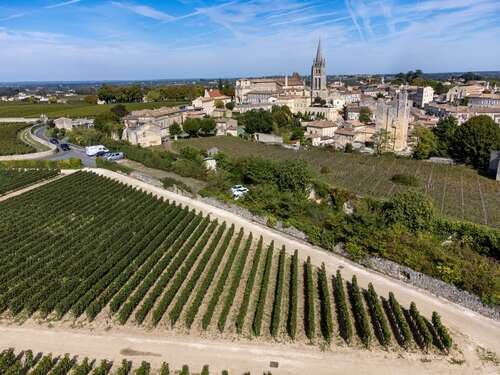
After the Holmes à Court family bought Vasse Felix, they expanded the original parcel, which is now called Tom’s block, initially toward Caves Road in the 1990s, and in the mid-2000s more land to the east of the Wilyabrup Brook was purchased. An established vineyard was also acquired on the adjacent property. “At present, Vasse Felix has 52ha [128 acres] under vine on this extended Home Vineyard in the Wilyabrup area,” says Virginia. “These plantings are now the key premier plots that go into our Cabernet Sauvignon, replacing purchased fruit over the years.”
She explains why they are special. “The plots of Cabernet in our home vineyard are grown on shallow ironstone, gravel soils and produce a smaller, less vigorous vine, with a moderate crop level and an open canopy, providing the grapes perfect access to the ocean’s cooling breeze. We are just 4km [2.5 miles] away from the coast.”
2005 was the last vintage Otto made, because assistant winemaker Virginia was soon to take over, and she had a very different idea of what Margaret River Cabernet should look like. “I don’t like Cabernet Sauvignon with Shiraz. Our Cabernet doesn’t work with Merlot either. I feel it shows a lack of confidence if you are making up something missing in the wine. Filling a hole in Cabernet is the biggest load of bollocks.”
She was also against using additives such as tannins and was intent on returning to a lighter style. “I wanted the shape and form of Cabernet. In Margaret River, we can have an elegant, sweet-fruit palate.”
Virginia was born the year after Tom Cullity planted his vines in 1967. She grew up in Perth and thinks she became a winemaker because it made her parents happy. Her father and three of his friends bought an old vineyard in the Swan Valley—“too hot, really”—to make wine just for family and friends. She has happy memories of running wild there, but her father sold the vineyard when she was 15. “I was heartbroken. I was just a kid but decided then I would be a winemaker.” This took her to South Australia to study enology at Roseworthy College, since there was nowhere to study in Perth at that time. “I wanted to create something—not to look at, but to smell and to taste.”
She finished off the 2007 vintage for Otto, and 2008 was her first proper vintage. “2008 was a beautiful vintage. We could pick when the grapes were ripe. I wanted time for the wine to evolve on the skins”—so she brought in some small static fermenters, which allowed her to make an extended maceration, and from 2008 onward, she has relied on indigenous yeast. She reverted to French barriques, most from barrel-makers Taransaud and Sylvian, and a tighter grain of oak. “I started on a journey of discovery.”
Vasse Felix Cabernet Sauvignon has collected some trophies starting from the early days with gold at the Perth Wine Show in 1973, graduating to the New York Wine Fair in 1979, when it won second place. “Back in those days, shows were the only third-party endorsement.” But she adds candidly, “There were not many wines in these shows, so you could easily stand out. Our Cabernet Sauvignon had perfume, fresh acidity, and finer tannin. Many people were surprised by cool-climate Cabernet Sauvignon, as nearly everyone in Australia was making Cabernet in warmer regions.” Under her stewardship, the medals keep coming—and I am not in the least surprised.
The evolution in winemaking is accompanied by an organic approach in the vineyards. Vasse Felix is not organic but is certified by Sustainable Winegrowing Australia. “I work closely with Bart Molony, our chief viticulturist, to maintain vine health in a manner that preserves the expression of the soil, so the plots of Cabernet from our heritage clone, Houghton, in our Home Vineyard deliver ripeness with elegance and power every year.”
We tasted some more recent vintages for which Virginia has played with the blend and drawn back from 50% new oak to less than 40%. She is trialing concrete and cocciopesto egg fermentation and aging for the Malbec plots, and aging Cabernet in different-sized amphorae. Small amounts of these trials have started to be included in the final Cabernet wine.
“I think we are getting toward an older style of Bordeaux,” remarks Virginia. “And we have older vine material than Bordeaux.” She speculates that the Cabernet Sauvignon and Malbec vines that arrived in Australia in the 1850s and were propagated in Swan Valley came via England, and they may even be the same stock that found its way to South America. She says Catena’s Malbec shows distinctive similarities to Vasse Felix’s heritage Houghton clone.
I find Virginia’s wines are definitely becoming more streamlined and fluid, irrespective of vintage. She responds, “Big is not better anymore. I am not going to give you this. We had an underlying confidence that we didn’t need big wines, that we could make light, more elegant wines.
“We are the least affected of any wine area in the world by climate change, because we are on the southwest corner of Australia, below Antarctica. To the east, we have a big desert, so most of our weather is ocean-conditioned and less affected by climate change. Some studies say that Margaret River and Tasmania may actually cool going forward. 2017, 2019, and 2021 are the coolest vintages we have ever had.”
There is a higher proportion of Malbec in the two most recent vintages. “We moved away from it but found our way back,” says Virginia. “I have never smelled anything like it in my life from the old-vine material. Mulberry perfume, rich and dense, meaty and fleshy like Cahors. Mixed with Cabernet Sauvignon, it’s fabulous. It is very obvious at the beginning but ages into the wine. There are the olive eaters and lolly eaters—and we are olive eaters. We like savory wine. We have gone back to what Tom was trying to do, which is a Margaret River Cabernet with a touch of Malbec. This represents us.”
What a fascinating tasting this was. The flight of wine eloquently illustrated the evolution of Western Australia’s oldest estate, starting with Tom Cullity’s initial vision of cool and restrained wine with a strong sense of place. The story unfolded through the interventionist period, which delivered the more opulent style the market demanded. Since Virginia took over, with her more hands-off approach, the wines show more restraint, focus, and finesse, and with this they have once again become transparent to the terroir.
Tasting
1985 Vasse Felix Margaret River Cabernet Sauvignon
(92% Cabernet Sauvignon, 8% Malbec; 12.8% ABV)
Surprisingly fresh and fruity. The aroma is slightly dusty, but pleasantly so, and there are appetizing highlights of mint and vanilla. It slips lightly onto the palate with a fresh line of acidity; crisp, straight; a touch lean but not mean, and the texture is supple. There’s still fruit on the mid-palate, reminiscent of barely ripe black blackberries, and the finish is both quite tart and quite persistent. This piquant wine has lightness and tension. I find the sparsity and edge inviting. It shows no sign of flagging. | 91–92
1995 Vasse Felix Margaret River Cabernet Sauvignon
(87% Cabernet Sauvignon, 4% Cabernet Franc, 6% Shiraz, 3% Malbec; 14% ABV)
Rich and earthy aromas of garden compost. Plump, juicy, and notably honeyed on the attack. The sumptuous new oak, in which it aged for 18 months, and the ripe fruit combine in a luscious rounded mid-palate. It stretches into a well-sustained finish with a pronounced lick of glossy sweetness. The relaxed and generous profile lacks the snappy energy of the 1985 but doesn’t lose its balance. | 91
2005 Vasse Felix Margaret River Cabernet Sauvignon
(86% Cabernet Sauvignon, 6% Merlot, 5% Shiraz, 3% Malbec; 14.5% ABV)
Aromas of dry woodland, earthy undergrowth, and dried cèpe. Very mushroomy and slightly grubby, with a faint echo of sweetness, but the palate is hollowed out. Coffee grounds on a slightly bitter finish. Apparently, the cork was very crumbly. “You can see the fatness and richness they were aiming for,” commented Virginia. | 86
2008 Vasse Felix Margaret River Cabernet Sauvignon
(92% Cabernet Sauvignon, 8% Malbec; 14.5% ABV; the first vintage under screwcap)
Intense, generously fruity, and svelte. There is a move here to more suavity and elegance. It has neat edges. Super-fresh and still evolving. A frisson on the finish. Evidently, Virginia was moving back to the lightness and purity of the earlier vintages of this wine. She likes to include Malbec: “Malbec doesn’t change the shape of the wine but enhances it. Both Cabernet Sauvignon and Malbec are long on the finish.” 2025–30+. | 93
2012 Vasse Felix Margaret River Cabernet Sauvignon
(86% Cabernet Sauvignon, 13% Malbec, 1% Petit Verdot)
Elegant, poised, and more restrained aroma. More finely woven palate, where the tannins are refined. It shows finesse in the lighter but more defined palate. This is clearly a step up on the 2008, partially in the texture but also in the streamlined shape. The link with the past becomes more pronounced. Maybe my favorite wine of the tasting. Gorgeous texture. Drinking now but no hurry. It has some years to go: until 2030, maybe longer. “I had a whole different level of confidence in winemaking by this vintage,” remarks Virginia, who developed the small-batch fermentation in 2012 and extended the vatting up to 30 days. “I wanted to make a wine that was more delicious.” 2025–35. | 94
2018 Vasse Felix Margaret River Cabernet Sauvignon
(90% Cabernet Sauvignon, 8% Petit Verdot, 2% Malbec; 14.5% ABV)
“2018 was considered to be the vintage of the century. There were no problems with birds, and the conditions were so perfect that you could pick when you wanted. But the vintage of the century? Maybe for winemakers, but not for wine.” A ripe and vivacious wine. Good intensity, with a lovely balance of freshness and ripe fruit. Supple and sleek. I like the hint of dark-chocolate freshness and touch of mint. It’s super-zesty and lively on the finish. 2025–38. | 93
2019 Vasse Felix Margaret River Cabernet Sauvignon
(91% Cabernet Sauvignon, 4.5% Malbec, 4% Petit Verdot, 0.5% Cabernet Franc; 14.5% ABV)
“2019 was a very cold year. Year of the birds. Every net was out. Viticulturists hated this vintage. The birds dive-bombed the nets, which had to be cleared out.” Very low yields. Super-rich and intense aroma. Vigorous attack to a concentrated palate. There is density combined with vibrant acidity. It is nicely defined and has a firm line. Shoots into the finish, which is both sweet and super-fresh. There is a juxtaposition here of concentration and acidity. 2026–40. | 92
2020 Vasse Felix Margaret River Cabernet Sauvignon
(85% Cabernet Sauvignon, 13% Malbec, 1% Petit Verdot, 1% Merlot; 14.5% ABV)
More restrained aroma. Talc-fine powered tannins on the perfumed palate. A touch plush in the middle, but elegant and so contained. It was a ripe vintage, but nevertheless this is still pared back and, on the finish, super-silken. 2027–40+. | 94
2021 Vasse Felix Margaret River Cabernet Sauvignon
(86% Cabernet Sauvignon, 14% Malbec; 14% ABV)
“2021 was a super-cold, long vintage. A mild but challenging season—too marginal for many, but we are in the sweet spot, and we loved it.” A more savory, tense, and bright wine, with its blueberry fruit and herbal twang. The tannins are fine and glassy. Slightly crunchy. Very promising. Some may find this a little austere, but I like it. It has a crystalline coolness and bite. 2028–40+. | 94–95