Joanna Simon explores the history of the truffle, and finds the best wines to pair with a favorite Italian dish: Tagliatelle with truffle (or tajarin con tartufo bianco or tagliatelle con tartufo).
Truffles black and white have prompted many a prominent figure through the centuries to wax lyrical. For Brillat-Savarin, the truffle was “the very diamond of gastronomy” and a word that “awakens erotic and gastronomic ideas,” albeit without actually being an aphrodisiac (The Physiology of Taste, 1825). The English diarist John Evelyn, in an entry in 1644, wrote of supping on “among other dainties, a dish of truffles, an earth nut found by an hogg trained to it.” The 19th century composer Rossini, who lived in Bologna for significant periods, is quoted as saying, “I have wept three times in my life. Once when my first opera failed. Once again, the first time I heard Paganini play the violin. And once when a truffled turkey fell overboard on a boating picnic.” We can be fairly sure it wasn’t the turkey he was crying over. Curnonsky, the great 20th century writer on gastronomy, described the truffle as “the fragrant soul of Périgord” (which means he was talking about the black truffle) and, when asked by a social-climbing Paris hostess how he liked his truffles, replied: “In great quantity, madame. In great quantity.”
The latter was a sentiment he shared with the celebrated French writer Colette, who famously used to say, “If I can’t have too many truffles, I’ll do without truffles” (Close to Colette, 1956, by Henri Goudeket, her third and last husband). And she had other trenchant views on truffles, which she expressed in her essay collection Prisons et Paradis (Hachette, 1932).
The true truffle, declared Colette, was “la noire, la périgourdine” (the black Périgord), which she had hunted in Martel in the Lot with a small sow on a lead. This “artiste en son genre” was rewarded with a fistful of maize each time she found and dislodged another such trésor (treasure).
Related
Truffles, Colette insisted, should be served hot, “in sumptuous portions” and simply. Their sovereign flavour, she wrote, disdains complications: they should be cooked and brought to the table in a court bouillon made with white wine (“save Champagne for banquets”). She rails against those who, having paid for a truffle with its weight in gold, smear it with foie gras, bury it in poultry overloaded with fat, submerge it, minced, in brown sauce or pair it with vegetables covered with mayonnaise, and so she goes on.
She also has advice on accompanying wine (not a subject she generally touches on). In the absence of a generous, full-bodied Burgundy of great pedigree, she recommends a Mercurey that is “firm and velvety at the same time.” While she doesn’t specify red, it is fair to assume that she is talking about red Burgundy.
Too much of a good thing?
Far be it from me to disagree with Colette or Curnonsky, but there was a time when I overdid it and thought I would never again eat truffle, black, white, autumn or summer. I was wrong, of course. As soon as the opportunity arose, I was tucking in with enthusiasm once more, but I haven’t forgotten that the seemingly impossible—eating too much truffle—is possible. It brought no ill effects, save for a slight queasiness and, as it turned out, an only slightly less temporary aversion.
Content from our partners
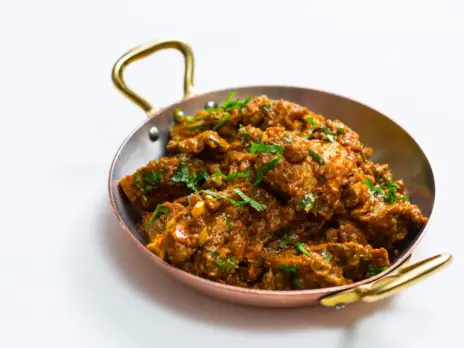
The occasion was a dinner dedicated to black winter truffles (tuber melanosporum as opposed to the tuber magnaturm or Alba white truffle), after a day’s truffle hunting with dogs in the snow-bound Catalan Pyrenees one January. It was a nine-course dinner, every course truffle-laden. The food was, let’s say, on the ambitiously innovative side (remember, this was Catalonia, pioneer of molecular gastronomy) and, while some dishes were relatively light, some were emphatically not. But that was okay: I’m a trooper when it comes to large set dinners. What floored me was the finale, the ice cream—very sweet and rich, and heavily flecked and infused with black truffle.
I readily concede that the issue was probably not really the ice cream, although I do think this one was unbalanced in its sweetness; it was the quantity of food, truffle-heavy, that preceded it. Blaming the ice cream is rather like blaming the Vintage Port for a hangover when it’s not so much the Port per se but that the Port came on top of the Champagne and the wine already consumed.
The other thing the dinner taught me was that truffles, white or black, do not go with everything and can’t be shoe-horned into every dish or conception. While I have had some outstanding creative dishes (among them Enrico Crippa’s cardoon and cardoon with white truffle at Piazza Duomo in Alba, WFW 81, and imaginative scallop dishes with truffles of both colors), it is still hard to beat the simplest classics: tagliatelle or risotto with shavings of truffle, white or black, la brouillade aux truffes (scrambled eggs with black truffle), fonduta con tartufo bianco (melted fontina cheese slackened with milk, butter, and egg yolks) or carpaccio con tartufo (paper-thin raw beef, olive oil, lemon juice, Parmigiano-Reggiano, and shavings of black or white truffle).
Again, far be it from me to take on Colette or Curnonsky, but I am with the Italians when it comes to the superiority of their white Alba truffle, the headiest, most intense and musky of all varieties and the one that is almost always eaten raw. While tagliatelle with black truffle is heavenly, tajarin con tartufo bianco is even more hedonistic (tajarin is the Piedmont version of tagliatelle) and Piedmont wines are a match for it, although they are not the only ones.
The best wines to pair with tagliatelle with truffle
To accompany it, I usually reach for a bottle of Nebbiolo, sometimes Nebbiolo d’Alba or Langhe Nebbiolo, sometimes a grander Barbaresco or Barolo, or, if I can find one, a Carema or Ghemme. For me, Nebbiolo and white truffle have an affinity that Piedmont’s Dolcetto and Barbera don’t have, although, if the truffle is being shaved on to carpaccio or carne cruda (raw beef) instead of pasta, a Barbera d’Asti can come into its own, one from Marchese Alfieri, for example.
The truffly, rich flavour of an old red Burgundy can also harmonize beautifully with the white truffle on tajarin. A Nuits St-Georges Premier Cru from Robert Chevillon or Ghislaine Barthod Chambolle-Musigny would be among my ideals, but I could settle for less. (For the record, mature Right Bank Bordeaux is not a match for old red Burgundy with white truffle but can come into its own with black. I recently paired a 2005 Château Jean Faure St-Emilion with black truffle with tagliatelle.)
Red is not the only color. Mature dry white wines with good structure and complexity, including sometimes slightly honeyed flavours, can work well: Piedmont’s Timorasso, for example, or Verdicchio di Castelli Jesi Riserva, Vernaccia di San Gimignano Riserva, or Côte d’Or Chardonnay. The sort of white wines I would avoid are very crisp, light, high acid, or leaner mineral styles.
Mature Vintage Champagne, or a multi-vintage, is another successful pairing in which intense, complex and truffley echoes may come into play. I have enjoyed Krug Grande Cuvée with white truffle and tagliatelle more than once and on one occasion Krug Rosé, although I have to admit that I don’t recall an occasion when I haven’t enjoyed a Krug Champagne.