ST-JULIEN
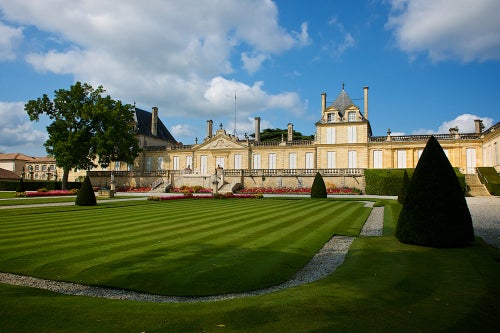
Château Beychevelle 4ème Cru
(52% CS, 43% M, 5% PV)
SF | It may appear churlish to describe this as a “blockbuster,” but there is something inordinately generous and satisfying about a Beychevelle with its sails tacked to the wind. Damson, Morello cherry, and vanillin to betray the new oak. 13% of press wine has been added. Philippe Blanc assures us that the maceration has been shorter than usual and the extraction more measured, but we remain on the verge of being unconvinced, such is the sensuous approachability on display here! A high-toned, hedonistic delight. | 95–96
Amiral de Beychevelle
(56% CS, 44% M)
SF | Adjacent to Beaumont, with a relatively high (for Beychevelle, that is) proportion of Cabernet Sauvignon, now coming of age, this is an exciting Amiral; clean, rich, and focused, with energy and volume, ripe tannins and a gamut of flavors on display, many tilting toward the darker, black-cherry end of the spectrum. Peppery black fruits to the fore, a croquant style with plenty of bite, all undersigned by typical Beychevelle generosity. Steady as she goes! | 92–93
Related
Château Branaire-Ducru 4ème Cru
(62% CS, 26% M, 6% CF, 6% PV)
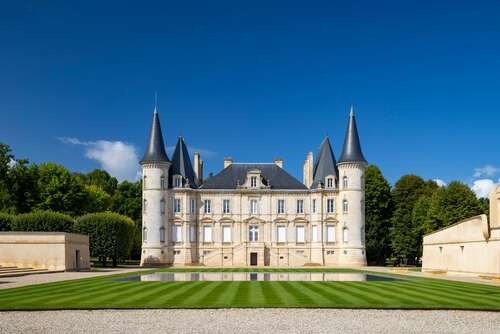
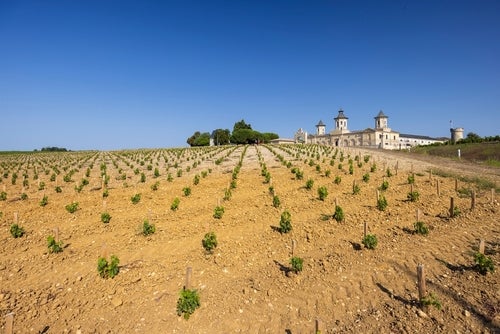
SF | A jewel-like, crystalline crimson clarity, a teasing glint to signal quality and freshness, both of which, sure enough, ensue. Winemaker Jean-Dominique Videau recalls how the Merlot was less marked by the benevolent late rain, and was therefore assertive and firm of purpose, whereas Cabernet, benefiting from the post-drought balm, reveals itself in terms best described as linear, aromatic, and svelte. The Cabernet looks set to win out, such is its refined, cool character, which emerges, supple and poised, from the weighty preamble. The chalky tannins are seamless and there is impressive length and capacity to age, itself underwritten by a pure seam of acidity (more tartaric than malic, Jean-Dominique advises). Small-berried and high-toned, succulent and precise; a lower fermentation temperature, parcel vinification, and only 65% new wood—all of these attributes have conspired to underwrite quality here. The upward trajectory of this property, which has scarcely budged from its 1855 boundaries, continues. | 95–96
Château Ducru-Beaucaillou 2ème Cru
(79% CS, 21% M)
Content from our partners
SF | The proximity to the Gironde estuary, together with appreciable diurnal variation in August, are both cited to explain how the wine can be so seductively powerful, a festival of blue and black fruit, and at the same time demonstrably precise and refreshing, especially on the finish, which has an almost-menthol uplift. Gunpowder, lavender, and crushed rock spice up the party, but the ripe fruit is king, true to form, enveloped by fine-grained tannins (from 100% new oak) and a tapered peroration. Bruno Borie compares this to the 2010, the 2022 to 2009. | 94–95
Croix Ducru-Beaucaillou
(66% M, 32% CS, 2% CF)
SF | Sourced from a specific gravelly site between Léoville Barton and Gloria, Croix Ducru-Beaucaillou is a succulent, powerful, and resonant wine, with the Merlot, as usual, very expressive, plums and damson to the fore. It is aged in 80% new oak, and beyond the velvet and vanilla, there is a pleasing interplay between spice and fruit and a mid-palate generosity, all without forsaking tannic grip, or, for that matter, what we may describe as Ducru plush. | 91–92
Château Gloria
(56% CS, 34% M, 6% PV, 4% CF)
SF | Arriviste in the sense that it was created after the 1855 classification, but classy in many other senses (including the topography and the fact that it now farms biodynamically), Gloria in 2025 is richly perfumed and hedonistic, with cassis to the fore and a texture that stays just the right side of decadence, thanks to a studied regime of cold maceration and gentle infusion. Pleasingly perfumed and long. | 93–94
Château Gruaud-Larose 2ème Cru
(77% CS, 21% M, 2% CF)
SF | With a special embossed label to mark the 300th anniversary, a special wine; fresher, in the opinion of Virginie Sallette, than 2022 and perhaps more on a par with 2020. A deep, near-opaque color, then a characteristically reticent aromatic, which unfurls gradually, teasingly, with herbs, tea, and mint all evidenced just as much as the dark fruit. Rather against the flow, Virginie fermented at higher temperatures than sometimes (no more than 82°F [28°C], admittedly), confident in the inherent structure and the phenolic potential, despite a relatively low ABV (13.47%) Sapidity sits with purity, the drama of the tannins controlled by a line of acidity and the stretch of the finish. New oak, for up to 18 months, discreet in the face of the quiet power on display. | 97–98
Sarget de Gruaud-Larose
(58% CS, 36% M, 2% CF, 4% PV)
SF | Included in the original 1855 classification, the vines that tend to make up Sarget are sourced from Terrace 3 Garonne gravels from the Quaternary terraces, although some of the (gentle) croupes are more clay-based. The original terroir, in other words, and with some old vines from all three varieties. Aristocratic Cabernet Sauvignon bestows floral aromas; black tea and eucalypt, too, then cassis and loganberry. Then there are plums and damsons from the Merlot and a sturdy, spicy contribution from the Petit Verdot. An early harvest (September 4–20) has not inhibited complexity or, for that matter, aromatic harmony. The texture is generous, richly upholstered yet not overblown; the finish is clean and satisfying. An extremely accomplished Sarget. | 94–95
Château Lagrange 3ème Cru
(77% CS, 18% M, 5% PV)
SF | The proportion of Cabernet Sauvignon has been consistently high since 2019, even with 2025’s parsimonious yields. The “house style” has evolved apace; an always glossy, sumptuous wine has now, quietly, taken on more cerebral depth, even if not quite in the same manner as its neighbor Gruaud-Larose. A late harvest (concluded October 10) helped to inform a style that is both ripe and intense, aromatically satisfying (plenty of blue and black fruit, then graphite and cigar box) yet with very precise tannins and a whistle-clean finish. Consultant Eric Boissenot has helped to fashion a St-Julien that is both richly stylish and also (no contradiction here!) a worthy representative of this delightful appellation. A fine effort. | 95–96
Les Fiefs de Lagrange
(57% M, 33% CS, 10% PV)
SF | A somewhat atypical Fiefs, with more Merlot than usual as the lower yielding Cabernet Sauvignon has found its way into the grand vin. Selected by parcel, nonetheless, and made up predominantly of Merlot vines of up to 40 years of age. Aged mainly in old wood but with 10% of both new barrique and amphorae to refine the detail. Fleshy, broad, and what Matthieu Bordes describes as “gourmand,” there is no lack of spicy intrigue and a powerful, satisfying finish. | 92–93
Château Langoa Barton 3ème Cru
(45% M, 40% CS, 15% CF)
SF | Parsimonious yields (20hl/ha was below the already-low St-Julien average of 26hl/ha) and particular attention to factors such as length and intensity of extraction and the subdivision of the components of the press wine (the near-ubiquitous Eric Boissenot consults), all conspire to fashion a quintessential Langoa; thus a wine that is juicy and forward and yet also seriously structured and long. Black and red fruit both play their part, as do notes of juniper, camphor even; most important is the naturally authoritative strand of acidity and the integration of finely grained, gently chalky tannin. No new oak here—no need for it! | 94–95
Château Léoville Barton 2ème Cru
(86% CS, 12% M, 2% CF)
SF | Even the increasingly playful shenanigans of Alma, Lilian Barton Sartorius’s youthful dog, cannot undermine the joyous quality of this wine. A showstopper and, as with all great things, clearly great from the start. Lilian explains the refreshing, almost-cool finish in terms of the agroforestry that surrounds the vines, the Cabernet Sauvignon (it has not held such a large stake since 2017’s 93%) dignified, nuanced, and regal. Subtle, chalky tannins, very classic, then a slow build on the palate, bright and distinguished dark fruit; discreet yet poised, hints of cigar box and incense, then a crescendo and a broad, pavonine flourish. The harvest had been brought in by September 18 and the yield (22hl/ha) was the lowest since 1991, the former frosty, the incumbent far from it, in every sense. | 95–96
Château Léoville-Las-Cases 2ème Cru
(82% CS, 12% CF, 6% M)
SF | Las-Cases appears to have reverted to its traditional 80% new oak, sourced with great care from ten coopers and, unsurprisingly, locking the wine in a tight clasp. The aromatic is initially reticent, but soon offers lavender and violet, boysenberry and coal embers, truffle and cassis, tobacco and loam, to name a few initial impressions that adorn the palate, itself long and complex, its tannins fine-grained and precise, its acidity imperious and uplifting, its texture layered and nuanced. A very worthy first vintage to be vinified in the massive and massively impressive, cathedral-like St-Julien installation and the first under the directorship of Arnaud Delon who, familial reticence aside, seems genuinely very pleased by this masterpiece… as are we all. | 96–97
Clos du Marquis
(73% CS, 21% M, 6% CF)
SF | Autonomous in terms of location and winemaking, Clos du Marquis is worthy of a standalone cru classé status, such is the elegance of its structure and the complexity of the fruit of its older vines. Impressive aromatic intensity; cassis, plum, lavender, and graphite, with just a hint of St-Julien’s traditional cigar box and loamy earth, then a generous mouthfeel, this year’s dominance by Cabernet Sauvignon evidenced by gravelly yet magisterial tannins and linear acidity. Old-school in the sense that one really does wonder how it will turn out; the tenor of such speculation, however, is overwhelmingly positive. | 94–95
Le Petit Lion
(49% CS, 48% M, 3% CF)
SF | Pretty much level-pegging this year, the Cabernet and Merlot sit harmoniously and offer succulent fruit; sloes and loganberry, then cassis, all rounded out by 27% new barrels. Polished tannins and impressive concentration, then an elegantly tapered finish, elegant of texture, too. Sone of the older Merlot vines didn’t quite make the grand vin and seem to add a dash of welcome complexity here. | 93–94
Château Léoville Poyferré 2ème Cru
(61% CS, 26% M, 8% CF, 5% PV)
SF | The near-obsession in the selection of the oak, 80% of which is new, and which is sourced from 18 different coopers, is the key to unlock the complexity in play here and to illustrate the precise approach that stretches all the way back to the vineyard parcels; nothing stretched about the wine, however, which is exuberant and expressive; a symphony of blueberry, lavender, and soaring potential. The sensuous Poyferré house style seems well suited to 2025, its initially sturdier, maybe more “serious” demeanor gifted by confidence in the natural ripeness and pure profile of this thoughtful vintage itself. Highly successful, all in all. | 95–96
Pavillon de Léoville Poyferré
(58% CS, 21% M, 14% PV, 7% CF)
SF | A little more Petit Verdot than usual, adding gravitas and grip to the luscious flavors of raspberry compote, summer pudding, and parma violet. A creamy, mocha touch comes courtesy of only 20% new oak, adding generous texture to an already generous substructure. Ripe, chalky tannins abound but the wine claims purity and an almost-cool finish in apparent but pleasing defiance of the warmth of the vintage. | 93–94
Château St-Pierre 4ème Cru
(78% CS, 15% M, 4%CF, 3% PV)
SF | Sacha le Baube-Triaud, the fourth generation of the owning family, compares his methodology to that of Claire Villars down the road from St-Julien at Ferrière in Margaux; his tilt toward a natural methodology and a very careful extraction regime are both pointers to increasing quality—unsurprising, given the vines’ location in the heart of St-Julien. The oldest Cabernet Sauvignon vines are located on the gravel plateau next to Branaire-Ducru. Graphite and cigar box, blueberries and licorice, the 60% of new oak influential but not overbearing. Restrained, some may say, and less overtly exuberant than Gloria. Sasha describes the wine’s progress in terms of an “Ascension Story,” echoing the crossed-keyed implications of the name itself, and with no overt ontological anxiety. Maybe both wines rehearse a vinous Gloria in Excelsis! | 94–95
Château Talbot 4ème Cru
(74% CS, 17% M, 9% PV)
SF | With its highest-ever proportion of Petit Verdot, Talbot ’25 is statuesque and measured, with a fine definition of dark fruit and a halo of aromatic purity. Gentle extraction was key, according to Jean-Michel Laporte, the key mission to exploit the full potential of the small berries, without overworking the pips. No fewer than 38 different types of barrel were used, adding to an innate complexity and a pixilated panorama of detail. Juniper and cigar box add complexity, with the mouthfeel undeniably sturdy, but poised and refreshing on the finish, its successful future thereby underwritten. | 94–95
Connétable Talbot
(59% M, 41% CS)
SF | Jean-Michel Laporte has included 4% of 2024 in the blend, to make it, in his words “more accessible,” and ideal for a Parisien bistrot or equivalent. No new oak, but plenty of juicy fruit and ripe, if forthright, tannins, betraying provenance but without losing a fundamental generosity of spirit. | 92–93