

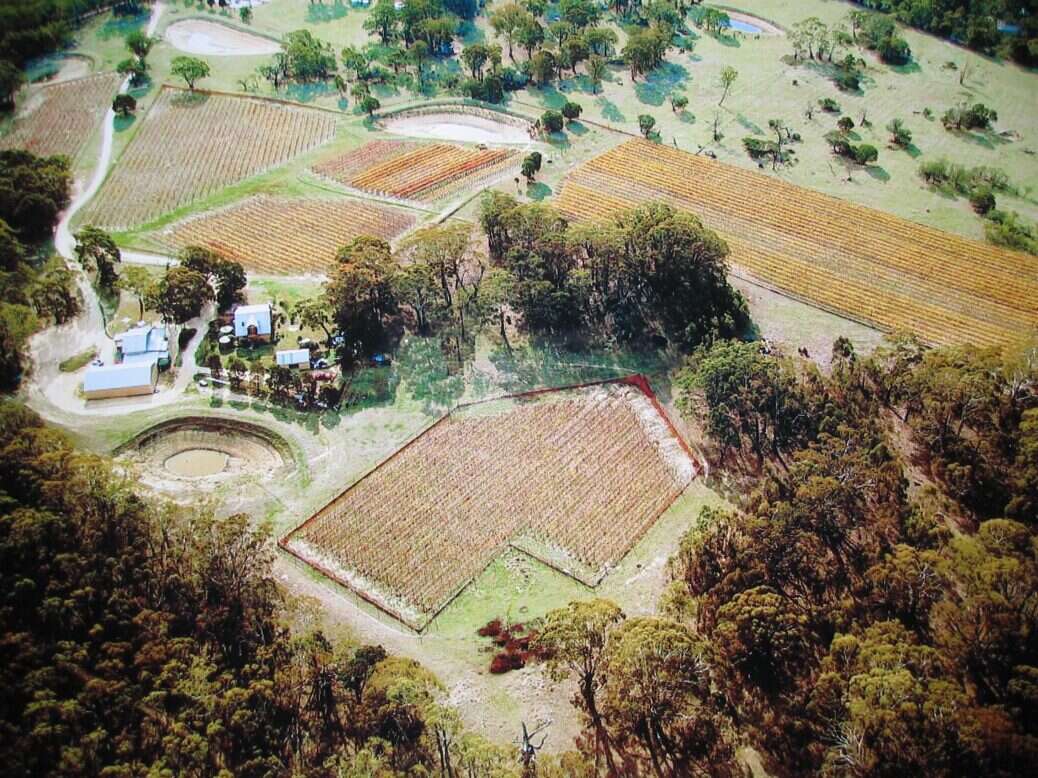
GEELONG
Once a thriving region for vineyards, Geelong was brought to a crashing halt around 140 years ago due to a combination of economic reasons, changing tastes, and phylloxera. It kicked off again in the late 1960s/early 1970s, with much of its success riding on the back of the efforts of Gary Farr, chief winemaker at Bannockburn from 1978 to 2004. Gary moved on in 2004 to establish his own operation, By Farr, now run by his son Nick. There are quality producers in Geelong, but it is the Farr family that has driven the wines to the heights they have achieved. Both Gary and Nick have spent considerable time in Burgundy, working at the famous Domaine Dujac, and the influence does not go unnoticed. The best examples of Geelong are wines of power and complexity.
By Farr
One of the traits of the wines crafted by Gary Farr, and subsequently his son Nick, is that they are always evolving, always improving. Talking to Nick, his latest focus was improving rootstocks due to inconsistencies over the seasons. He is aiming to keep minerality and freshness in his wines. There is also a focus on clones. Originally, there was P58; now the focus has shifted to Dijon clones, but always in a way that they can keep experimenting and keep learning. Vine density is another project. Nick talks of looking for as much tension as possible to sustain the power in the wines. They have a true minerality that Nick believes comes from the limestone. His wines have a “salty character that draws you back.” Nick likes working with Chardonnay because he believes it shows regionality. He loves the purity of the fruit and how it is expressive of individual sites. Any oak use needs to be seamless and very much in the background. He believes Chardonnay ages better than Pinot Noir, especially in tough years. Retaining acidity is the key. They have a range of Chardonnays with their GC the flagship. How long for remains to be seen. GC stands for Gary Charles, as in Gary Charles Farr, and not grand cru, though either works. These are some of the finest Chardonnays made anywhere in Australia, and if one thing is certain, it is that we will see even better in the years to come.
GC Chardonnay 2023
As noted, GC stands for Gary Charles. This wine is under Diam. Shimmering straw/gold. There are wonderful aromatics, with notes of white peaches, ginger, lemongrass, immaculate oak integration, nectarines, and spices. This is a wine of complexity and intensity, with fine citrusy acidity running the full, seemingly endless length. Stunning stuff that has at least 15 years ahead of it. One suspects Gary would love it. | 96
Related


Chardonnay Cote Vineyard 2017
A shining golden color, this is a wonderful Chardonnay with maturity and complexity and yet all the freshness and energy one could wish for. There are notes of cashews, oatmeal, spices, ginger, mandarins, and apricots. The oak integration has long finished, and it has left the wine with such a seductive and creamy texture. Great length here, and the wine still has the best part of a decade ahead of it. Under Diam. | 97
MACEDON
Anyone keen to undertake cool-climate viticulture on the mainland of Australia need look no farther. The cool, elevated region of Macedon in Victoria is ideal for growing quality Pinot Noir and Chardonnay. Bindi tends to be seen as a little bit of an outlier here, but you would be hard-pressed to find anyone who did not see its wines as the pick of the region—and some of the best made in the country. There are others who have established stellar reputations and for whom the future also looks very exciting.
Content from our partners
Bindi
Planted in 1988 by Michael Dhillon’s father, Bill, Bindi places an emphasis on great Pinot Noir and Chardonnay. Bill was born in India in 1937, spent time in Malaya, and moved to Victoria in the late ’50s. He was introduced to wine while studying, and the rest, as they say in the classics, is history. Bindi is a Punjabi word meaning “wisdom and humility” (and not, as most Aussies assume, a reference to the hated bindi weeds with their nasty little thorns, the bane of every young Aussie kid playing outdoors). The Bindi vineyards are at an elevation of 1,650ft (500m) above sea level—high for Australia. The soils are predominantly shattered quartz over siltstone, sandstone, and clay, with some eroded volcanic topsoil over clay. Bindi’s earliest vintages saw three barrels of 1991 Chardonnay made at Hanging Rock and two barrels of 1992 Pinot Noir at Mt Gisborne by Stuart Anderson of Balgownie, who would become a valued mentor to Michael. Since 1997, all Bindi wines have been made at the winery. Before taking over, Michael worked in Champagne, the Rhône, and Tuscany, as well as at Howard Park in Margaret River.
Michael is very much enamored of close planting in his vineyards, but what is perhaps more apparent is his deft touch with oak. It runs through all the wines. The clones he uses are P58 and I10. He sees all his vineyards as having their own personalities, and differences simply come down to conditions of the season. Michael has always stressed that “season cannot trump site.”
The Quartz Vineyard is a 480-million-year-old base of Ordovician soil, with quartz, mudstone, sandstone, clay, and a little 5-million-year-old volcanic soil intermixed. It was planted in 1988 and sits 1,650ft (500m) above sea level. Michael notes that every 330ft (100m) above sea level delays ripening by a week. The grapes are destemmed and given some skin contact in the press, then go straight to barrel with wild yeasts for 11 months’ maturation after fermentation. The oak is 228-liter barriques.
Quartz Chardonnay 2023
From a vineyard planted in 1988, Michael Dhillon has made some of Australia’s finest Chardonnays. This is no exception. There are pungent aromatics here, with notes of stone fruit, nectarines, grapefruits, spices, citrus, and an intriguing flick of white pepper. There is tight oak beautifully rendered, in a wine of poise and precision. Toward the finish, we see crisp nashi pear notes emerging. A line of bright acidity runs the full journey. Ten to 15 years ahead. Such promise. | 98
Quartz Chardonnay 2012
A mature Chardonnay but still with much to give. The nose has notes of ripe peaches, orange rind, glacé ginger, florals, and a slight chalky, minerally backing. A wine of incredible intensity, layered and with laser-like focus. On the palate, we see hints of figs and a touch of matchstick emerge. | 97
Dash Farms (Josh Cooper)
I first met Josh Cooper when he was working, or at least living, at his parent’s winery, Cobaw Ridge, many years ago. Clearly, as they say, the apple does not fall far from the tree, and Josh has established his own reputation as not only one of the region’s emerging talents but one of the best young winemakers in the country. His site, Dash Farms, sits on granitic slopes 1,500ft (450m) above sea level, technically just outside the Macedon Ranges GI. Josh believes that the lean granite soils and high altitude give his wines both concentration and freshness. Bunches are partially crushed by foot, as well as gently pressed before overnight settling and transfer to very lightly toasted 300-liter oak vessels, around 10–15% new. Maturing after fermentation is for a year, followed by four months in stainless steel prior to bottling. His experience working in both Burgundy and Chablis assists him in building complexity in the wines. He believes full malolactic fermentation is important to the texture.
Fans of Josh’s wines will be delighted to know that his next project for Chardonnay is an estate in the Macedon Ranges, where the vines will be close-planted at 10,000 vines per hectare.
Chardonnay 2023
Josh Cooper has emerged as a serious talent in the world of Chardonnay, and the evidence is plain for all to see. Here we have hints of apricot skins and peach pits, with a touch of nutmeg and cinnamon. Florals, figs, lemongrass, and notes of mandarin are in support, and the oak is beautifully melded. A seductively lingering finish. This is a joy to drink now but will still offer pleasure over the next 8–12 years. Under Diam. | 95
Chardonnay 2021
A plush and generous style, with hints of the development to date, but there is still a very long way for this wine to go. The nose gives notes of white peaches, florals, mango, honeysuckle, and some cushiony, cashew oak, with a hint of crumbly biscuits on the finish. The palate sees the emergence blood orange and pink grapefruit characters. Impressive length and fine balance, this is for enjoying any time over the next eight to ten years. | 96
Cobaw Ridge
The inclusion of this estate, owned and run by Josh Cooper’s parents Alan and Nelly, is not just to ensure family harmony but to highlight some of the pioneers of the region who have been producing superb wines since the early 1980s. In 1985, 1.6ha (4 acres) of red-wine grapes were planted; 1.2ha (3 acres) of Chardonnay—the P58 clone—followed the next year. They have always operated in a largely organic manner and were certified in 2009, with biodynamic certification following in 2011. They moved from cork to Diam in 2003 and transitioned to Diam 30 in 2014, finding it made a huge difference to the aging potential of their wines. Time on lees without bâtonnage and time in tank prior to bottling have also been introduced. They have also moved to a more subtle oak-integration program, including some larger-format oak with lower toast levels. They recently planted a further 0.3ha (0.75 acre) at 7,000 vines per hectare and take every opportunity to experiment when they can, including a multi-vintage release from pressings.
Chardonnay 2023
The nose exhibits an array of enticing aromatics, including grapefruit, honeysuckle, a range of spices, oatmeal, and mandarin. There is a minerally backing here, with a line of citrusy acidity. Impressive balance and length throughout; this is no shrinking violet, with flavor very much to the fore. Will drink well into the next decade. Under Diam. | 93
HUNTER VALLEY
If Margaret River’s success with Chardonnay can raise an eyebrow, Tyrrell’s extraordinary achievements with its Vat 47 are mind-blowing. If ever a wine seemingly shouldn’t work… The region offers rich and ripe flavors, including stone fruits, cashews, and peaches. Again, surely Chardonnay from the region should not age in the way Tyrrell’s has managed. Simply put your preconceptions aside, and enjoy the wines. If you ever want to irritate a wine snob, serve them a bottle of Vat 47. After contempt and dismissal, there will be grudging respect and finally undoubted enjoyment. Not that they’d ever admit it.
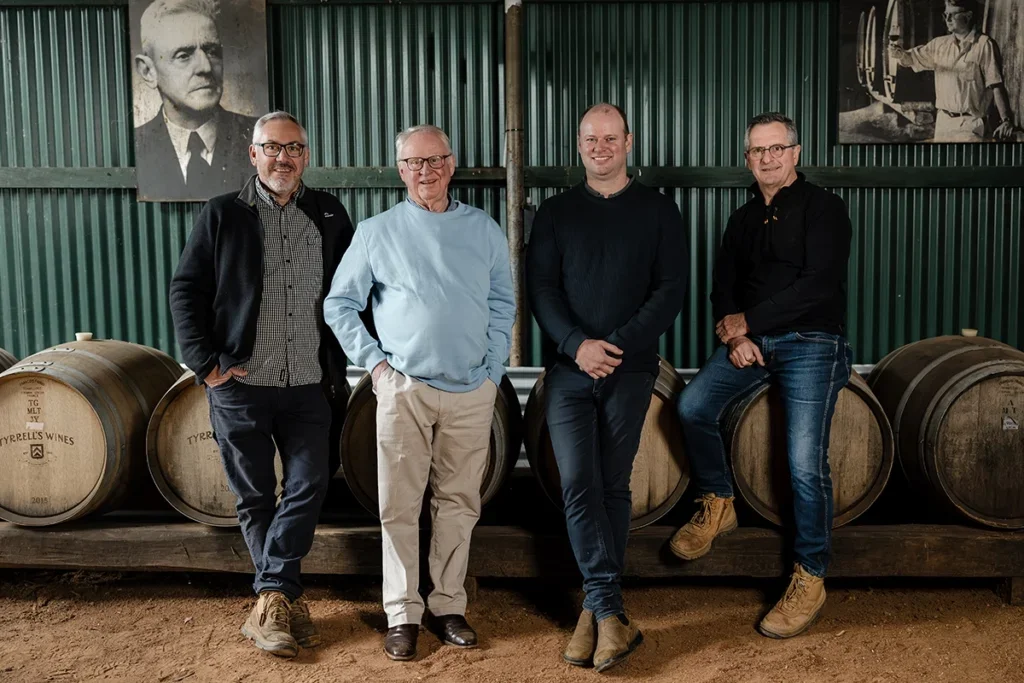
Tyrrell’s
The focus is always on its extraordinary Vat 47, but Tyrrell’s also offers a second prestige Chardonnay, HVD Old Vines. Yes, that stands for Hunter Valley Distillery, because that was where the fruit was originally intended to go. As noted, the 1971 Vat 47 was the genesis of Chardonnay in Australia. Who could have predicted where that wine would lead us? Tyrrell’s purchased the HVD Vineyard, the source of the allegedly stolen vines, from Penfolds in the early ’80s. The block of old vines in that vineyard, 0.82ha (2 acres), dates back to 1908. Tyrrell’s believes there is an argument that this makes it the oldest producing Chardonnay vineyard in the world. It and the Short Flat Vineyard have been the backbone of Vat 47 for many years, but with the establishment of the HVD as a separate wine, Vat 47 now comes solely from the Short Flat Vineyard.
Vat 47 is matured in French oak barriques, from the Burgundian cooperage François Frères. Malolactic fermentation is avoided, and the wine remains on gross lees until September each year, before racking. It has been under screwcap since 2004. Chris Tyrrell is, understandably, delighted at the results they get with Vat 47. “I think Chardonnay should be generous but still have freshness and vibrance of acidity, and I think that’s something we’ve got a good handle on now.” One suspects the Vat 47 will be around for as long as Australia is making Chardonnay.
Vat 47 Chardonnay 2023
The wine that, for many people, started it all. The color is a very pale, almost watery lemon hue, but there is no lack of punch when it comes to the aromas and palate. A wine of precision and focus, with notes of limes and lemons; the intensity never wavers. Pink-grapefruit touches emerge on the finish, along with florals and stone fruits. This will drink beautifully for at least the next 10–12 years. | 95
Vat 47 Chardonnay 2017
This is from an excellent vintage for the Hunter Valley. The nose offers lemon sherbert, citrus, florals, lemongrass, sea-breeze notes, and hints of grapefruit. Citrusy acidity runs the full length. A most persistent style, with excellent focus, but complexity is already evident, too, and it should build even further over the next decade. | 96


