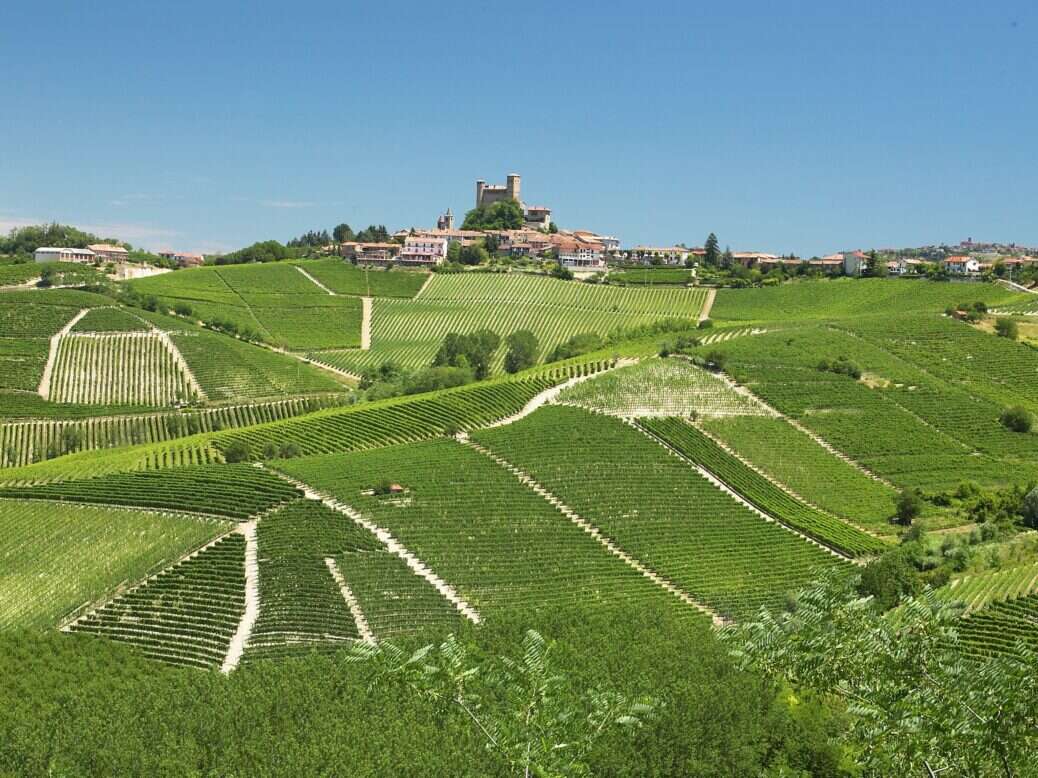
Anthony Rose reports on an imaginatively arranged vertical tasting of Massolino Vigna Rionda.
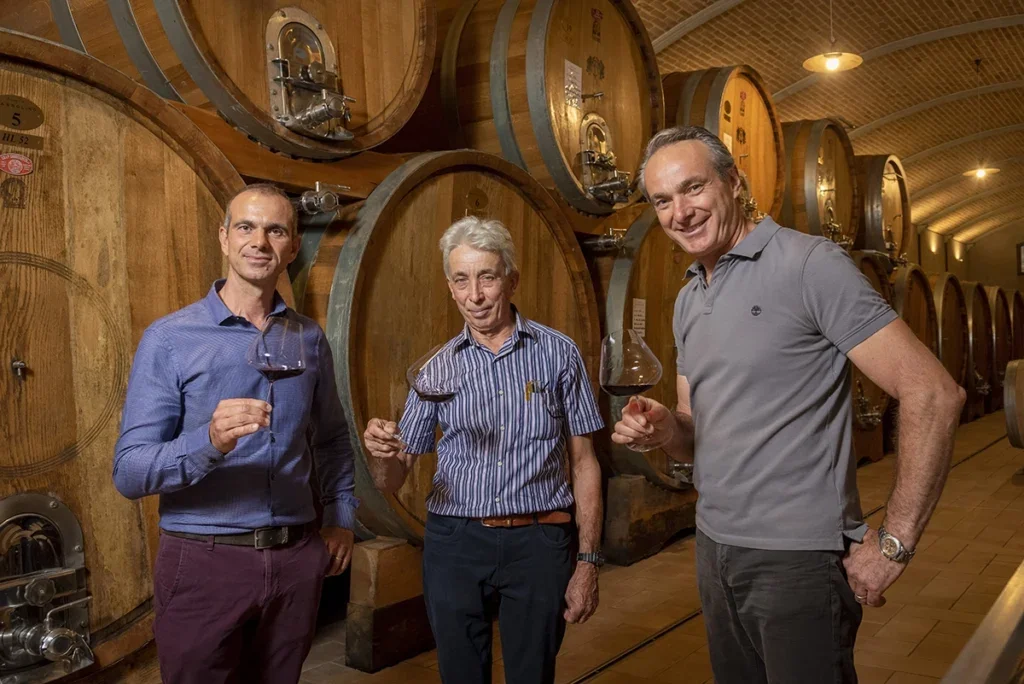
You’re at a tasting spanning vintages from 2019 back to 1997. Do you begin with the older wines or the younger ones? For Franco Massolino, presenting 12 vintages of his flagship Vigna Rionda, no such dilemma existed. Together with his UK importer, Liberty Wines’ David Gleave MW, who hosted the event in London, he devised a clever solution: present the 12 wines in four themed flights: hot years, classic years, greatest vintages, and recent releases.
David Gleave introduced Franco Massolino, the fourth generation of the family that founded the estate back in 1896. The importance of Vigna Rionda—both to Barolo as a whole and to the Massolino family specifically—could hardly be overstated. Today, the estate extends over a total of 55ha (136 acres), some of which lie within the prized Vigna Rionda MGA (Menzione Geografica Aggiuntiva), a cru within the Barolo DOCG that the Massolino family shares with ten other producers.
Franco recounted how his great-grandfather Giovanni, born just three years before the unification of Italy, faced no shortage of challenges when he moved from Monforte to Serralunga. Staying true to the land, he achieved his dream of a mixed farm: vegetables, corn, livestock, and a small amount of wine. His son Giuseppe was one of the founders of today’s Barolo and Barbaresco Consorzio in 1934 and bottled the first wine under the Massolino name in 1947.
Related

The family refers to their first acquisition of Vigna Rionda, in 1956, as the “conquest” of the cru—and the term is not used lightly. As early as 1879, Giovanni Gagna had written about Vigna Rionda as a source of exceptional wine. After inheriting vineyards in Serralunga d’Alba from his aunt Matilde Ornato, Giuseppe set out to make Vigna Rionda part of the Massolino estate.
Aware of its quality, he acquired a small parcel by swapping a piece of land twice its size with a neighbor. The neighbor was well aware of the value of his vineyard in Vigna Rionda but the vineyard offered in exchange was located right next to his house, so he accepted the exchange. In 1967 Giuseppe consolidated the family’s holdings and renamed the business Azienda Agricola Vigna Rionda. Additional purchases in 1986 and 1990 brought Massolino’s total to 3ha (7.4 acres)—nearly one third of the cru’s 10.24ha (25.3 acres). The first Barolo Vigna Rionda Massolino was produced in 1982.
Situated on the western ridge of Serralunga, south of the village, Vigna Rionda takes its name from the round shape of the hill. Altitudes run from 260 to 360m (850–1,180ft). Part of the Lequio Formation—the oldest geological portion of Barolo, dating back 15 million years. Its soils are predominantly clay marl with some sand, containing an impressive 30% active limestone (far higher than the regional average of 7–12%). The slopes face south and southwest; vines 40–50 years old are planted at 5,000–6,000 vines per hectare in guyot, with an average yield of 4.5 tonnes per hectare.
Content from our partners
Introducing the tasting, Franco explained that the first flight, 1997, 2000, and 2011, comprised warm vintages. The 1997 was the first year they associated with global warming. “It was considered extraordinary at the time. It was our first hot year. Now, with droughts, storms, and heavy rain more common, we’re better prepared. We manage the canopy differently and pay close attention to harvest dates.”
The hot years 2000 and 2011 also required relatively early picking. Traditionally, harvest began in mid-October, finishing later in the month. “Today we’re harvesting ten days to two weeks earlier,” Franco said. “We let leaves protect fruit from sun, maintain grass cover to retain moisture, and use hail nets. In hot vintages, some grapes can be prone to sunburn, so sorting is crucial.”
The second flight, the “classic” vintages, featured years with ideal water and temperature balance and October harvests. “This is the traditional style of Piemonte,” Franco said. “Slow, prolonged ripening, cooler weather, big day–night temperature swings at the end of the season. The wines develop different personalities—maybe not fully rounded yet, but expressive, with great aging potential.”
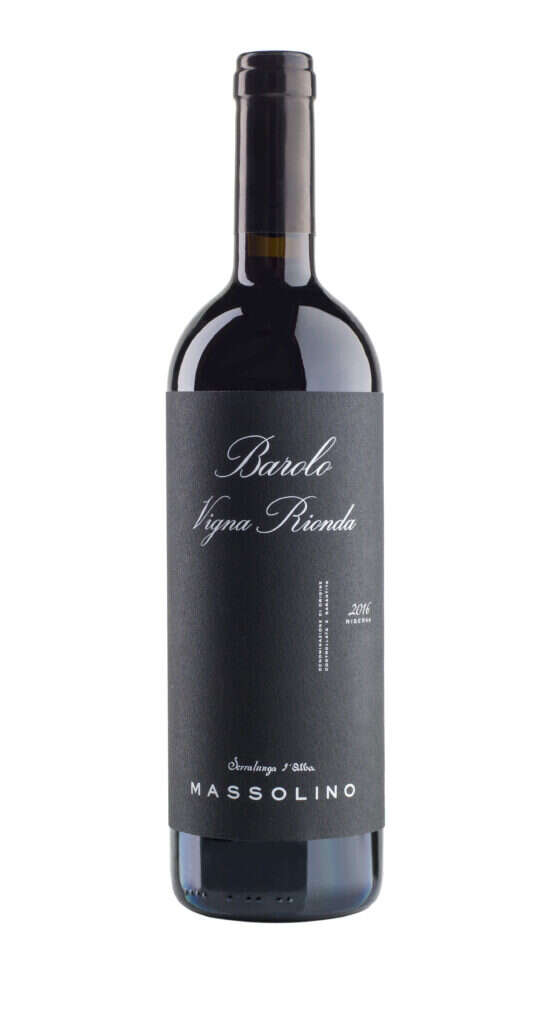
The third flight comprised vintages widely regarded as exceptional. These wines are aged for a shorter period in wood (two and a half years). The seasons were uniform, “almost perfect,” Franco said. The 2016, packaged with a black label to mark its significance, was described as “one of the best vintages of our lifetime.” The final flight showcased the most recent vintages.
Vinification is traditional: native yeast fermentation for three to four weeks in oak vats (from 2016, and previously concrete) at around 86°F (30°C), with gentle pumping over and ageing in large, neutral Slavonian oak for up to 42 months, followed by two years in bottle. “We’re not fans of excessively long macerations. Balance is key,” says Franco. Harvesting follows altitude, with the lower, middle and upper parts of the vineyard vinified separately. “In drought years, the lower part gives the best quality; in rainy years, the wind at the top helps dry the grapes, so the upper part excels.” Only the best results are used for the Barolo Vigna Rionda Riserva, the others are blended into the classic Barolo DOCG.
Franco recalled the era when Barolo producers fiercely debated modern versus traditional styles. As Gleave added, “The modernists started talking to each other in a region not known for openness, and things moved quickly in the 1990s.” In 1990, Massolino experimented with a modern style from their Parafada vineyard. “It was fun and we learned a lot,” Franco said, “but our father was right. We returned to our roots. We’re proud of the identity of our wines. Barolo isn’t easy—tannic, high in acidity—but its elegance and charm are unique. This is our path.”
Tasting
Group 1: Warm vintages
1997 Massolino Vigna Rionda Riserva (14% ABV)
Deep garnet; fresh, both sweet and savory, with evolved smoky, gamey notes and a mature chalkiness, no hint of oxidation; lovel,y ripe, dark fruit, sumptuous mid-palate concentration, almost juicy, checked by Nebbiolo’s light grip of tannin and acidity, the sweet fruit core just beginning to loosen. | 94
2000 Massolino Vigna Rionda Riserva (14% ABV)
Deep garnet with a bright red center; still fresh, not a whiff of oxidation; an evolved bouquet of black cherry, with floral notes and savoriness; generously ripe and concentrated, with a sweet cherry middle, now rounded after 25 years of evolution; soft, juicy tannins and ripe acidity turn the fruit to appetizingly savory on the finish. | 94
2011 Massolino Vigna Rionda Riserva (14.5% ABV)
Garnet but bright, with youthful red fruit and plum, plus background licorice spice, this is ripe with cherry and strawberry fruit; finely textured and generous, with rounded, almost melting tannins thanks to a fruit concentration of flavor, tapering gradually toward a lightly grippy finish. | 95
Group 2: Classic vintages
2001 Massolino Vigna Rionda Riserva (14% ABV)
Youthfully garnet, showing fine, fresh aromatics of cherry and spice, this is more classically structured than the warm vintages, with tannins appearing earlier, then dissolving to reveal a bright, red-cherry fruit core underpinned by a firm spine of fresh acidity, with a seamlessly balanced, savory finish. | 95
2004 Massolino Vigna Rionda Riserva (14% ABV)
Even though over two decades old, this looks considerably younger than the 2001, with a cherry-red center to garnet rim and the savory/ sweet combination of Nebbiolo aromatics and
a background tarry, gamey hint; the classic dry Nebbiolo tannins hold the red-fruit core in slow motion before releasing it in textbook fashion. | 95
2006 Massolino Vigna Rionda Riserva (14% ABV)
Relatively young and bright looking in the glass showing ruby shading to garnet, the typical, evolved Nebbiolo bouquet of red cherries, spice, and savory tar is intense; notes of sage and tar add a dimension to the concentrated, ripe fruit and firmer tannins than seen in the warm vintages; still grippy, with a firm spine of acidity and chewy, lightly astringent finish. | 94
Group 3: The great vintages
1996 Massolino Vigna Rionda Riserva (14.5% ABV)
Aged for four years in large oak barrels, this is a rich, deep garnet in color with savory, classic aromatics; firm tannins tighten early, holding the fruit in an iron grip, making this full-on Barolo in the traditional, austere mode; the sweet spot emerges gradually, though fruit is a tad less generous and the finish slightly astringent. | 94
2010 Massolino Vigna Rionda Riserva (14% ABV)
A youthful ruby shading to garnet at the rim of the glass, this has a sweet, maturing cherryish aromatic profile with a floral note; singing from the get-go, not just aromatically, the real textural finesse behind the first seductive taste of liquid cherries with its hint of tar helps the cherry fruit to dissolve effortlessly on the tongue with elegantly styled silkiness and juicy acidity. | 97
2016 Massolino Vigna Rionda Riserva Black Label (14.5% ABV)
Bright ruby in color, this, is superfresh and fragrant in its floral and haunting bright, red-fruit aromas, while on tasting there’s a rich and concentrated core of cherry fruit tinged with spice and floral notes, expanding on the tongue before the ripe tannins and juicy acidity kick in with an adolescent muscular structure; a core of bright fruit hold firm then starts to evolve, albeit with a degree of chewiness, gradually easing to release its full potential. | 96
Group 4: Recent vintages
2014 Massolino Vigna Rionda Riserva (14% ABV)
Exceptionally dark in color, the aromas are distinctively different, with a vanilla-oak note, perhaps a touch of new oak here; the fruit is more black cherry, too, and the tannins kick in, grabbing the tongue in a stranglehold of chewy extraction that traditionalists will love. | 92
2017 Massolino Vigna Rionda Riserva (14.5% ABV)
Bright youthful ruby, with a beguiling aromatic floral fragrance, this classically styled Nebbiolo with its bright cherries and spice is super-concentrated with rich, spicy cherry to the fore; still muscular in texture, it is still youthfully adolescent, its voluptuous, rich, red-fruit core underpinned by a fine structure of ripe tannins and refreshingly cranberryish acidity; very smart, evolving beautifully. | 95
2019 Massolino Vigna Rionda Riserva (14.5% ABV)
Youthfully ruby, this is classic Nebbiolo in style, with a fragrance, a firm spine of acidity, and typically grippy tannins; behind the red-fruit aromas, there’s a fine yet firm structure of muscular tannins and firm acidity, with good length and aging potential in traditional style, making this very much the province of the Barolo lover, i.e. people like me. | 94