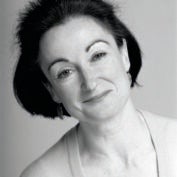
Having established herself as an architect, Ondine de la Feld was initially reluctant to take over her uncle’s esteemed Tenuta di Tavignano in 2013. Now, more than a decade (and some difficult moments) later, she is starting to make her mark in the Marche, says Margaret Rand.
As Ondine de la Feld recalls, “They’d say, ‘bâtonnage.’ Whaaat? ‘Malo.’ Whaaat? ‘What kind of yeast?’ Whaaat? I started gradually. I knew nothing about wine.”
Succession stories tend to fall into two camps. There’s the kind where there are public rows in which the heir stalks out and starts his own estate elsewhere. (It’s usually a “he.”) Then there’s the kind that is apparently accomplished without a single ripple, and everybody is smiling. “Rubbish,” says Ondine. “Anything around succession involves a lot going on. If it’s not employees [making problems], it could be a sister or a cousin. Nobody is going to give you control. If you want it, you have to take it. All changes of generation in family businesses are similar to my story.”
Ondine didn’t initially want control. She was an architect, and the niece of Stefano Aymerich di Laconi, who, with his wife Beatrice Lucangeli, founded Tenuta di Tavignano, in Italy’s Marche, in 1973. It has an outstanding reputation for Verdicchio dei Castelli di Jesi and particularly for its long-lived cru, Misco. What they bought was four properties that they put together; the land, which was farmed by tenants on the mezzadria system, produced wheat, oil, and wine—the standard local mix. That mix dictated the 9ft (2.8m) spacing of the rows of vines, because the same tractors had to be used for all crops. Gradually, the tenants left, and by the 1990s, the vineyards were being reorganized and replanted with the varieties of the day: Verdicchio, yes, plus Lacrima di Morro d’Alba, Cabernet Sauvignon, Cabernet Franc, Merlot, and others. The tradition of making light red for sale in demijohns for the local market (€2.10 per liter) continues, though it’s less important to the estate now. Vineyards form only 30ha (75 acres) of the total 230ha (570 acres) but account for most of the turnover.
Related
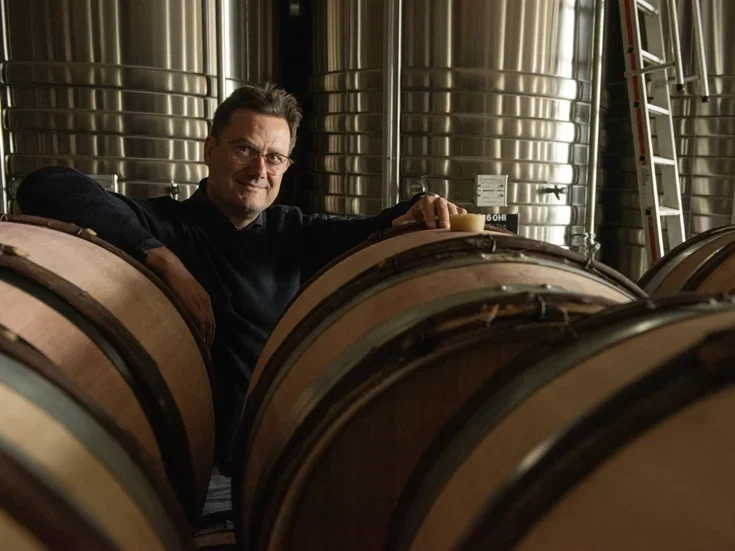
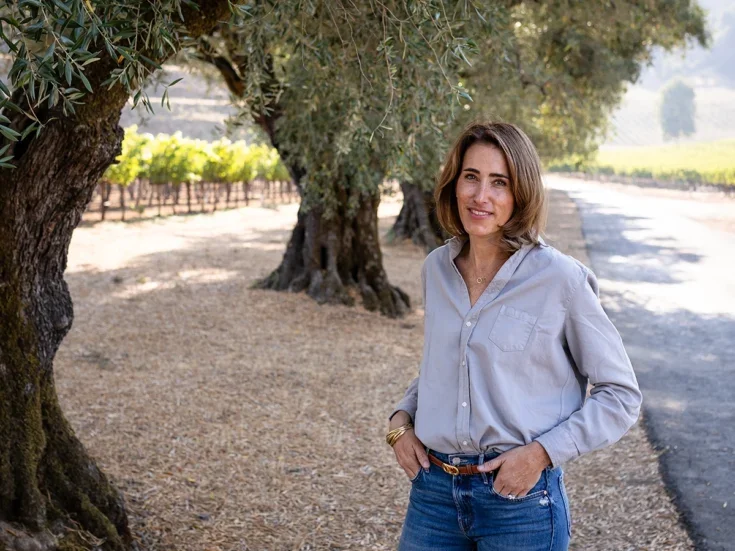
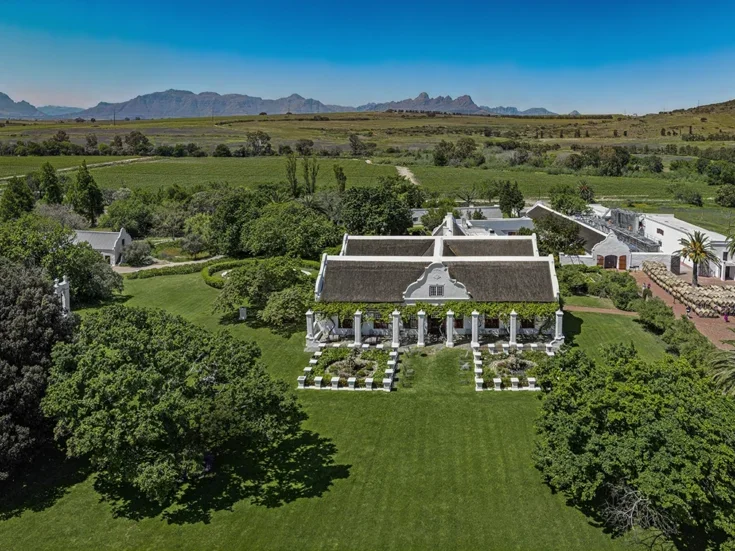
By 2013, Beatrice had died unexpectedly; they had not thought about the succession. Stefano asked Ondine to take over. Ondine was the fourth child in her family, and she just wanted to be left alone to do her own thing, “but he had a special affection for me”—hence the request.
Her first thought was to say no. She was working in another world and had no wish to change. “But my husband is from a very traditional family, with a focus on the importance of land, and he said, ‘How can you think this?’ I said, ‘I can think this.’”
Ondine had studied at La Sapienza in Rome, which she describes as “very intellectual but not contemporary.” Then she moved to London to complete her BA at City and Westminster University. She wanted to go on to the Architectural Association, but her father went bankrupt and funds were not available. Instead, she got a loan to go to the Royal College of Art and worked at Quaglino’s restaurant to earn money.
Content from our partners
For much of her childhood, from the age of six until 16, Ondine lived in Africa—her father worked then for Alitalia. “Those years gave me a big part of my personality. I adapt very easily to anything. I’m not disturbed by violence, poverty, extremes, or difficulties; and I’m very grateful for everything I have. When you have a lot, you’re aware that you could have nothing the day after. Money comes and goes; you can’t base everything on it.” She did a stage with Zaha Hadid; she likes drama in her architecture. She admires John Pawson, too: “My house in Milan was inspired by him. I built it myself. It was a townhouse, and I kept the facade and rebuilt it inside.”
Ondine met her husband in London—he was in banking—and she followed his career, initially to Switzerland. She had three children, moved country pretty much every year, and set up her own architectural studio. “I was teaching, too. I was a bit hyperactive, it’s true. Everything in wine is so slow by comparison. Maybe that’s good for me.” She comes across as formidably energetic. There’s a focused restlessness about her; she would not, one suspects, suffer fools gladly.
In any case, faced with her uncle’s request and her husband’s opinion, she wavered and asked her uncle to give her six months to decide. “In 2014, I accepted.”
Restarting at Tavignano from scratch
So, she started at the winery, knowing nothing, but studying. Because her uncle had no children, his employees had been taking more and more control themselves and not telling him everything. He said to her that she had to focus on the winery, “and slowly I got into it, taking care of things that were wrong. All was going well until the employees thought I was taking too much power. They built a fence against me and convinced my uncle that I was not capable of taking over.
“My uncle went to my mother, not to me, saying, ‘I made a mistake; she’s not the right person.’ I had seen things done in the wrong way in the winery. Money was disappearing.”
This was in 2017. Because it’s a family business, everyone had an opinion. “My father said, ‘Ondine, your uncle knows better than you do; you should listen to him.’ But my uncle was ill, and his employees were taking advantage.”
“There were many struggles, accidents.” One industrial accident from her uncle’s time took several years to resolve. “The employees who were against me left. I found myself starting from scratch. I found Paolo [Novelli, cellar master], who is very strong and nice and respectful of me. I had to change everything.” And this, she says, is pretty typical of what happens in family companies. “My husband works in family offices, and he sees many changes of generation. It’s always painful. It happens in all families, but some resent the passage to new leadership, and some don’t. If they fail, they fail. If this is what family businesses are like, ai ai ai…”
Eventually, her uncle realized that she was right, and his employees were wrong. In 2021, Ondine took complete control. There was a lot to be sorted out: All the official certifications, permits; all that bureaucracy was in a mess.
“I got into a quicksand,” she says of the whole experience. “Finally, I managed to survive. I’m enjoying it, but I would have preferred a bit less aggression. People say how lucky I am, but it’s not true. They don’t know how much work it involves.”
The first stage was, she says, “to work on the basement. Then to work on the sales team. I could have chosen a very experienced sales manager, but they would do everything themselves, and I prefer to work with them and make mistakes together.” Paolo Novelli is young, but her winemaker is in his 70s, “and he’s used to doing things his way. He needs to feel free; that way he says he can do good wines. He was never one of the ones against me. But I need to be involved now.”
Was it—is it—more difficult because she’s a woman? Maybe, she says. “But if you think of yourself as a woman in this business, it doesn’t help. I’m a producer, basta. If I was a man, I might have been received in different ways, but I have been very resilient. It was difficult at first, but after a while it’s not a problem; you get used to it. It’s part of a way of being. My husband is very supportive, and my children too.” Indeed, when I asked her to name her best quality, she said resilience. And her worst? “Resilience. It’s a problem, too. When you know you can accept a lot, you don’t react enough.”
Cultured and contemporary
Does she miss architecture? Yes, and it informs her plans for the future—of which more later. “It’s the best study on Earth,” she says; “it’s so complete. It’s psychology, humanism, history; a place you go into changes your attitude. In the temples of Greece, the distances between one column and other were so important. If you know about architecture, you know about civilization.” So, she also brings to her role a feeling for the wider culture of wine: the history of the region, its arts, the reasons it is how it is. She took me not just to her vineyards and around her winery but to Cingoli, to Sirolo. In Jesi she hired an official guide for a tour of its history: the spot where Emperor Frederick II was born in 1194; the quarrels between church and state; the Roman roads that run through the city; the theaters and the churches; the road through her vineyards that was once the main route to Ancona; and the fact that the wine here was a commodity rather than a luxury for rich markets.
And she brought some of her staff with us, too, to listen and learn. When visitors come, she wants her staff to be able to tell them about the region, not just about barrels and tanks; about why the vineyards are planted with these varieties and not others; about why the wines of the east coast of Italy are more extreme in style than those of the west coast.
Her name, of course, is not entirely local, and she thinks she’s regarded locally as not being entirely local. Her grandfather Stefano was of Sardinian and Spanish heritage—the Aymerichs were Ostrogoths who reached Sardinia about 1,000 years ago, and by the 20th century they had more names and titles than you could shake a stick at. But her grandmother Beatrice’s family, the Lucangeli, are an old Marche family, so she can claim deep roots here. She has English blood, too: Joseph Delafield used to run a big London brewery, Combe Delafield & Co, which was taken over by Watneys, after which he moved to Naples.
These strands leading back into the past are slightly deceptive, however. “The most frightening thing is to be stuck in tradition. I’m a person who really likes change. I like extreme contemporary architecture; art, too. Wine that’s stuck in old associations, images, and tradition does not excite me a lot. I want to take the dust off. The logo [of the estate] was different when I joined; it was two crowns and a shield. I wanted it to be lighter and less dramatic, so I simplified it, and put a wave underneath, for Ondine.”
She went over to organic viticulture early on and put on solar panels that make 60% of the estate’s electricity; and if she was planting now, she would favor indigenous grapes over the Merlot and Cabernet that take up a small part of the vineyard. (The Merlot is not very Merlot-ish, however, and may be all the better for that.)
“I wanted Tavignano to be more contemporary. But I realized that the wine business needs change to be very slow. At the start, I was too impatient. I made some mistakes and had to go back and start again, reinvent the image in different ways, being more patient and more respectful. I wanted to change before I realized what it really was. You can’t change without understanding what you want to change and the point you’re starting from. Then you can change. The real journey starts from now, this year.” The industrial injury case was a big distraction and took up a lot of energy for four years. “My uncle left me a layer, a very beautiful layer, but I had a lot of adjustment to do before putting my layer on top. Tradition is where I start from. Tavignano must be more contemporary.”
This, when your wine is winning plaudits all over, is complicated. “We do a perfect wine, but it’s his,” she says—it’s her winemaker’s wine. She might work with an enologist to make a new wine—“I want to have fun. I want to create things that maybe won’t be any good. But I need to risk it.”
What has emerged so far is an I Love Monsters trio: one called Freak, one called La Birba, and one called La Vergine. The bottle designs were produced by her architectural students; Ondine herself reckons she is too old to design such things. They look, to my eyes, rather younger in attitude than the wines inside them; a youthful packaging of col fondo, skin ferments, that sort of thing—but interesting, complex, grown-up flavors. They are, I’m told, very Hackney.
Misco, too, she’d like to be a bit edgier. That, and the Reserva version, are “perfect; too perfect. I’d like them to have more personality and less quantity. There’s too much mass-market in the style now.” Maybe something between La Vergine and this, she thinks—“just to break through. It’s had the best awards, we can’t have more awards, but we’re unknown. How to do it, I don’t know, but we’re in the shadows. I want to be in the sun a bit more. I would like to be a reference. We should be a reference.”
She’d like to build something, too, which can hardly come as a surprise. She’d like to design it, but with a team of architects behind her, because building regulations change all the time. “I can be the director, but I’d need an established architect in order not to finish in a big mess.”
She has fantasies, too—“plans” might be too strong a word—of what else she could do. Going back to university is one such, to study anthropology. She reads, obsessively, every day: “Every evening I start on a journey.” Another is to buy an old wooden sailing boat and repair it. She used to sail competitively. “I would love to work with my hands, making the same movements every day, not inventing something every day. The shape of a boat is so beautiful, so sexy. And I would like to have a result that mirrors the work I put in.”