

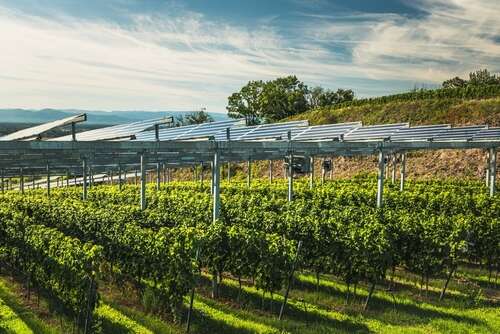
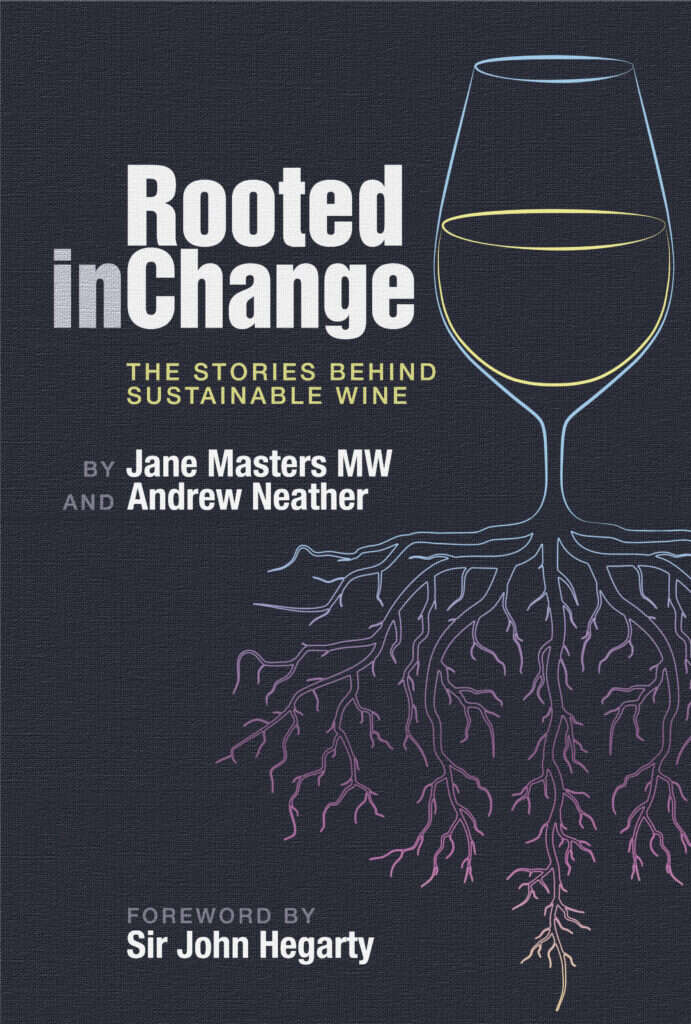
Brian St Pierre reviews Rooted in Change: The Stories Behind Sustainable Wine by Jane Masters MW and Andrew Neather.
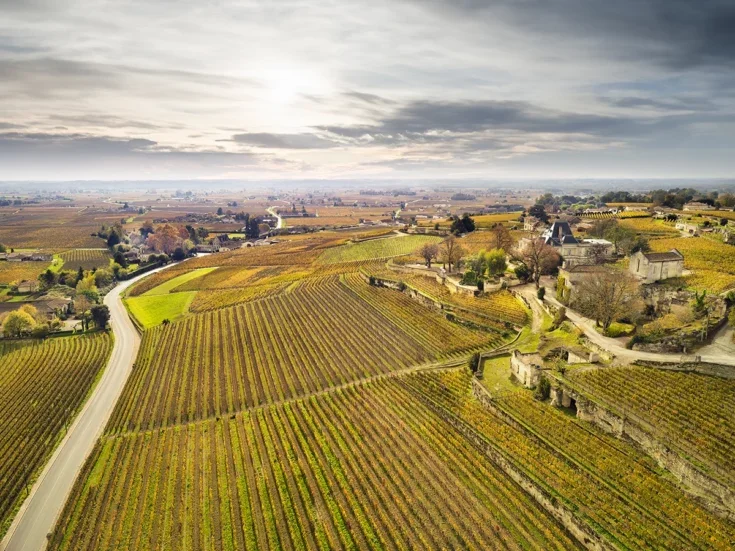
Walking between vines on a slope in Burgundy’s Côte d’Or on a sunny day in early summer a decade ago, gazing at the mosaic of vineyards spread below, it was easy to think there are few more appealing places to be, for a wine-lover, than such a scene, and what a considerable blessing its duplications around the world were. My cheery reverie wasn’t, however, being shared by my companion, a fourth-generation vigneron, who was trudging hard and looking down, grim-faced and muttering. Finally, she stopped and told me to shut my eyes and hold out my hands, which she filled with something light, though its bulk overflowed; she told me to squeeze it, and what felt like the flimsy exoskeletons of long-dead bugs, or stale cornflakes, crunched into dust between my fingers—it was the soil on which we stood, but it wasn’t what any serious gardener would recognize as good, honest dirt. The vineyard had belonged to a grower keen to embrace modernity, a believer in the power of synthetic fertilizers, fungicides, pesticides, and the manicured sterility of serious tillage, which didn’t prevent him from failing. “This can’t go on,” she said angrily, “it’s warfare, chemical and otherwise—total. We must go back.”
Now, it seems we’ve at least begun to return, with viticultural cease-fires around the world: “sustainability” is part of job titles at a multitude of wineries, while “regenerative” and “renewable” entwine through the dialogue as we swirl our glasses. (I discovered biochar, an ingeniously recycled soil supplement, when I overheard Randall Grahm enthuse about it as he poured samples of his Boony Doon at a fairly posh wine-tasting recently; aside from improving our wine discourse, it’s now also improving my backyard vegetable patch.) We’re making progress, but given the current psychological and political climate of abounding uncertainties, it’s still fair to wonder how we’re doing.
Rooted in Change is a well-organized, well-written, and serious situation report, a wine book like no other, especially in its cogently thorough best-of-times/worst-of-times explorations and scenarios, as the authors untangle the numerous knots of modern business practices and many of their effects and consequences, taking a balanced, often prescriptive view, but never preachy, even when reporting on sometimes appalling carelessness or indifference. Their credentials are as impressive as their research and restraint: Jane Masters MW has degrees in winemaking as well as business, and has been chairperson of the Institute of Masters of Wine, while Andrew Neather has been an academic historian, political speechwriter, newspaper journalist, and commentator on wine.
Related

No compromise for the future
The big-picture definition of “sustainability” that begins and anchors this literally world-wide collection of stories from the front lines was nailed down by the United Nations in 1987 and still makes sense: “Meeting the needs of the present without compromising the ability of future generations to meet their own needs.”
That broad mandate is applied inclusively here, organized in sequences that run from the ground up, literal roots to grapes to our glasses, from the “functional biodiversity” clarified in the refreshing rationality of the terroir section, through the growth cycle of vines, and on to the complications of modern winemaking, bottling, and packaging—a larger and more complicated chapter than you’d have found at any other time in wine’s history—with some interesting surprises: Cans are only good for short-term use, but increasingly and steadily popular, bag-in-boxes are great for shipping but lousy for recycling, closures aren’t at all created equal and can create small but persistent problems of their own.
Even the best containers—good old glass bottles, as it turns out, though efficient, neutral, and easy to recycle—have some problems: “One of the wine industry’s easy wins in reducing emissions should be to cut the weight of wine bottles,” the authors note. So far, the only group of retailers presenting a sensible policy toward the frequent heavy trudge of bottles’ carbon footprints seems to be the Scandinavian monopolies, but a patchwork of wine producers and importers are discarding the mythology of stodgy “mature markets” and a tentativeness toward new ideas by retail chains to lighten that load. They’re being joined by bottle manufacturers themselves, thus improving the odds for the future.
Content from our partners


Of course, the other drawback of many of these complications is wine itself. What wine goes with this herd of elephants in our rooms? Many of these shipping, retailing, carbon-neutrality, and recycling issues may seem lugubrious and certainly unromantic, not fit for appreciative chat and aesthetic admiration, but as they often affect our budgets as well as the endgame in our glasses, certainly seem worthy of consideration. (And considering that “the global wine industry uses the equivalent of around 27-billion 75-centilre bottles every year,” as the authors note, it should be an aspect hard to ignore, shouldn’t it?)
The good news on this front is increasing, not always grim, certainly no worse than this morning’s (or, these days, almost any morning’s) other dispatches, and often better balanced, in the longer run, between optimism and pessimism—my newspaper this morning has a story about the “energy pragmatism” of banks and hedge funds, which translates to large-scale climate-change denial and retreat, going from greenwash to whitewash in familiar steps, but a few days ago I was cheered up by an overview of improvements in English sparkling wines, partly through global warming, and another on experiments with some nearly forgotten grape varieties that may thrive again. David Gleave MW, of fine-wine importer Liberty Wines, committed to carbon neutrality, cheerfully tells the authors how he’s considerably reduced emissions and costs on shipments from Italy and Spain by switching to boats and rail. On a much larger scale, Bronco, one of America’s largest producer-purveyors of mass-market California wines, has switched from shipping nationally by truck to low-emission, lower-cost railroads. Point taken?
Problem or opportunity?
Caveats, it certainly turns out, are available on both sides of the street, but the basic question is ancient: Problem or opportunity? As the authors report and sift through the complications, they make clear that though numerous aspects are looking up, there’s still a need to make much more and better news, still a long way to go from the threats of today’s unbalanced realities: “The current level and pace of change in the world in terms of climate change, social change, technology and loss of biodiversity are bigger and faster than they have ever been in human history.”
A small sampler of problems demonstrates the urgency:
Around the world, “there were 151 unprecedented extreme weather events in 2024, the worst figure ever recorded.” (One close-to-home result: The alcohol content of what had been two of my favourite everyday Italian wines, formerly fairly light, nicely fresh, and delicious, jumped up by 2% that vintage. My tasting notes are dolorous.)
In formerly reliably cool Champagne, “Moët & Chandon harvested as early as August just once in the 20th century (1976). This century has already seen seven August harvests there.”
Annual rainfall in Chile is half or less than it once was; 3,000 wildfires in 2023 led the government to declare emergencies in several regions, and a majority of wells in some wine-growing regions have run dry. In the January just past, 24,000ha (59,300 acres), some in wine regions, have burned.
Amazon has a small fleet of massive electric heavy-goods vehicles for short-term haulage, each powered by a battery that weighs about a ton (2,000 pounds), creating complications at each end of their existence (mining the raw materials, and safe disposal when they expire). A “solution” now being developed in China is more rather than less—battery-swapping stations to serve, and surely encourage, retailers’ larger fleets.
There is of course much more, but there’s also, persistently, a tough-minded abundance of striving, insights, facts, and stories of progress from a multitude of grape growers and winemakers around the world, often pungent applications of common sense: Josep Ribas, in Catalonia, has a message for all of us: “Renewable energy gives you autonomy.” Alvaro Espinoza in Chile’s Maipo Valley warns, “Nitrogen makes the plant weaker. It’s like sugar for humans.” In South Africa’s Stellenbosch, Johan Reynecke is rewilding the bush, reviving corridors of fynbos, wild gardens of thousands of beneficial shrubs and flowers in corridors around his vineyards. “People should be as concerned about diversity loss as about climate change,” he says.
If the news isn’t all negative, it’s also not all retroactive, either; modernization, it turns out, can be a gate that swings both ways. Amorim, in Portugal, utilizes the dust from making its corks as a biomass energy source, and numerous wineries around the world now use the same process with vine cuttings, formerly discarded after winter pruning; sensors have been developed that can remotely and quickly monitor much of what’s going on in a vineyard, even sending data to a mobile phone; drones are ancillary tools for birds’-eye views, not toys any more, and “passive” has become a virtue, as wineries challenge global warming by moving some functions underground, cooling them down and saving energy.
People created vineyards, which aren’t at all a natural configuration for grapevines, and there are evidently more than an enlightened few now harnessing considerable ingenuity and determination to enhance and save those “perennial woody creepers” on a larger scale, problems of weather and economics permitting, of course, as well as wildfires, drought, bad bugs of all sorts, and especially climate-change denial and inaction by “merchants of doubt.”
In the end, though, the evidence of the virtues of wine have been available for millennia, and blueprints like this book demonstrate there’s still plenty of room for hope. It’s up to us, after all, to be able to say, in the future, that our blessings outweigh our regrets.
Rooted in Change: The Stories Behind Sustainable Wine
Jane Masters MW and Andrew Neather
Published by Académie du Vin Library; 248 pages (hardback); $25/£20


