


Chianti Classico is part of our DNA,” declared Marchese Piero Antinori when the new Antinori Gran Selezione (UGA) wines were first presented in Tuscany in September 2024.
Yet in the early 1970s, it might have seemed that Antinori was not so very interested in Chianti Classico. It left the Chianti Classico consorzio in 1975, not returning until 2012. It was relentlessly focused on making the best wine possible, and it was making a groundbreaking new wine that the DOC rules did not allow. That wine was Tignanello.
Tignanello was made with Sangiovese and the addition of 15–20% of Cabernet Sauvignon and Cabernet Franc, and it was fermented in barrique. At that time, this meant the wine could not be labeled as Chianti Classico. Entering the market as a vino da tavola, it soon commanded far higher prices than any Chianti Classico DOCG. In the years since then, the Chianti Classico consorzio regulations have evolved, and the focus is now very much on quality. The introduction of Chianti Classico Gran Selezione in 2014 is part of that development.
The Gran Selezione category sits at the top of the quality hierarchy, above Chianti Classico and Chianti Classico Riserva, and has stricter controls and regulations. The grapes for these wines must be sourced only from the producer’s own vineyards; bought-in grapes are not permitted. Gran Selezione wines must have a minimum of 80% Sangiovese and must be aged for a minimum of 30 months.
Related
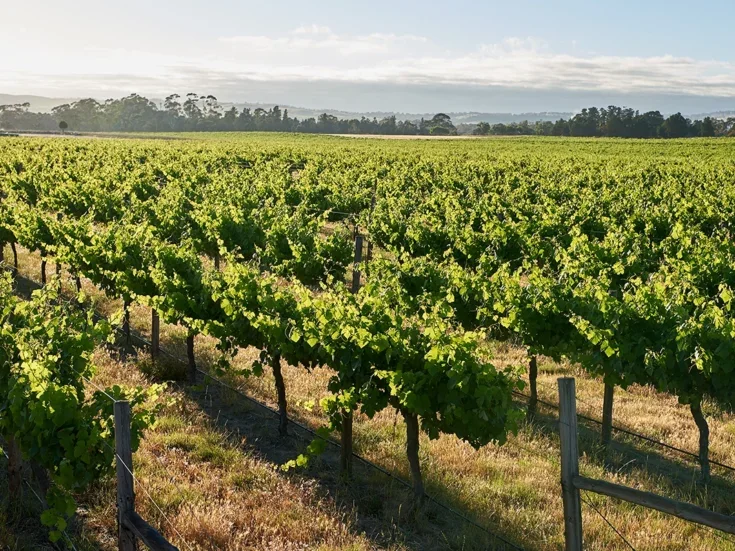
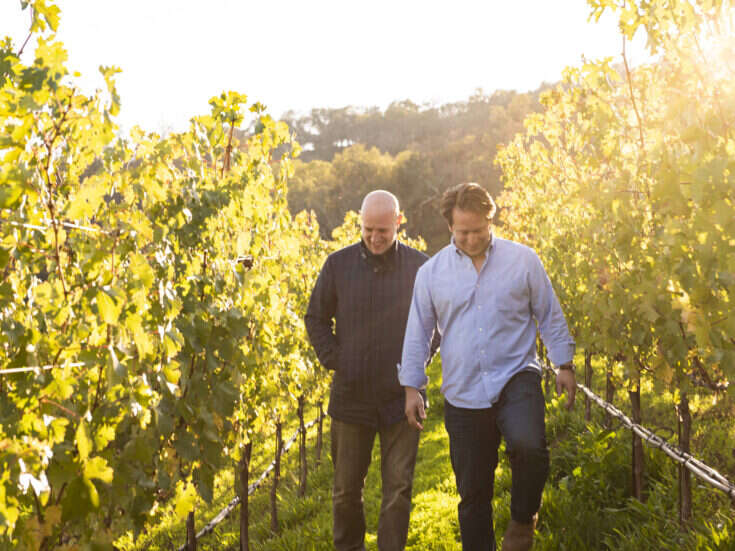

In 2023, there was a refinement to Gran Selezione with the addition of 11 UGAs. This allowed one of the 11 recently introduced Chianti Classico sub-zones—known as a unità geografiche aggiuntive (UGA)—to be specified on the label. The rules for these wines are even tighter than for Gran Selezione. The grapes must be grown on the producer’s estate within the UGA, and the wine must be at least 90% Sangiovese, with up to 10% being other native Italian grape varieties.

Identity and territory
On June 24, 2025, at its London restaurant, Cantinetta Antinori, which opened in Knightsbridge in 2023, Antinori presented four Gran Selezione UGA wines, three of which were being released onto the UK market for the first time. Introducing the wines to the press were Allegra Antinori, Marchese Piero’s daughter, responsible for hospitality throughout the company, and Renzo Cotarella, CEO and head of winemaking, who is effectively Marchese Antinori’s right-hand man.
All four wines come from Antinori’s own vineyards and represent four different UGAs. From the north to the south of the region, they are Cigliano, from vineyards bought in 2011 in the San Casciano UGA; Badia a Passignano, cultivated by Antinori since 1987, in the San Donato in Poggio UGA; Buiano, purchased in 2017, from Castellina in Chianti UGA; and San Sano, bought in 2014, in the Gaiole UGA.
Content from our partners

The 2021 Badia a Passignano, a 100% Sangiovese wine, was released onto the market in 2024. The Badia a Passignano estate is a powerful example of Antinori’s long-standing commitment to Chianti Classico and to Sangiovese. This investment was made in 1987, at a very difficult time for Italian wine and when Antinori was no longer a member of the Chianti Classico consorzio.
Allegra explained, “The 1980s and 1990s were an important time of expansion and experimentation for Antinori.” During that period, the company developed 15 wine estates, and it now makes wines in Umbria, Piemonte, Puglia, Bolgheri, and Montalcino, as well as in Chile and the US. Most recently it added Stag’s Leap in Napa to its portfolio. “But my family really started in Chianti Classico [in 1385], and we have a very strong connection with the Chianti Classico area. We have always believed that it was one of the most important regions with more potential.” In 2013, it built its main winery and headquarters, the Cantina di Chianti Classico, just outside Florence (in Chianti Classico). This was an investment of around €100 million and a huge undertaking for Antinori. Allegra remarks, “We really wanted to give back something to this territory that had given so much to our family over the years.” Turning to the new UGA wines, she emphasized that they are looking to the future. “But also, in a way, we are going back to our roots, because we began everything in Chianti Classico many, many centuries ago, and now we are focusing on this area.”
Renzo Cotarella added, “The truth is, we always believed in Chianti Classico. It was the place we made some of our earliest investments, with Pèppoli in 1985 and Badia in 1987. We believed that to produce a Chianti Classico with identity and with a reason, we needed our own vineyards.” Each of these new wines has its own identity and is matured in a slightly different way, to reflect and enhance that identity as far as possible.
Before moving on to taste any of the new wines, we touched briefly on the Antinori style and the influence of climate change. Cotarella commented, “We are in a global warming. We are in a period where the wine should be richer and darker and heavier. But you will be able to taste that we are moving exactly in the opposite direction. It’s much easier to make a wine with weight and more power. To make wine more and more refined—with more and more grace—is much more difficult.”

On tasting these wines, there is sometimes a fine line to tread between the Antinori signature of finesse and grace on the one hand, and the identity of the place on the other. The 2021 Buiano UGA, for example, comes from a warm site and is quite rich and powerful, even a little robust in style, but even here the tannins are very refined. The San Sano UGA wine, however, with its vertical style, racy acidity, and deeply silty tannins fits the bill more closely; it is lithe and lively, with energy and grace. I also found this energy and precision in the Cigliano, even though this, too, comes from a warm site, but it expresses itself in crunchy, just-ripe red fruits picked at the perfect time. This is the first release of these wines, so Antinori will continue to fine-tune, discover, and coax even more from these sites over the next few years. Given that Antinori has always focused on quality and wanted to make wines that express a sense of place, the new consorzio UGA regulations fit Antinori like a glove.
Things have come full circle, but throughout its adventurous experimentation, Antinori has always stayed true to its principles and beliefs, and its passionate focus on quality has made it one of the most successful wine producers in the world. Now that its beloved Chianti Classico has adopted some of these beliefs, it can finally come home, returning like Ulysses from its explorations but, like Penelope, having always kept the faith.
Cotarella concluded, “Producing wines with identity and intensity and authenticity is our goal, our destiny. We are obliged, we are condemned, in a certain a sense, to do this. These four wines really represent the beginning and the end of the 60 years of ownership and presence of Piero Antinori. We started with Tignanello—and the last thing he thought was to go back to Chianti Classico.”
Tasting
2021 Cigliano Chianti Classico DOCG Gran Selezione San Casciano UGA (14.5% ABV)
“2021 is the best vintage I have had in more than 30 years,” commented Cotarella. “We had a frost on April 7, and it was cold all April, so the season really started in May. Then there was very little rain. It was a dry season, and the ripening time was postponed by at least 20 days. This meant the grapes ripened during September and October, when there were much bigger diurnal temperature differences, of about 10°C [18°F], so the final ripening was longer and slower than normal, and the grapes ripened without stress. 2021 is intense and rich in taste but refined and precise.”
Villa Cigliano was the Antinori family’s historic residence from 1546 until 1800, when there was a family split. It was where the family took its first steps in growing grapes and making wine. Fortunately, the Villa Cigliano estate was recently reacquired by the Antinori family in 2020. The Cigliano vineyards are set among gently sloping hills in the province of Florence at an altitude of between 820ft and 1,380ft (250–420m) above sea level, and the area has a more continental climate. Cigliano ripens at least two weeks before San Sano. The soils here are alluvial clay with veins of limestone, sand, and quite a lot of gravel.
This was one of my favorites among these four Antinori wines because of the range of aromas and the weightless texture of the wine. It is also the most approachable of the four wines right now. The appearance is a lighter-toned, more transparent ruby than the other three. The nose is delightfully nuanced, with spicy, peppery raspberry and other red fruits to the fore, and a beguiling touch of sweet coconut oak in the background. What I liked so much was the range and vibrancy of the aromas and flavors, which were very clearly delineated but also melded together and harmonious. On the palate, the fruit is crisp and just ripe, with crunchy raspberry and redcurrant flavors that intertwine with notes of bitter orange, licorice, and white pepper, all wrapped in a juicy acidity creating a vibrant and uplifting feeling on the finish. A beautifully transparent and energetic wine, with finely woven, linen-textured tannins and a lovely feeling of ease and flow on the palate. 2025–40. | 96

2021 Buiano Chianti Classico DOCG Gran Selezione Castellina in Chianti UGA (15% ABV)
Buiano is a large, 100ha (250-acre) estate, with 50ha (125 acres) of vines, surrounded by oak forests. It is in the heart of the western slopes of Castellina in Chianti, in the province of Siena, with the town of San Gimignano visible on a clear day to the west. This UGA is farther south and in a warm subzone, with a typically Mediterranean climate. The vineyards here are at 950ft (290m) above sea level but have a northern exposure. Buiano is the most powerful and robust of these four wines, reflecting the warmth of this UGA, but always with the Antinori signature of refined tannins and beautifully precise winemaking. The wine is deep, inky, black ruby in color, and the nose opens slowly in the glass, with some ripe blackberry fruit and crunchy, green-herb notes. On the palate, it is quite full-bodied and powerful, solid and robust in style, with leafy blackberry and black-olive flavors. It is a wine of smoldering, dark fruit, with a firm backbone of tannins. When I first tasted this wine in September 2024, it seemed more open and expressive, and I scored it more highly, but it seems to be going through a closed phase at the moment and just needs more time in bottle to open up more fully. 2026–40. | 94
2021 San Sano Chianti Classico DOCG Gran Selezione Gaiole UGA Gaiole in Chianti (14.5% ABV)
The San Sano estate in Gaiole is in the province of Siena. The Gaiole UGA is in the southern part of the region and parallel to Castellina in Chianti but on the eastern side. Gaiole UGA has the advantage of some high-altitude vineyards, which create cooler vineyard mesoclimates. The San Sano estate comprises approximately 200ha (500 acres) of land, with 100ha (250 acres) of vineyards. The vineyards are set in a dramatic landscape of rugged, steep slopes and narrow valleys, sitting at an elevation of 1,230–1,475ft (375–450m). This high site creates a greater difference between day- and nighttime temperature, and this is reflected in the vertical structure of the wine and its racy acidity. Antinori’s Chianti Classico San Sano GS has a remarkably low pH, at 3.27 (equivalent to some white wines). Another striking advantage is that the soils in San Sano are mostly marly limestone, which really helps to create wines of elegance and finesse. Cotarella commented, “All the great wines are grown on soils rich in lime.”
In the glass there is a vibrant blue-ruby rim, reflecting the high acidity and low pH of this wine. At first, the nose is softly spicy, with intense, red-berried fruits and just-ripe blackberries—and a touch of forest floor. This wine has powerful flavors intertwined with exotic notes like dried orange peel and quinine. The San Sano is a much more nervy, vertical style of wine than the rounder and fuller Buiano or Badia a Passignano. The wine is linear and elegant, with noticeable tannins and acidity. There is a solid wall of fine but firmly textured tannins, like fine silt or sand, and a bright flash of acidity on the finish gives a mouthwatering freshness at the end. An energetic and characterful wine. 2026–40. | 96

2021 Badia a Passigano Chianti Classico DOCG Gran Selezione UGA San Donato in Poggio (14.5% ABV)
This Badia a Passignano was released in July 2024 in Italy. Badia a Passignano is above the town of Sambuca Val di Pesa in the San Donato in Poggio UGA, in the province of Florence, and very close to the Antinori’s Tenuta Tignanello. The first vintage of this wine was 1988, and it was Antinori’s first 100% Sangiovese wine. The vineyards surround a very old abbey (badia in Italian) and a monastery. The Antinori family bought the vineyards in 1987. These vineyards are at an altitude of 820–980ft (250–300m), surrounded by rolling hills that form a natural amphitheater, and the area has a Mediterranean climate.
The wine is dark, blood ruby in appearance. At first, gentle sweet-oak spice aromas appear, with a popcorn, brown-sugar note that later opens in the glass to reveal mint, blackberry, green herbs, and licorice. On the palate, it is a very balanced wine, with a lovely, silky texture. It is concentrated without being heavy, and there is just the merest hint of green herb intertwined with blackberry, creating an attractive contrast against the silky texture. This green-herb note is much more pleasingly integrated and less evident than before on this wine, so I asked Cotarella why. He said that from 2021 they had reduced the proportion of Hungarian oak used; from the 2022 vintage, they will stop using it completely. “Despite being a good-quality oak, it contributes to a certain sappiness in the wine,” he explained. As with so many of Antinori’s best wines, this Badia a Passignano finishes with beautiful mouthwatering acidity and fine-textured tannins. The effect creates a gentle salty savoriness that combines with refreshing acidity to make you want more. This is the best Badia a Passignano I have tasted in recent vintages. 2026–40. | 95


