Simon Field MW relished the opportunity to join Marina Olsson’s most recent Champagne spectacular, which was “dedicated to the clos.”
The 16th-century Jörgen Kock’s House is located in Malmö’s oldest square, the latter described, somewhat quaintly, as a piazza. The eponymous moneylender lived when Sweden was part of the Kalmar Union and when Dom Pérignon was gazing at the stars. We are assembled, of course, for another Marina Olsson Champagne spectacular with the Gomseglet Connoisseurs, this time dedicated to the so-called clos, some of the region’s rarest and most celebrated wines. An international contingent, including a trio from Australia, is serenaded, as is the tradition, by Johann Strauss II and Verdi and then settles down for a symposium of some eight flights of Champagne, all tasted semi-blind. For each flight, we know the vintages in question but neither the producers concerned nor the order of the vintages. It always works rather well.
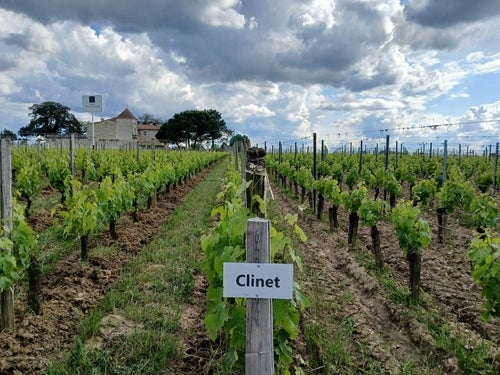
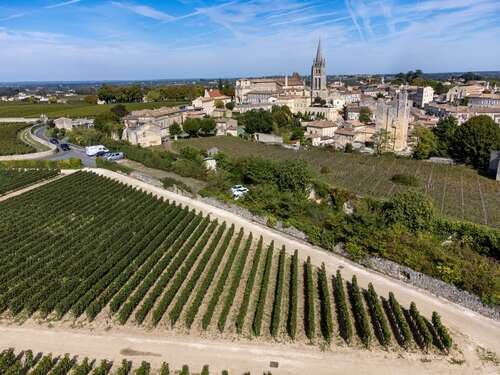
What exactly is a clos? One might have thought that, being as it is at or close to the pinnacle of the category, the term would merit a precise set of rules regarding planting and yields and the like. One might at least have thought that the clos would cleave to the Cistercian heritage of the romance of a walled garden. Neither of these apply, and indeed the walls are far from ubiquitous, often merely a de facto necessity in a semi-urban environment (Lanson) or resulting from the aspiration to preserve heat and/or to defy the wind (Clos des Goisses and Clos du Mesnil). Few specifically claim monastic heritage for their walls (Clos de l’Abbé an obvious but little-known exception) and some, the 25ha (62 acres) of Pommery’s Clos Pompadour among them, are of a size immediately to undermine any romanticism equated to a Benedictine kitchen garden.
Clos, in short, is a term recognized by the INAO but not one that requires a specific taxonomy of regulation; more like a lieu-dit than grand cru, then, and many, located within grand or premier cru sites, will therefore adhere to the stipulations thereof. A misnomer, maybe, since some are not really walled at all (hedged, maybe), but an increasingly popular one, with at least 45 wines now so labeled. The fact that many growers now add a single-vineyard portfolio to their traditional blended offerings underlines the trend, courtesy of Burgundy’s long and bright shadow. The fact that there often appears to be little distinction between a single-vineyard label and a clos offering underlines both a lack of hierarchy and the risk of confusion. Many might think that it is somewhat surprising and that the Champenois, past masters in the art of self-promotion, are missing a trick here. Others maintain the distinction is clear and that the clos has earned primacy. One might add that the clos, in total, cover only some 50ha (124 acres) of Champagne’s 34,000ha (84,000-acre) surface area so are rare jewels indeed. A shroud of mystery is no bad thing.
Related

And so to the tasting, which runs for the whole day and traverses eight flights. Two of them, it turns out, are dedicated to Billecart-Salmon’s Clos St-Hilaire, as we are treated to a vertical of every release. The second flight is presented to the group by winemaker Baptiste Chazeaud from Pommery, today’s special guest (there will always be at least one senior winemaker in situ, such is the esteem for Marina in the region), including a new release and the frighteningly rare Demoiselle Jardin cru, a clos within a clos, perhaps, raising the stakes, or at least a garden within a clos.
This was an outstanding tasting, yet again. Particularly interesting was the assessment of the (increased) use of wood for these rare wines and a discussion of whether the fact that many of the sites are acknowledged to be a little warmer may have compromised style in our brave new world where warmth is not always seen as a benefit. It is hard to generalize, but I was very impressed by the Clos Pompadour flight from Pommery and also struck by the youthful vigor of the Lansons, loyal to reputation. The fact that the St-Hilaires were so stylistically diverse underlines the positive fact that these very small sites do not inevitably defer to homogeneity. And as for today’s battle royale between the houses of Krug and Bollinger: a clear win for Bollinger, with the Vieilles Vignes Françaises 2008 the wine of the day—outstanding, or at least standing out from its walled splendor, a winsome ambassador for a pleasingly enigmatic category.
Tasting

Malmö, October 18, 2025
Content from our partners
Flight One: Marc Hébrart Clos le Léon
The chalky slopes of Dizy are hardly vertiginous, but their south-facing aspect and supremely austere soils prompted Marc Hébrart to replant a historic clos, initially three separate vineyards, now all allied under the banner of homogeneity and all waving the flag for highly densely planted Chardonnay. The total surface area of the clos is 0.8ha (2 acres). Oak-aged (225- or 300-liter second fills) and rested on lees under crown cap for at least 72 months, the wine is dosed at around 3g/l and labeled as extra-brut. Our quartet was of a consistently high quality, though the wood influence on the 2014 somewhat undermined its perceived Chablisien purity. The Chardonnay from the sun-kissed vineyards of the basin around Epernay’s conurbation has its own character, broader and more immediately generous than that of cousins from the Côte des Blancs. Hébrart also captures an aromatic character that is distinctive, by turns spicy and floral. It seduces most in the generous 2018 vintage.
Clos Le Léon 2018
Medium gold, with a lively bead and provocative aromatic, initially dominated by spearmint and beeswax. More conventional citric notes soon emerge, shrouded in soft spice and the gentlest hint of vanillin. The palate defers to the heat of
the vintage in terms of generosity and fruit profile. The latter is dominated by soft pineapple and white peach. Enrobing acidity and a modest dosage (3g/l) ensure that the structure is firm and linear, dignified and refined. | 93
Clos Le Léon 2016 92
Clos Le Léon 2015 92
Clos Le Léon 2014 90
Flight 2: Philipponnat Clos des Goisses
A magnificent, large (5.8ha [14.3-acre]) plot in the premier cru village of Mareuil-sur-Aÿ, itself surely worthy of grand cru status, such are the vicissitudes of nature that have left this slope (at 35 degrees) with a temperature on average 1.5°C (2.7°F) warmer than that enjoyed by many surrounding vineyards, such is the reflective benevolence of the Marne River that lies at the foot of the vineyard. Comprising no fewer than 11 lieux-dits and 14 separate plots (nine for Pinot Noir and five for Chardonnay), Goisses is nonetheless geologically homogenous, with a shallow topsoil soon ceding ground to the firm chalk beneath. Vinified in a combination of stainless steel and (Burgundian) barrels, Clos des Goisses enjoys a long aging and then a modest dosage; 4.5g/l seems to be a preferred quota. Our quartet performed strongly, with the 2006 (described by one taster as “a rather plump ballerina”) the least convincing, then the 2005 rather mysterious, the nutty oxidative imperative of the attack elegantly tamed by a zesty, almost tight finish. Our two highest scores, the 2004 and the 2007, were the wines with a slightly higher proportion of Pinot Noir (40%, compared to 35% in the ’05 and ’06), leading, perhaps, to a soft confirmation of the Goisses reputation for this particular variety.
Clos des Goisses 2004
(60% C, 40% PN; dosage 4.5g/l)
A charming iridescent shimmer flecks a gently persistent mousse. The aroma, impressively fresh two decades on, recalls honeysuckle, nougat, and spring flowers. Rosy apples join on the palate, with macadamia, tilleul, and mirabelle plum. Brioche and spice add warmth and texture, and the faint final dredge of salinity teases out the qualitative runes. Once again 2004, lauded modestly at the time, is now showing its true virtue. | 95
Clos des Goisses 2007 94
Clos des Goisses 2006 92
Clos des Goisses 2005 93
Flight 3: Pommery Clos Pompadour
Elegance and charm characterize this cuvée, from the largest of Champagne’s clos, all of its 25ha (62 acres) nestling within the city of Reims and, at one point, serving as a back garden to Madame Pommery herself. We should perhaps overlook the fact that Madame de Pompadour was a courtesan, taking this word in its noblest, or at least most literal, sense—namely a woman of the court. A dignified and cultured patron of the arts, Madame’s legacy is positive and well matched to this particular wine. The vineyard is dominated by Chardonnay (75%), much of which was planted in the 1960s. Baptiste Chazeaud has also brought along the superb deluxe cuvée—a clos within a clos—if you like, and this wine is our second-best performer. Demoiselle Le Jardin, Baptiste advises, is protected by trees and thus a little more sheltered, its wines therefore lower in acidity; the experiment of using oak, apparently counterintuitive, has yielded a rich, robust style but one that does not lack aromatic charm and a deft, saline finish. Only 500 magnums have been made, not (thus far) commercially released, so we are all rather lucky. The wine has been two thirds barrel aged, one third in amphora, and then on its lees for seven years, with an extra-brut dosage.
Once again, 2004 has come out on top of the flight, but honorable mention to the 2002, showing an evolved, measured, rich style, and the 2005, which is surprisingly tight and focused for such a tricky year. The even more challenging 2017 lacked definition and power on the finish, while the 2003, the child of a famously warm year, was tiring a little. Overall, an excellent lineup, the wines more reductive of inclination than Pommery’s Cuvée Louise and capable of aging gracefully.
Clos Pompadour 2004
(50% C, 45% PN, 5% PM; dosage 7g/l)
Pale gold and with a flinty reductive character at first, the notes of white flowers, green apple and hawthorn initially reticent, then eventually accompanied by white peach and hints of patisserie. Exceptionally refined, in other words, a quality that reverberates on the palate, with hints of riper, almost tropical fruit allied to hazelnut and verbena. Served in magnum, this wine is approaching its very best iteration, 20 years on, with the primary freshness still supporting a magnificently elegant structure and a powerfully persuasive yet poetic peroration. | 96
Vranken Demoiselle Le Jardin 2016 95
Clos Pompadour 2017 92
Clos Pompadour 2005 93
Clos Pompadour 2003 90
Clos Pompadour 2002 93
Flight Four: Krug
Is one allowed to be marginally disappointed by Krug? Probably not, and the fact that the disappointment is bolstered by marks in the mid-90s really does underline the weight of expectation. Clos du Mesnil (1.84ha [4.54 acres] in Le Mesnil-sur-Oger) and Ambonnay (0.68ha [1.68 acres] in Ambonnay) have quickly assumed roles as primes inter pares—the ultimate statements of single-vineyard terroirs and the reason such things are important in an appellation dominated by cross-regional blends. A key question might focus on whether the use of oak, a Krug leitmotif, may actually diminish the raison d’être of such distinctive terroir. This, generally, is not the case, but it would seem that the wines need a little more time really to express authenticity of origin. Such a shame, then, that our 1998 was corked. Of the three remaining Mesnils, the 2000 seemed to personify the “interregnum” described above, with neither the oaky richness nor the flinty tension fully resolved; the result a web of contradiction and potential, itself quite impressive after so long. Better was the 2004, which was finely poised, its citric undercurrent buttressing the richer notes harmoniously, gearing up for the next step. The 2002 has already taken control of its second age, and the intimations of truffle, white chocolate, and sour honey, hint at its full maturity. A great wine awaits us, surely. The same applies to the magisterial Ambonnay 2006, careless, it would seem, of the mixed reputation of the vintage and doused with regal intent.
Clos d’Ambonnay 2006
The reputation as the sine qua non of Pinot Noir in Champagne dials high expectation, the more so in a temperamental year such as 2006. The wine is a burnished gold, almost nacreous as the black grapes hint at their influence, an influence translated into the red (apple and cherry) fruit on the nose, once the reduction has been navigated, and then into the generous savory character of the palate, its phenolic power and firm acidity providing a robust and eloquent framework for future development. Layers of flavor draw us in, orange peel and quince, honey and chalk, gunpowder and cassis… One could and should go on and on, in the fashion of the wine itself. Probably ten years from its summit. | 96
Clos du Mesnil 2004 94
Clos du Mesnil 2002 95
Clos du Mesnil 2000 93
Clos du Mesnil 1998 NS
Flight 5: Clos Lanson
This single hectare (2.47 acres) of Chardonnay next to the historic cellars in the center of Reims is one of Lanson’s few senior vineyards, its history matching that of the house itself, which was founded in 1760. Ironically, the clos cuvée
was not initiated until 2006, which, maybe surprisingly, scored today’s top mark. Perhaps this is a statement of the potential for longevity of this non-malo house, and it will certainly be fascinating to try them all again in a decade. The 2008 was not singing on the day and was clearly not representative of the potential of this great year. Both the 2010 and the 2009 were on an upward trajectory, with the rapier acidity threatening austerity; the 2007 was a little more generous, with a floral bouquet and a finely detailed, flinty texture. Time’s arrow evidently tarries when it comes to this walled address; one has every confidence, however, in Hervé Danton, Lanson’s brilliant chef de cave, who clearly understands the long game.
Clos Lanson 2006
The oldest of our quintet yet, ironically, the one with the most immediately reductive nose—unusual in a wine that has been brought up in oak—dissipated quickly by wafts of spring flowers and soft nectarine. The palate maintains a gentle yellow-fruit character, enveloped as it is by firm, flinty acidity and the stern burden of its youthful complexity. Dosage, as for all the five wines, is low, at 3g/l. | 95
Clos Lanson 2010 93
Clos Lanson 2009 93
Clos Lanson 2008 90
Clos Lanson 2007 94
Flights 6 and 7: Billecart-Salmon Le Clos St-Hilaire
As if this tasting were not special enough already, we are now treated to two flights including all ten of the commercially released vintages of Clos St-Hilaire, Billecart-Salmon’s Pinot Noir cuvée from Mareuil-sur-Aÿ, its location inviting comparison to Clos des Goisses, certainly, and even Clos d’Ambonnay, which is not too far away. The first flight is for the younger wines, the second the initial releases, although, as usual, thereafter the chronology is varied, and we are invited to guess the exact sequence of vintages, which sometimes proves difficult.
The 1ha (2.47-acre) monocépage vineyard dates from 1964 and is named for the patron saint of the village. As is often the case with clos, it is located adjacent to the property’s cellars and therefore is included in the winery tour, its fame now redoubled by familiarity.
Vinification is in wood and tirage exceptionally long; we still await the 2008 vintage, which should suit the house style very well. Dosage is low, most often 1 or 2g/l (1996 at 4g/l and 2003 at 3.5g/l, radically different years both, the exceptions) and down as low as zero thrice, in 1995, 1998, and 1999. Patience, once again, is key here, some of it subsidized by the house with its policy of late release, some invested in the consumer, who gets to understand the quiet brooding power of the wines. No more than 7,500 bottles are released
in any vintage.
In the first flight of the younger wines, one is struck by the freshness and precision, more luminous and crystalline than Clos des Goisses, perhaps. Thereafter, aromatics and textural profiles vary, from the toasty nutmeg notes of the ’07, to the flinty, leesy character of the ’03, the latter maybe touched by a whisper of TCA. The 2009 is incredibly successful, youth notwithstanding, its precisely delineated flavors showing little of the heat of the year. Even better, on the day, is the superlative 2006, notching up another win for this sometimes underappreciated vintage.
Clos St-Hilaire 2006
A lustrous golden sheen, with a precise and persistent flow of small bubbles and a seductive aromatic of patisserie, fireworks, griotte, and figs; Pinot Noir writ large. There is a generous mouthfeel, softly cushioned yet resolute in linearity and carefully gauged tension. Quince, lemongrass, and slate vie with softer red fruits and hints of cinnamon and lavender. A pavonine finish, quietly indulgent, foreshadows a happy evolution. | 96
Clos St-Hilaire 2009 95
Clos St-Hilaire 2007 94
Clos St-Hilaire 2005 94
Clos St-Hilaire 2003 89
The second flight was marred slightly by a disappointingly disjointed 1995, the inaugural release—not actively faulty, perhaps, but far from “correct.” Otherwise, a marginally disappointing 2002 (these things are always relative, of course), smoky, fragile, and somewhat unrepresentative of house and vintage alike, despite its gentle grace. More familiar was the robust, stentorian 1996, a bittersweet symphony of angelica root, spearmint, and mirabelle plum; also the 1999, hazelnuts, bitter almond, and buttered toast to the fore, a brilliant homage to a sometimes difficult (low-acid) year. Plaudits go to the 1998, a vintage that I have aways liked, though it has sometimes fallen into the shadows of the discussions around prima donnas such as the ’95 and ’96. The fact that, overall, the wines with the highest scores did not necessarily echo the reputation of their vintages is another logical conclusion from a tasting of site-specific wines rather than regional blends.
Clos St-Hilaire 1998
Deep iridescent gold, with green tinges. A nose of truffle, white chocolate, and dried fruit, distant bonfires and a whisper of modest oxidation, not enough to sway us from appreciation, itself redoubled by the velvety, vinous texture, gastronomic potential signaled and then underlined by the power of the peroration. | 95
Clos St-Hilaire 2002 93
Clos St-Hilaire 1999 94
Clos St-Hilaire 1996 93
Clos St-Hilaire 1995 88
Flight 8: Bollinger Vieilles Vignes Françaises
Lily Bollinger’s original celebration of layered, pre-phylloxera vines had to be reduced in scope in 2004, when the Croix Rouge site in Bouzy succumbed to phylloxera—a result, some say, of it not being walled. (See also Essi Avellan MW’s review of the 1969–2005 vintages in WFW 47, 2015, pp.68–72.) Now the wine is sourced only from the remaining two plots adjacent to the cellars in Aÿ; Les Chaudes Terres (there is a stylistic clue in the name) and Clos St-Jacques. Their combined surface area is less than 1ha (2.47 acres), and the planting density is high, with conspicuously low yields per vine. Oak treatment thereafter adds the Bollinger imprimatur, but only in the sense of highlighting the particular brilliance of this wine, which manages somehow, to capture the essence of a lively, generous Champagne together with all the cerebral nourishment normally associated with a still wine, from Burgundy perhaps. This was the flight of the day, without any question.
Vieilles Vignes Françaises 2008
There is a line of excellence, of beauty, running through the powerful, pedigree-replete 2012 and the 2008, both deep gold in color and with a delicate yet persistent mousse. They also share a rich, toasty, pressed-flower aromatic, with redcurrants, cherry, and sloe all subtly supporting a fascia of dried fruit and umami-laden poise. The 2008 scores the extra point because of the focus of acidity on the palate and the lifted, almost surreal poise with which it descants notes of inordinate complexity. There is something redolent of tobacco leaf, bergamot also, both held in counterpoint to the generously concentrated fruit. There is velvety weight and old-vine authority, complete with the nuance born of experience. A perfect rejoinder to those who feel that Champagne should always blend from several sources in the name of both consistency and complexity. A rejoinder also to anyone who does not believe in the vinous potential of great Champagne. The bubbles are but a pleasing distraction, a playful cadenza in the face of the gravitas ahead and behind. | 98
Vieilles Vignes Françaises 2012 97
Vieilles Vignes Françaises 2000 94