POMEROL
Château Beauregard
(72% M, 20% CF, 8% CS)
SF | Although relatively new to the blend and from young vines, the Cabernet Sauvignon has proved to be a gamechanger; a voluptuous and almost indulgent style has ceded to something more serious, more cerebral; a real vin de garde, with no lack of fruit, but also aromatics of flowers and spice, black tea and peat. A serious wine; a seriously successful wine. | 93–94
Château Le Bon Pasteur
(80% M, 20% CF)
SF | A deep color and heady perfume, graphite and plum, violet and hints of woodsmoke; assertive, tight-knit tannins and an eloquent peroration, a fitting tribute to long-term associate Michel Rolland, who died before the campaign. | 92–93
Related

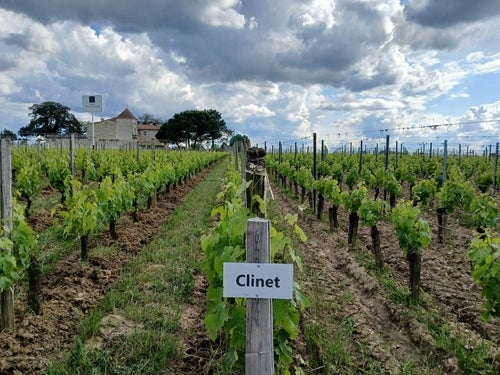
Château Clinet (80% M, 20% CS)
SF | The oak (60% new) is less obvious; the old-vine Cabernet is from the plateau, and the careful vinification is telling. Clinet no longer flirts with self-parody; indeed the 2025, careless of the much-discussed heat and drought issues on the plateau, courts perfection, its rich and creamy inclinations checked by fine-grained tannins, its natural concentration held in finely embroidered animation by a mesmerizing structural integrity and finely tapered finish. Yield of 34hl/ha. | 94–95
Château La Conseillante
(87% M, 10% CF, 3% CS)
Content from our partners
SF | I am hijacked on entering La Conseillante, and much to my surprise, by an interview for the Sud Ouest newspaper, which appears the following day and manages not to be overly controversial, such are my plaudits for the vintage. Managing director Marielle Cazaux has been able to deny any blocage in her vines by recourse to description of the effect of cover crops, a carefully managed lower canopy, and the use of compost to encourage porosity in the soil. The combination of gravel and clay, the latter relatively thin, has proved effective in evening the maturation cycle and ensuring physiological ripeness, both aided in the winery by a pre-fermentation cold maceration and a gentle extraction regime thereafter. 70% new wood has nurtured a firm, fleshy texture, with ripe, dark fruit and a sweetness that belies both the structural complexity and the grip of balancing acidity. Less overtly seductive than the2022, the 2025 is more linear and cerebral of inclination, and may well prove to be the more interesting choice. Hard to say today, but it may be related to the fact that this wine sees the inclusion of a dash of Cabernet Sauvignon for the first time in 70 years. Slowly does it. | 96–97
Château L’Eglise-Clinet
(90% M, 10% CF)
SF | Noëmie Durantou, with typical honesty, advises that there were periods approximating hydric stress throughout July, but that the vines did not shut down. That stress translates to creative tension and a cerebral wine, floral and complex, its 75% barriques finely integrated and its mocha-laden finish complementing the rich, cassis-infused palate. | 95–96
Château L’Evangile
(86% M, 13% CF, 1% CS)
SF | Winemaker Juliette Couderc has gradually reduced the proportion of new oak in l’Evangile since 2020, and it now stands at 40%. The focus has been on the vineyards, with lowered palissage, an earlier harvest, and much more by way of parcel selection. 2025’s crop has yielded only 22hl/ha, with its wine offering aromatic purity—red fruit, myrtle, and laurel, even a hint of chocolate—then a gracious, almost understated, palate, its 13% ABV and balancing supporting acidity both neatly entwined within a matrix of chalky tannins. The finish is fresh and composed; all in all, a pleasingly harmonious ensemble, its “joyful aromas” singled out by Juliette as the bellwether of the joys to come. | 95–96
Château La Fleur-Pétrus
(97% M, 3% PV)
SF | An archetype of the plateau of Pomerol, La Fleur-Pétrus is one of the great properties in the Moueix portfolio. There is deep gravel here as well as clay; the grapes had to work hard in the heat of high summer. Despite, or maybe because of, the challenges, the wine is sleek, rich, and almost ethereal, its undoubted power, harnessed by 50% new oak, mired in such coherent complexity that its quality takes all before it with peremptory self-assurance, with regal tannins, and a hauntingly uplifting finish. | 94–95
Château Gazin
(87% M, 10% CS, 3% CF)
SF | The sixth generation of the venerable De Bailliencourt family is represented by Edouard and Elise, and although one misses retired Nicolas’s anecdotes of Knights Templar and the Road to Compostella, one senses a distinguished familial thread, maybe now with a touch more commercial intuition. Opposed to irrigation, but receptive to developing their Cabernet vineyards, the stewards of Gazin have exploited the water-retention capacity of the plateau’s blue clay with great distinction. Theirs, they advise, is the philosophy of the garden, with attention to detail and aromatic harmony to the fore. The aromatics are pure; blueberry and iris, with a touch of eucalypt; then an equally harmonious palate, distinguishing itself by the silky tannic texture and the firm acidity in support. 40% new oak and Thomas Duclos consulting from the wings. A blue-blooded offering from the blue clay. | 93–94
Château Lafleur
(49% M, 51% Bouchet)
SF | A gloriously discreet Lafleur, careless of all the debate around irrigation and the reclassification as Vin de France. The initial aromatic reticence, in any event, completely contradicts any inference of abundance, and this is indeed a classic Lafleur; its slow aromatic build and lasting aromatic resonance nourished by a basket of dark fruit and an elegant floral tribute. Sophisticated, grainy tannins and a sturdy backbone of acidity will both secure longevity. All change here… but nothing, fundamentally, has changed. | 96–97
Les Pensées de Lafleur
(67% M, 33% Bouchet)
SF | Created in 1987 by Sylvie and Jacques Guinaudeau, this small (0.87ha [2-acre]) cigar-shaped oasis of Pomerol clay is located in the middle of the otherwise gravel-dominated Lafleur vineyard. Geographical juxtaposition clearly provides little by way of impediment to stylistic variety, and this most definitely is not a second wine. Cool and elegant on the nose, with aromas recalling peony and boysenberry; the palate is refined and vertical, with hints of spice and tobacco enlivening proceedings. Despite the impressive verticality, the fruit is succulent and layered, generous and dignified. | 94–95
Les Perrières
(56% M, 44% Bouchet)
SF | The member of the Lafleur family that has always been a Vin de France, farmed on the limestone plateau de Meyney close to the Dordogne. It has, however, previously been made of 100% Bouchet. Honors are now shared. Sapid and floral, with licorice, cassis, and wild plum on the palate; there is racy acidity here and then a dizzying crescendo as elements of the ensemble dare to attempt to outdo each other—all in perfect harmony, needless to say! | 94–95
Château Latour-à-Pomerol
(100% M)
SF | Roses, lavender, and woodsmoke, allied to blueberry and sloe, with intimations of the kitchen herb garden; all in all, a wine of great pedigree, with cleansing acidity and noble, enrobing tannins to complete the tableau. Morello cherry notes dominate the mid-palate, which is persuasive and detailed; black pepper and dark chocolate work together to underline the serious potential of this exceptionally articulate wine. | 93–94
Château Nénin
(62% M, 32% CF, 6% CS)
SF | Nénin’s 32ha (79 acres) are divided between blue clay on the plateau and sandier soils on the gentle slope near the property. 40% new oak has given the grand vin a dramatically different structure to the Fugue; far more symphonic, to say the least. Rich and velvety, with elegant and polished tannins, the wine has pleasing mid-palate concentration, a firm undertow of acidity, and a pleasing, almost-indolent glide to a modest crescendo on the finish. | 93–94
Château Petit Village
(60% M, 32% CF, 8% CS)
SF | There has been quite a lot of new planting at Petit Village, with the new(ish) owners, the Moulin family from Galeries Lafayette, employing massal selection to ensure the optimum soil-plant matches. The quality initiative is bearing fruit, slowly but surely, with the highly successful 2025 descanting a floral tribute to an increased proportion of Cabernet Franc and the careful élevage (five coopers and 20% of the wine aged in 500-liter foudres) underwriting a composed and precise style. There are notes of peony and lavender behind the dark fruit, incense and cedar, too, then an impressive concentration that does not presume to weigh too heavily on the deftly managed structure. | 94–95
Le Pin
(100% M)
SF | A worthy vintage to celebrate the retirement of Jacques Thienpont, one of the great gentlemen of Bordeaux. Our conversation glided from the impeccable wine, to the large Renaissance tapestry behind us; works of art both. The wine, harvested early but in stages (September 5 and 10) has evidently benefited from attention to detail and the resilience of the famous iron-rich soil. Less overtly flamboyant than sometimes, the 2025 unfurls slowly, with hints of pepper and spice holding courtly counterpoint to the velvety fruit. The new oak (67%) does not overwhelm, neither does the 14% ABV, and while it would be inaccurate to posit a stylistic abjuration, it is certainly worthy of note that this is Le Pin in more somber livery than sometimes and built to evolve extremely gracefully. | 97–98
Château Trotanoy
(96% M, 4% CF)
SF | An imperious color and a nose that betrays an intention to seduce; a symphony of dark fruit, spice, and barely supressed tension. An aromatic integrity pervades the palate which, allied to the highly sophisticated tannins and cleansing acidity, make for an intriguing and beguiling Trotanoy, which will hold the attention for many years as it evolves, slowly but surely. | 94–95
Vieux Château Certan
(80% M, 15% CF, 5% CS)
SF | “All of our plots were proud to be part of our first wine,” says Alexandre Thienpont, with a characteristic flourish to explain that this is the first time there has been no second wine since 2008, the younger Merlot proving useful in tempering intimations of fleshy excess. His praise extends to the cashmere texture of the Cabernet Franc, which reminds him of 2018. An early and “straightforward” harvest and a wine to vindicate the grapes’ resilience. A deep but bright ruby hue and aromatics dominated by black fruit and Bigarreau cherries, then a palate that manages to be both velvety and sapid, thereby capturing the essence of the vintage. Only half seriously, I ask Alexandre how often, as here, he has entitled his vintage summary “un grand millésime.” He retorts with an apology for the machinations of semantics and, for good measure, a 40-line poem written by Victor Hugo in 1848, all from memory. Quite an achievement… as is the wine. | 96–97