

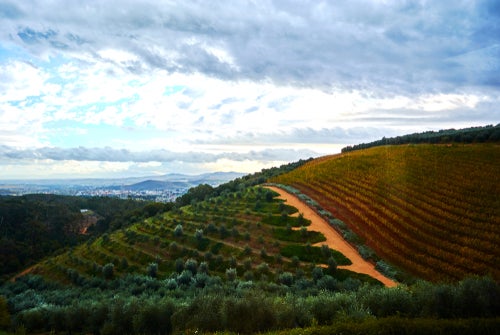
A meticulously presented vertical tasting of Leeu Passant, the Franschhoek-based project of Chris and Andrea Mullineux with Indian businessman Analjit Singh, inspires Tim James to reflect on vintage variation.
The classic Old World of wine has—somewhat reluctantly, no doubt—come to allow that the New World may claim scattered patches of terroir. Also, the vintages of the warm south may be admitted to differ in character and quality. When I started getting interested in wine in the late 1980s, the winelands of countries such as South Africa and Australia were widely supposed by classic Europe to bask in reliable sunshine; minor untoward climatic issues would anyway be corrected by the industrial processes of grape-farmers and wineries.
While there was an element of truth in the assumptions of climatic reliability, it didn’t always feel like that here—
but it was a touch smugly bemusing to know that Bordeaux could expect only three or four really good vintages a decade and occasionally, as in the dismal 1930s, none or even just one. Vintage disparities in South Africa were seldom great, though sometimes significant, and a wine lover looking back knew that 1972 was a great year for Cape reds and liked the idea that the even-numbered vintages of that decade were superior to the odd.
Improvements in viticulture in both worlds started reducing vintage variation, while internationalization of cellar practices—for both small, quality-ambitious wineries and larger, more commercial ones—also brought them closer. Talk of Old and New World distinction has, happily, become increasingly rare and superfluous.
Related
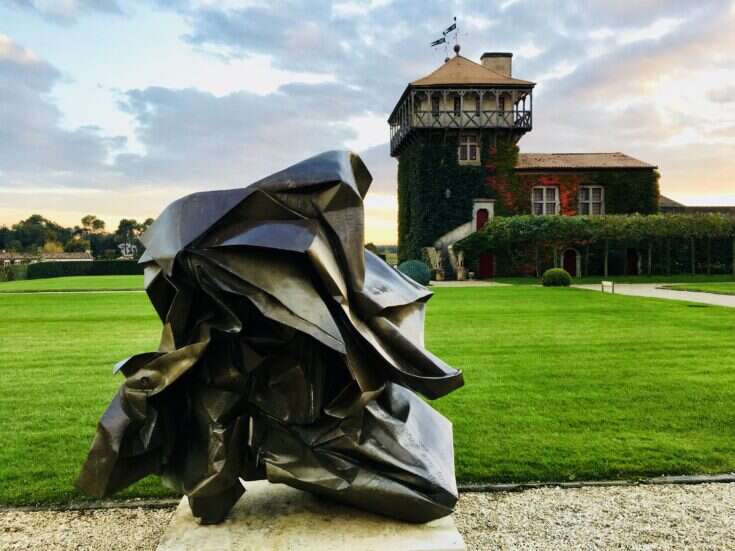
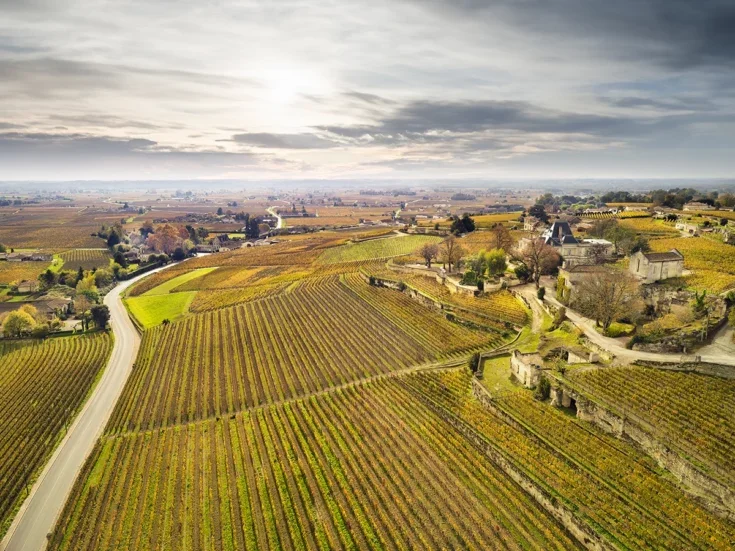
Subtle vintage variation in a fine wine probably grows even more important as wine growers learn about their vineyards and plant new ones more appropriately. Variation has, perhaps paradoxically, become more significant in Cape wines as the terroir-oriented producers of the post-1994 quality explosion gain experience in responding to nuances of both weather and vineyard. More vertical tastings of those wines are being offered, allowing commentators, sommeliers, and dealers—and thus all wine lovers if they choose—to also gain experience and, let’s hope, understanding.
Stellenbosch insights
Andrea and Chris Mullineux have been generous in such tastings with their Mullineux range, made from Swartland grapes since 2008. Now they can do so meaningfully at Leeu Passant, with wines made from other vineyards. This is their Franschhoek-based project with Indian businessman Analjit Singh, who first visited South Africa in 2010 (bringing a grandson to the soccer World Cup) and who, well, more or less stayed to invest massively in the hospitality industry of that agreeable little town and the lovely mountainous country surrounding it. Leeu Passant (leeu being the Afrikaans word for lion, which is what Singh signifies in Sanskrit) was founded in 2013, and the first Chardonnay released was from 2015.
This was a period when the number of fine Cape Chardonnays was growing. A recent vertical tasting (that great joy for wine geeks) of the first ten vintages reminded those who were there why Leeu Passant was rapidly acclaimed. The gravelly, rich yet well-drained vineyard, planted in 2001, is on high slopes of the Helderberg outside Stellenbosch, facing the Atlantic, which sends vital cooling breezes. The alcohol level of the splendid current 2024 is just 13%—in some vintages, it rises to 14%. The spontaneously fermented wine spends 22 months in French oak barriques (blended after a year).
Content from our partners
Andrea Mullineux is as meticulous in her own geekiness as she is in her vineyard and cellar work. She offered a graph that was based on her and Chris’s observations of the vintages. Two axes cross at their centers, making four quadrants into which the ten vintages were plotted. The vertical axis represents texture, ranging from velvety roundness, via silky, creamy, juicy, and chalky, to limey acid length. The horizontal axis, representing aroma and flavor profile, moves from flinty and salty at one end, to citrus and yellow fruit at the other. (The extremes are relative only to this admirably restrained wine.)
This all made a lot of sense when tasting the wines, expressing the unity given by the site and the variation in vintage conditions. While the characters of the different vintages were clear, there were no outstanding quality jumps on wines that were all delicious and mostly still developing well, albeit at different rates. For me, only the 2015 was starting to show real tertiary development (not everyone agreed that it did), and just a few vintages looked unlikely to develop much further to great benefit.
So, another lesson in the complex matter of vintages—at least for this vineyard and Chardonnay and perhaps for Stellenbosch. Here we too easily tend to extrapolate across the winelands, which are not as dispersed as Australia’s, say, but vary greatly in soil, aspect, and mesoclimate. Andrea Mullineux works in both the marginal Swartland and more generously rained-on Stellenbosch, and she was characteristically detailed in responding to my idle question about the comparability of their vintages. Here’s a tasty morsel: “Water-reserve and buffering-capacity differences create a very different relationship to the same weather event. A dry year in Stellenbosch may simply reduce vigor and concentrate fruit, whereas in the Swartland it can fundamentally alter vine physiology, berry size, canopy survival, ripening trajectory, and the crop load.”
There is much to learn about what makes a Cape vintage. And a great present irony. For as we learn more, climate change is fundamentally affecting all the rules.


