

Originally a single-vineyard wine, Penfolds Bin 707 has long been sourced from across South Australia, says Ken Gargett, who reports on a tasting that paid tribute to the producer’s mastery of the cross-regional blend.
Truly special sites, vineyards revered by wine lovers around the globe, are few and far between. But the best are a bucket list of vinous diamonds. Naming them would only tie us up with endless debates about personal preferences and then send us down the terroir-or-blending rabbit hole. Down under, it usually ends up with Penfolds Grange in one corner and Henschke’s Hill of Grace in the other, which seems to miss the point that both styles can offer superb wines.
One wine, however, has managed to have a foot in each camp over its 60-year history, commencing life as a single-vineyard Barossa red—Cabernet Sauvignon, of all things—before morphing into a multiregional blend, still Cabernet. Indeed, this was the wine that was supposed to be the Cabernet version of Grange (yes, there were Cabernet versions of Grange, but we’ll get to that)—but as good as it is, it has never been seen in quite that light.
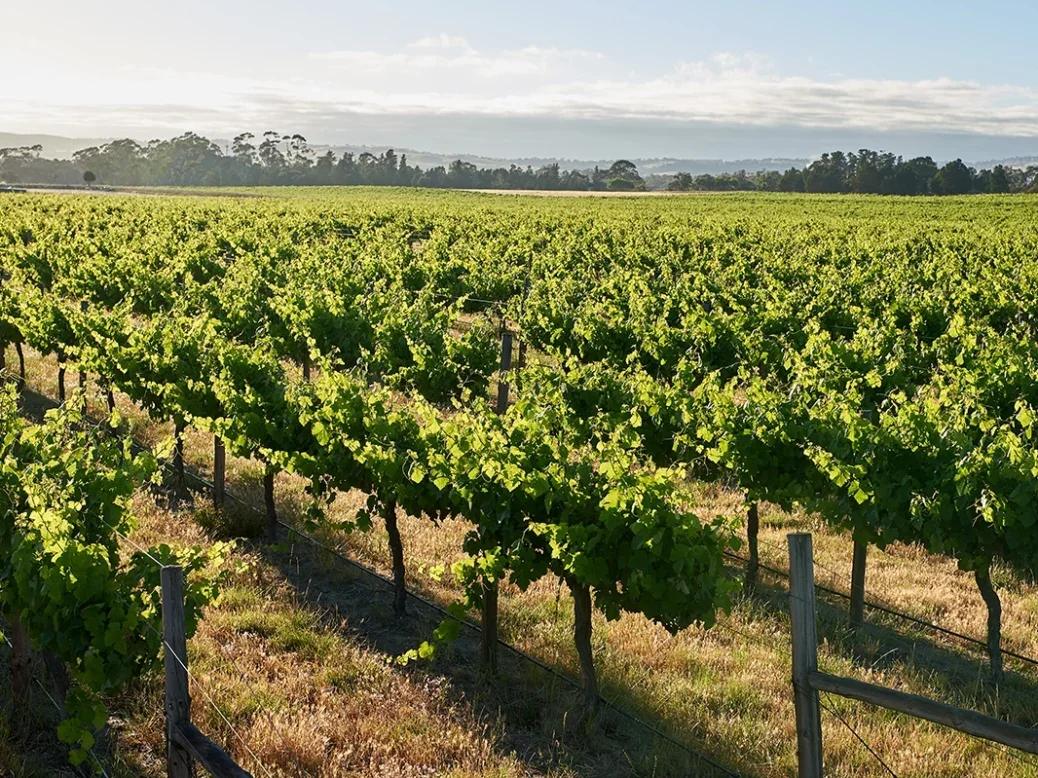
Penfolds Bin 707 began life as a wine sourced from a single vineyard. In later years, production simply exceeded what the vineyard could offer, and fruit is now harvested not only from around the Barossa but also from top vineyards across South Australia. It remains 100% Cabernet. Penfolds could have continued to produce it from the single block within the vineyard, but it has always been seen as a producer that favors the blend. A few exceptions, like Magill Estate, merely show its versatility. Moreover, quantity would have been a fraction of what we enjoy today.
Related


From one to many
The first Bin 707 was from the 1964 vintage. The story of how winemaker Max Schubert (Max joined Penfolds as a 16-year-old in 1931) chose Shiraz for his great Bordeaux lookalike Grange Hermitage (the Hermitage dropped with the 1990 vintage) has been told many times. Quite simply, he did not have the volume of quality Cabernet Sauvignon he would need, so Shiraz it was, even though Schubert did have access to the Kalimna Vineyard, within which was the famed Block 42. This was in the late 1940s/early 1950s. The Kalimna Vineyard had been planted in 1888, making it, according to Andrew Caillard MW in The Australian Ark, “the oldest surviving Cabernet Sauvignon vineyard from the 19th century.” We are talking worldwide here, not just Australia. It is worth noting that this vineyard was planted just over 30 years after the 1855 Bordeaux Classification: living history. 1888 was also the year of the first Kodak camera and the year in which Jack the Ripper was committing his crimes in London. It is amazing to think that the vineyard was planted the year before the Eiffel Tower was finished and Vincent van Gogh painted Starry Night. By the 1880s, Penfolds was producing one third of the wine of the colony (later known as the State of South Australia) and winning medals as far afield as Paris.
The problem was that when Schubert was looking to create a leading Penfolds Cabernet, the Cabernet from Block 42 was thought to be “unreliable and inconsistent.” It had been considered as a potential source for what would become Grange, and from the 1952 and 1953 vintages there were experimental bottlings—the 1952 and 1953 “Grange Cabernets” were both largely from Block 42. But nothing came of it for the long term, and Schubert had already opted for the Shiraz path. Schubert—who, according to Huon Hooke’s Max Schubert: Winemaker, saw the 1953 as a forerunner to 707—returned to the vineyard in the 1960s, determined to make something from the fruit, and Bin 707 was born with the 1964 vintage. The Cabernet planted in Block 42 totaled just 4ha (10 acres), and this was all the “premium Cabernet” Schubert had to work with, according to Hooke. Sadly, no one at Penfolds had the patience to propagate further plantings from these magnificent old vines—something about the “rewards of patience” springs to mind, though not necessarily in a good way.
Given what we know of Schubert’s fascination with crafting a great Aussie Cabernet, which he was unable to achieve with Grange, it is not a stretch to imagine that the birth of 707 was Max having another crack. Caillard notes, in The Rewards of Patience (sixth edition), that the “1960 Bin 630 Kalimna Cabernet Adelaide Foothills Mataro, 1961 Bin 58 Cabernet, 1963 Bin 64 Cabernet and 1963 Bin 511 Kalimna Cabernet Ouillade were all precursors to Bin 707.” While 707 may not have been a roaring success in its early days, it is impossible to believe that Schubert would not have been immensely proud of what the wine has become.
Content from our partners


It took time, and as Caillard says, the 1964 “began a false dawn […]. Fruit quality was too inconsistent to justify an on-going single-vineyard Cabernet.” Penfolds recognized this and, from the 1967 vintage, was already including other Barossa material in 707. Across South Australia, 1969 was a very poor vintage, and it sounded the inevitable death knell.
Caillard says that the early Bin 707s were “typically open-fermented under wax-lined header boards and matured in seasoned old oak rather than new oak.” As a result, the wines did not have the “power or richness associated with the modern vintages.” That said, the 1964 has always been very highly regarded. Sadly, 707 did not attract the attention Penfolds wished, and in 1969 it was decided that that vintage would be the final release. The project was shelved. Hooke has quoted the man who took over from Schubert, Don Ditter, as stating that there simply was not sufficient quality Cabernet available to Penfolds (or anyone) at the time, and it was considered that what the company had was better used in Bin 389, its wildly popular Cabernet/Shiraz blend. No Bin 707 was made from 1970 to 1975. With the 1976 vintage—which was quite a legendary one for Penfolds (1976 Grange has always been a superstar, and we saw wines like Koonunga Hill introduced into the range the same year)—it was decided to revive it.
Penfolds is well known for naming its wines after the storage bins where they were first housed. Even Grange was often termed Bin 95, though that never really took off. Bin 707 was a departure from this. Although still dubbed a bin, it was named after the Boeing 707, an aircraft that was famous back in the 1960s and seen as bringing Australia to the rest of the world—or vice versa, if you prefer. The name came from Penfolds’ marketing director at the time, Rowan Waddy, a war hero who was also a former executive at Qantas. “War hero” is a term often bandied about rather casually, but in this case it is more than justified. Waddy was part of Z Force, Australia’s ultimate guerrilla squad during World War II, which ran more than 80 operations behind enemy lines in the Southwest Pacific.
Waddy continued the aviation theme, naming a Barossa Clare Shiraz/Cabernet as Bin 747 Claret, though it was discontinued in 1975. Years later, Penfolds repaid the Boeing Corporation for the use of the name with a special bottling, in a collaboration with Lord Linley, David Armstrong-Jones, 2nd Earl of Snowdon, of an Impériale (6 liters) of a Bin 707 from a mix of the 2012 and 2013 vintages for Boeing’s 100th anniversary.
Inconsistent or not, the vineyard had certainly had its moments before 707. Planted in 1888 on scrubland at Moppa in the Barossa Valley, it was owned by D&J Fowler. By the early 1900s, the vineyard had expanded to 326 acres (132ha), with 200 acres (80ha) devoted to Shiraz, Cabernet, and Malbec, made into “burgundy” for the export market. In 1896, the family built a winery and storage facility. GS Fowler also commissioned a riverboat steamer for business and private use, but he sadly passed away before he ever had a chance to use it. Many visitors to the region will be familiar with it—the PS Marion. It fell into the hands of Ben Chaffey, another well-known wine identity, before it was restored in the 1990s by Robert O’Callaghan, famous for his Rockford winery. The Kalimna Vineyard was managed from 1904 to 1910 by another famous wine name of the day, William Salter, but it was running into problems: economics, style questions, and supposedly starlings (yes, the birds). 1924 saw experimental plantings of Mataro, which coincided with a move to the vineyard supplying the fortified industry.
In 1945, the Fowlers sold the vineyard to Penfolds. Reasons for this included the uncertain future, problems that the war had caused, and what has been described as a “war-related family tragedy.” Penfolds would use the fruit for its new wines, such as Bin 28 and Bin 389. It also produced a one-off wine from the Cabernet in Block 42—the extremely rare Penfolds Kalimna Cabernet Sauvignon 1948, which was never commercially released. Block 42 additionally supplied the fruit for the dozen Cabernet 2004 ampoules that were released some years ago, at a price of A$168,000 each. The Kalimna Vineyard, from which the Shiraz (and Cabernet) still makes a significant contribution to Grange on an annual basis, has been crucial to the success of Penfolds and ultimately made an enormous contribution to the Australian wine industry.
Coonawarra and cooler
Bin 707’s revival with the 1976 vintage took the wine completely away from its heritage, with most of the fruit sourced from Coonawarra, supported by a contribution from Kalimna to maintain “house style.” This was the time when Cabernet from Coonawarra was cementing itself as Australia’s leading red wine. Penfolds certainly took advantage of that and, in doing so, established 707 as one of the country’s great Cabernets, a title it has maintained to this day. Over time, other regions have also been included in the blend.
Schubert was known to be skeptical of Coonawarra, considering it too cold. But Bill Redman, who was determined to build Coonawarra’s reputation and believed attracting larger producers would do this, convinced the Penfold family to invest in the region. The first purchase was Sharam’s Block in 1960. The Sharam family had purchased the land back at the turn of the century from John Riddoch himself.
The break from 1970 to 1975 is not the only time 707 has not been made. There was no release from 1981, 1995, 2000, 2003, 2011, 2017, or 2020. The reason, according to Penfolds, is that there was simply not sufficient “fruit of the required style and quality available.” In missing years, it is worth taking extra notice of bins 407 (never my favorite wine) and 389 (always a star).
Today, the 707 fruit is largely sourced from Coonawarra and the Barossa Valley, with contributions, depending on the vintage, from Wrattonbully, McLaren Vale, Robe, Adelaide Hills, and Padthaway. The origins can vary enormously; the 2023 707 has no fruit from Coonawarra. The move from the Barossa/Block 42 in the early days to largely Coonawarra with the revival via the 1976 vintage saw a move from a hot-climate style (not commonly associated with Cabernet Sauvignon), to a cooler-climate wine, with variations in between in the subsequent years. As current chief winemaker Peter Gago seems to confirm, Penfolds aims to bash any hint of Cabernet out of the wine and for it to be, first and last, “707” through and through. It is entirely possible that the reason for gaps in releases is not solely based on the quality of the vintage but also whether the team can produce a 707 in the Penfolds house style at the level of quality it requires.
Fermentation is in stainless-steel tanks with wax-lined/wooden header boards. All of the components finish fermentation in barrel. The wine spends the best part of a year and a half in new American oak hogsheads and is normally released a couple of years after vintage. The price is not that far short of Grange. The similar method of making the wine means it will inevitably be seen as the Cabernet equivalent of Grange. As a generalization, despite some superb early offerings from the program, it was considered that the style of 707 really hit its stride in the mid-’90s, with years like 1996 and 1998.
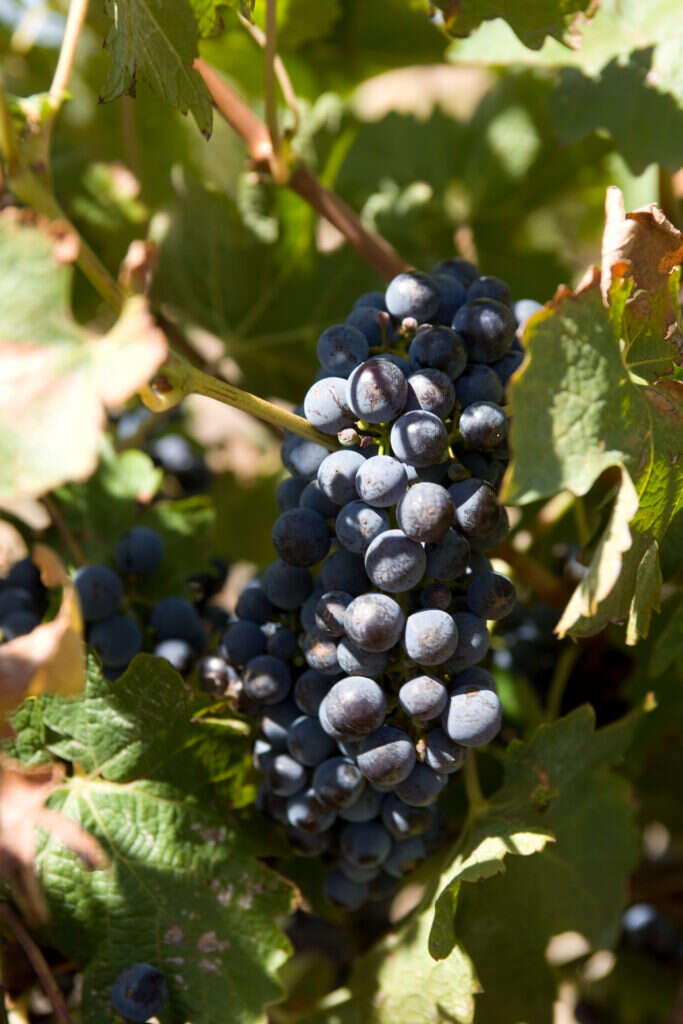
This is warm-climate Cabernet at its best, though the house style will always be to the fore. New oak is a given, and the wine will be powerful and long-lived, with ripe tannins and a delicious, sweet choc-cherry core. Needless to say, there will always be traditionalists who recoil at the concept of Cabernet that is aged in American oak, let alone warmer climates, but Spanish winemakers may have more sympathy. Accordingly, Penfolds created Bin 169—Coonawarra fruit and all French oak—the first vintage being 2008.
One thing that may surprise many readers—it certainly surprised me—is that, according to Gago, who will know, 707 is the Penfolds wine that sells out most quickly on release.
Tasting
1976 Bin 707 (12% ABV)
Deep maroon/mahogany in color. The nose seems very Penfolds, even after all this time. Evocative, with notes of chocolate, dry herbs, bay leaves, tobacco, dark fruits, and cigar boxes. The wine was in amazing condition for its age, especially as it was the only vintage in the tasting not from magnum. Great length here through to powdery tannins; there is a savoriness, with hints of truffles and earth along the way. Finely balanced, this is still fabulous drinking, and bottles in this condition should remain so for years to come. | 95
1982 Bin 707 (14.5% ABV)
Not tasted as part of the formal tasting (all others were, bar the 1964), but a kind friend opened one at lunch recently, so it seemed timely. Deep red, starting to lighten on the rim. Took a touch longer than anticipated to really start to open up. Attractive truffle, leather, bay leaves, black fruits, dark cherry notes, root vegetables, beef stock, and plums all evident in an array of aromas. Nicely balanced, with focus and life, through to ever so gentle tannins. Best enjoyed now, but well-cellared bottles will be providing pleasure for some time yet. | 94
1986 Bin 707 (13% ABV; magnum)
This may have been from the days before 707 really hit its stride, but 1986 was always seen as a great vintage for Penfolds. The major components were 74% from Coonawarra and 11% from Willunga in McLaren Vale. A vibrant, dark red/garnet, and it seems as though we still have primary fruit notes here. There is wonderful complexity, freshness, balance, and drive. The nose offers notes of black fruits, tar, beef stock, soy, cloves, and plums. There is a vibrancy and energy to this wine, which offers great length, through to very fine tannins. Surely a wine that still has 20 years ahead of it—so impressive. | 98
1990 Bin 707 (13.5% ABV; magnum)
Another great vintage for the Penfolds stable and, for me, the superstar of the entire tasting. 83% Coonawarra. Gleaming magenta. The nose gives us chocolate, coffee beans, tobacco leaves, axle grease, black fruits, tar, and a choc/nuts character. It does seem that there are the last vestiges of oak still evident, but the wine is beautifully balanced throughout and seamless in structure. Taut, poised, and concentrated, this is a superb wine, with such focus and a lingering finish. Complex and complete. At least 20 years ahead of it. | 99
1991 Bin 707 (13.3% ABV; magnum)
There has long been debate over just which is the better wine between the 1990 and 1991 Grange. Recent tastings suggest that the older wine is finally edging ahead, but there is little more than the proverbial wafer-thin gap between them. When it comes to Bin 707, 1990 wins comfortably. 1991 is a fine wine, including fruit from growers in Eden Valley, which rarely happened, but it pales in comparison to the power of the 1990. Nonetheless, it is still thoroughly enjoyable drinking in a more elegant, fragrant style. Dark garnet in hue, with a nose offering florals, cassis, liqueur cherries, aniseed, and dried herbs; this is finely balanced and seamless. Quite exquisite, it is a little like one imagines drinking silk would be. For those who prefer a more refined style, this will most definitely appeal. Five to ten years might see it start to fade. | 97
1996 Bin 707 (13.5% ABV; magnum)
It was around this time that authorities such as James Halliday believed that 707 came into its own. 1996 was a great vintage—not just for Penfolds but across South Australia. All that said, Peter Gago saw 1996 as a Shiraz year. “On paper, it should be great,” and while 1996 Grange is seen as the best of the ’90s, time has not been quite so kind to the 707. The major components were 34% Coonawarra, a similar amount from Barossa, and 21% Padthaway. The color is a vibrant purple/maroon. An attractive yet hardly compelling nose, which is quite fragrant, with notes of chocolate and florals. The wine does seem to have a slight sourness do it. Of medium length, with firm, even slightly gritty tannins. The nose impresses more than the palate. One has to wonder whether there is any point in keeping this vintage any longer. In the overall scheme of things, this must be considered a little disappointing. Fair to say it was more highly regarded in its youth. As Neil Young said, “It is better to burn out than to fade away.” | 92
1998 Bin 707 (13.5% ABV; magnum)
Dark maroon with a purple rim, while the nose is full of plums, cranberries, mulberries, wild raspberries, and bay leaves. There is coiled power here, with medium length through to fine, firm tannins. Good concentration; this is a wine that should drink well for at least the next 5–10 years. A very good, though not great, 707. | 94
2002 Bin 707 (14.5% ABV; magnum)
Peter Gago’s first Bin 707 as chief winemaker was a superb one to start his reign. The major components are 51% Barossa and 18% Padthaway. Very much a cool year; the color here is purple/maroon. This is more varietally Cabernet than most of the range. We have notes of chocolate, cloves, truffles, black fruits, tobacco leaves, and impressive oak integration. Seamless, seductive, fresh, vibrant, and complex, there is a lovely, long, lingering finish and sleek tannins. A beautiful wine for enjoying over the next 15–20 years. | 97
2004 Bin 707 (13.5% ABV; magnum)
This was a vintage with significant demand on the famous Block 42: the legendary ampoules, a contribution to Grange (4%), the 2004 Block 42 release itself, and this wine. Inky dark in color, this is wonderfully plush, with notes of chocolate, coffee beans, tobacco leaves, beef stock, and cigar boxes, with dry herbs, aniseed, and yet more chocolate emerging on the palate. Good concentration throughout, yet the wine remains supple for the full journey. Intensity is maintained at all stages, and the length is impressive. Seriously good, and the wine still has great promise for at least the next 20 years, longer if well cellared. | 97
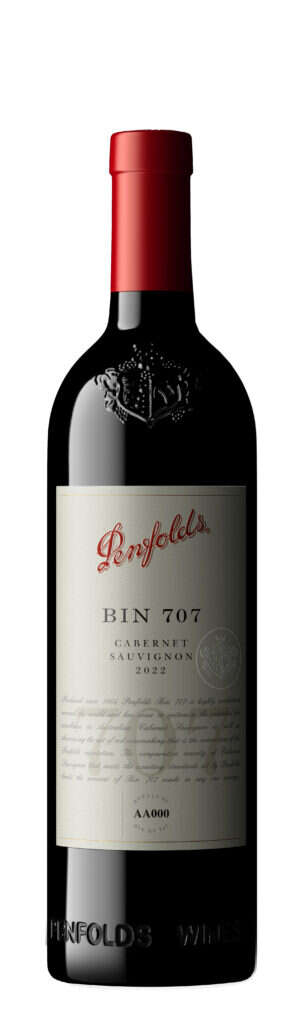
2006 Bin 707 (14.5% ABV; magnum)
A combination of Barossa, Coonawarra, and Adelaide Hills fruit, this is inky dark in color. Opens beautifully with notes of cocoa powder, licorice, coffee beans, and tar. Impressively concentrated. There is superb balance here, with a hint of austerity on the finish. The power never wavers, and the wine is already exhibiting good complexity and length. It finishes with firm tannins and should provide at least 15–20 years of pleasure if well cellared. | 96
2008 Bin 707 (14.5% ABV; magnum)
A wine that has been described as “a bruiser,” this is from a superb vintage and drinks like it. Opaque maroon, and there is power from start to finish. The nose reveals notes of chocolate, axle grease, cedar, and cigar boxes. There is well-integrated oak, and we see hints of blackberries, cloves, bay leaves, aniseed, warm earth, and truffles. It seems almost impossible, but the wine lifts even further on the palate. Concentration throughout, and yet the balance remains immaculate. Seductive and seamless, through to fine silky/powdery tannins. This has 30 years ahead of it. Wow! | 98
2010 Bin 707 (14.5% ABV; magnum)
Another superb vintage and another stellar Bin 707. What a year this was for Penfolds, with a brilliant Grange and one of the all-time great St Henris. This wine sits comfortably with them. A blueish/maroon hue with a very dark purple rim, while on the nose we have licorice, mocha, liqueur cherries, spices, tar, blackberries, warm earth, axle grease, and dried herbs. There is excellent oak integration, and everything seems very Penfolds. Good concentration throughout and incredible length. The wine finishes with fine but firm tannins and will provide pleasure for another three decades. | 98
2012 Bin 707 (14.5% ABV; magnum)
The even years just keep delivering through this era, and 2012 was yet another thrilling vintage. I’m not completely convinced it has matured to the level we might have expected from this as a young wine, but it is certainly superb drinking. Notes of menthol and gum leaf are to the fore here, but we also have dried herbs, blackberries, coffee grinds, blueberries, liqueur cherries, and a hint of tomato bush on the nose. Fine tannins and a silky texture; the wine is impressively balanced, with very good length. Enjoy over the next 20 years. | 95
2023 Bin 707 (14.5% ABV)
The tasting concluded with a look at the latest release, 2023, which includes no material from Coonawarra: It’s 68% McLaren Vale, 18% Padthaway, and 14% Barossa Valley. There was also no 2023 Bin 169, giving a fair indication of the thoughts of the Penfolds team on this vintage in Coonawarra. Still quite toasty; we have notes of chocolate, cassis, smoked meats, licorice, cloves, chocolate, soy, and a hint of baked bread. Rich and ripe, this is supple, with a fine line of acidity and firm, sleek tannins on the finish. It has a good couple of decades ahead of it. This is a really impressive wine for what might be termed a lesser vintage. | 97
Finally, the 1964. It is so long since I tasted it that any notes from me would be irrelevant, but I knew that Gago had seen one recently, and I asked him for thoughts. Instead, he kindly provided me with some thoughts from our own Nick Ryan and Neil Beckett, from the recently published ninth edition of The Rewards of Patience. Nick saw it as coming to the end of its life but noted characters of marzipan, chinotto, cassis, and mint, with finely powdered tannins. Neil felt it possessed the “secret of eternal youth… delicate but far from fragile, like fine bone china.”


