Joanna Simon’s series on wine country food and wine takes a festive turn with a Bordeaux take on surf and turf, huîtres et crépinettes truffées.
You can eat very well in Bordeaux in restaurants and in the wine châteaux—in both grand and more modest establishments—but the region’s wines have always outshone its cuisine. Asked to name the classic dishes of Bordeaux, most people would probably come up with entrecôte à la bordelaise and either canelés or macarons de Saint-Emilion. I like to think that there are readers of this series who would also recall lamproie à la bordelaise, even if not necessarily very fondly.
Some people might also name products of the wider region that are usually eaten very simply, such as Cap Ferret oysters (huîtres), the white asparagus of Blaye and Aquitaine caviar. But, however you look at it, Bordeaux hasn’t the roll call of world-renowned classic dishes that Burgundy proclaims—boeuf bourguignon, coq au vin, oeufs en meurette, jambon persillé and escargots à la bourguignonne, to name just a few. Perhaps Bordeaux was always too busy making and trading wine.
But Bordeaux does have huîtres et crépinettes, its own distinctive answer to surf and turf and a particular favourite at Christmas when the dish often becomes more luxurious with the addition of black truffle to the crépinettes and thus becomes huîtres et crépinettes truffées. While oysters are eaten all across France as part of the multi-course Christmas dinner eaten on Christmas Eve, or, if it doesn’t start until after midnight mass, in the early hours of December 25th, in Bordeaux (and also Savoie), it is oysters with crépinettes—or, and this is considered a perfectly acceptable alternative, with pork chipolatas.
Related
How to make huîtres et crépinettes truffées
Crépinettes are small meat patties made from well-flavored and seasoned minced pork wrapped in caul fat (crépine) and either fried, grilled (broiled) or, if it’s more convenient, baked in the oven. Caul fat, a thin, lacy or web-like animal membrane from around the stomach and other organs, has the advantage over sausage casing of melting during cooking. The French word crépine dates back to the Middle Ages and is derived from the cloth crêpe, probably because of its appearance, and the essential idea of crépinettes, minced meat and/or offal and seasonings wrapped and cooked in caul, goes back a long way, possibly as far back as the 13th century. Today, when not accompanying oysters, crépinettes, a bistro classic, are usually served with potato purée and often a substantial sauce, such as Périgueux (Madeira and truffle), forestière (mushroom). or mustard.

Oysters have been a staple luxury (if that’s not too much of an oxymoron) of Bordeaux since the 19th century, when their farming in the nutrient-rich waters of the Bassin d’Arcachon was encouraged, supported and regulated by Napoleon III. Cap Ferret at the southern tip is the most famous of the oyster ports but there are another 23 in the basin. There are also Médoc oysters from the mouth of the Gironde. Their cultivation was banned towards the end of the last century but revived in 2014 once the waters were once again cadmium-free. And Marennes-Oléron oysters from the Atlantic coast north of the GIronde estuary are also sold in Bordeaux.
The main oyster type farmed in the Arcachon basin and Médoc is the Japanese cupped oyster (aka the Pacific or Cassostrea gigas). The grading of oysters by size (from 000, the largest, to 6, the smallest) and by category is an article in itself. Suffice to say here that fine and fine de claires are leaner and milder than the fleshier, fuller flavoured spéciales or spéciales de claires, which have been ripened for longer.
Content from our partners
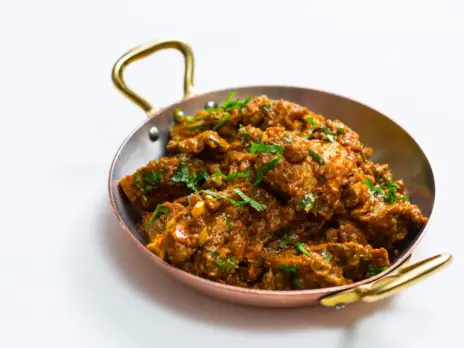
Any kind can be used in huîtres et crépinettes. It’s a matter of taste. But whichever is chosen, the dish is usually served on individual plates with a crépinette surrounded by the shucked oysters. Sauce mignonette (finally chopped shallots in red wine vinegar) may be served with the oysters, adding a sharpness to a dish that already contrasts salty, briny freshness and succulence with meaty richness (richer and more savory still, if truffle is included). Huîtres et crépinettes also takes surf and turf one step further than a classic American version in that it presents a palate-awakening temperature contrast by pitting chilled oysters against hot crépinette.
The best wines to pair with huîtres et crépinettes truffées
Which wines pair with these contrasting, albeit complementary, elements? The local recommendation is commonly a young Sauvignon Blanc or Sauvignon-based Entre-Deux-Mers (although I doubt that it’s often on the tables of the grand châteaux of Péssac-Léognan). The choice of a sprightly, light, dry white makes sense with the oysters, and even more so if mignonette sauce is served, and makes sense at an early stage of a large meal. There’s also a case for saying that it cuts through the richness of the crépinette, but I find the wine flavour that emerges from the encounter is rather reedy and thin.
Successful white wines need good acidity and a mineral accent, but more complexity than most Entre-Deux-Mers Sauvignons. Better bets are wines such as Chablis, good Muscadet Sur Lie or longer aged, more concentrated Muscadet from one of the Crus Communaux (Clisson or Gorges to name just two of the ten) and, from Bordeaux, Graves, or Pessac-Léognan that has the waxy weight of some Sémillon and has seen oak but doesn’t flaunt it, or a multifaceted Sémillon Sauvignon blend such as Château Suduiraut Vieilles Vignes Blanc Sec.
Champagne, such a winner with oysters au naturel, can also pair well, especially vintage, multi-vintage or non-vintage with a high proportion of reserve wines. The extra layers and depth these possess gives them a fighting chance with the crépinette, whereas a simpler, younger non-vintage, which may be very good with oysters alone, can, like Entre-Deux-Mers, emerge scrawnier. Taittinger Millésime 2016 and Billecart-Salmon Le Réserve Vintage are good candidates for the oyster crépinette combination, as is, in similar vein, England’s Nyetimber Blanc de Blancs 2017. Vintage rosé Champagne is another option, even when its Pinot fruit would be too much for the oysters on their own.
Other whites that can work with this dish in a similar way to Chablis are Soave Classico, white Douro, Etna Bianco, and, in a slightly different way with its bitter-almond nuttiness, Rueda Verdejo.
If the dish presents challenges for white wines, it is nothing to finding companionable reds. The oysters are not bound into the dish in the way they are in a traditional British steak and kidney pudding, which can be accompanied successfully by reds. With huîtres et crépinettes, you are looking for red wines that are fairly light bodied, low in tannin, with relatively (for red wine) high acidity, mineral shading, perhaps a delicate peppery note and no overt oak—reds in fact that have more in common with many dry white wines and which can be lightly chilled. The limited pool includes cool-climate Pinot Noirs, especially from France, the more mineral Beaujolais Crus, such as Chénas, and granite-grown, old-vine Chilean País and Cinsault, most notably in the Itata wines of vineyard soil guru Pedro Parra.