

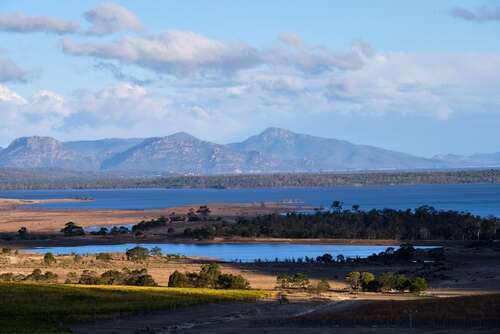
As a region that basically encompasses an entire state of Australia, even if it is our smallest, Tasmania offers an infinite variety of microclimates and terroirs. The broadest brush would suggest that this is where we find our coolest vineyards. The use of so much of the Island’s Chardonnay for its superb sparklers is an indication of the style grown.
Dawson James
No doubt many wine lovers haven’t a clue about the two gentlemen behind this label. In short, Peter Dawson and Tim James are two of the finest winemakers Australia has ever seen, working together at Hardys for decades. (Big companies rarely do rock-star winemakers, so most consumers have no clue who is behind the wines.) They have more than 80 vintages between them, and if you’ve drunk Australian wine, you have almost certainly drunk wines made by one or both of the team. As their time at Hardys came to an end, neither was ready to hang up their boots, so they created this small passion project. The wines should be on every wine lover’s bucket list.
Dawson and James were keen to offer pure and pristine expressions of Chardonnay and Pinot Noir from a cool climate. The fruit is sourced from the Meadowbank Vineyard in the Upper Derwent Valley, planted back in the 1980s. The guys knew of it because it had provided Hardys with grapes for premium sparkling wines for many years. The clones they use include I10V5 and P58. The fruit is whole-bunch-pressed and fermented in French oak barriques. The Chardonnay then sits on yeast lees for eight months, with regular stirring. They use 228-liter French oak barrels, around one third new, sourced from Taransaud’s Burgundy cooperage.
Chardonnay 2021
Related
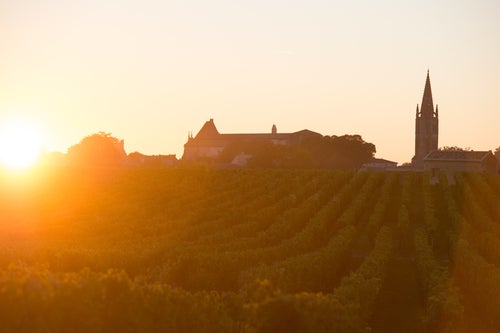
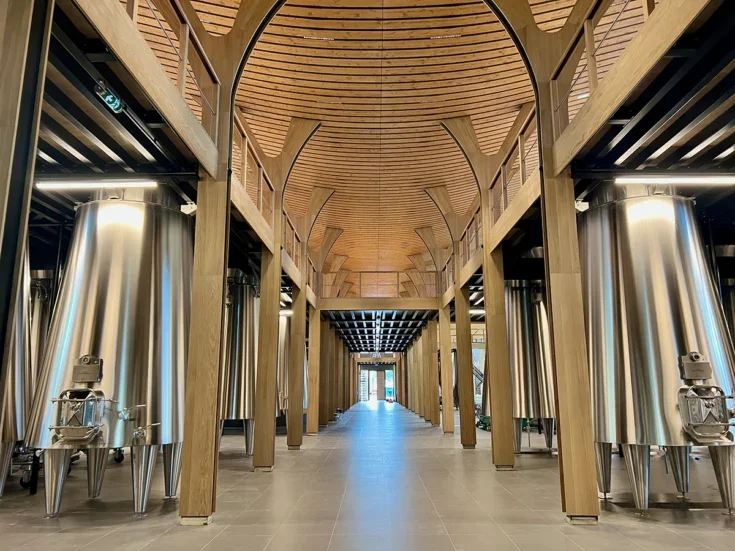
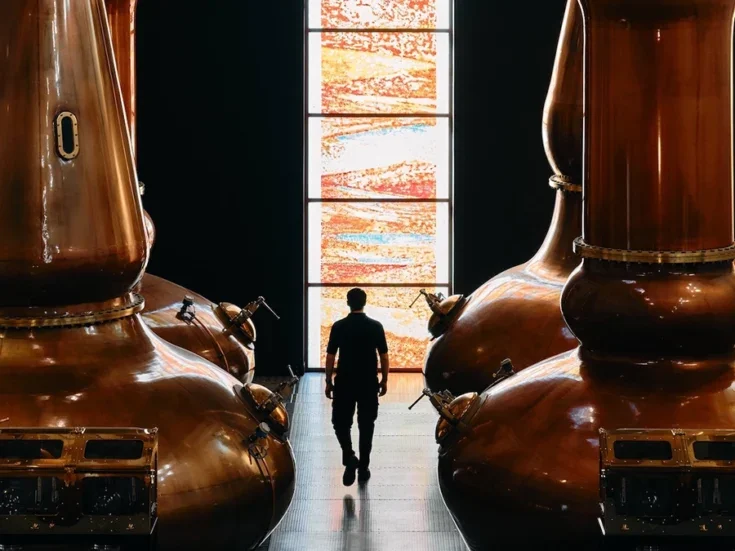
The immediate impression is one of ultra-elegance. Understated, refined, almost ethereal; there are hints of citrus, river stones, flint, florals, minerals, and grapefruit. Excellent length and balance, with underlying power—this will continue to impress for at least a decade. An effortless wine. | 95
Chardonnay 2013
Some development here, unsurprisingly, though considerably less than you might expect. Finely balanced, there is some complexity, but surely more to come. We have notes of orange rinds, cashews, spices, white peaches, and mango. A line of fine juicy acidity, laser-like focus and wonderful length. If ever a wine came from the fountain of youth, this might just be it. In another ten years, I suspect we will still be saying that it has many years ahead of it. | 96
Content from our partners
Decades
If Dawson James is a Tasmanian passion project from two of the old veterans the industry, Decades is very similar, with a pair of friends a little younger. Steve Flamsteed (of Giant Steps fame; he also worked with Leeuwin Estate, and it would be hard to find a better place for a Chardonnay apprenticeship, and he is also a chef and cheesemaker) and Brad Rogers (subsequently one of the founders of the much loved Stone & Wood Brewing Company), both far from their Queensland homes, met on day one of their enology degree at the Roseworthy Agricultural College, back in 1991. They have been great mates ever since and were keen to do something together. This is it. There really is something deliciously ironic about Queenslanders making some of the country’s best cool-climate wines.
Decades? Well, it took them several decades to get the project off the ground. When a 2.7ha (6.7-acre) vineyard of Pinot Noir and Chardonnay (just 0.7ha [1.7 acres] of Chardonnay) in Tasmania’s Coal River Valley, which had been planted back in 1990, came on the market, they grabbed it. The guys were delighted from a Chardonnay perspective, because the region is “about as far south as you can go, where the seasons are long and cool. This coupled with its cracking black clay over lime calcareous subsoil works perfectly for Chardonnay, we think.” They have since added a further 7ha (17 acres), though just 1ha (2.5 acres) of Chardonnay, the 548 clone. The original clones? “We’re not entirely sure what clone the existing Chardonnay is, but it works.” They believe that their most important decision each year is the picking window. They employ wild fermentation, preferring larger-format French oak, and maturation in one-year-old seasoned French oak, with the wine left on full fermentation lees for almost a year. Malolactic fermentation is a year-by-year decision. Closure? “We feel the screwcap is technically superior to cork, although some of the trade ironically are asking for cork. It just doesn’t make sense to package in an inferior closure when we have put so much work into growing the grapes and making the wine. We refuse to accept the 10% failure rate.” Needless to say, production is tiny at this early stage. This will never be a large estate, but it will surely be producing some of our most thrilling wines.
Chardonnay 2024
From the Coal River Valley, the color is a gleaming pale yellow. Layered, generous, and plush. There is an intriguing lemon/eggnog character, along with a lovely saline freshness. Oyster-shell notes, citrus, dried herbs, pink grapefruit, and well-integrated oak are all present, as well as some bitey lemon on the finish. A seductive style with excellent length. This will drink beautifully for the best part of a decade. | 95
Chardonnay 2023
A touch difficult to get much distance between the two vintages on show when the project is so new, but the consolation is that we are in at the ground floor of something that is special. A lime/lemon hue. Taut, pristine, and perhaps showing a touch more finesse and refinement than its younger self. It comes from a cooler vintage. There are notes of citrus, florals, bergamot, grapefruit, and spices, with a flick of green apples. Deft oak integration. The wine exhibits weight and yet is in no way heavy. Indeed, it dances with a line of vibrant acidity. Beautifully crafted and very long. There is a flick of orange rind on the finish. Enjoy it for at least another decade. | 97
Freycinet
One of Australia’s most underrated wineries, it seems that everything it touches is always first class. These are wines of finesse, elegance, and quite often astonishing longevity. Claudio Radenti believes that the driver in producing premium Chardonnay in Tasmania “is the southerly latitude and the resultant cool climate that comes from being farther away from the equator than all other mainland Australian wine regions. Being surrounded by ocean means that Tasmania’s climate is moderated and does not suffer from the extremes of heat and cold. The growing season is long as a result, which means nothing rushes to ripeness.” The result are wines that are “uniquely remarkably elegant, with excellent purity and intensity of flavor, accompanied by good natural acidity balance providing tension and longevity.”
Freycinet has a total of 16ha (40 acres) under vine, 4ha (10 acres) of which are Chardonnay, and it has been making Chardonnay since 1990. The fruit is hand-sorted on a vibrating table before whole-bunch pressing. The harder pressings are not used. Claudio uses four different coopers. From them he sources tight-grain French barriques for full barrel-fermentation. Approximately one quarter of the barrels are new each vintage. Maturation is for around ten months, with periodic bâtonnage. Malolactic fermentation depends on the season. Use of oak has been reduced over time. Without wishing to flog the proverbial dead horse, Claudio notes a significant change to his wines since 2005 with the introduction of screwcaps.
Chardonnay 2023
There is absolutely no reason to think that this wine will not enjoy the long and happy life we see with the 2007. Lemon sherbert, nutmeg, and cinnamon notes are evident on the nose, along with the merest flick of oak. We also have notes of pink grapefruit and touches of herbs, gunflint, florals, and white peaches. Good intensity and balance; there is vibrantly fresh, citrusy acidity, good energy, and impressive length. It will see the next 10–15 years as a doddle. | 94
Chardonnay 2007
Like many of Claudio’s wines, this embraces the Benjamin Button effect, seemingly getting younger by the year. This is a whisker short of 20 years, and I would have no hesitation in putting it in a time capsule for another 10–15 years. It would need to be a very good white Burgundy, perhaps nothing less than a great grand cru, to engender similar confidence. This really is typical of the amazing longevity of the Freycinet wines. There are still flecks of green evident in the deep straw that is its color—amazing after all this time. The nose reveals notes of lemons, hazelnut, stone fruits, butterscotch, mandarins, and flint. The wine is bright and full of life, with serious length and the most appealing creaminess on the palate. Love it. | 97
Stargazer (Samantha Connew)
Samantha Connew is a New Zealander who, back in the 1990s, was studying law and working in a local wine bar in Christchurch. When it came time to make a choice as to the future, it was no contest. Sam then worked in many regions around the world, before setting up her own operation, Stargazer, in 2012. The name pays tribute to Abel Tasman, a famous explorer and navigator, the first European to set eyes on Tasmania, though others have suggested that it is named for the stargazer fish (an ugly thing that will bury itself in the sand if you hook one, making it extremely difficult to catch; you expect something large, given how difficult it is to move, but disappointment awaits). Sam believed that the Coal River Valley in Tasmania would allow her to make the Pinot Noir, Riesling, and Chardonnay in which she believed. In 2016, prior to which she had been buying fruit, she purchased 11ha (27 acres). At the time, the vineyard was just one 1ha (2.5 acres) of Pinot Noir and Chardonnay. Since then, she has planted a further 4ha (10 acres) and is eyeing more. She uses clones 76, 95, 96, and a few rows of 548. Winemaking is typical for the region. Wild fermentation, no added acid, and gentle use of oak. The use of malolactic fermentation varies depending on the conditions. Sam believes that the decision as to when to pick is critical, since the “raw product is awesome.” She picks not on sugar ripeness but where she believes the alcohol will finish. The oak is 500-liter puncheons, which allow the wine to stay fresher. She likes the contribution from Mercurey oak and uses around 20% new. As for closures, she would be happy to change to a better option, but asked to choose between cork and screwcap, she replied, “Screwcap, of course—I’m not an idiot.”
Chardonnay 2023
Fruit here is from the Coal River Valley/Derwent Valley. A very pale lemon hue, with notes of green apples, spices, pink grapefruit, pears, lemon cheesecake, gunflint, and beautifully integrated oak. There is paper-cut acidity running the length, with a long and lingering finish. A wine of balance, focus, and intensity—expect it to provide pleasure for at least another decade. | 96
Tolpuddle
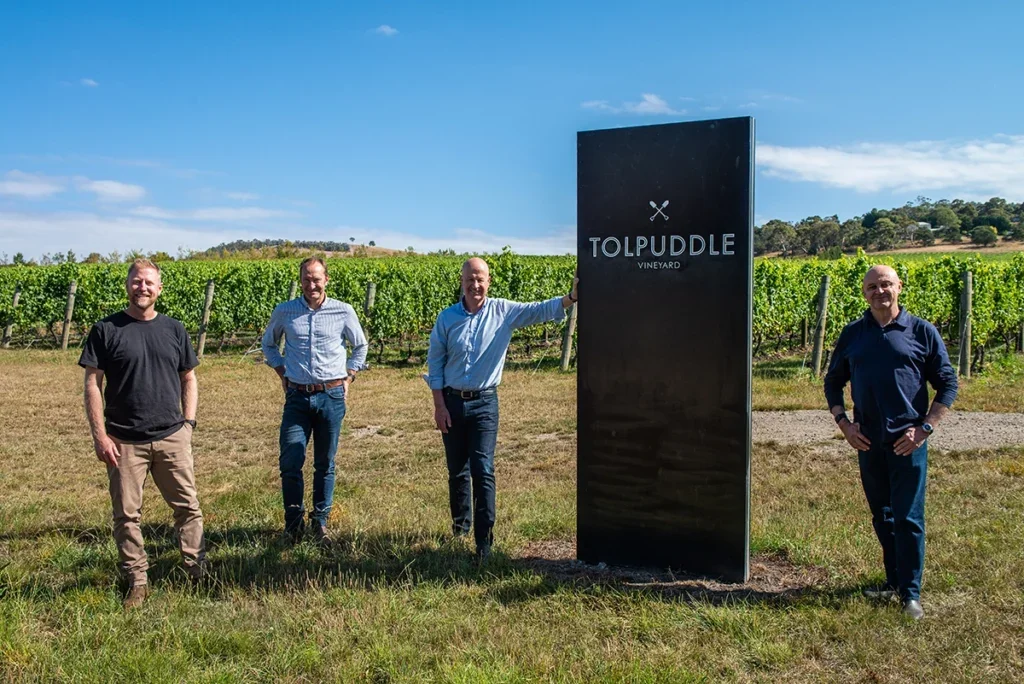
Michael Hill Smith MW and Martin Shaw, well known for their highly respected Shaw & Smith operation in the Adelaide Hills, purchased a vineyard in the Coal River Valley in Tasmania, the Tolpuddle Vineyard, in 2011. (As they tell the story, they went to Tasmania intending to buy nothing other than lunch.) Shortly after, winemaker Adam Wadewitz joined the team. In a little over a decade, they have turned this into the one of the more famous Australian Chardonnay vineyards. New plantings have been included, with vines at a higher density—6,060 vines/ha. They now have 13ha (32 acres) of Chardonnay, though it will be some time before the younger vines are considered for inclusion. The wines are made at the Shaw & Smith winery in the Adelaide Hills. From 2013, they have put the wines through malolactic fermentation. Maturation is for around 14–15 months in French oak barriques, one third of them new, before the wines are blended in stainless steel.
In their short history, they have picked up plenty of bling, including international awards for White Wine of the Year in 2022 and, recently, World’s Best Chardonnay and Champion White Wine from the International Wine Challenge. As an aside, their Pinot Noir is equally revered.
Chardonnay 2023
It seems that the Tolpuddle Chardonnays simply cannot stop impressing the world. Not hard to see why. The immediate impression that this wine gives is of a complete wine, everything perfectly in its place. The nose offers a range of aromas, including hints of cashews, ginger, pears, spices, citrus, and florals. There is early complexity, which will no doubt build further, and a most seductive texture, with a touch of some oatmeal characters emerging. Fine balance, bright and zesty, and grapefruity acidity runs the length. It will handle the next decade with ease. | 97
Chardonnay 2018
From vines planted in 1988, this a wine that seems to scream terroir—the Coal River Valley personified. The nose offers a range of aromas, including lemon curd, citrus, florals, cashews, a minerally note, and even a touch of freshly turned soil. Medium length. There is good energy and focus here, with a line of acidity a little reminiscent of what one might find with a very good gin and tonic. A superb Chardonnay to enjoy over the next six to eight years. | 96
Holyman
Joe Holyman was once known for his deft work behind the stumps as a record setting wicket-keeper. These days, his best work comes in the vineyard. The flagship Holyman Chardonnay comes from a 0.75ha (1.85-acre) block on the property that was planted in 1986. As Joe says, “In 1986, no one really cared about clones—I still don’t—but we think it is what was known as Penfolds.” Presumably, the P58, but as long as it works… Joe says that not even the person who planted the vineyard has any idea. Their first Chardonnay vintage was in 2005. Fruit is hand-picked and whole-bunch-pressed directly to new 500-liter French oak puncheons for fermentation, where it will remain on full solids for nine months. Screwcaps have allowed his wines to age for lengthy periods, and he is still enjoying his 2007.
According to Joe, “Tasmania is the best place in Australia to grow Chardonnay. The natural acidity is different and more profound here. I wouldn’t swap it for anywhere.” He does acknowledge the problem that Chardonnay fruit has here—most goes into sparkling wines. But he believes the quality of the still wines will ensure that they receive the attention they deserve.
Chardonnay 2023
An elegant style of Chardonnay: beautifully refined, even a touch lean. The nose reveals aromas weaving through grapefruits, lemon, crisp apples, spices, minerals, and a slightly chalky backing. Fine, juicy acidity runs the length. The wine is very well balanced with really good length. Enjoy this for a decade. | 94
Chardonnay 2018
Despite the years already under its belt, this is still delightfully youthful. We do see some complexity, but surely there is more to come. The nose exhibits notes of florals, stone fruits, hazelnuts, honeysuckle, matchsticks, and beeswax. Great balance here, with serious intensity and a delightfully creamy texture. Anytime over the next five to six years would be ideal. A cracker. | 96


