Andrew Jefford tastes 2019 Valentini Bocale Montefalco Sagrantino.
Is it the bass? Harmonic support, in other words; a palpable, slow-moving counterweight to higher distractions. Or is it the beat itself? That rhythmic gravity field in which melody is laid out. As so often, wine is a sister to music: beguiling nourishment for nose, tongue, and digestion rather than ears, brain, and soul.
What I’m thinking of is tannin. Perhaps it’s both bass and beat combined—and often the source of seriousness, dignity, and even profundity in the world’s greatest reds. Yet tannin is maligned and misunderstood. It provokes fear when it should inspire; it’s often a conundrum; it has a dozen faces, and some are ugly; it demands artistry. But it’s a gift, too, and not one that nature surrenders everywhere. Fruit acquires grandeur when informed and ennobled by tannin. As fermentation unfolds, it’s a stroke of luck, perhaps a start to stardom. Repress or expunge it at your peril. Understand it, coax it, cosset it; the wine beauty you’ve helped bring into being will then have both resonance and endurance.
Those who know Sagrantino di Montefalco will smile at this point. “Sagrantino,” wrote Ian D’Agata in 2014, “is Italy’s most tannic red wine, by far” (Native Wine Grapes of Italy, University of California Press, p.425). Whoa, Ian! There’s significant competition here: Nebbiolo, Aglianico, Nerello Mascalese, Oseleta, and Ruchè, to mention just five; Cannonau and Sangiovese, too, on occasion. Lucky Italy. But Ian wrote “wine” and not “variety.” (Sagrantino the variety is used for making what was called Sagrantino di Montefalco DOCG between 1992 and 2009, and Montefalco Sagrantino DOCG since 2009.) Perhaps “by far” was true of many Sagrantino wines in 2014; it certainly seemed true when I first tasted this wine in 1990. Sagrantino is polyphenolically rich and surrenders its tannins easily; an innocent request will often be swamped with brutal generosity. In 2025, though, the culture of Sagrantino is richer and wiser than formerly. Sagrantino need no longer be Italy’s “most tannic red wine.” What it can be is one of Italy’s most beautifully textured and resonantly flavored reds: a peer to great Barolo, Brunello, or Taurasi. Here’s an example.
Related

Velvet mixed with lava
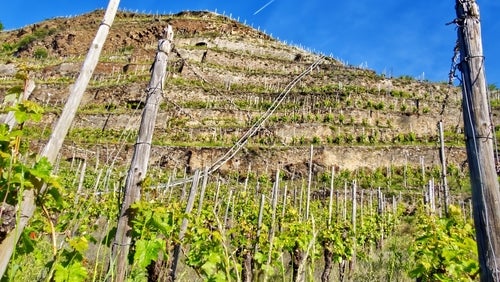
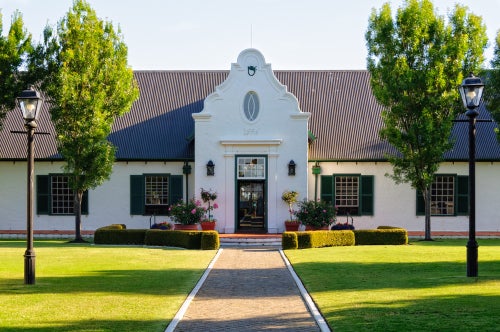
The Valentini family’s winery sits on the edge of the Umbrian valley that lies between Montefalco and Spoleto—one of the two lobes of the vast, ancient, and long-lost Lake Tiberino. That lake’s clay legacy is perhaps another reason for the textural generosity of Sagrantino. The Apennines mass across the valley, gathering blue clouds. The family began its winemaking in the 1920s, selling everything in a 2-liter jar called a boccale; the Umbrian dialect version with one c became the family nickname. Two world wars took their toll; after the second, Valentino Valentini says, “Few were left; the survivors gave up on Sagrantino because its yields were too low.” There were five or six wineries in the whole region in the 1980s; lift-off only came in the 1990s. Everything has changed since. There are now 85 wineries, and the enigma of Sagrantino is slowly being decoded. Late harvesting is key at Valentini, as it is for Bocale’s near neighbor, the wiry genius Giampaolo Tabarrini: at the end of October, when the pips are brown and crunchy. Then ferment slowly and gently, for the best part of two months; one pump-over per day as the wine is fermenting; submerged cap afterward. Barriques were once used here, but small wood oversweetens Sagrantino, lending it a raisiny, cigar-like rasp. Bocale now ages in small tuns.
You can find much in the aromas of this opaque black-red wine. Brambly fruits are often mentioned for Sagrantino, but for me it’s among the most savory of all red wines, and the way that it waves goodbye to primary fruit is one of the things I like most about it. Wagons, barns, and byres are never far away; nor are fields and woods, with all their rich surprises. The aromas are deep, woven, gratifying: crushed leaves and expressed oils, not without an inner sweetness. In the mouth, it’s a soft pillar of a wine, velvet mixed with lava; the tannins themselves are magnificent—burnished and refined. This, I remember thinking, is the best sort of natural wine, the sort that recalls nature. Those tannins unlock the Old Master landscape that the aromas sketched out: stick, earth, stone, breath. There is acidity here, but it’s quiet, recessive—a memory of the fruit that’s moved on and modulated. No longer sweet on the palate, either; instead a resolved bitterness that is also true to nature, with its energy and vitality and attack. It is hero wine: something to admire, to believe in, to wait for, to trust. Every sip does much; there are Barolo, Barbaresco, and Brunello wines that do less. Many.
“We focus too much on aromas and flavors,” said the Italian wine educator Cristina Mercuri at a masterclass I attended while in Montefalco. “The most important thing is tasting by texture.” She has a point, though I wouldn’t drive it that far; the three are peer qualities. Cristina served some wines blind, in pairs; a Sagrantino alongside something else, the point being to show that the caricature of this wine—as a kind of tannic gargoyle—is far from the truth, and that its textures can be as seductive and beguiling as illustrious others. Bocale’s 2019 Sagrantino went head-on with Guigal’s 2018 Château d’Ampuis Côte-Rôtie. Car crash? Not at all. The Côte-Rôtie smelled more pure-fruited, sweeter, swisher: new oak and perfumed plum. On the palate, you could see a brighter beam of acidity; the tannins were as firm but less wide. The Sagrantino embraced it, warmly. I sank back into its accommodating landscape—and felt at home.
Content from our partners