Harry Eyres reflects on vinous contingency.
Wimbledon is long past, and this column is not supposed to be about white shorts and green courts, but I can’t help recalling an incident that might have changed the course of the championships. This was the muscle tear that forced elegant Bulgarian Grigor Dimitrov to retire in the third round, when he was up two sets to love against eventual champion Jannik Sinner. Dimitrov was playing the match of his life, finally realizing his great potential, sending unreturnable serves at 140mph (225km/h) and baffling Sinner with his low-bouncing backhand slice. But suddenly and without warning, Dimitrov clutched at his left pectoral muscle, pain visible on his face; he was in agony and could not continue. Sinner spoke well-chosen words of consolation, the media were briefly interested, and then the show moved on to Sinner’s triumphant conclusion.
Contingency and valid possibilities
The technical philosophical term for what I am talking about is contingency. It means that things could have turned out otherwise. Perfectly valid possibilities could have eventuated but, for various reasons, didn’t. In wine terms, I am thinking of alternative histories of wine, or of wine regions, styles, grape varieties.
Phylloxera is perhaps the most dramatic example of contingency in wine. There was no divinely ordained reason why the vine-destroying phylloxera aphid should have found its way to Europe from America, probably in the late 1850s. But find its way it did, and for a couple of decades the whole future of wine seemed in doubt. Among the effects of phylloxera were the decline of certain wine regions and the disappearance—virtual or complete—of numerous grape varieties; the social effects included mass migration of European vineyard workers, especially to South America. How would the wine world look now if phylloxera had never crossed the Atlantic? One or two clues: In Burgundy, only 43% of red plantings were Pinot Noir before phylloxera. In Bordeaux, Carmenère rivaled Cabernet Sauvignon pre-phylloxera, and Malbec and Petit Verdot were much commoner than they are now.
Related
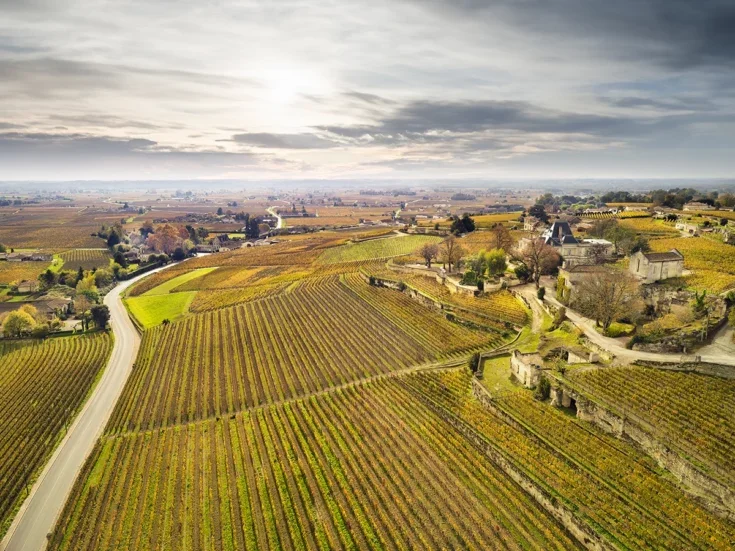

We’ll come back later to grape varieties, the most hopeful expressions of alternative histories of wine. But alternative histories of wine regions are equally intriguing. One rather sad case is Cahors. In the Middle Ages, Cahors rivaled Bordeaux as a source of export red wine, especially to England, but the trade route went along the Lot and Garonne rivers via Bordeaux, and Bordeaux traders realized they could easily disadvantage their upriver cousins by imposing crippling duties on high-country wines, the so-called police des vins. Cahors has never fully recovered. It may not be much consolation to the vignerons of Cahors that their local grape, Malbec, has gone on to achieve great renown—and prices beyond their most gilded dreams—in Argentina and, especially, in high, cool-climate subregions such as Gualtallary.
Wine more redemptive than history
Whole wine styles have come about more or less by chance. Champagne began as a still wine, or at least a wine that aspired to be still. The presence of carbon dioxide in the wine was a function of cold winters, which paused the fermentation before it was complete. In the late 17th century, Dom Pérignon, the supposed inventor of Champagne, was still trying to take the bubbles out of the bubbly. But in Britain, which had supplies of better corks and the thicker glass bottles necessary to avoid premature popping and explosions, a fashion for sparkling Champagne—which is referenced in several Restoration comedies—took hold. It has never loosened its grip.
Something a little similar occurred with Port. Fortification, creating the rich, sweet style we are familiar with today, was neither necessary nor inevitable. From the late 17th century—when the Port trade with Britain and other northern European countries began in earnest—until the mid-18th century, most Port was not fortified at all. Even in the mid-19th century, Baron Joseph James Forrester, the “protector of the Douro,” was arguing passionately against the fortification of Port.
Content from our partners

So, back to grape varieties and hopeful expressions of alternative histories. In the conclusion to “Spain 1937,” a poem written in the second year of the Spanish Civil War that prefigured the war to come, Auden wrote lines he later disavowed: “History to the defeated / May say Alas, but cannot help or pardon.” History here seems to go just one way, with no alternative permitted, and no mercy for the losers (here presumed to be lacking moral conviction).
Wine offers something more redemptive. I recently attended a tasting in London given by Mireia Torres devoted to wines made from ancestral Catalan varieties that history almost condemned to oblivion. Among nearly forgotten white varieties, Torres is especially interested in Forcada, a late-maturing grape with aromatic intensity and excellent acidity. I was impressed by both the sparkling and still interpretations of this grape. Among the ancestral red varieties, I liked Moneu’s red-fruit delicacy, but the star was the rare Pirene; some call it the Catalan Pinot Noir—understandable, because it combines finesse and body. It should be added that Torres is pursuing this project not just out of antiquarian curiosity but in the face of the rapid advance of climate change; temperatures in Penedès have already risen by more than 3.6°F (2°C) since the 1970s.
For poor Grigor Dimitrov, history could only say Alas and move on its apparently inevitable course. But wine shows that some alternative histories are not unrecoverable and irredeemable. Buried deep in the culture, and more literally in the soil, they are still alive and waiting for their chance.