


Amanda Barnes MW speaks to some of the key players involved in the rapid reinvention of South American white wines in Argentina, Chile, and Uruguay.
South America is quite rightly known as a red-wine continent. Not only is the land under vine dominated by red grape varieties, but the Malbec of Argentina, Cabernet Sauvignon of Chile, and Tannat of Uruguay are undoubtedly the best-known varieties produced there. In each of their respective nations, they claim the lion’s share of vine area, as well as most of the accolades. They have also been the focal point for winemakers in terms of making world-class wines since the quality revolution in the 1990s.
While these hearty reds most certainly suit the meat-heavy diet of South Americans, the diverse tapestry of terroirs in the wine regions is, in fact, just as suitable for high-quality South American white wines. And more recently, winemakers have been turning their attention to the potential of premium white wines with some thrilling and elegant results.
A new focus on premium South American white wines
“In Argentina, we focused so much on red wines that we almost forgot about the potential we have for white wines,” says third-generation winemaker Sebastián Zuccardi, who has just released the winery’s first icon-level white wine, El Camino de Las Flores Chardonnay, through La Place de Bordeaux. “I think maybe it was because we thought that to make great white wines you needed the influence of the sea—as is the case in most New World regions—but we have since discovered that when you plant closer to, and farther into, the Andes foothills, you find exceptional soils and climates for white wines,” he adds. Zuccardi has been at the forefront of the exploration of new vineyards planted increasingly farther into the Andes in Mendoza’s Uco Valley. “This mountain climate, with its cool temperatures, especially at nighttime, and its calcareous soils—like we find in Altamira, Gualtallary, and San Pablo—really help in building the structure of these white wines.”
Related
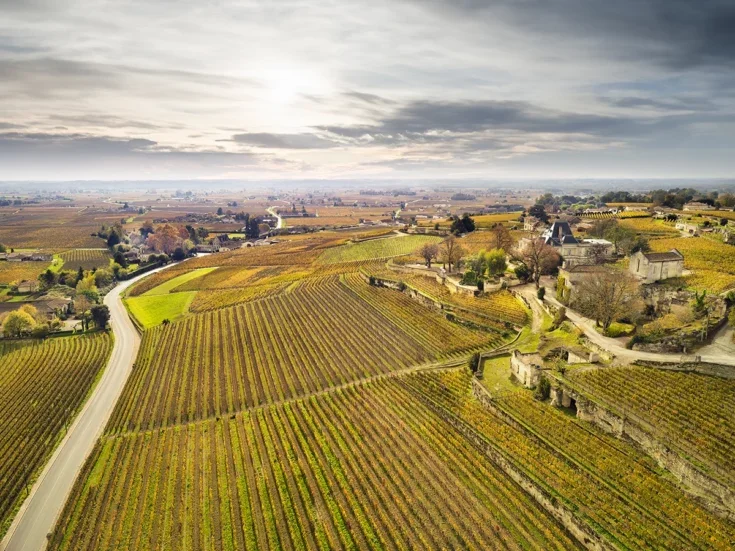

In Argentina, the development of its top premium wines has largely been focused in the Uco Valley—and notably in the three terroirs mentioned by Zuccardi: Paraje Altamira, Gualtallary, and San Pablo. Here you will also find the top wines of Catena Zapata, Susana Balbo Wines, El Enemigo, Salentein, Matías Riccitelli, Bemberg Estate Wines, and Viña Artesana (a new producer releasing its first vintage in October 2025).
These high-altitude terroirs in the Uco Valley are also responsible for some of the country’s top red wines and are most certainly not exclusive to white varieties. They are, in fact, some of the most studied wine-growing regions of Argentina, where producers have invested heavily in detailed soil mapping, geological surveys, and climatic modeling prior to planting. This level of precision viticulture and the resulting intimate understanding of micro-terroirs has been instrumental in the recent leap in quality of Argentina’s white wines.
A similar story is unfolding in Chile. “If you look at the history of Chile, it was always about high-end red wines,” reflects Emily Faulconer, technical director and winemaker of Viñedos Familia Chadwick, which encompasses the iconic brands Seña, Viñedo Chadwick, and Errázuriz. “White wines were not even part of the discussion—but if you look at Chile today, they are increasingly becoming part of the discussion around the top wines of the country.”
Content from our partners

Winemaker Francisco Baettig, who spearheaded the development of Errázuriz’s Las Pizarras Chardonnay during his tenure there, believes the transformation of Chilean white wine has been driven by three key factors: “The overall style and quality of Chile’s white wines has changed and improved for three reasons,” he summarizes. “One of the main reasons is that the plant material we have had available over the past 15 years is much better than what we had before.”
Specifically, he credits the arrival of high-quality Burgundian clones for elevating the quality of Chile’s Chardonnay. “Previously we had only massal selections of the Mendoza clone, which was very tainted with virus and led to uneven ripening and an unclean style of wine. When we started using good plant material, it completely changed the potential.”
Second, he highlights a philosophical and stylistic evolution in the winemaking. “The style has also changed in recent years: Winemakers are looking for less ripeness, less oak, and more acidity and freshness, resulting in wines that are much better balanced.”
And finally, he points to the discovery and development of cooler-climate terroirs that are naturally well suited to white varieties. “We have developed new cool-climate terroirs that work really well with these varieties. Thanks to a combination of these three factors, the quality of Chardonnay in Chile has improved overall.”

Chardonnay: The white knight of South American wine
There is no doubting that Chardonnay is the white knight leading the charge in South America’s premium white-wine scene. It is also the variety from which some of the most ambitious white wines are emerging in Brazil, and it is being increasingly explored in Uruguay, too. But the two nations that are truly proving Chardonnay’s fine-wine potential are Argentina and Chile. And because it is such a malleable and expressive variety, it has become the greatest “terroir translator” for both countries, capable of vividly articulating the nuances of soil, altitude, and climate.
The first cool-climate terroirs to be really seriously explored for Chardonnay in Chile were coastal. It was one of the first varieties planted by Casablanca pioneer Pablo Morandé, who broke convention by planting vines near the Pacific coast in the 1980s. Since then, Chardonnay has been widely adopted across Chile’s coastal wine regions, from the salt-crusted sandy soils of the Atacama and the schist intrusions of Aconcagua Costa, down to the granitic coastal hills of the Secano Interior.
One region where Chardonnay particularly thrives—and has yielded some of Chile’s most distinctive examples—is Limarí. “Wines made from grapes grown in these calcareous soils can reach full maturity but retain really high acidity, and this character is really unique in Chile,” says Héctor Rojas, head viticulturist for Viña Tabalí, one of Limarí’s leading producers. “There’s no greenness in the wines, but you get great structure and weight, with mineral or saline notes, and incredible freshness.” Top wines from the region include those of Tabalí, but also Reta, Amelia, Miguel Torres, and Maycas del Limarí.
The newest frontiers in Chile’s Chardonnay journey lie far to the south, in the volcanic soils and sandy terrains of Malleco, Pucón, and Osorno. Producers including Aquitania, De Martino, and Trapi del Bueno are now making some very exciting examples there, as is Francisco Baettig, who chose Malleco as the home of his eponymous project, where he produces two standout Chardonnays that are among Chile’s best.
“Malleco is really good for Chardonnay because it has 30% less direct solar radiation [compared to the Central Valleys] because of the latitude,” explains Baettig. “There’s less heat and energy from the sun, so we can get lower alcohols and better acidity, and the style is more mineral, with more tension. The ancient volcanic soils also have great drainage, and in the south we have sufficient rainwater to dry farm. All of these factors give us very balanced wines.”
One of the most surprising Chardonnay newcomers in Argentina in recent years comes from the southernmost vineyard in the world, located in the wind-lashed steppes of Chubut. Otronia was first planted in 2010 at 45°33′ south, taking a bold risk on completely untested terroir (see also Anthony Rose, “Alejandro Bulgheroni: When I’m 64,” WFW 85, p.176). The gamble paid off; today, Otronia is producing some of the most singular and expressive wines in South America—including outstanding Chardonnay. Winds here exceed 60mph (100km/h), and the winter landscape is often covered in snow, but the region’s high luminosity and cool climate deliver highly aromatic, vibrant white wines with striking clarity. In just over a decade, Otronia has emerged as one of Argentina’s most intriguing white-wine producers—and not only for Chardonnay, but Torrontès and white blends, too.

Farther north, at the gateway to Patagonia, the old vines of Río Negro are being grafted over to Chardonnay with excellent results, most notably at the boutique winery Bodega Chacra, where Piero Incisa della Rocchetta has partnered with Jean-Marc Roulot of Domaine Roulot in Meursault, bringing Burgundian finesse and precision to the mild southern climate of Río Negro. The wines produced are some of the most seductive, mineral-infused Chardonnays in Argentina today.
Most of the development for Argentinian Chardonnay, however, has been concentrated in the Uco Valley—and specifically in the calcareous-rich soils mentioned earlier by Zuccardi. “In our coldest places, and with our most calcareous soils, I think Chardonnay is the most transparent variety to transmit our terroirs,” he adds.
Many of the top Chardonnays in South America are conceptualized entirely around terroir expression. Take, for example, the celebrated duo from Catena Zapata: White Bones and White Stones. These single-parcel wines come from vines just a few yards (meters) apart in the Adrianna Vineyard and are vinified by Alejandro Vigil using identical techniques. Yet the resulting wines are wildly different. White Bones is taut and linear, with a Chablis-esque structure and a distinctive nose of wild mint, lavender, and citrus zest. White Stones, by contrast, is broader and richer on the palate, with a more restrained bouquet of flint, Meyer lemon, and wet stone.
The difference lies beneath the surface. Both parcels share the same clones, altitude, and climate but diverge in their subsoil compositions. White Bones comes from a block with finer calcareous deposits, fossilized plant matter, and remnants of an ancient riverbed, while White Stones is rooted in gravelly soils strewn with oval-shaped white stones covered in a chalky dusting. Wines like these demonstrate the precision with which South American winemakers are now interpreting and showcasing terroir—not just on a regional level, but down to the micro-parcel.
Although Argentinian and Chilean terroirs may share some calcareous similarities with Burgundy, winemakers are developing their own distinctive cellar techniques. “We need to interpret our Chardonnay differently to Burgundy—for example, because we have much more light,” explains Zuccardi. “We’ve adapted our winemaking to reflect our conditions, choosing concrete for vinification because there is less oxygen in the aging and it shows a lot more transparency. It isn’t only about looking for great places, but knowing how to interpret and vinify it, too.”
In Chile, Faulconer agrees that although fine terroirs for Chardonnay have already been discovered, there is still some distance to cover in terms of mastering the winemaking. “I think that within the next ten years we will start to see more conversations about texture and age worthiness,” she muses. “If you think about great Meursault, the wines have the texture as well as the freshness, and on the nose you can always see something new developing. I think that is our next challenge.”
Given the relatively recent shift toward fine white winemaking, it’s unsurprising that there is still room for further refinement. Yet many of these wines already demonstrate excellent longevity—and in some cases, improvement over time. Las Pizarras Chardonnay from Errázuriz, for example, remains taut and youthfully restrained in its 2023 vintage. The 2022, however, has begun to unfold, with subtle baking spices and a fine, chalky texture. The 2021 shows more volume and reveals notes of marzipan and lavender. Even the warmer 2020 vintage maintains impressive tension, while offering deeper tones of toasted nuts and hints of white truffle.
Other benchmark Chardonnays from Chile and Argentina tell a similar story—these are wines built to age. Though many of the finest examples are still in their first decade of life, their evolution in bottle is proving that ageworthiness is not only possible but may become a defining hallmark of South America’s emerging white-wine identity.


Catena Zapata’s Adrianna Vineyard and the White Stones parcel, source of one of Catena’s two most celebrated Chardonnays. Photography courtesy of Catena.
Returning South American Semillon to its former glory
Semillon is another of the white grape varieties to watch from South America. Once a mainstay in both Chile and Argentina, it was among the most widely planted white grape varieties on the continent—with more than 5,500ha (13,600 acres) planted in Argentina by the 1960s, and some 35,000ha (86,500 acres) in Chile during the same period. It was used in a range of styles, from simple table wines to oxidized whites and sweet wines. But interest in the variety waned through the 1970s and ’80s, and plantings declined drastically. Today, fewer than 580ha (1,430 acres) remain in Argentina, and just 620ha (1,530 acres) in Chile—a shadow of its former prevalence.
The renewed focus on white wines in recent years has, however, sparked fresh attention and energy toward Semillon—leading to a quiet revival and some rather exciting results. The winemaker widely credited with kickstarting this resurgence is Argentinian legend Roberto de la Mota. His Mendel Semillon remains a benchmark for the variety in Argentina, a wine that is lean and taut in its youth but develops rich texture and honeyed complexity with bottle-age.
Joining de la Mota are many leading figures of Argentina’s new-generation winemakers, including Matías Riccitelli, the Michelini i Mufatto family, Finca Suárez, and Zuccardi. Most of them are working with old vine material, taking advantage of the pre-phylloxera-era plantings scattered through the Uco Valley, Luján de Cuyo, and Río Negro. These sites allow for concentrated, waxy, and racy expressions of Semillon that are showing increasing finesse and individuality.
Over the Andes, a parallel rejuvenation is unfolding in Chile. Here, too, the focus has been on reclaiming old vines—particularly in historic regions such as Apalta, Maule, and Itata. The revival has been led by producers like Bouchon and Carmen, with a growing number of artisanal wineries now joining the movement. Chile’s versions tend to be earthier and more savory in character, and more often than not with an oxidative character.
Importantly, the vinification style of South American Semillon has diverged from its traditional Bordeaux counterpart and taken on a distinct identity. Many producers prefer to ferment and age the wines in large, neutral vessels—such as old barrels or foudres—to emphasize texture and allow oxidative complexity to emerge gradually. Skin-contact is increasingly common, and there is a growing trend toward biological aging under flor, borrowing inspiration from Sherry and Jura.
One of the best examples of this unique evolution is Carmen’s DO Florillón: a tangy, saline Semillon with a lifted floral character, nutty depth, and an almond-like finish. Other producers have followed suit, experimenting with wild fermentations, minimal sulfur regimes, and extended aging to push the boundaries of what Semillon can be. South America’s Semillons are quickly becoming not only one of the most exciting categories in the continent’s white wine revival but a compelling category in the global context as well. From linear and mineral, to oxidative and textural, this once-forgotten grape is now being reimagined in thrilling new ways.
Other varieties—from native, to niche
A host of other grape varieties are playing their part in South America’s white-wine quality revival. Before this recent surge of interest in fine white wines, Argentina was almost exclusively aligned with Torrontés, widely seen as its flagship native white grape. And although much of today’s attention has turned to internationally renowned varieties like Chardonnay and Semillon, a few dedicated winemakers have remained focused on elevating Argentina’s homegrown white to world-class status.
Notably, Susana Balbo and Alejandro Vigil have been championing the variety by planting new vines in some of the Uco Valley’s most prized terroirs—namely Paraje Altamira and Gualtallary. While many Torrontés wines still come from century-old plantings in the north, with top cuvées sourced from carefully selected parcels, this new wave of precision viticulture and clonal selection has produced some remarkably refined examples.
“Torrontès has a great potential to be identified as the signature variety of Argentina,” says Susana Balbo, often referred to within the country as the queen of Torrontés for her pioneering work with the grape. “But we need more focus on high-quality production. It is an amazing variety but difficult to work with; it needs good technology to achieve elegance.”
By combining the gentle hand of modern winemaking and adding the complexity of barrel-fermentation and oak-aging, and by sourcing from high-altitude, low-yielding sites, Balbo has helped transform Torrontés into a more serious and ageworthy white wine—one that still retains its trademark floral perfume, but now comes with added depth, structure, and length.
Another grape variety, though not native to South America, that has become a trademark white grape for Uruguay is Albariño. First planted by the Bouza family in 2001 and significantly expanded by Bodega Garzón starting in 2008, Albariño has grown rapidly in both prestige and plantings, now ranking among the top ten grape varieties in Uruguay. Found throughout the coastal regions of Canelones, Maldonado, and Rocha, Albariño particularly thrives in the granite-rich soils and cool Atlantic climate of the eastern coast.
“Albariño is one of our most promising white wines, with incredible quality potential,” says Santiago Deicas, third-generation winemaker at Familia Deicas, which produces one of Uruguay’s most sought-after white wines: Cru d’Exception Albariño. “We have an incredible natural acidity for the variety, sometimes 2.9 pH, which means excellent potential for aging.”
Although still in their infancy, the Albariños of Uruguay are already showing remarkable aging potential. A vertical tasting of Bouza’s early vintages reveals how the wines evolve from youthful expressions—zesty, peachy, and floral—into more savory, mineral-driven wines with an oilier texture and the petrol-scented complexity reminiscent of fine Riesling. Albariño is, without question, the rising white-wine star of Uruguay and a standout in the broader South American context.
Sauvignon Blanc might feel notably absent from the conversation thus far—especially considering that it is the most widely planted white grape in Chile, and among the most planted in Argentina and Uruguay. Yet despite its volume, the category has historically been dominated by entry-level and mid-range wines rather than fine-wine expressions.
That said, Chile has clear potential to produce outstanding Sauvignon Blanc—especially in its cool coastal regions, such as Leyda, Casablanca, San Antonio, and Limarí. Relatively few producers, however, have pushed their viticulture and cellar practices to the level required for top-tier Sauvignon Blanc. A notable recent exception is Santa Rita’s Floresta Sauvignon Blanc, a high-quality wine from Limarí that is shifting perceptions.
On the other side of the Andes, Sauvignon Blanc is also underrepresented among Argentina’s top whites. But some high-altitude subregions of the Uco Valley—such as El Peral and San Pablo—have begun producing remarkably expressive versions, including those from Giuseppe Franceschini and Salentein, respectively. The elegance and poise of these wines suggest that the variety may yet find its place among the continent’s great whites. For now, however, these high-quality examples remain isolated—hints of what could be, rather than a full-blown movement.
Several other white grape varieties are also at the start of their journey into South America’s fine-wine scene. Chenin Blanc, Marsanne, and Viognier, among others, are being produced in small volumes, often with promising results. As varietal wines, though, they have yet to achieve major critical acclaim or recognition as benchmark whites for the region.
Where these varieties do begin to shine is in blends—and that, increasingly, is where much of the innovation and excitement in South American white wines is happening. The movement toward textural, layered, and ageworthy white blends is one of the most riveting and creative trends on the continent today.

Photography courtesy of Viñedos Familia Chadwick
The fine-wine movement of white blends
Far from the bulk blending so typical of entry-level wines on the continent, a fascinating trend is emerging in South America: carefully thought-out and creatively inspired white blends. These are wines born from precision viticulture and thoughtful cellar work—not commercial formulas. Some of these blends nod to classical models, while others chart entirely new stylistic territory.
Among the more classically inspired approaches, Semillon and Sauvignon Blanc blends—well known in Bordeaux—have become a foundation for elegant whites in Argentina and Chile. Ruca Malen’s Capítulo Dos and De Martino’s Ungrafted are fine examples, showing restraint, freshness, and ageworthiness.
Perhaps the most compelling interpretation of this style is Alandes Paradoux Blanc by Karim Mussi in Argentina. Fermented and aged in French oak and on the lees, it offers richness, depth, and layered complexity on the palate. A nod to the top white wines of Pessac-Léognan, yet unmistakably Uco Valley in character, its floral perfume and herbal vibrancy set it apart. Intriguingly, Mussi blends multiple vintages, embracing the creative freedoms afforded by New World winemaking.
Often, the traditional Bordeaux blend is given a distinctively South American twist. In Argentina, it’s not uncommon to see Torrontés in blends of Sauvignon Blanc and Semillon, as in Susana Balbo’s Signature White Blend—a wine of vivid aromatic intensity and striking complexity. Chardonnay also features prominently, bringing structure and mid-palate weight when blended with Semillon, Sauvignon Blanc, or Torrontés.
In Chile, these grape varieties often appear together in field blends from old vines in regions like Itata and Maule, sometimes joined by Chasselas (known locally as Corinto) and Muscat of Alexandria. These rustic field blends, reinterpreted through modern winemaking, offer an authentic expression of South America’s viticultural heritage.
Another major thread in the fine white-blend movement is Rhône-inspired winemaking. While there are a few noteworthy Viognier-based blends in Chile, the real Rhône revival is taking place in Argentina—particularly in the Uco Valley’s Los Chacayes subregion. Pioneering producers such as Mariana Onofri, Matervini, Ver Sacrum, and Mil Suelos are all creating compelling blends with Marsanne, Roussanne, and Viognier.
Among the most distinctive examples is Geisha de Jade from Ver Sacrum, a Marsanne/Roussanne blend that releases a complex medley of orange peel, lavender, peach, white blossom, and coriander as it unfurls in the glass. Another Ver Sacrum wine, Dragón del Desierto, blends Viognier, Marsanne, and the native Pedro Giménez, and is aged under a veil of flor. It leans into notes of honey, dried apricot, sea salt, and freshly baked croissant—a generous, textural white of striking originality.
“The white-blend category allows you to play with aroma, flavor, and texture in more adventurous ways—it’s about exploring new horizons,” says Achaval Ferrer winemaker Gustavo Rearte. Their Quimera Blanco, from Los Chacayes, offers an Argentinian twist on the Viognier blend, combining it with Chardonnay, Semillon, and Sauvignon Blanc, yielding a wine with lifted aromatics and a firmer acid backbone. The companion wine, Quimerino Blanc, takes a slightly different route, pairing Sauvignon Blanc with Roussanne and Marsanne, for a pithier, tauter structure.
The interplay of different varieties—whether seeking the nerve and drive of Sauvignon Blanc, the weight of Semillon, or the flesh of Viognier—adds diverse dynamics to these wines. But the common denominator is the terroir of Los Chacayes, whose high-altitude, alluvial soils and stony terrain inject energy, freshness, and minerality into the blends. “It is Los Chacayes, with its alluvial, rocky soils, that gives us a really interesting profile for white wines,” Rearte adds.
The art of blending also plays a key role in the rise of South America’s sparkling-wine movement. Producers such as Tabalí and Undurraga in Chile, and Cruzat and Otronia in Argentina, are crafting blanc de blancs and traditional-method sparkling wines of notable complexity and longevity. These wines, too, reflect the growing ambition and fine-wine sensibility that is redefining South America’s white-wines.
Just the beginning…
Most exciting of all is that this movement—and the great leap in quality it represents—is just the beginning of South America’s foray into the world of world-class white wines.“We are in the best moment in the history of Argentina’s white wines in terms of the diversity and quality that we are seeing today, but I still don’t think we have fully seen the potential of Argentinian white wines yet,” reflects Sebastián Zuccardi. “There is a lot more yet to come.”
Although both Argentina and Chile are seeing a general decline in total vineyard area, high-quality plantings of white wine varieties in top terroirs are increasing steadily on both sides of the Andes—as they are in Uruguay.
“I think premium white wines are the future,” agrees Emily Faulconer. “If we look at wine consumption, we can see that it is a growing category. In fact, it’s one of the few categories that really is growing at the moment. And what has happened over the past decade has contributed to a really interesting white-wine scenario. We have really beautiful wines today, but there is still a lot further to go. I think we will see a new era of white wines in Chile and South America—and it will be amazing.”
If the trajectory of Malbec, Cabernet Sauvignon, and Tannat over the past 30 years is anything to go by, the white-wine revolution will likely advance more rapidly—and reach just as high. It’s really only over the past decade that producers have brought the same ambition and attention to white wines—and the next ten years promise even more creative, dynamic, and expressive results.
Already, the quality of South America’s very finest Chardonnays—whether from Limarí, Malleco, and Aconcagua Costa in Chile, or from the Uco Valley and Patagonia in Argentina—can comfortably rival many white Burgundies at similar price points. With increasing scarcity and surging prices in Burgundy, these wines can represent a more compelling, budget-friendly proposition for wine lovers—and an opportunity for adventurous collectors. They may not yet carry the same prestige or collectability, but their affordability, longevity, and precision position them perfectly for those who want to get ahead of the curve.
And without the constraints of appellations and rigid regional rules of Europe, South American winemakers enjoy a unique freedom to experiment—with creative blends, bold winemaking choices, and pioneering new wine regions. As they begin to reinterpret international classics while simultaneously exploring native and lesser-known varieties, they are making some of the most compelling wines of the New World.
These may be countries long known for red wine, but today they are proving that their best white wines can stand shoulder to shoulder with fine white wines from anywhere around the world. From cool-climate Chardonnays, to flor-aged Semillons, a new chapter of South American finesse is being written—and it’s only just begun.


