ST-AUBIN
DOMAINE MARC COLIN ET FILS
Damien Colin found the mildew less difficult in St-Aubin than in Chassagne. He started the harvest on September 19, and yields averaged 40hl/ha. “The level of ripeness is not high—generally around 11–11.5% ABV, the highest 12%—but I didn’t chaptalize. I know the style of the vintage is fine and pure, and higher alcohol would overpower this.” There was not a lot of malic acidity in the grapes, with pH levels 3.15–3.20 before malolactic. All the fruit was whole-bunch-pressed. Every year for the past ten years, Damien has lowered the proportion of new oak, so it is now much lower than in the past—5–10% for village wines, 15–20% for the premiers crus. The small cuvées, including the grands crus—only two barrels of Bâtard and one of Montrachet in 2024—are in one-year-old oak. Most of the barrels are from François Frères. “Eleven months in barrel and then tank for six months,” before bottling in January or February. No fining and no filtering.
The estate extends across 12ha (30 acres), most in St-Aubin and Chassagne. There are 24 white cuvées, which clearly express their terroirs. The premiers crus in Chassagne range from the fruity, easy-going Champs-Gains, to the broad, quite richly textured, dense, and punchy Vide Bourse. I like the fact that Damien has not chaptalized and has chosen to focus on the finer, slimmer, more elegant style of this vintage. There is lucidity but no lack of intensity. There are normally a few reds, but only two in 2024, which are fruit-focused, with crunchy tannins.
Related

“It is a very pure, elegant, and fine vintage,” concludes Damien. “When you taste, it is very difficult to imagine the history of the summer. It is an easy vintage to taste and in which to understand the different soils and expositions. For the style of the domaine, it is a very good vintage.”
St-Aubin Premier Cru Chatenière
Like St-Aubin En Montceau, this was never planted to Pinot Noir, and Damien has two parcels, one 35 years old, the other 60. There is 25cm (10 inches) of clay over the rock. Damien feels the balance is better here since climate change—riper, with lower acidity. “When it is hot, the clay can keep the freshness. There is never hydric stress here.” Relatively burly, weighty wine, with a bit of austerity, to boot. Punchy finish. 2027–30. 88
Content from our partners
St-Aubin Premier Cru En Montceau
Damien has 1ha (2.47 acres) of the total 1.5ha (3.7 acres). There are six or seven producers, but the wine can also be labeled as Champlots. “It was never planted to Pinot Noir, so the vines here are from the 1950s. The soil is similar to Trézin in Puligny, in that it is not the clay/limestone mix that is typical here, but rather a slightly heavier marl.” Quite compact, with some tension. Quite full-bodied for St-Aubin, with a smooth, savory, miso finish. The substance to age well. 2027–32. 88
*St-Aubin Premier Cru En Remilly
From five plots totaling 1.5ha (3.7 acres). “There are two terroirs and styles in this large climat. On the plateau, there is lots of limestone, while on the slope, there is 25cm [10 inches] of clay over the limestone.” This cuvée is a blend of both. Confit citrus, silky richness underscored by freshness and soft-salt minerality. It glides elegantly. My favorite of the St-Aubin premiers crus here this year. So stylish. 2027–30. 89
*Puligny-Montrachet Le Trézin
10% new oak. Pure and untoned. Light, precise, and swift. Slim and trim; nervy and saline to finish. Spot-on. 2027–30. 90
Chassagne-Montrachet Premier Cru Les Caillerets
Tight and channeled, showing good tension and energy. Firmly edged, savory wine, with a nicely persistent, rich, miso-sweet/salt finish. 2027–34. 93–94
Chassagne-Montrachet Premier Cru Les Chenevottes
Just two barrels. A gregarious, fruity aroma, with slightly exotic pineapple notes. Juicy and ripe yet it has lovely acidity to finish. A longer and fresher finish than the Champs Gains. 2027–32. 92
*Bâtard-Montrachet Grand Cru
A 350-liter François Frères barrel, one-fill. Full and generous, with density and a powerful finish. I like the freshness and energy. Lithe muscle. It’s not a heavy Bâtard but an athletic one. 2028–38. 96–97
*Montrachet Grand Cru
A one-barrel cuvée in a one-year-old François Frères barrel. A channeled palate. It’s not rich, but it is super-intense and a level up from the Bâtard for its focus, precision, and persistence. Power and elegance combined. 2028–40. 98
CHASSAGNE-MONTRACHET
DOMAINE BRUNO COLIN
Bruno Colin worked organically in 2014. Since 2020, all his reds have been organic. In 2021, he felt he had to do one systemic spray, at flowering, for the whites, but there have been none since. He did 19 sprays of copper/sulfur in 2024—“sometimes three in a week, but all mechanical, which was easier where we had grass.” There were no problems with oidium or mildew, so little sorting to do. The average yield for whites was 45hl/ha, but for reds it was only 25hl/ha, due to poor flowering. Typical production in a normal vintage is 65,000 bottles.
Bruno Colin harvested at potential alcohol levels of 11.8–12.8%, chaptalizing to arrive at 12.5% where necessary. Malic acid levels were 3.5–4g/l, and tartaric, 6–7g/l, with pH levels of 3.15–3.2 before MLF, 3.25 after.
Bruno crushed the grapes a little before pressing, which he did so he could press more softly. He decanted at 14ºC (ºF), and sulfur was added once all the cuvées were pressed. Everything is now fermented in oak—350-liter barrels for most reds and whites, 10–15% new. The grands crus—Bâtard, Chevalier, and Montrachet—which are smaller cuvées, are in 228-liter barrels, but they are two years old; they are racked and put into wine globes in September post-harvest.
All the fruit for the reds was destemmed in 2024. The vatting was shorter—10–12 days—with only two pigeages, most of the extraction being by remontage. Bruno was extremely careful this year with extraction, which shows, as he has made some of the most delicate Chassagn reds. All the reds have passed through 350-liter barrels since 2019, with about 24% new.
“The whites are fruity now,” Bruno says, “but it was not an easy vintage—less gourmand than 2023, fresher and straighter—and we can see the identity of the vineyards, which I really like. Chaumée and Vergers are just 300m [ft] apart yet so different. When we have a ripe vintage, it is always more difficult to discern the terroir, while in a colder vintage it is more precise. 2024 is not a ‘great’ vintage—not the vintage of the century in the Côte de Beaune—but it is a good vintage. We were lucky in the Côte de Beaune, especially for whites, as we had some volume.
“We have to wait a bit for this style of wine. The 2022s and 2023s are very easy, for early drinking. The 2024s have good structure, so will benefit from time—from four to seven years after bottling. They are more like the 2021s, so fruity and fresh.”
I find the wines very forthcoming, and feel you could drink them quite soon or keep them. Precise and pure. Bruno’s wines are translucent to the terroir.
Bourgogne Aligoté
From vines below Chassagne, cordon-trained to keep the yields low—they are never more than 40–45hl/ha. Light and delicate lemon on the nose, with a lemon-sherbet palate, fresh acidity, slightly minty, grassy, and bright. 2026–28. 82
Bourgogne Chardonnay
A blend of three parcels in Chassagne and in Santenay and some bought fruit from the same grower each year. Two thirds saw oak, the rest only stainless steel. Light, floral aromas, and a nicely juicy palate. Oranges and lemons. Lightly rounded. Attractive. 2026–28. 83–84
Chassagne-Montrachet Ma Vigne de 1955
From vines in lieu-dit En Journoblot, planted in 1955, just under Criota-Bâtard-Montrachet. All the work is by hand. The oldest vines of Bruno’s village parcels, the 0.07ha (0.17 acre) making about 700 bottles. Lovely depth and juiciness. White peaches and a light spicy note. Fuller and more rounded than the main Chassagne village cuvée. Generous and succulent. Delicious. Top-notch. 2028–34. 90
St–Aubin Premier Cru Les Charmois
This is well-draining soil, as there is a lot of rock. The wine is light and delicate, with minty notes and a fine line of delicate acidity running through it. Lightly pithy. Charming. 2027–33. 89
*Chassagne-Montrachet Premier Cru Blanchot Dessus
Lime flowers on the nose. Substance on the palate. Cold grip and density. Compact. A cool cut of stoney minerality. Sapid to finish. 2029–35+. 94–95
Chassagne-Montrachet Premier Cru Boudriotte
From the Champs Jendreau lieu-dit, but labeled as Boudriotte. From old vines planted in 1951 and 1977. This is not the white part of Boudriotte, with a higher proportion of clay, and you feel its freshness; a broader, more substantial, fuller bodied, and earthier palate. Punches home. 2028–35. 93
Chassagne-Montrachet Premier Cru Les Chaumées
Zesty and bright. Zips with energy on the palate. A little oak still showing, maybe because the palate is so light and slim. Racy. 2027–33. 91
Chassagne-Montrachet Premier Cru Les Chenevottes
Fruit-driven, juicy, and gregarious. Good depth and splashy opulence, with a touch of bitterness on the finish, which boosts the freshness. 2027–35. 92
Chassagne-Montrachet Premier Cru La Maltroie
From a total of 0.55ha (1.36 acrea), most of the vines planted in 1960 and 1952, some from the late-1980s. Nice reduction. Juicy, with greengage fruit. Spicy, with a hint of ginger. Rounded palate and fresh to finish. Very forthcoming. Not especially persistent, but will be widely appealing. The younger and older vines make a good blend. 2027–34. 91–92
*Chassagne-Montrachet Premier Cru Les Morgeot
From the Francemont climat on the border of Santenay, planted in 1963, the parcel going up-slope to touch Les Embazées. Reduction on the palate, which adds to the smoky limestone notes on the palate. Savory and gun-flinty. Love it. 2028–35. 94+
Chassagne-Montrachet Premier Cru En Remilly
From vines planted in 1960 and 1989. Super-citrus and light-bodied, sprightly, slightly herbaceous, with a light grassy feel. Delicate. Pithy. Quinine notes to finish. 2028–32. 92–93
*Chassagne-Montrachet Premier Cru Les Vergers
Smooth and generous, and so very silky. White-peach and floral aromas. Charming and forthcoming. Perfumed to finish. Fluid. 2027–34. 93
Puligny-Montrachet Premier Cru Les Demoiselles
Replanted in 2019. The vines were 70 years old, planted in 1949. Michel wanted his sons to replant. A sapid and tense character. Firm and well-edged. A straight and salty finish. Not yet the breadth or depth the older vines gave, but very much the style. 2027–32. 93
*Puligny-Montrachet Premier Cru La Truffière
Smooth and silky upfront. Ribbon of fruit and acidity. Runs on an edge of aromatic richness and a silky texture, with a touch of herbal, minty lift. Light, salty, bitter finish. A warm-cold juxtaposition. Energetic. 2028–34. 94
*Chevalier-Montrachet Grand Cru
From older vines planted in 1962, so an early harvest. Millerandage but still a yield of 40hl/ha. Depth on the nose and on the strike. Tension. Clean-cut edges. Cool and precise. Slightly bitter to finish. Salty and pithy. Very persistent. 2029–38. 97
Red
Santenay Vieilles Vignes
From vines on the border with Chassagne. Perfumed, with spicy nutmeg and cinnamon, probably from the oak, which couples with red fruit on the aroma. Crunchy and bright. Morello-cherry fruit, with cherry kernel. Appetizing. 2027–30. 86
Chassagne-Montrachet
From four parcels, some on the Santenay side, some from the middle of the village, 1972 and 1979 plantings. Morello cherry and slight spice. Easy, juicy, red fruit on the attack. Very crunchy, with some garden-herb notes and minty to finish. Light. 2027–30. 86
*Maranges Premier Cru Fussières
One barrel of 350 liters. There was frost in Maranges and then very poor flowering, so only 8hl/ha. Deep, red-cherry fruit. Because the yields were so low, there is good concentration. Tense, austere, biting. A crunch of fine tannins. Super-energetic. Chalky and sapid. Love it. 2028–34. 89
Santenay Premier Cru Gravieres
The very gentle extraction shows in this wine in the light, soft waft of tannins. There is charm and purity and delicacy here. Job well done. 2027–30. 87
DOMAINE SIMON COLIN
Simon worked from 2015 to 2017 with his father, Philippe Colin (and also in South Africa), followed by four vintages at Etienne Sauzet, while he created a small négoce from 2017 to 2020. In 2020, Simon and Philippe split the family estate. Simon got 9ha (22 acres). In 2021, he made his first domaine wines, but he has a little négoce on the side, generally swapping fruit with friends, so he just puts Simon Colin on his labels. He spent time working in the Willamette Valley, where he has just started a project with a friend.
He will be certified organic in 2024. “There was no question to continue in 2024. I think it is the best tool we have in farming now.” He picks into 500k (lb) bins, “so I can go quickly from picking to pressing, which is really good when it’s hot.” Obviously not an issue in 2024. He has a vibrating table.
Analysis: Tartaric 5–6g/l and malic 2.5–3.5, mainly at 3g/l. TA (as sulfuric) 5–6g/l after MLF. Before MLF, pH 3.12; after MLF pH 3.25.
Slight crush for whites. “I like to work on the lees and the crush helps to have more lees. Not smashing the grapes but to release as much solids as possible, and we need a lot of lees so we can make a selection. In 2024, the lees were acceptable, but you needed a good selection, while in 2022 and 2023, all the lees were so nice.” All fermented in barrel in 2024, most 228-liter barrels, but some 350-liter; in recent vintages, there have also been 550-liter concrete eggs, but they were not used in 2024 because the yields were too small.
“I never do bâtonnage, so I didn’t even ask myself in 2024. I don’t like to change the vintage character. I like sharp and acidic wines.” Racked to stainless steel for a second winter for village and premier cru wines. Two sulfur additions during élevage, at racking and then rechecked at fining. He was planning to bottle in January. 25% new oak.
“For reds, we work with whole-cluster, but less in 2024—around 25%—while usually it is 25–50%. We ferment a lot in barrel—always the premiers crus, but we did it for the village wines in 2024, too, as we had low crops.”
Bourgogne Aligoté
From 40-year-old vines below Chassagne. Quite nicely ripe, juicy citrus fruit, with a sharp cut of acidity. A decent Aligoté. 2026–28. 82–83
St–Aubin Premier Cru Les Charmois
Despite the hail, the yield here was 40hl/ha. A succulent apricot and peach palate, shot through with sharp acidity. Fruit-driven and dynamic. 2027–33. 90
Chassagne-Montrachet
From nine parcels all below the village, from one side to the other. Super-juicy, with ripe lemon and a touch of apricot fruit. Well-integrated acidity. Just lightly rounded. Quite succulent. Bright and citrusy to finish. 2027–30. 86
*Chassagne-Montrachet Premier Cru Chaumées
Racy and high-toned. Saline tension to finish. Quivers. 2027–33. 92
Chassagne-Montrachet Premier Cru Chaumées Clos St Abdon
More compact and concentrated than the other Chaumées cuvée, with the sensation of higher acidity, to boot. And richer into the finish. A super-charged Chaumée. 2028–34. 92–93
*Chassagne-Montrachet Premier Cru Les Vergers
Elegant. Nice depth of fruit. It is silky, supple, and aromatic to finish. The most complete of the white wines here this year. 2027–34. 93
Red
Santenay
From a vineyard planted in the 1960s and ’70s, on cordon royat. 25% whole-cluster. Red fruit, soft and supple. Fruity and light. Somewhat floral. Wafting. Easy-going and charming. 2026–28. 85
Maranges Premier Cru La Fussière
There are normally 8–10 barrels, but in 2024 there were only three, from 15h/ha. Tight, snappy, and sappy. A lot of tannin, but it works with the really concentrated fruit. 2028–34. 89
DOMAINE HEITZ-LOCHARDET
Armand Heitz started harvest on September 10 in Perrières and finished on September 30 with white Beaune. Yields for reds were 20–30hl/ha, and whites 20–25hl/ha. He slightly increased the proportion of new oak to 25% in 2023 and 2024. For Pinot, he likes to use 100% whole-bunch and continued this approach in 2024, with a punch-down for four or five times in the first few days, followed by pump-over.
Bourgogne Blanc 3 Cépages
Generally from young vines below Pommard and Meursault; 80% Chardonnay with some Pinot Gris and Pinot Blanc, but not co-planted as a field blend. A high canopy and low density of 5,000 plants per hectare. Lightly spicy, with a touch of minerality. 2026–28. 81
St–Romain
Citrus orange fruit and orange flowers. The palate, which is quite ripe, has cinnamon oaky notes. (Chassin and Vicard 228-liter barrels.) Is is typical St-Romain? Maybe not, but it’s attractive. 2026–29. 84
St–Aubin Premier Cru Travers de Chez Edouard
A quite lively, precise and salty palate. It has lime pith and earthy minerals. I like the light tannic bite and there’s a little tension. 2027–35. 87–88
Meursault Vireuils
Straight, salty, and pithy notes combine with lemony sweetness. It’s swift and delicate and fine to finish. A lovely example. 2027–32. 90
Reds
Beaujolais Juliénas
Armand has 8ha (20 acres) in Beaujolais. Here the vines were planted in 1960s. 100% whole-bunch. Two weeks in vatting. Made like the Côte d’Or wines. This has sweet raspberry jam flavors, with a fresh line of acidity. Soft brush of tannin. 2027–28. 82
Beaune Premier Cru Boucherottes
Ripe strawberry fruits, to a light-bodied, red-fruited palate, with a waft of garden herbs to finish and a delicate breath of minty tannins. 2028–32. 91
Chassagne-Montrachet Premier Cru Morgeot
Harvested September 19, with a yield of 10hl/hl. A curious blend of grilled bell pepper and strawberries on both nose and palate. Certainly a herbal, minty crunch of tannins, which gives and freshness. The light mineral, chalky note to finish takes you to the lieu- dit of Francemont. 2028–32. 91
DOMAINE RENÉ LAMY-PILLOT
What a good job Sébastien Caillat has done with his reds this vintage. The whites, too. The St-Aubin whites are delicate and precise. Light-bodied and pretty. Because they are organic at this domaine, they lost 30–50% to mildew, but I love Sebastien’s positive attitude this year. Usually, he is so anxious. “I have a memory of a good challenge and a good team in a different vintage. It is not so bad that we lost some of harvest, as the ripeness is much better. I am very happy to have this style of vintage. You might think it is a cold and fresh vintage, but not after the MLF. We had high malic, but MLF has changed the wine.”
His Lamy-Caillat wines had not finished MLF when I visited in June and he had not done a proper tasting of Lamy-Pillot, but his initial impressions of the whites was, “I want to think it is a fresh and crystal vintage.” For reds, “I am happy to have light, fresh, and supple reds. For my own pleasure, the reds are a great satisfaction. In recent years, the body and color can be too much and the wines don’t feel like Pinot.” He kept about 10% whole-bunch for reds and used only pump-over.
White
St-Aubin Premier Cru Le Charmois
Charmois has an engaging energy and some tension, and I like the light and pure thread of minerality linked to a citrus spark on the finish. 2027–32. 88
St-Aubin Premier Cru Les Combes
Succulent strike. Dewy, fresh-peach mid-palate and a light line of acidity coming up behind. Forward and attractive. 2027–30. 87
St-Aubin Premier Cru En Créot
A dark and earthy expression, with a touch of tannic grip. 2028–30. 87–88
St-Aubin Les Pucelles
Attractive combination of a light, citrus squeeze and lightly creamy lemon curd, but all is delicate. Hint of a bitter note to finish. Pretty. 2027–30. 86
*Chassagne-Montrachet Pot Bois
High-wired, with a light and steely thread. Lemon-pith bitterness. Fizzles on a salty finish. I like the snappy, lightly tart bitterness to finish. Top-notch village wine. Spot-on. 2027–32. 89
Chassagne-Montrachet Premier Cru Boudriotte
Generous, gregarious, and juicy palate, quite full-bodied; combines ripe fruit, a touch tropical, with notes of toasted caraway from lightly spicy oak, which boosts the sense of freshness. 2028–33. 93
*Chassagne-Montrachet Premier Cru Les Morgeot
From Les Petits Clos (0.16ha [0.4 acre]) and Guerchère (0.17ha [0.42 acre]), a combination of opposites. Quite a step up in intensity here. A punchy and dense Morgeot. Up-front, ripe fruit on the strike, to a savory, compact palate. Layered and concentrated. Good push on the finish, with savory sapidity. 2028–35+. 94–95
Chassagne-Montrachet Premier Cru Vergers
Oaky notes dominate the palate, but the freshness is there. The finish is silky and streamlined, and at the end there are pink floral notes. 2028–33. 90–91
Red
Chassagne-Montrachet
From a village parcel below Morgeot. Forest fruit, with attractive earthiness, spiciness, and freshness. A little tannic grip. It’s lightly rustic in an appealing way. 2028–32. 86
Chassagne-Montrachet Premier Cru Boudriotte
More sophisticated than the previous Morgeot. Vibrant, red-cherry fruit and a fine-grained tannin texture; such an appealing crispness and light, snappy austerity. It’s bright and has a chalky, mineral feel. An elegant red Morgeot. 2028–34. 93
*Chassagne-Montrachet Premier Cru Clos St–Jean
Juicy and supple on the strike, this sidles into the palate. Somewhat lush for ’24 on the front. Fine texture to the tannins. Not silky, but lightly cripspy and crunchy. Red fruit to start, but certainly more salty to finish. Delightful. Doesn’t get better than this for red in Chassagne. 2028–34. 93–94
Chassagne-Montrachet Premier Cru Morgeot
Succulent and supple up-front, with nice density of red plum fruit. A hint of licorice. Quite a bite and light chew of tannin. Fresh to finish, with an attractive aniseed note. 2028–34. 92
*Meursault Blagny Premier Cru La Pièce Sous Le Bois
Fine-textured and delicate, this runs in a lively steam of ripe red-currant and white-currant fruit. Light and so straight, and delicate, with gauzy tannin. High-toned. Pure and airy. How lovely is this! Wine I want to drink. 2027–35. 93–94
DOMAINE BENOÎT MOREAU
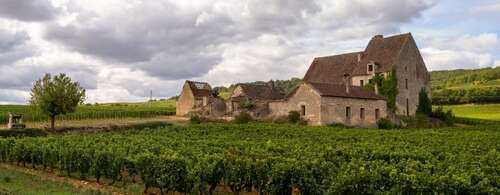
2021 was the first vintage for Benoît with his own grapes after 22 years making wine with his brother Alex. He moved into the new winery on the industrial estate below Chassagne—a good space in which to make his style of pure and precise wine. He has 4.5ha (11 acres) of vines. “I wanted to be smaller and to control everything from the vine to the wine. My goal is really to do a great job in the vineyard and then to do a long aging”—by which he means an élevage of at least 18 months. He works biodynamically, but has not applied for certification. He will, however, be certified organic from the 2024 vintage. He did around 15 sprays during the 2024 growing season, using around 4.3kg (9.5lb) of copper. Four climats are plowed by horse. He uses tressage in Grandes Ruchottes and Cardeuse. In the other vineyards, he cuts the canopy high and late.
In 2024, Benoît did both whole-bunch and some foulage, “to extract some more texture when it’s ripe. It really depends on ripeness. I like to pick earlier.” So, in 2024 he began on September 14. He likes to work with a lot of lees and takes all the press juice but doesn’t measure the NTUs. Quite high malic. He chaptalized some wines to reach 12.5–13%. All barrel-fermentation in a mixture of sizes, from 228- to 500-liter barrels. There is one foudre and a concrete egg for the regional wines, used in combination with barrel. Everything has a second winter—some cuvées in tank rather than wood. Generally, the smaller cuvées stay in barrel. “Now I don’t distinguish between the Bourgogne and the crus. Bourgogne is my visiting card: I want to show my style from the first wine.” Most of the barrels are from François Fréres and Damy. He buys a little new oak each year and washes it with the largest cuvée—the Bourgogne.
An elegant and pure flight of whites from Benoît. They show precision and intensity. I liked everything, from the bright and cucumber-fresh Bourgogne all the way up the hierarchy. He clearly pursues the same style and attention to winemaking from regional to the village and premier crus, including a lively, splashy, and salty Maltroie from lieux-dits Ez Crets and Les Places, showing the limestone saltiness of the latter. There are two wines from Morgeot—neither from the deeper clay soils, but from either side of the dip in this large climat, both from more limestone soils. Benoît separates the two parcels, previously blended, to bottle his Fairendes and La Cardeuse cuvées. The richest wine, Les Grandes Ruchottes, has power and even a slightly exotic note, albeit underscored with austerity and minerality. His wines have lucidity and transparency to their terroir.
“For reds I want to respect the fruit. I want to make something delicate and digestible and continue the profile of the white wines.” The village parcel is at the bottom of Chassagne, with deep clay and the reputation of tough tannins. But Benoît’s wine is fruity, bright, and crunchy. He uses only remontage for extraction, presses to 0.8 bar, and settles for a week before barreling down. In his Chassagne Premier Cru Cardeuse, he has achieved silky tannins, delicacy, and clarity to the limestone soils.
Benoît finds 2024 “a very Burgundian vintage—precise, pure, and mineral whites picked mid-September, so slow to ripen, as in 2021 and 2017, which gives us more precision than a warm vintage. Wine in the style I like to make.”
White
St-Aubin Premier Cru En Remilly
From parcels in the middle and at the top of the slope. “What saves this south-facing terroir is the limestone.” The vines are now 60 or 70 years old. Direct, tight, sharply edged, and pure. Racy. Wet-stone minerals and attractive lemon-pith bitterness to finish. An excellent example. 2027–32. 89
Chassagne-Montrachet Les Charrières
“No one uses this lieu-dit, as most of it is less interesting, but at top of the climat, it slopes up to Les Criots and has the slope-wash from Bâtard.” Made separately from 2021. A two-pièces cuvée in 2024. “I pick this early, because it has very small berries and in a warm vintage it can ripen very quickly.” Compact palate, with rather good density, grip, and tension for a village wine. Punches into the finish. Personality and sapidity. Top-notch. 2027–32. 90
Chassagne-Montrachet Premier Cru La Cardeuse
From old vines planted by his grandfather in the 1950s, on a small section (0.15ha [0.37 acre]) of limestone in the middle of the surrounding Pinot Noir, with just 15cm (6 inches) of clay topsoil. It used to be blended with the Fairendes. A taut, tense, and super-direct wine. Fizzles on the finish. Super-sappy, savory, and saline. 2027–34. 94–95
Sabine Mollard harvested quite early, from September 9, because the weather was good. Consequently, the wines are on the cooler, leaner, more acidic side and need more time. They are reserved. But this really suited En Virondot.
“For whites,” Sabine says, “2024 is a classic vintage, with good balance and energy. It is a good surprise after the difficulties of the vintage. It doesn’t taste like the vintage of mildew. It is a good vintage, finally. A little like 2008. 2021 is more concentrated. I am happy. I prefer 2024 to 2023.”
St-Aubin Premier Cru Les Charmois
There was a touch of hail here, and problems of mildew and oidium, but the end result is rather good. 30hl/ha. Nicely concentrated, citrus and floral aroma, with a bright, slicing palate. Crystalized lemon on the mid-palate and a zesty finish. 2028–33. 91–92
Chassagne-Montrachet Les Chenevottes
The aroma is ripe, with a touch of greengage, even a little tropical. But the palate strike is whipping. Strict with acidity, but balanced with some sweeter fruit to finish. 2028–34. 91–92
Chassagne-Montrachet Les Vergers
A charming, fresh, and neatly woven palate, with a juicy line of acidity and fruitiness. Very harmonious. 2028–34. 92–93
Chassagne-Montrachet Premier Cru Les Caillerets
Savory, broad, and sapid, with terse strike and acid and pithy bite, then saltiness to finish. 2028–35. 93
Chassagne-Montrachet Premier Cru En Virondot
Succulent strike, to a juicy, citrus, linear palate, undercut with a sharp line of acidity. Salty/herbal bite on the finish. It’s straight, light, and nervy. Slightly bitter quinine notes at the end. Persistent. Virondot is well-suited to a cooler vintage. 2029–35+. 94+
Bâtard-Montrachet Grand Cru
Sabine replanted here in 2019, so this is from young, five-year-old vines. Picked September 12. Sabine has two 350-liter barrels from François Frères. A lively and lighter Bâtard. Early harvesting works well here. Appropriately generous and rounded, with a vibrant undercut of acidity, and super-fresh to finish. I like the slimmer texture and acidity from the Chassagne side of Bâtard, the parcel for this wine being right next to Criots. Elegant. 2029–35+. 95
FERNAND AND LAURENT PILLOT
“We have a new tractor for spraying, so with two tractors we were quite efficient, spraying 14 times,” says Laurent Pillot. The estate is just over 15ha (37 acres). “We removed the leaves on every vineyard, so we had a big crew. We really saw the difference on the hillside, where there was less mildew, while on the flat, there was much more humidity and we lost a lot to mildew. We did a good job working organically and are happy with the low volumes.”
“For the reds, vatting was 14–18 days, so a little shorter than usual. We have already decreased punch-down a lot over recent years, and there was not much extraction in 2024. All the reds were pressed in a new, small, vertical press because the volumes were so low.
“We did some bâtonnage for whites until December, so a little more than usual. We often do it at the end of fermentation just to help the lees. The whites have good balance—actually nice ripeness, with a touch of acidity, too—almost exactly what we are looking for. So, we are very happy.”
“The reds have less concentration than 2023 or 2022, but are quite elegant. Different to 2021. We have never seen such low volumes [an average of 15hl/ha], but that was a good thing in terms of concentration, as we would have had far less ripeness with higher yields.”
White
Puligny-Montrachet Noyers Brets
Pure, straight, citrus, and light, with a shiver of soft-salt minerals to finish. Delicate, but nicely sustained for a village wine. 2027–32. 89–90
Chassagne-Montrachet
Floral, citrus, and fresh. Light and well-balanced. Easy and charming. 2027–29. 86–87
Chassagne-Montrachet Les Chênes
This is much fuller and deeper than the main Chassagne-Montrachet village cuvée. Showing white-peach fruit, this slightly rounded wine has smooth minerality. Accessible and pleasing. 2027–32. 89
Chassagne-Montrachet Premier Cru Les Champs Gain
A light note of powdered ginger on the aroma. This is still on 161-49 rootstock, but faring better than most. Sweetness of fruit up-front, lightly rounded. Perfumed. Apricot fruit carries the finish. So, a lighter and charming version of Champs Gain this year; slimmer and purer than usual. 2028–32. 92
*Chassagne-Montrachet Premier Cru Grandes Ruchottes
Adrien is using tressage for this parcel, planted in 1969, which is still healthy but not vigorous. A lot of millerandage. Depth and juicy richness. Even in this colder vintage, this has a luscious, ripe, almost-tropical intensity, but is cut with cold-stone severity. Layered and persistent. “It’s kind of a grand cru for us,” says Laurent. A stand-out white in my tastings of the 2024 vintage. 2028–35+. 95
*Chassagne-Montrachet Premier Cru Morgeot
From Petit Clos largely, but not exclusively. Tight and compact. I like the tension and salinity. Super-savory. Sharp minerals. Very chalky finish. 2028–35. 94
Chassagne-Montrachet Premier Cru Vergers
Silky, slinky, and nicely concentrated for 2024. So pure and smooth, with a warm-stone, mineral finish stretching out. 2027–34. 93
*Chassagne-Montrachet Premier Cru Vide Bouse
Powerful and rather dense for a 2024, and attractively savory. A lot of millerandage. A compact mid-palate. Rather good structure and some tension to finish. A lovely example. 2028–35+. 94–95
Meursault Premier Cru Caillerets
“Much less trouble here with mildew and no oidium.” A light, linear, crisply edged, and saline palate. 2028–33. 92
Red
Bourgogne
Juicy and fresh, with red summer fruits and a light crunch. 2026–28. 82–83
*Pommard Tavennes
A single, 0.8ha (2-acre) vineyard below the train station, below Croix Blanche, with old vines. There is a bit of Pinot Gris in the field-blend—but only a tiny proportion. Good genetic material here, so they are using it for a massal selection for other vineyards. White pepper on this lightly spicy aroma. Nice concentration of fruit and lightly chewy, but ripe tannin. Sweet and earthy (licorice). Full of character. Really good village wine. 2028–32. 88
*Pommard Premier Cru Charmots
Silky tannins, finely textured. Juicy strawberry fruits are cut with freshness and underscored with light sapidity. Lovely finish, with chalky minerality. Some complexity. 2029–34. 94
Pommard Premier Cru Clos de Vergers
One third of this parcel has been recently replanted, so this was a pleasant surprise. It is at the very bottom of the slope, and gets very hot in the afternoon, but is cold in the morning, so is often harvested last. Succulent currant fruit, red and black, nicely ripened. It’s energetic; there’s freshness and some sapidity to finish. Very appealing. 2028–34. 93
Pommard Premier Cru Rugiens
A blend from the Haut and Bas sections, and a mix of young and older vines. Vibrant, red-currant fruit aroma. Succulent and juicy up-front. Sweet summer fruit on the mid-palate. Supple tannins. It’s quite light and gentle for Rugiens, and perfumed on the finish, with less grip and austerity than usual; the focus is on summer fruits. 2028–34. 93
Volnay
Ripe, red-fruit aromas, crunchy and bright. Sweet summer fruits. Juicy, with a light minty note at the end. Very approachable. 2026–28. 86–87
Volnay Premier Cru Brouillards
This used to go into the Volnay village. The old vines, on 161-49 rootstock, are not dying but are very low-vigor. Lots of small stones here, so the fruit ripens more easily. Fermented in barrel. Red-currant aroma. Juicy strike, with soft, smooth, velvety tannins. Ripe summer-fruits mid-palate. Quite plump and nicely rounded. Love the texture. 2028–35. 92–93