Essi Avellan MW introduces a tasting of 2018 Champagne shared with Simon Field MW and Anthony Rose and featuring “exceptional” cuvées from both grandes marques and grower-producers.
This is an extract from an article first published in WFW90. For full tasting notes and scores for all 37 wines tasted by the panel, subscribe to The World of Fine Wine.
The 2018 Champagne harvest marked the start of the region’s now-famous trilogy of vintages: 2018, 2019, and 2020. After the difficult 2017 season, when growers had little to cheer about, expectations for 2018 were very high. And for once, they were fully met: Mother Nature was unusually generous, delivering a dream vintage that combined both quality and quantity.
If 2017 offered any silver lining, it was the unusually high water reserves in the soil, giving the Champenois a head start for 2018. After a cool early spring, temperatures rose above average, occasionally accompanied by thunderstorms that caused some localized damage. These were minor blemishes on what was otherwise a spectacular growing season. The summer that followed was intensely dry, hot, and sunny, surpassing even the infamous 2003 records. By harvest time, soil moisture was among the lowest ever recorded. Yet unlike 2003, the early-season water reserves acted as a buffer, allowing vines to maintain healthy, active canopies and bring the grapes to full phenolic ripeness across the region.
Related
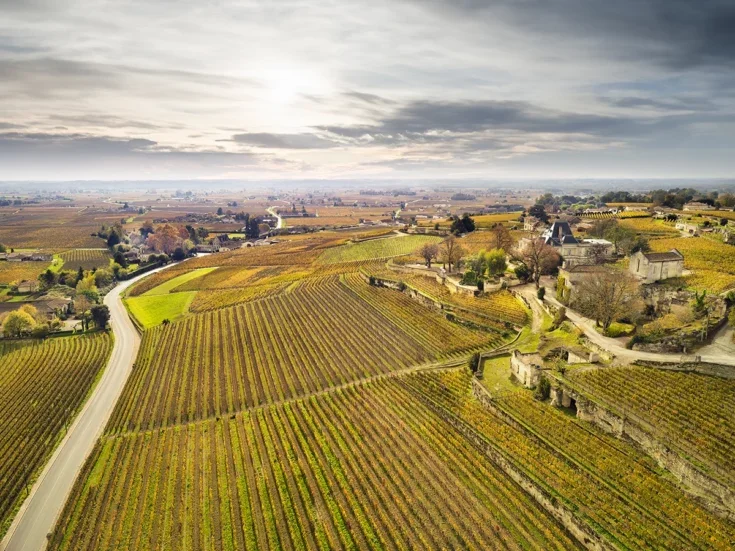
These exceptional conditions encouraged vigorous vegetative growth and prolific bunch development. Veraison (color change) began around July 30, roughly ten days ahead of the ten-year average. The harvest officially started on August 20 in Montgueux and parts of the Côte des Bar. Dry weather with cool nights persisted throughout the picking period, preserving the fruit’s freshness. Grapes reached the presses in remarkably sanitary condition, virtually untouched by disease or pests—a rare blessing in Champagne.
The average yield was 12,361kg/ha, though actual agronomic yields often exceeded this, ranging between 14,000 and 18,000kg/ha. Wineries across the whole region were full to capacity, and the abundance allowed producers to replenish reserves after the disappointing 2017 vintage. Comparisons to historic years were inevitable, with 2002, 1989, 1959, and 1976 all coming to mind. Piper-Heidsieck cellar master Emilien Boutillat described the quality as uniformly very good, though he noted at blending that truly exceptional base wines were scarce, a reminder that even near-perfection has its limits.
In the glass, 2018 wines tend to be clean, plush, and approachable, with their average potential alcohol of 10.2% at picking and relatively low acidity (5.9g/l) lending them a noticeable softness. The Pinot Noirs initially received the most widespread praise, while some Chardonnays raised concerns about potential heaviness. Louis Roederer’s cellar master Jean-Baptiste Lécaillon described the wines as particularly perfumed and expressive of their terroir. The wines combine the richness and suppleness typical of a warm continental year, showing early charm while retaining the structure and density necessary for longevity. The vintage was uniformly declared across the region.
Content from our partners
2018 Champagne: The tasting
With most of the 2018 vintage’s grower Champagnes already gracing the market and an increasing number of house releases joining them, it was high time to put this much-discussed year to the test. Alongside my fellow tasters, Simon Field MW and Anthony Rose, we embarked on a blind tasting of 37 Champagnes spanning both grandes marques and grower-producers.
The results were nothing short of impressive. The wines performed exceptionally well, with an overall average score of 92.1 points—quite remarkable for a lineup dominated not by prestige cuvées but by Vintage-tier bottlings. My own average came out on top at 93.2, followed by Anthony’s at 91.9 and Simon’s at 91.1. The 2018 Champagne vintage clearly earned our collective seal of approval. Admittedly, the consistently high scores (only one wine failed to crack 90 points) were helped by the careful pre-selection of producers and cuvées invited to participate.
Despite 2018’s reputation as a Pinot Noir year, it was the blancs de blancs that stole the show: Four of them claimed spots in our top five. Leclerc Briant Les Monts Ferrés Vertus and Henriot L’Inattendue shared the top position, both dazzling with their precision and vitality. Among the five blancs de noirs in the lineup, Deutz Hommage à William Deutz La Côte Glacière impressed, tying for sixth place, while its sibling cuvée Meurtet curiously landed 2.3 points lower. Deutz’s Vintage Rosé also stood out, the highest-ranked of the four rosé Champagnes, taking a well-deserved shared third place. The best-performing blends were Pol Roger Cuvée Sir Winston Churchill, Charles Heidsieck Vintage, and JM Sélèque Partition 7 Parcelles, all exemplary expressions of harmony and depth in 2018.
We were delighted to see a strong showing from grower Champagnes in the tasting—13 in total, and they performed admirably. Girard-Bonnet Recueil Extrait No.1 (3rd) and Pascal Agrapart Vénus (5th) both earned top-five honors. Because many growers’ flagship cuvées hail from single vineyards, this booming category was particularly well represented. Agrapart’s Vénus, from the Fosse-aux-Pourceaux lieu-dit in Avize, is a touching tribute to the workhorse that once tended the plot—today still farmed by man and horse alone. The winning wine, Leclerc Briant Les Monts Ferrés, originates from a biodynamically tended 0.6ha (1.5-acre) parcel in Vertus premier cru, while its sibling Les Carelles from Mesnil-sur-Oger took a strong seventh place.
Interestingly, our trio of tasters found greater harmony than usual in our assessments. For the top five wines, our scores were very closely aligned. Disagreements surfaced only occasionally—most notably with the Delamotte Blanc de Blancs, which I rated at 97 (my joint top score), while Anthony and Simon were rather less enthusiastic, at 90 and 93 respectively. The same divergence appeared with the Pol Roger Cuvée Sir Winston Churchill: Again my co-favorite at 97, yet it received 90 and 92 from my colleagues.
2018 Champagne: The verdict
The 2018 Champagne vintage lived up to its promise—and then some. Our tasting not only underscored its immediate charm but also heightened anticipation for the many prestige cuvées still resting quietly in the cellars, yet to make their debut. What stood out above all was the purity of fruit. The aromatics were radiant and precise, the fruit perfectly ripe yet never tipping into excess. Crucially, there was no trace of the vegetal phenolics that often plague hotter years marked by hydric stress. Instead, 2018 delivered a seamless balance: sun-blessed ripeness without heaviness, generosity without fatigue.
The wines are already remarkably approachable. Their openness made the tasting a genuine pleasure, offering early drinking appeal without compromising structure. On the palate, they show volume and depth but remain agile and fresh. Texturally, 2018 is lush, rounded, and supple, yet it lacks the stern phenolic grip of the hottest years, ensuring its finesse. For purists who crave razor-edged acidity and high-wire finesse, this may not be the ultimate connoisseur’s vintage. Yet the harmony on display is undeniable, and the balance of fruit, texture, and freshness suggests a long, graceful evolution ahead.
It’s also worth noting the vintage’s practical significance: 2018 Champagne came as a godsend after the difficult 2017, rescuing quantity, quality, and spirits in Champagne. But make no mistake, this is no “recovery” vintage: 2018 stands proudly on its own merit, earning its rightful place in Champagne’s modern trilogy of great years.
The top five: The best of 2018 Champagne
Leclerc Briant Les Monts Ferrés Vertus Premier Cru Extra Brut (12% ABV; organic, Demeter) | 95
EA | Deeply lemony colored. Pronounced nose, with oaky and spicy tones over lush peach and apricot fruit. Full and rich on the palate, too, in line with the promise of the nose. It comes with a good degree of vinosity, sweet vanilla-laden fruit, and texturedness. Fresh, balanced, and lingering; the wine has soul and character. 2025–32. | 95
SF | Luminous yellow-green gold, if one can countenance such an apparition. A rich fig and chocolate undertow to the bright and heterogenous fruit profile (tarte tatin and verbena provides a shorthand), with eloquent support from the inherent phenolic structure and the carefully added dosage. Extremely impressive. 2025–35. | 95
AR | Mid-gold. There’s plenty happening on the nose here, with a richness of honeyed fruit linking with the nuttiness of oxidative oak fermentation and aging. It may be a tad oaky for some, but I like the voluptuous and complexing effect that the combined oxidative and leesy notes bring to the fruit, which is nicely supported by the textural quality of the mousse. It ends on a balanced, stylish note, with potential for further aging in bottle. 2025–30. | 94
Champagne Pascal Agrapart Vénus Grand Cru Blanc de Blancs Brut Nature (12.5% ABV) | 94
EA | Deeply colored. Rich and overt nose, with heaps of expressive fruit. Spice and wood-complexed orchard fruit. Full, rounded body, with lovely vinosity and texture. On the palate, sweeter fruit such as pineapple leaves its mark. A warming sensation on the palate is surprising, but the wine comes with great, sweet intensity. Long-lasting aftertaste full of fruit. 2025–32. | 95
SF | Green-gold, lifted, bright. Nougat, quince, and then hazelnut, honey, and pineapple as the wine asserts itself and scores out its territory of potential. Still quite phenolic and tight but not without an opportunity to grow, flourish, and conquer. 2026–33. | 93
AR | Pale to mid-gold in color, this is fresh but at the same time showing developing complexity as the butterscotchy lees combines with the fruit to draw you invitingly into the glass. And the fruit is worth waiting for: ripe stone-fruit flavors buoyed by a lively, fresh mousse of bubbles and a sour, fresh acidity, whose texture holds the tongue nicely in its grip, with all the elements combining in an attractive, well-balanced dry style. 2025–32. | 93
Champagne Deutz Rosé Brut (12% ABV) | 94
EA | Medium-deep peachy color. Refined, sweetly fruity nose, very correct in every way. Red cherries, strawberries, and peaches enhanced by a light toasty and spicy complexity. Juicy and succulent; the sweetness of the fruit stays on top despite the firmness of the phenolic structure. Long, fruity length of sweet spiciness. Drinking super-well already, but there is potential for more. 2025–34. | 94
SF | Pale salmon. The nose expresses thereafter a cornucopia of lively recollection: rosehip, raspberry, verbena, oyster shell, redcurrant, and so on. A pleasing if not quite encyclopedic lexicon of appreciation. 2025–32. | 93
AR | Onion skin in color, this is super-fresh and elegant on the nose. Rather the same is true of the palate, whose textured mousse expands in the mouth to bring juicy raspberryish flavors in a delicate framework of bubbles, not trying too hard, just the opposite, an authentic, dry food-friendly rosé comfortable in its own pink skin and overall seamlessly balanced without the need for any flattering makeup. 2025–30. | 95
Champagne Girard-Bonnet Recueil Extrait No.1 Extra-Brut (12.5% ABV) | 94
EA | Deep lemon-gold color. Sweetly fruity nose with confected tones: lemon confit, marmalade, and golden raisin. Very sweet overall fruit impression. The palate has an appealing structural firmness, bringing freshness to the rich whole. Long, lingering aftertaste, with an elegant pencil-shavings note to finish. 2025–32. | 92
SF | Burnished gold; playful bubbles. A pleasing youthful blanc de blancs aromatic: spice, flowers, encyclopedic fruit, and a firm, almost metallic finish. A serious wine, both generous and cautious, lean and expressive, deft of construction and alluring. 2025–30. | 94
AR | Pale gold. This is already showing really attractive freshness and autolytic complexity, linked to a promising degree of energy—and that’s just in the aroma. A seriously vinous style of blanc de blancs, with excellent concentration of ripe fruit in Burgundy-with-bubbles style. The mousse is lively and finely textured, and the fruit travels seamlessly across the tongue. Considerable energy, freshness, and elegance here—this is quite the wine. 2025–32. | 96
Champagne Henriot L’Inattendue Grand Cru Chardonnay Brut (12% ABV) | 94
EA | Bright lemon color. Pronounced nose, with spicy and toasty complexity. Ripe apples, even tropical notions and exotic spices. Really firm and structured palate, promising longevity. Impressive concentration for the high-yielding year; the palate is full of fruit and delicious. Brilliant, shiny fruit. 2025–35. | 95
SF | Pale gold, luminous, gentle, with a watery rim, and a restrained aromatic that recalls gorse, verbena, and orchard fruit. The palate is forward, maybe a little short, extolling, no doubt, the virtues of younger fruit on an excellent site and doing so with great aplomb. 2025–29. | 93
AR | Pale to mid-gold in color. The aromas of this blanc de blancs, while fresh, are also beautifully rich and honeyed with inviting depth. And it doesn’t disappoint on tasting, with an energetic cushion of full-flavored rich bubbles that explode on the tongue in myriad flavors of peach, honey, and background nuttiness, finishing elegantly and sophisticatedly dry. 2025–30. | 95