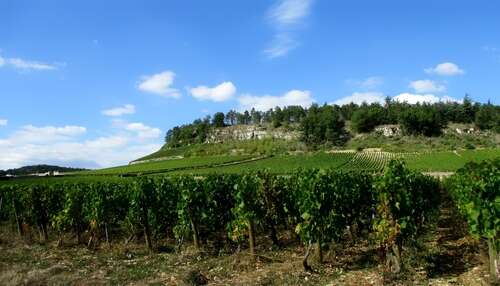
MERCUREY
Amaury Devillard, who is the president of the syndicat of growers for Mercurey, is on a mission to gain greater awareness for this village, which he feels lies too much in the shadow of the Côte d’Or. He would like to see greater recognition for Mercurey’s “great price/quality ratio—the wines are so affordable.” Of the 2024s, he says “I like the concentration, freshness, and purity. It is the perfect vintage to drink right away. Who keeps wines 20 years today? It is a vintage to enjoy young and is well-positioned for restaurants. We [in Mercurey] have kept prices stable, unlike the rest of Burgundy.”
Benoît Eschard at Domaine Jeannin-Naltet reflects that Mercury is a large appellation (640ha [1,580 acres]), where some of the larger producers have not worked to promote the potential of the appellation, while smaller producers have been working diligently in a qualitative manner for the past 15 years. It seems that Devillard, however, is pulling producers together to promote the village. “Together we are stronger than alone. It is working well, as we share ideas—something that started 25 years ago with a technical commission.”
One of the most valuable initiatives is the Caveau Divin in the middle of the village, which represents 80% of the producers there. I popped in last year to check it out. You can try 64 Mercurey wines by the glass, and there is someone knowledgable on hand to advise. It’s an attractive space in which to taste, and the wines are kept correctly. There’s a space for kids and you can purchase bottles at the same price as cellar door.
Related

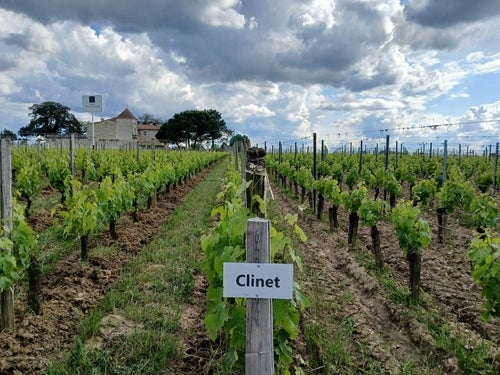
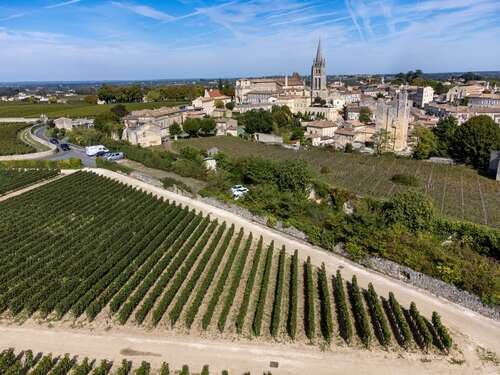
Following a poor start to the season, with high rainfall, the weather in Mercurey improved from July 14. Yields were low. Most growers had 30–40% less than an average crop. Everyone suffered losses, but organic producers more than conventional, as the former sustained greater losses to mildew. At Jeannin-Naltet, Benoît Eschard takes the conventional approach. “The issue with 2024 is low yields, but we lost the crop through coulure. There were a lot of bunches but few berries and these were small, with thick skins.”
Manuel Bautista, who used one systemic spray and 12 of copper and sulfur, lost 30% of his crop to millerandage and recalls the quantity of leaves, requiring him to leaf pluck. “July was very bad, but August really counted. It was the most important month. Fifteen days in August were really good—warm and dry.” He harvested from September 10.
Benoît Eschard recalls, “At the end, the phenolic maturity came at the same time as the sugar and acidity, unlike the previous year. I think we have more concentration in 2024 than in 2023.”
Content from our partners
Jeanne Raquillet made a strict selection on the sorting table in 2024, as they had in 2023. “We succeeded in fighting the mildew. We sorted for unripe berries during the first part of the harvest, then for withered toward the end. It was more difficult in 2024 than in 2023.”
Benoît Eschard found color and tannins easy to extract. He did an 18-day vatting, five days fewer than in 2023 and much shorter than in 2021. He was careful not to extract too much. It seemed most people de-stemmed. Nobody I spoke with used any whole-bunch.
At La Grange aux Sources, Julien Bordet finds that “2024 has well-balanced ripeness and freshness. Very drinkable.”
“The style of 2024 has candied fruits on the finish for the reds, while the whites will have nice acidity on the finish,” says Manuel Bautista, who finds the whites a little like 2017.
Benoît Eschard thinks 2024 a bit like 2016 with more concentration but mentions that for whites (he has some village parcels) “it was more difficult to get the alcohol level, so they lack intensity.”
Jeanne Raquillet considers 2024 “fresh for whites, thanks to the acidity, while the reds are well-balanced, with fresh fruits and less tannin. It’s not a solar year.”
I found the reds very approachable in June 2025—just slightly reductive sometimes, which is no bad thing. I repeatedly wrote “juicy” in my tasting notes (as I did for Rully whites). There is plenty of delicious fruit and ripe, easy-going tannins in Mercurey. The wines should come forward quickly. You could start drinking the premier cru reds from late-2027. There is good terroir distinction.
Maybe Mercurey whites didn’t quite achieve the same ripeness and concentration as the reds. A few are on the lighter side, but there were many attractive examples and some standout wines. They represent 15% of plantings now, and are savory, food-friendly whites. About 15 producers make them, so they are not difficult to find, and they make a change from Rully’s whites.
DOMAINE DE LA BRESSANDE
Mercurey Premier Cru Sazenay
Clean and pure aroma. This is slightly herbaceous and fresh, with a light herbal note. Light-bodied, breezy, and a hint of minerality to the finish. 2025–28. 86
CHÂTEAU DE CHAMILLY
White
Mercurey Les Marcoeurs
This lieu-dit is on the north side of the village under the premier cru of Miglands. A flat part, slightly south-facing. Juicy, easy, fruit-driven wine. Slightly peachy, supple, and lightly rounded. A hint of spice on the finish. 2026–30. 84
Red
Mercurey Clos la Perrière (Monopole)
From a flat but rocky site, this is snappy and crunchy. Red fruit and red peppercorn, lively and slightly salty to finish. Very drinkable. 2026–30. 85
Mercurey Premier Cru Les Puillets
From a higher climat in a combe facing south. Succulent and generous red fruits strike the palate. Nicely fresh and really quite aromatic, and spicy to finish. 2026–32. 88
CHÂTEAU DE CHAMIREY
Not a high crop after 2023. “Mother nature regulates,” remarks Amaury Devillard. “I am surprised how approachable these wines are showing,” he adds. “The acidity is good. A food vintage because of that freshness. Enjoy them for the freshness. Great restaurant wine.”
Mercurey Premier Cru Clos du Roi
Château de Chamirey has 3ha (7.5 acres) of the total 11ha (27 acres). Amaury explains, “We have four parcels within the clos, which we make separately as we have different phenolic maturity.” After 18 months the parts are blended. All the fruit was destemmed in 2024, and the proportion of new oak was 20%. “It’s a cold cellar and so there is a long process of élevage.” Spicy. Lots of fruit on the front. This has vibrancy and energy for Clos du Roi, which can be a rather more straightforward, rounder, softer wine. It has bite and freshness and crunchiness. There is sapidity on the finish. A more complex Clos du Roi. 2026–34. 90
Mercurey Premier Cru Clos des Ruelles (Monopole)
From a proper clos with four walls, covering 2.53ha (6.25 acres). Ripe fruit aroma to a supple, smooth, and fluid palate, with plentiful sweet, intense, raspberry fruits streamed with a lively line of acidity. All very harmonious and in place. Silky soft and flowing tannins to a lovely finish. Charming. 2026–34. 89
DOMAINE CHANSON
Chanson bought a substantial domaine here (Château d’Etroyes) a couple of years ago. I like the village wines, and maybe the red village wine most of all, but I found the Clos L’Évêque a little underwhelming this year.
White
Mercurey
From an east-facing parcel, this has a candied-lemon fruit aroma. A straight, channeled, and neatly intense palate, with a firm finish. Nice acidity, more stony than fruity on the nose, and carried with a little oak to finish. 2026–28. 85
Red
Mercurey
From a southwest-facing village parcel with a high proportion of marl in the soil. Super-fresh and juicy. Has a tight clip and slight austerity, together with ripe summer fruits. Nicely balanced. Jolly good. Yummy village wine. 2026–29. 85
Mercurey Premier Cru Le Clos L’Évêque
From one of the largest Mercurey premier cru vineyards, 23ha (57 acres) in total, where there is considerable diversity in terms of altitude and terroir. A broad and soft wine, ripe and spicy. 2026–30. 85
VINCENT ET JEAN-PIERRE CHARTON
Vincent is Jean-Pierre’s son, and they have a high proportion of old vines.
Mercurey Clos du Chapitre
From the bottom part of slope, this is full and juicy, generous and bold. Up-front, with quite thick, robust tannins. 2026–28. 83
Mercurey Clos de la Chiquette
Creamy oak is apparent on the nose, and the palate is nicely rounded. Lightly sumptuous, with a spicy finish. A generous style. 2026–28. 83–84
Mercurey Premier Cru La Chassière
An open, friendly, supple style, with slightly fresher tannic bite than the village wines. 2026–30. 86
DOMAINE LAURENT DUFOULEUR
The domaine was created in 2019 and now owns 17ha (42 acres), roughly half in Mercurey (8.18ha [20.21 acres]).
Mercurey Château Mi-Pont
The parcel for this wine is almost flat. Dark forest fruit, with a light burr of tannin. An attractively robust feel, with plentiful fruit. 2027–29. 83–84
Mercurey Premier Cru Clos de Barraults
Fresh, crisp, straight, light, and elegant wine, with a fine texture to the tannins. A perfumed warmth to the fruit and just light, crisp austerity to the texture. Very appealing. Salty finish. 2026–32. 89–90
White
Mercurey Clos Rochette
From a 2ha (5-acre) monopole, now with no walls, on the way to Rully, which is harvested by machine. Nicely fruity, citrus and white flowers, with well-balanced acidity. Simple but attractive. 2026–28. 82
Red
Mercurey La Framboisière
From another monopole, east-facing, with a high proportion of clay in the soil. Juicy raspberry fruit, with white-pepper notes. This is easy and charming. 2026–28. 83
Mercurey Premier Cru Le Clos du Roy
Rich and juicy, fuller bodied than the village wine, and quite hearty, with sweet cassis fruit but a nice, fresh finish. Soft and smooth tannins. 2027–30. 86–87
DOMAINE GOUFFIER
Gouffier’s wines tend to be on the elegant side. Sadly, he didn’t present any reds.
Mercurey Premier Cru Les Champs Martin Blanc
Lightly spicy aroma, with a hint of vanilla and nutmeg. Cooler, stony, savory palate, lightly rounded at the front, then it becomes straight and precise, but holds onto some rich floral notes on the finish. 2027–32. 89–90
DOMAINE LA GRANGE AUX SOURCES
Julien Bordet, who is ex-Faiveley, created his own domaine in Mercurey, his wife’s home village. 2009 was his first vintage. He is renting vineyards and working them himself. He normally likes to use a little whole-bunch (20% in 2022) but not in 2024, as he found the stems were insufficiently ripe. He lost 30–40% of the crop, but “because we had leaves, we were able to continue the phenolic ripeness.” Two very good village wines, as below—juicy, fresh, and energetic. In 2025 he might have access to some Mercurey premier cru Clos des Montaigus.
Mercurey Creu de Monthelons
Super-sweet and juicy strike, with succulent, red-cherry fruit mid-palate and a crunchy, tannic bite on the fresh finish. It’s vibrant. Very well-made. Among the fruitiest and most attractive village wines I tasted. 2026–32. 85–86
Mercurey Les Ormeaux
This is firmer, higher, and more austere, firm and bold in a good way, but it needs more time. 2027–32. 85–86
DOMAINE JEANNIN-NALTET
This domaine, founded in 1858, has been in the same family for six generations, although until recently most of the fruit was sold off in bulk. Some wine was bottled and sold cellar-door. It was Benoît Eschard who changed the direction of the domaine, which belonged to his wife’s family. Benoît is an engineer who worked in industry and lived in Paris with his wife. Together they quit their jobs and Benoît went back to school in Beaune for a year before taking over officially in 2013. They have 7ha (17 acres) of premier cru across three climats.
“The Côte Chalonnaise is much less famous than the Côte de Beaune, but we have great terroir in Mercurey,” says Benoît. “Previously, growers did not always devote the necessary attention to it, but for the past 15 years, some estates have worked in the best way. I don’t dispute that the very best terroirs are in the Côte d’Or, but Mercurey has been under-represented.
“It was colder in the early part of the summer in 2024, before it switched to a canicule [heatwave]. We had mildew pressure, but not like the Côte de Nuits. We lost 40% of the crop but that was due to coulure, not mildew. We are organic but use no herbicides and none of the more aggressive sprays. I want to have as little impact as possible.” He points out that numerous sprays necessary for an organic approach compact the soil “and the diesel is not good for the environment. I do what is best for humans and the environment.
“2013 was the last year I harvested in October. We started on September 13 and finished on September 21 with the whites. It was more difficult to get ripeness for the whites this year.”
Natural sugar levels made possible 13% ABV for most of the cuvées. “The total acidity levels were good—I never have a problem with acidity. I have vigorous vines, so have more of a problem achieving full ripeness, and need to manage the yield to reach it.” The vines are on SO4 and 5BB rootstock, and the clone is the productive Pinot Droit. “I pay attention to acidity, as freshness is key for me. I do not like heavy wine.”
In the winery, Benoît has used “less and less pigeage over the past ten years, even if the level of ripeness has been good. We did a lot of pumping-over in 2024. The color and tannins came easily, and the vatting was 18 days, while in 2023 it was five days longer, and in 2021 it was very long and slow, as I didn’t want to extract out much.”
He finds 2024 “much better than it should have been given the rain.”
He has four wines including a white village wine from two parcels in the mouth of the valley. They are fruity up-front but light and more acidic behind.
Benoît describes monopole premier cru Clos des Grands Voyens in this way: “Much more clay here. It typically has more tannin and structure than Clos L’Évêque but less than Les Naugues. L’Évêque is always finer, fresher, and more delicate.”
I found the Clos des Grands Voyens showed less well during my tasting, so have selected l’Évêque and Naugues, which is by far the more interesting wine. I tasted the wines in the 2023 vintage as well.
Benoît sums up as follows: “Quite a classic vintage, with good ripeness but without any excess—not too warm, with good phenolic maturity. So, we have good structure and wines that will age very well—10 to 15 years for the premier cru reds. 2016 had the same level of ripeness, which also arrived late in the season. We harvested in September—the harvest was later in 2016, but we maybe have more concentration in 2024.”
Red
Mercurey Premier Cru Le Clos l’Évêque
The Clos has an easterly orientation and light, limestone soil. Supple, with plenty of scope on the palate and spicy floral aromatics floating above. Quite exotic, with tartness and a bite of tannin that lends freshness to the finish. 2027–32. 86
Mercurey Premier Cru Les Naugues
This climat has clay over limestone, and despite its southerly orientation, the wine remains nice and fresh. Super-juicy, deep, and succulent, with good acidity and energy. Splashing on the palate. Extrovert. But well-balanced, with enhancing, crisp tannins. 2027–34. 90
DOMAINE JOUSSIER
Mot of this estate’s production is Bourgogne, but there is also a delicious Mercurey lieu-dit.
Mercurey Les Murgers
Juicy and fresh, with strikingly attractive fruit. Lots of depth for a village wine. Yummy. 2027–28. 84
DOMAINE MICHEL JUILLOT
An old estate in the village, established in 1970s. Michel is now 85, and his work is being continued by his son, Laurent. The wines are good—stylish and well-balanced.
White
Mercurey Les Vignes de Maillonge
A monopole. Super-juicy spring onto the palate, where stoney fruit grips the middle. A neat slice of citrus acidity cuts though. Wet-stone finish. One of the best village whites I tasted. 2027–30. 84–85
Red
Mercurey Les Vignes de Maillonge Les Dix Ouvrées
Sappy and bright, this has crisp tannins, some tension, and a bright note. 2027–28. 84–85
Mercurey Premier Cru Clos de Barraults
Ripe red fruit, juicy and generous up-front. Straight and compact. This shows good structure, with crunchy, firm tannins and a lively finish. 2027–32. 89–90
DOMAINE LEVERT-BARAULT
This is a family Picard wine. They bought the estate a long time ago, but have recently been focusing more attention on it, building a new winery three years ago. Francine Picard is taking care of the wines.
Red
Mercurey Premier Cru Champs Martin
Pure wine, with plenty of energy and intention. Maybe a bit more intensity than the Combins on the mid-palate, and a firmer, more decisive note to finish. A touch more length and energy, too. 2027–35. 90
Mercurey Premier Cru Combins
Silky and elegant, rippling across the palate on a ribbon of pure red fruit. A delicate and refined style. 2027–35. 89–90
Mercurey Premier Cru La Vasée
From a climat lower on the slope, under Les Naugues, this is fruity, juicy, rounded, and succulent, with smooth, soft tannins but a touch of grip to the finish that brings freshness. 2027–32. 87
DOMAINE DE LA LUOLLE
A Parisian family developed this small estate.
Mercurey Le Balcon
Juicy and fruity, with a light grip of tannins. Nicely fresh and sappy to finish. 2026–28. 84
DOMAINE MANOIR DE MERCEY
Paul Berger has taken over from his parents and represents the fourth generation at the family domaine in Cheilly-lès-Maranges. They also have 3ha (7.5 acres) in Rully. The style is accessible, forward, and fruity.
White
Rully Cuvée Louise
From a southeast-facing parcel at 350–370m (1,150–1,210ft). Creamy, lemony fruit. Generous and lightly rounded, with nicely balanced acidity. Pleasant. 2026–28. 82
Red
Mercurey Chateaubeau
Attractive red-berry aroma to a juicy and fresh palate, with notes of raspberries on the finish. Pleasant. 2026–27. 82
DOMAINE MEIX-FOULOT
Mercurey Premier Cru Les Montaigus
I like the sweet cherry and hint of roasted almonds on the nose. It has a pleasant bitterness, with plenty of energy. Good acidity and crunchy fruit to finish. Good job. 2026–29. 87–88
Mercurey Premier Cru Les Veleys
Soft and fruity; rounded and quite plummy. The tannins are a bit rustic and a little dilute, but it’s a pleasant, honest wine. 2026–28. 82
DOMAINE MENAND
A small estate, certified organic since 2006, belonging to a long-established family now in its seventh generation. Philippe Menand’s son made the wines in 2024 following his father’s tractor accident.
White
Mercurey Premier Cru Clos des Combins
There is a clos at the bottom of the lieu-dit, which is southwest-facing. I like the brightness, the intensity, and the stony sapidity. There is some tension and depth here. 2026–32. 89
Red
Mercurey Premier Cru Clos des Combins
A light burr and grip to the tannins, with plentiful blackberry fruits and spices. Quite robust, but with good intensity of fruit. 2027–32. 87
DOMAINE DU CHÂTEAU PHILIPPE LE HARDI
Three good wines from this domaine based in Santenay.
Mercurey La Brigadière
From a steep, northwest-facing parcel. A savory, stony aroma, then a light lick of oak around the stony palate, with a sappy, mineral note to balance. I like this. 2026–29. 85
Mercurey Les Cheneaults
From a more east-facing parcel. Strawberry fruit aroma, and also fruit-driven on the palate, with soft, smooth tannins and a light, herbal crunch to the end. Lovely village red. 2026–29. 85
Mercurey Premier Cru Les Croichots
This climat faces south-southwest. An upright red-cherry aroma, with red-berry fruit on the palate, fine-textured tannins, and a light, crunchy pepperiness at the end, which also manages to be slightly saline. 2026–30. 88
DOMAINE RAQUILLET
This domaine has been cultivated by 12 generations of the family. François Raquillet and his wife Emmanuelle took over the estate in 1990, when he was only 16. “My father-in-law created the estate in 1961 with vines from his parents,” says Emmanuelle. François and Emmanuelle both attended the Lycée de Beaune. Jeanne, their youngest daughter, now 28, has worked with them since 2022.
They set out with 7ha (17 acres). Between renting and buying, the estate has grown to 14ha (35 acres). A parcel in Les Naugues was bought 45 years ago, while those in Les Vasées and Les Veleys came via a grandfather. They have 3ha (7.5 acres) of white in Mercurey.
Jeanne recalls the 2024 season this way: “We had good weather only from July 15 to August 15. It was very cold. It was the first time I didn’t have to refresh the grapes, as they came in at 7ºC [45ºF]. We had on jumpers and hats working at the sorting table. All the grapes were destemmed, and we didn’t extract much—two or three pigeages and then remontage once a day.” They generally destem the grapes, using a little whole-bunch for Les Vasées only in 2022, “and that was a success, but not for 2024.”
“When we harvested, ripening had stalled. We debated whether we should harvest earlier, with freshness but less ripeness, or wait… But the fruit was fragile and was turning, so we harvested in two parts—September 3–10 and then some on September 15. So, we have two profiles of wine. The later harvested fruit was more concentrated. And finally, 2024 is more on the fruit, like 2023. But the 2024 whites had more acidity than the 2023s, so we did some bâtonnage to lend a little more richness.”
The family makes a consistently good Les Naugues, as I confirmed tasting back though several vintages—it ages well. It is clearly their best wine, but it was going through MLF at the time of my visit, which is why there is no tasting note for it.
Red
Mercurey Vignes des Chazeaux
From a village lieu-dit on a gentle slope just under the premiers crus. The vines here are still quite young, planted in 2014, which may be one reason they were the first to be harvested in 2024. The wine is super-bright, pure, and edged with fine tannins. So drinkable. 2026–28. 85
Mercurey Premier Cru Les Vasées
The fruit for this was picked later. Ripe and nicely concentrated, with soft, smooth tannins. A really easy, relaxed palate. 2026–29. 86–87
Mercurey Premier Cru Les Veleys
“Veleys is marl with some limestone, which gives the whites richness and volume, and the reds more finesse and length.” This is more dynamic than the Vasées. Straight, compact, and dense, showing energy and a firmer, longer finish. 2026–30. 88–89
DOMAINE TUPINIER-BAUTISTA
The domaine is a combination of two families, Tupinier and Bautista, now led by the younger generation. The estate is 11ha (27 acres), but they also buy in some grapes for the village cuvées. I met with Manuel Bautista, who spent time with Hamilton Russell in South Africa and Alan Scott in New Zealand. His first vintage was 2017, although 2024 is his first vintage alone. “Good to be back to a colder vintage,” he enthuses.
A bold, somewhat oaky and fruit-driven style from this domaine, which uses largely Chassin barrels. Maybe the oak is bit overpowering, but the fruit is concentrated, and the tannin is ripe. Clearly a good selection of fruit, and well-made wines. Manuel explains: “I want fruit for the reds and freshness for the whites. I want wines we can drink immediately. This is what our customers want.” I have tasted his wines in previous vintages (this was my first visit) and this doesn’t surprise me. I like Manuel’s enthusiasm: “My aim is more and more fruit in the wine!”
Manuel has learned from his uncle, but says, “My uncle wanted a richer style, but I want more acidity,” so from 2022 he began picking a bit earlier. “We have deep soil, and I want more precision.” Some 40% of the vines were replanted ten years ago, and they are continuing with a replanting program of 0.5ha (1.25 acres) a year, using clone 943 on SO4 and 420A. All is hand-harvested. “We tried to reach 13% ABV naturally in 2024 but some of the village cuvées were at 12.8%, so we chaptalized a little. We suffered a 30% loss in the reds but had a normal yield for whites.”
A new winery was completed in 2020. “Now the reds are moved by gravity, and I can be more precise with the whites.” There is a whole-bunch press for the whites, which represent just 20% of production. “So, we can take time to press using a manual program.” Manuel allows 12 hours for settling, just using cold temperatures, before putting the must into barrel. All the wines are barrel-fermented. There are some 500-liter barrels for the whites, but all the reds go through 228-liter barriques, 30% new. 100% malolactic for the whites, which are racked out of barrels for the new vintage and bottled toward the end of the year. “I think the 2024 whites will be close to the reds,” says Manuel.
The reds are 100% destemmed. All the fruit was kept cold and the short, ten-day maceration started once the harvest was finished, with only pumping over by way of extraction. Any chaptalization came at the end of the fermentation; indeed, Manuel likes to press off and barrel down with a little sugar, for the fermentation to finish there. “It was easier for the 2024s, as the winery was colder.”
“2024 is on the fruity side if you did a good job in the vineyards. A little like 2017, but with more freshness and lighter body. The same quality and aromatics as 2018, and the same aging potential, too. It was difficult to make wines with freshness in 2023. But I love the 2022 whites and the 2024s.”
White
Bourgogne Blanc La Garenne
From a flat, 0.8ha (2-acre) parcel on limestone, with some iron in the soil, which was replanted to white in 2016. For this cuvée there was one 500-liter barrel, three years old, while the rest of the barrels were new oak pièces. Fresh citrus, lively and youthful vivacity, with nice acidity and a perky finish. Light and pleasant. 2026–27. 80
Mercurey Premier Cru En Sazenay
From a southeast-facing climat of 14ha (35 acres) at an altitude of 250–300m (820–985ft), where one section, with more clay, is planted to reds, and one, with more limestone, to whites. The Chardonnay vines are mostly 45 years old, with some 14-year-old vines. The barrels for this cuvée are 350 liters. Ripe citrus sweetness, with a cut of acidity and cold minerality. Tension on the finish. Shivers at the end. Among my favorite wines of 2024 Mercurey. 2026–32. 89
Mercurey Premier Cru Les Vellées
From a lower, more southerly vineyard, where 0.7ha (1.7 acres) was planted in 1941 and a little (0.32ha [0.8 acre]) bought as a younger parcel. An earthier, gruntier wine. Square on the palate. 2026–32. 86–87
Red
Mercurey Vieilles Vignes
Sweet and juicy, with a brush of new oak (25%). Soft tannins and forthcoming. Attractive. 2026–29. 82–83
Mercurey Les Chavances
Juicy and punchy, a denser, earthier wine, with an honest, lightly burly brush of tannin. 2026–30. 84
Mercurey Premier Cru Clos du Roy
The parcel for this wine is protected from the north wind that hits Les Vellées. Generous fruit and a generous oak on the strike. Round and succulent, with a fresh finish. Punchy and energetic, and with some richness and concentration for 2024. 2027–32. 88
Mercurey Premier Cru En Sazenay
A first sample, from a new oak barrel, had sweetness but also energy and fruity vivacity, and fairly sizzled on the palate. A sample from a blend of new and older oak was more restrained and elegant, with fine-grained tannins, although it also showed a bit too much oak on the finish. 2027–32. 89–90
2024 Burgundy tasting notes: Côte Chalonnaise—Rully