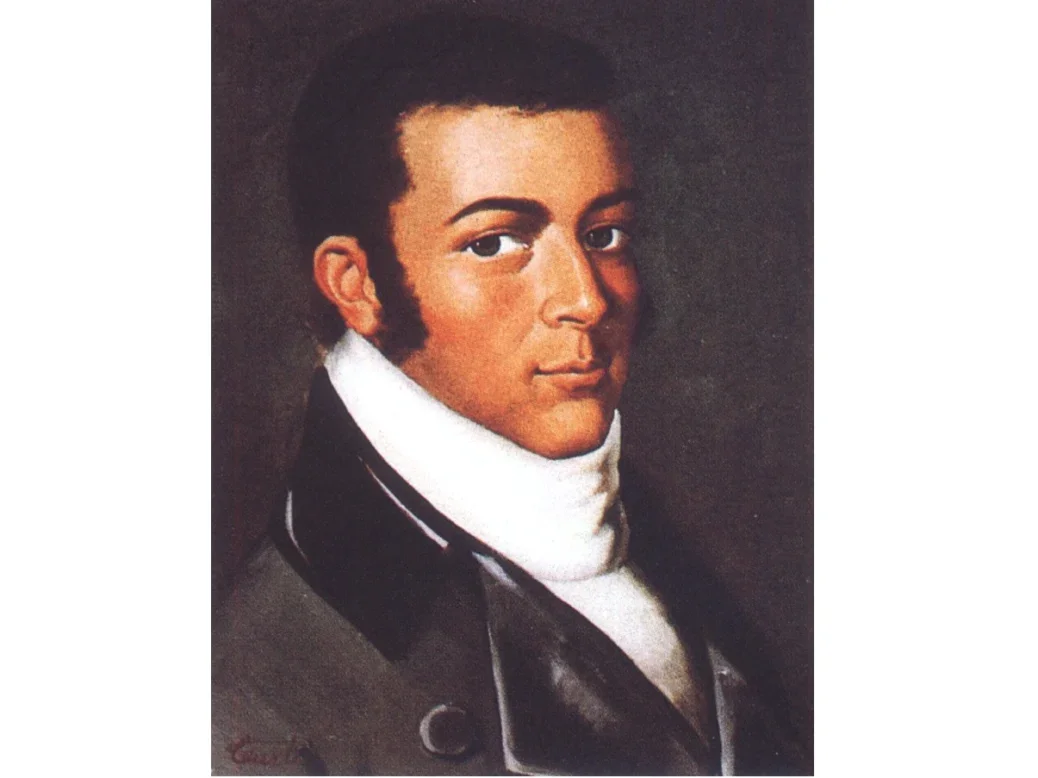
Stuart Walton looks back on the work of the early 19th-century German medic Dr Eduard Löbenstein-Löbel, who believed wine was a versatile treatment for all manner of human ailments, prescribing specific wines for specific health problems.
We are quite familiar with the idea that wine was an essential element in the pharmacopoeia of the ancient world. It played its part in the humoral system for centuries, rebalancing overly cool and frigid persons with enlivening heat and moisture. In the Victorian era, as we saw in this column in May 2022, wine played a role among the etiolated bourgeoisie in the sanatorium system, dispensed in measured doses to revive the spirits of the jaded and fortify the nerves of the neurasthenic.
Between these two epochs, however, there were attempts to put the medicinal use of wine on a sure systematic footing. In the great classifying schemes of the Enlightenment, there was a category, and a science of application, for everything. The Linnaean taxonomy of the natural world was only the most heroically ambitious of these schemes, which extended into a newly ebullient approach to the materia medica of the physician.
The German medic Dr Eduard Löbenstein-Löbel had held positions at Weimar, Jena, and Erlangen. In the course of treating patients with a variety of often life-threatening conditions, he came to believe that wine, systematically and rationally applied in judiciously calibrated measures, was one of the most effective weapons in the doctor’s armoury. His formulary eventually became so refined and so finely discriminatory that he enshrined the whole theoretical and practical apparatus in a definitive text of 1817, the Abhandlung über die medicinischen Eigenschaften des Weins (Treatise on the Medical Properties of Wine).
Related

Löbenstein-Löbel’s prescriptions
Löbenstein-Löbel’s system begins, chauvinistically enough, with the wines of the German regions of the Rhine, Palatinate (Pfalz), Franconia, and Mosel, and then, after a quick zip through Austria-Hungary, plunges into the French heartlands of Burgundy, Champagne, and Bordeaux. Spain, Portugal, and Italy share a chapter, and then Turkey enjoys a chapter to itself (largely for the fortified wines of Cyprus), before the geographical survey comes to a close with a section on sweet wines.
The author makes the point in an Introduction that wine has a range of effects that are in humoral antithesis to the cure-all, opium. Where the latter has a muting and enfeebling action on the organism, wine reanimates and stimulates it, wakes it up. If an anxious state requires the soothing balm of opium, a soporific nature needs wine. Citing the great antecedent French authority Servière, Löbenstein-Löbel reminds the reader that the more aroma and body a wine has, the greater will be its restorative value.
Franken and Pfalz wines, we may be surprised to learn, are particularly good in treating recently developed cases of rheumatism, especially those of Roth, Neustadt, Ettinghofen, and Forster. Steinwein is the tonic, though, where the condition has been long established, where the patient is elderly, or if the skin has become sensitive to touch. It is also effective against dysentery, although the precise dose is a matter for the individual doctor to judge. Less well-off patients who do not quite merit the expense of Steinwein can be offered the serviceable stopgap of Pfalz or Mosel wines from decent vintages. For what the author calls “slow hectic fever,”1 Stein and Leisten are the go-to medicaments, “several glasses a day,” perhaps whisked up with egg yolk and a little nutmeg.
Content from our partners

It is a relief to know that gout in the hands and feet can be relieved by Burgundy, from which the patient can be gradually weaned as the condition improves, “several glasses at dinner and supper” then sufficing to keep it at bay. Bilious maladies accompanied by much vomiting arising from irritation in the stomach or intestinal canal, or indeed sickness during pregnancy, are remediable with Champagne, administered every half-hour or hour in anything from a quarter to half a glass of the best available. Occupation plays a part: those with a sedentary working life are better treated with Châteaux Haut-Brion or Margaux, while the wines of Libourne or the Roussillon are more suited to those who work in the great outdoors, such as farmers and hunters.

If you are a martyr to angina, look no further than Madeira. In cases of paralysis, hemiplegia, blepharoptosis, port is excellent – perhaps two to four glasses a day. Italian wines are very good for pediatric conditions. The author can vouch for having twice prescribed Lacryma Christi to the children of well-off parents, with successful results. Scrofulous asthma? Tokay Essencia, half a glass to a glass, once a day.
We are on the shadowed margins here of two historical eras, a place where a primitive belief in magical remedies meets the earnest wish to find something in nature to answer every exigency and, in so doing, make naïve hope serve science. Where the patient escaped having his condition woefully exacerbated with alcohol, he might at least have looked forward, in the shards of his own hope, to the daily dose of Margaux.
Notes
1 All English quotes are my own renderings from the French translation of the work, Traité sur l’Usage et les Effets des Vins dans les Maladies Dangereuses et Mortelles, published in Strasbourg in 1817.