In the heat of the summer, Paul White enjoyed a weekend of fine Iberian wine, food, and culture in the cool Catalan mountain village of Llívia.
Fleeing the 40 degree August weather burning its way through Corbières vineyards in 2025, my wife Jenny and I planned to beat the heat by heading to the Pyrenees as locals have done for generations. Where others go to cycle, hike or ski, we went for food and wine.
Our destination: Spain’s highest vineyard in a strangely isolated town and a row of first rate but relatively inexpensive restaurants serving high quality traditional fare, often twisted in new directions.
We chose to drive south from Carcassonne, through bubble-focused Limoux, via windy roads following fast river-etched canyons, past charming medieval towns, ever onwards, watching the treeline drop away and rugged peaks emerge. Up and over, two hours later we reached our destination, Llívia. Spain’s only island not accessible by bo
Related
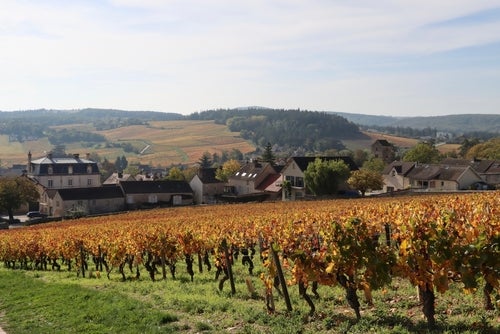


It’s an intriguing little medieval town, landlocked 3km (1.9 miles) inside France, a quirky result of the French and Spanish kings sorting out borders in 1659. The French demanded that all villages on the southern crest of the Pyrenees would be French, not realizing that Llívia, the former capital of Cerdanya, was officially designated a town. Semantics ruled and Llívia remained in Spain.
Cozy, walkable Llívia
Today Llívia is a cozy, walkable place where both Spanish and Catalan are spoken on the streets, both cultures are maintained, and Iberian cuisines rule. In the surrounding French ski towns you’ll get hearty, predictably French, mountain grub; in Llívia you can dine on edgy, reinterpreted paella full of high-altitude bunnies, wild mushrooms, and game, subtly riffing off the final echoes of El Bulli.
The wine lists are full of tiny, little-known, up-and-coming mountain appellations headed for glory in a globally warmed-up future. Preferring my Garnacha and Tempranillo leaning toward the Pinot side of style, I was in exploratory heaven.
Content from our partners
On a similar trek last year we’d discovered Llivins, a newish winery and tidy vineyard on the outskirts of Llívia focused on Sauvignon Blanc, with newer rows of Pinot Noir and nearly extinct local varieties eagerly queuing up.
This is Spain’s highest vineyard at 1,225m (4,020ft) Overlooking the Cerdanya Valley’s big-sky country, the wines are as pure and fresh as the views. Style is very much determined by a long, cool, even-tempered growing season. Organically-grown grapes bask in 30°C (86°F) days, with weather dropping to teens at night, providing that ideal tease between acid retention and gentle late-season ripening.
Llivins was pioneered in 2011 by vignerons Anna Baqués and Isaac Rigau, intent on revitalizing Cerdanya’s cool-climate winemaking. Clearly they’ve struck gold given other extensive newer plantations are now popping up throughout the valley—next year’s discoveries.
Whilst the winery itself isn’t much more than a serviceable shed, their tasting room is a cracker. A little open air bar serves €7 glasses or cost-price bottles with tapas to tourists overlooking a vineyard with million dollar views. Most of their wine is sold there during a limited summer season, with the rest ending up in restaurants and shops throughout Cerdanya’s thriving ski season. Luckily, a bit is leaking out internationally, with more to come.
Focused on Sauvignons, Llivin produces only four wines: two bone dry from 2024, a botrytis-free Llivins late-harvested DGEL Sauvignon Blanc 2023 15% and Llivins Floc Ice Wine Sauvignon Blanc 2022 15%. The purer dry style, DNEU Sauvignon Blanc 2024 12%, is born and raised in stainless steel, reflecting where it was grown and the surrounding landscape: delicately floral, linear ,and defined by a long, beautifully balanced streak of fresh acidity. It is a remarkably refined, elegant style that has been tagged internationally with gold medals in previous vintages. The second, DNEU ‘Floc’ Sauvignon Blanc 2024 12.5%, is oak-produced; fuller, fleshier, and denser, it begs for more bottle age to show its truest colours. The super pure, sweeter, late-harvested versions, we saved to accompany foie gras back home; which proved a perfect pairing.
Perusing the mountainscapes there, I recalled an old Burgundian grower I met in Nuits-St-Georges one January day decades ago. He pointed to the hills above, blanketed in white, and chuckled, ‘Pinot, she loves the snow.’ Cerdanyan-grown Pinot Noir has the potential to elevate this affair to a whole new level.

Whereas Llivin’s first Pinot Noir awaits bottling, another Cerdanyan Pinot has beaten them off the ranks. Down at lower altitudes in Penedès, Gramona grows around 400ha (990 acres) of vineyards biodynamically, mostly for Cava. Above 1,210m (3,900ft) near Riu de Cerdanya, current generation Xavier and Jaume Gramona apply this same magic to Pinot, Muscat, and Montonec (the local name for mountain-grown Parallada), while recovering other nearly extinct locals: Neral, Fina de Pedralba, and Pirineus.
Gramona’s star is Costes du Espadants Pinot Noir 2023, 13.5%, grown biodynamically and showing its mountain-grown roots, it’s rife with lovely, spicy, delicately floral Pinot Noir aromatics topping off terrific red fruit/black cherry/beetroot notes, echoed in follow-on flavors. Deftly oaked with old neutral barrels, the emphasis throughout the palate is on fruit purity, depth and balance. Absolutely delicious, it’s among the best Pinot Noirs I’ve had south of Burgundy.
The whites were like none other I’ve tasted. Costes del Misteri Montonec 2020 wore its 11.5% beautifully, an intense mix of spicy pineapple and mineral aromas and flavors, high acidity with a juicy finish. Similarly low in alcohol, their 2020 Petit Costes Muscat was an unusually restrained mineral style of Muscat: tight, light-bodied, crisp and bone dry, but with ripe pineapple, lime and orange zest flavors.
Eating in Llívia
Back to Llívia’s foodie side; a well kept secret for visitors from Barcelona and Girona, who pop up on weekends year round for its food. As with many tiny restaurants that pepper the nooks and crannies of Catalonia’s more remote villages, El Bulli-trained staff now train their own. This sophisticated background influence, alongside a focus on traditional mountain fare and classic Iberian cuisine, is what makes Llívia’s restaurants shine.
La Formatgeria served up two of the finest suckling lamb and pig dishes we’ve had in Iberia, preceded by tiny slow-roasted quail legs and a Peruvian ceviche of cod, avocado, and mango.
The local mountain farmhouse cheeses were a revelation. We worked our way through a cheese service with a smattering of unpasteurized, farmhouse goat, sheep, and cow, ranging from soft and gooey, through perfectly cured and on to blue.
An honourable mention also goes to Reval 13, a small, inexpensive restaurant serving traditional food with a modern twist. We shared a paella-like dish of caramelized rice, mushrooms, and rabbit, topped with cherry tomatoes and crisped kale, rich and umami, sweet and bitter; truly outstanding.
The real treat was the brilliant eight-course tasting menu at Michelin-mentioned Trumfe. It started with sweet tomato and smoked eel and a vichyssoise with sundried tomatoes and ceps, followed by a creamy cod with anchovies, and a courgette flower tempura served with a plump scallop and tiny mushrooms on an eggy base. The mains included monkfish with kimchi and matchstick potatoes, and a superb Iberian pork “pluma”; the cut of cuts from the back of the neck, served with chimichurri and perfectly cooked summer vegetables. Dessert entered like a drumroll; marinated cherries, sponge cake with black pepper, sheep milk ice cream flavoured with rosemary, and a quintet of chocolate delights: gelato, sponge, truffle, mousse, and cookie.

At only €60, I told the attentive sommelier it was too cheap and she grinned proudly while shrugging, “Locals say we are too expensive.” Grinning to myself, I didn’t mention my favorite go-to Rioja, Viña Tondonia Reserva 2012, was only €47 on the list when in shops it is €40.
But that sort of wine markup, rarely above 10%, was common in all three restaurants. Whereas Trumfe had all the classic French and Spanish regions well covered, I found the other restaurants’ wine lists, more focused on Pyrenees wines, just as thoughtfully curated, and as interesting as they were horizon-expanding. House wines are the real thing, personally selected.
To be honest, I really enjoyed a couple of €20–30 wines as much as the stellar Tondonia. Those same wines would have been bumped up to three digits in places like London or New York. But that’s often a key part of long wine weekends away in France, Spain, Portugal, Italy.
Getting to and from Llívia, from any direction, is laden with everchanging landscapes, often stunning, all squeezed into a short time frame of two to three hours drive from Toulouse, Carcassonne, Perpignan, Girona, or Barcelona. All are served by Ryanair (often at £25-30) and other airlines.
Public transport is possible: you can train from Toulouse to French terminus Latour-de-Carol-Enveith, or from Barcelona to Spanish terminus Puigcerdà, and then a short taxi ride, or take the bus from Barcelona to Llívia. The most famous approach however is the “Jaune” train running up the stunningly beautiful central valley from Villefranche-de-Conflent, connecting to Perpignan. At €16, it stops at all the important villages along the way and ends with just a short taxi ride to Llívia.
We headed back home via a favorite route, skimming the peaks down through the ski slopes surrounding Ax-les-Thermes, a lovely spa town with 68 springs where people have bathed back through Roman and well into Neanderthal times. Down the road is the impressively hand-painted Neolithic cave site in Tarascon and a scenic road winding onward through Foix, Pamier, and on to Toulouse, all worth a stopover of their own. But that’s another story.